


Prefer the print book? Buy on Amazon
As an Amazon Associate, Sumizeit earns from qualifying purchases.
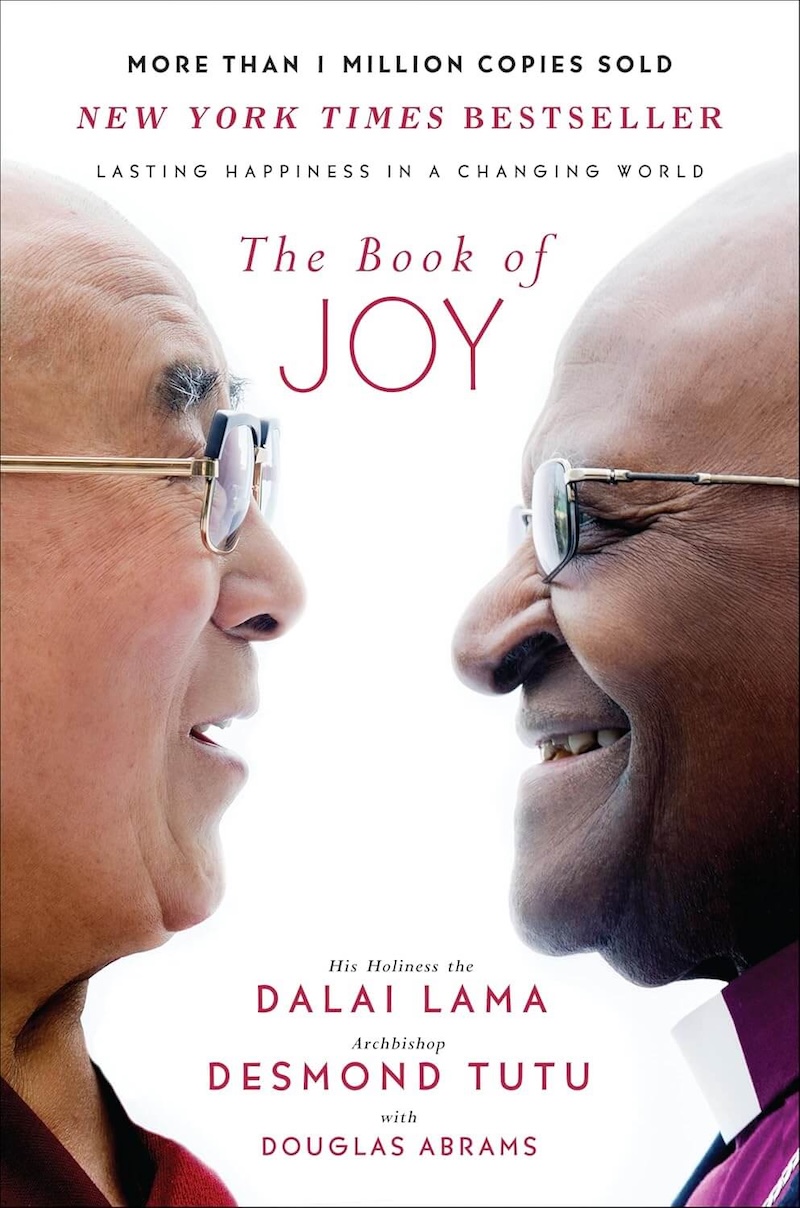
The Book of Joy Book Summary
This The Book of Joy Book Summary covers the key ideas, lessons, and takeaways in about 20 minutes.
Short Description:
The Book of Joy shows joy arises from compassion, forgiveness, and acceptance.
Suffering is not the enemy; it is the sculptor of compassion. Joy is not the absence of hardship — it is the strength that carries us through it. Every day offers a choice: close the heart or open it wider.
When we practice these pillars intentionally, joy becomes natural — not forced. And through us, joy becomes a gift to the world.
Helps with these goals
Preview the The Book of Joy book summary
Below is a preview of Sumizeit’s comprehensive human-written summary of The Book of Joy by Dalai Lama. The full summary is 15-20 minutes long and covers the book’s key ideas in text, audio, visual, and video formats. Unlock the full 20 Minute Summary
The Book of Joy is more than philosophical conversation — it is intimate friendship made visible. His Holiness the Dalai Lama and Archbishop Desmond Tutu sit together in Dharamsala, laughing like mischievous boys, embracing with warmth, frequently interrupting each other with teasing jokes. Their joy is not theoretical — it is lived. They discuss pain openly, they recall exile, racism, illness, regret, and still rise into laughter. This spirit forms the foundation of the book: joy is not found by escaping hardship, but by facing life with an open heart.
This meeting was arranged for the Dalai Lama’s 80th birthday — a milestone that naturally invites reflection on suffering, purpose, and the meaning of a well-lived life. Tutu traveled despite health limitations, a reminder that joy is a commitment, not convenience. Their simple presence together is a testimony: You can carry scars and still glow with gratitude.
Joy vs. Happiness
Happiness is emotional weather — unstable, dependent on circumstances like a good meal, a raise, or praise from others. Joy is climate — enduring, internal, chosen. Many chase acquisition: more achievements, more money, more affirmation. Yet once a milestone is reached — the promotion comes, the house is bought — excitement fades. This pattern is known as hedonic adaptation, the endless treadmill of wanting.
Joy, on the other hand, does not demand improvement of life conditions — only improvement of mind orientation. Two people can experience the same event — a delayed flight — yet one panics and complains, while the other naps, reads, or speaks kindly to strangers. Nothing external changed — only inner posture differed.
Real-life example:
• A person loses their job. Happiness decreases, but joy can remain. Joy says: This is painful — and also an opening for new possibility.
• A grandparent with aching joints still finds joy when a grandchild holds their hand. Pain is present — but gratitude is louder.
Joy does not deny sorrow — it transforms how we relate to it.
The Eight Pillars of Joy — Deepened with Examples
These pillars are not abstract ideals; they are practices to be lived daily. Think of them like muscles — strength grows through repetition, not reading alone.
Perspective means seeing beyond yourself — widening the frame. Without perspective, small irritations appear enormous. With perspective, even large problems become manageable. Tutu and the Dalai Lama encourage imagining different angles like switching camera lenses. A narrow lens sees offense; a wide lens sees context.
Examples of perspective shifts:
• Someone cuts you off in traffic → Instead of “What a rude driver,” think “Maybe they’re rushing to the hospital.”
• Your friend cancels plans → Instead of “They don’t value me,” consider “They might be overwhelmed, let me check on them.”
• A child throws a tantrum → Instead of anger, a parent can see overstimulation, hunger, or fear.
Even astronauts experience the “overview effect” — seeing Earth from space dissolves pettiness into awe.
Want the complete 20-minute summary?
- Full structured summary
- Video Summary
- Podcast Summary
- Audio summary
- Infographic
- Key takeaways
- Exercises
- Quiz
- Highlights and notes
- Ask the book with AI
Who should read The Book of Joy?
The Book of Joy is for anyone seeking a deeper, more resilient kind of happiness—not dependent on life circumstances but rooted in inner practice. Whether you're navigating grief, illness, injustice, or everyday stress, this book offers wisdom from two of the world's most respected spiritual leaders. It speaks to seekers, skeptics, and those simply tired of chasing fleeting happiness through external achievement.
Why does The Book of Joy matter?
In a world saturated with self-help promising quick fixes and constant positivity, The Book of Joy by the Dalai Lama and Archbishop Desmond Tutu offers something radical: a framework for joy that doesn't deny suffering but transforms our relationship with it. Their lived experience—exile, apartheid, illness—proves that genuine joy isn't naive optimism but a disciplined, compassionate way of meeting life. This matters because joy built on practice is available to everyone, regardless of circumstance.
What are the key themes in The Book of Joy?
- Joy as a practice, not a feeling dependent on circumstances
- The difference between fleeting happiness and enduring joy
- Suffering and joy can coexist and deepen each other
- Compassion emerges from recognizing shared human vulnerability
- The power of perspective, humility, and forgiveness in transformation
- Generosity and gratitude as active rewiring of the mind
- Resilience as a skill built through daily practice
How can you apply ideas from The Book of Joy?
- Practice daily gratitude by writing three things you're appreciative of—this scientifically rewires your brain toward optimism over weeks
- Use perspective shifts when facing frustration: imagine the other person's full context and hardship rather than assuming the worst
- Practice forgiveness as emotional release, separating the harmful person from their harmful action to free yourself from bitterness
- Cultivate humor even in difficult moments—laughter lowers cortisol, reduces pain perception, and makes shared suffering bearable
- Reframe mundane tasks through gratitude: instead of resenting laundry, appreciate having clothes; instead of complaining about busyness with family, acknowledge the privilege of being needed
- Offer small acts of generosity daily—buying coffee for someone, listening deeply to a lonely coworker, teaching a skill freely—to activate your joy circuits
- When facing a difficult situation, practice acceptance first (this is happening) before action (how will I respond wisely?) to stop resistance from multiplying suffering
What common mistakes do readers make with The Book of Joy?
- Confusing happiness with joy and expecting external achievements to deliver lasting contentment, missing the inner work required for genuine joy
- Believing acceptance means approval or giving up, when it actually means gaining clarity to respond effectively to what is
- Waiting to feel grateful instead of practicing gratitude as a discipline—joy doesn't precede the practice; it emerges through it
- Trying to suppress or deny suffering rather than transforming your relationship with it, missing the wisdom and compassion it can birth
- Seeing humility as weakness or self-dismissal rather than recognizing it as strength that opens doors to learning and connection
Sumizeit Exercises Apply what you've learned
Turn ideas from The Book of Joy into action with a short guided reflection: identify the biggest takeaway, connect it to your life, and commit to one step you can take in the next 24 hours.
What is the expert analysis of The Book of Joy?
Overview
The Book of Joy emerges as a profound dialogue between two towering moral and spiritual figures of our time: His Holiness the Dalai Lama XIV and Archbishop Desmond Tutu. Co-authored with Douglas Abrams, the book transcends conventional self-help literature by weaving intimate friendship, lived experience, and deep philosophical insight into a compelling exploration of joy amid suffering. This collaboration is significant not only for its cross-cultural and interfaith dialogue but also for its grounding in real-world adversity—exile, apartheid, illness—rendering its lessons both authentic and universally resonant.
Core Thesis
The central argument of The Book of Joy is that joy is an enduring, internal state distinct from fleeting happiness, accessible not by avoiding life’s hardships but by confronting them with an open heart and disciplined mind. The authors propose that joy is cultivated through deliberate practice of eight pillars—Perspective, Humility, Humor, Acceptance, Forgiveness, Gratitude, Compassion, and Generosity—that transform suffering into a source of wisdom and connection. This thesis challenges the modern cultural fixation on external achievement as the path to fulfillment, emphasizing instead an inward orientation that fosters resilience and communal uplift.
Strengths
- Authenticity and Authority: The lived experiences of the Dalai Lama and Archbishop Tutu lend profound credibility, as their joy is not theoretical but forged through decades of personal and collective suffering.
- Integration of Spirituality and Science: The book skillfully bridges spiritual traditions with contemporary psychological research, such as the neuroscience of gratitude and humor, enhancing its appeal to both faith-based and secular readers.
- Practical Framework: The eight pillars provide concrete, actionable practices rather than abstract ideals, making the pursuit of joy accessible and sustainable.
- Emphasis on Interpersonal Connection: By highlighting compassion and generosity, the book situates joy within a social and ethical context, countering individualistic paradigms prevalent in self-help literature.
- Nuanced View of Suffering: Rather than denying pain, the book embraces it as an integral part of the human condition and a catalyst for growth, a perspective that is both psychologically sound and spiritually enriching.
Critiques & Counterarguments
- Potential Oversimplification: While the eight pillars offer clarity, the book occasionally risks reducing complex emotional and social dynamics into neat categories, which may not fully capture the variability of human experience across cultures and individual circumstances.
- Limited Engagement with Structural Issues: The focus on individual mindset and practice may underemphasize systemic factors—such as poverty, discrimination, and political oppression—that severely constrain the capacity for joy for many people worldwide.
- Western Psychological Lens: Despite its spiritual roots, the book’s reliance on concepts like “mental immunity” and “neural rewiring” reflects a Western scientific framework that might not resonate universally or could overshadow indigenous or alternative epistemologies of joy and suffering.
- Competing Research on Happiness and Resilience: Some psychological studies suggest that genetic predispositions and environmental factors play a more deterministic role in well-being than intentional practices alone, challenging the extent to which joy can be consciously cultivated as proposed.
- Philosophical Counterpoint—Stoicism and Existentialism: Philosophies such as Stoicism emphasize acceptance and virtue but often regard joy as secondary to tranquility or authenticity, offering a more austere approach that questions whether joy should be a primary goal amid suffering.
Who Should Read This
The Book of Joy is ideally suited for readers seeking a deeply reflective yet practical guide to cultivating resilience and meaning in turbulent times. It will resonate with those interested in spirituality, psychology, and ethical living, especially individuals confronting personal hardship or engaged in caregiving and social justice work. Scholars and practitioners in positive psychology, contemplative studies, and interfaith dialogue will find it a rich resource for understanding joy as a multifaceted, communal practice. However, readers looking for a purely secular, evidence-based manual or a critique of social structures may find its scope limited.
Frequently asked questions about the The Book of Joy book summary
What is The Book of Joy about?
The Book of Joy documents a conversation between the Dalai Lama and Archbishop Desmond Tutu, two Nobel Peace Prize laureates, as they share their wisdom on finding genuine, enduring joy despite lives marked by exile, apartheid, illness, and loss. The book teaches that joy is a practice rooted in eight pillars—perspective, humility, humor, acceptance, forgiveness, gratitude, compassion, and generosity—rather than a fleeting emotion dependent on circumstances.
Who should read The Book of Joy?
The Book of Joy is for anyone seeking a deeper, more resilient happiness beyond the pursuit of external achievements. It speaks to those navigating grief, injustice, illness, or everyday stress, as well as to spiritual seekers and skeptics alike. Whether you're struggling with suffering or simply tired of chasing happiness, this book offers a practical framework grounded in lived experience rather than theoretical idealism.
What are the main takeaways from The Book of Joy?
The main takeaways are: joy is a discipline and practice, not a feeling dependent on circumstances; suffering and joy can coexist and deepen each other; the eight pillars—perspective, humility, humor, acceptance, forgiveness, gratitude, compassion, and generosity—are daily practices that cultivate joy; and joy is communal, amplifying when shared. The book proves through the authors' own lived experience that genuine joy emerges from how you meet life, not from avoiding hardship.
What is the difference between happiness and joy according to The Book of Joy?
The Book of Joy teaches that happiness is emotional weather—unstable and dependent on external circumstances like achievements, money, or praise. Joy, by contrast, is climate—enduring, internal, and chosen regardless of circumstances. Happiness fades once goals are achieved (hedonic adaptation), while joy rooted in practice remains accessible even during suffering, requiring only a shift in mind orientation rather than a change in external conditions.
What are the eight pillars of joy in The Book of Joy?
The eight pillars of joy are: perspective (seeing beyond yourself and imagining different angles), humility (self-right-sizing without self-dismissal), humor (breaking tension and ego through laughter), acceptance (clarity about what is), forgiveness (releasing emotional chains to the past), gratitude (recognizing abundance in the ordinary), compassion (recognizing shared vulnerability), and generosity (making love visible through action). Each pillar is a daily practice that compounds over time to build joy.
How can I practice gratitude to build joy?
The Book of Joy recommends writing three things you're grateful for daily—this practice scientifically rewires neural pathways toward optimism. You can also reframe ordinary frustrations through gratitude: instead of resenting laundry, appreciate having clothes; instead of complaining about busyness with family, recognize the privilege of being needed. The key is that gratitude is an active daily discipline, not a feeling that magically appears; the more you practice expressing it, the more naturally joy grows.
Can you experience joy while suffering, according to The Book of Joy?
Yes, absolutely. The Dalai Lama and Archbishop Desmond Tutu—who endured exile, apartheid, illness, and loss—demonstrate that suffering and joy can coexist. The book teaches that joy isn't the absence of hardship but the strength and openness of heart that carries you through it. Sometimes suffering even deepens your capacity for compassion and wisdom, a phenomenon called post-traumatic growth, where pain becomes transformed into purpose and service.
About Sumizeit
Sumizeit is a profitable Scomy LLC company based in Miami, Florida. Our founders, Clemens Raemy and Weina Scott, are successful entrepreneurs with several exits. Sumizeit is a popular book summary app / micro learning app used by busy professionals and entrepreneurs with over 2,500 non-fiction book summaries and 10,000 podcast summaries in text, audio, visual, podcast, and video format. We also have stellar retention tools to make ideas stick - such as flashcards with spaced repetition, quizzes, streaks, highlighting and notes, daily challenges, riddles, mini-courses, meditation, and more. You won't only learn the idea, but also remember it. Over 90% of our users change their habits with Sumizeit.
Upgrade Now
Here's why readers love Sumizeit
Join thousands of learners getting smarter every day
"Great experience. Detailed summaries. Loved the gamification feature. Makes learning fun. Good customer service. I recommend Sumizeit to anyone. You'll learn a lot."
"I always felt busy but still wanting to keep up with the book discussion in my friend group. This was a great supplement to help me keep reading the books I find fun while keeping up with important books."
"I love this website. Instead of scrolling social media, I find myself learning a lot. I use it everyday. I recommend this app for anyone who is too busy and wants to get up to speed with their favorite books."
The Book of Joy Book Summary PDF
Looking for a The Book of Joy Book Summary PDF you can save and revisit offline? Our The Book of Joy Book Summary PDF captures the book’s core ideas in a clean, printable format — the key frameworks, takeaways, and structure without the fluff. Download the The Book of Joy Book Summary PDF when you want a reference you can annotate, share with your team, or review on the go. Get your The Book of Joy Book Summary PDF from the download page below.
Download The Book of Joy Book Summary PDFPeople also liked these summaries
Readers who explored The Book of Joy often enjoyed these titles next.


Ready to read the whole thing?
- Full structured summary
- Video Summary
- Podcast Summary
- Audio summary
- Infographic
- Key takeaways
- Exercises
- Quiz
- Highlights and notes
- Ask the book with AI
Featured Book Titles
Popular Book Summaries at sumizeit, leading book summary app