


As an Amazon Associate, Sumizeit earns from qualifying purchases.
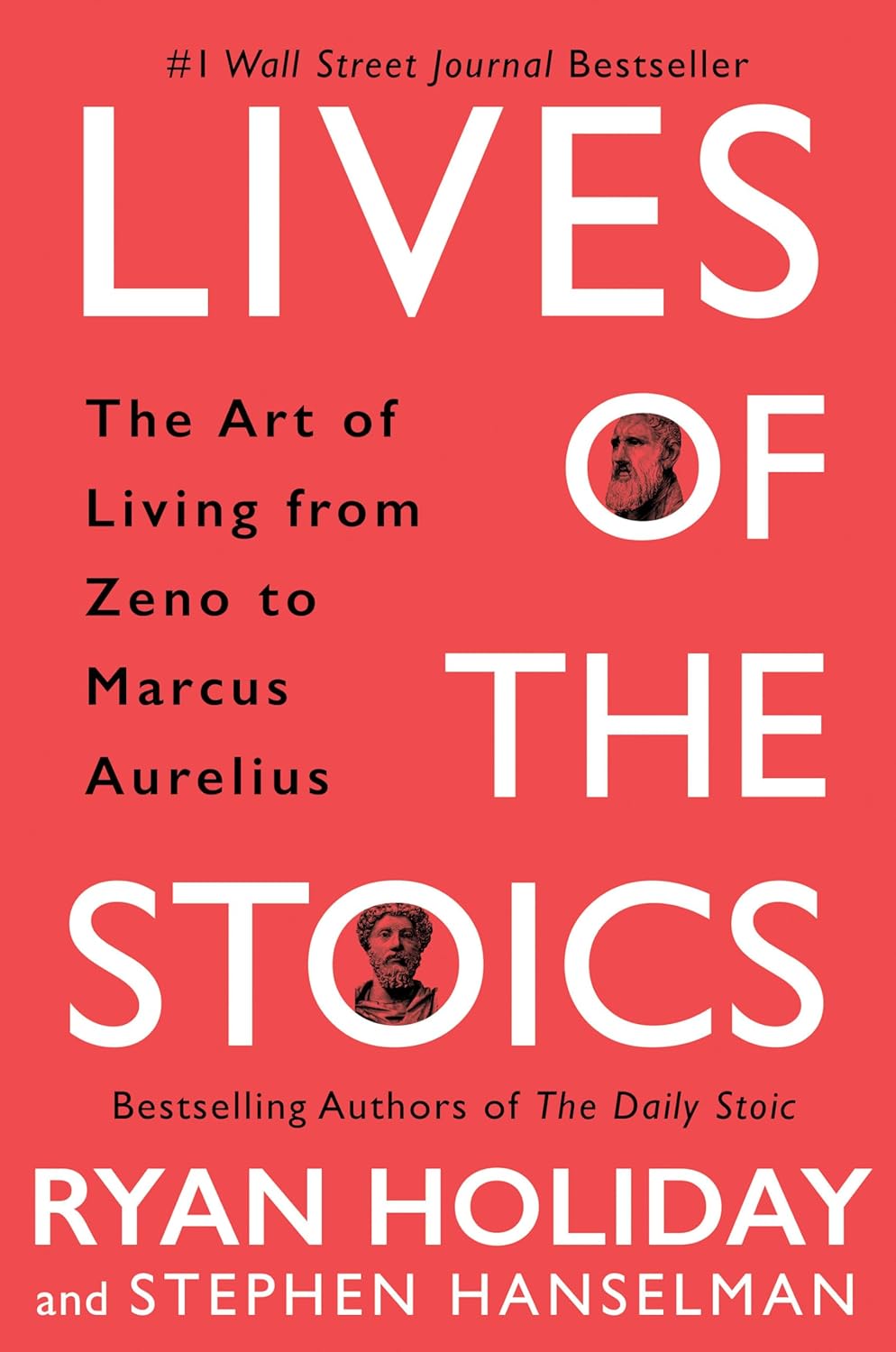
Lives of the Stoics Book Summary
This Lives of the Stoics Book Summary covers the key ideas, lessons, and takeaways in about 20 minutes.
Through shipwrecks, slavery, exile, power, and death, the Stoics demonstrated that dignity is not granted by circumstances. It is earned through judgment, discipline, and moral courage. Their lives show that wisdom is not proven by words, but by consistent action when it matters most.
Stoicism does not eliminate pain, failure, or loss. Instead, it offers a way to meet them without surrendering one’s values. In a world obsessed with outcomes, the Stoics remind us that how we live matters more than what happens to us.
Want the complete 20-minute summary?
- Full structured summary
- Video Summary
- Podcast Summary
- Audio summary
- Key takeaways
- Exercises
- Quiz
- Highlights and notes
- Ask the book with AI
What is in the Lives of the Stoics book summary?
Below is a preview of Sumizeit’s expert-written summary of Lives of the Stoics by Ryan Holiday. The full summary covers the book’s key ideas in text, audio, and video.
Lives of the Stoics is not a conventional philosophy book, nor is it a dry historical survey. Instead, it is a collection of human stories—messy, imperfect, courageous, contradictory lives—used to demonstrate that Stoicism was never meant to stay trapped in scrolls or classrooms. For the Stoics, philosophy existed to shape behavior, decisions, and character under pressure. Ryan Holiday and Stephen Hanselman frame Stoicism as an applied discipline: a guide for how to respond when life becomes unfair, chaotic, or painful.
From the very beginning, the book emphasizes that Stoicism is less about abstract theories and more about how one behaves when tested. The ancient Stoics were merchants ruined by fate, slaves stripped of freedom, politicians navigating corruption, generals confronting death, and emperors burdened with absolute power. What unified them was not their status, but their commitment to cultivating inner strength, moral clarity, and calm judgment regardless of circumstances.
Stoicism, as presented in the book, is fundamentally ethical rather than intellectual. The Stoics did not ask what sounds impressive, but what actually works when your reputation collapses, when your body fails, or when your world changes overnight. The book argues that Stoicism survived for centuries not because it was elegant, but because it was useful.
The Four Virtues as a Moral Compass
At the center of Stoic philosophy are four inseparable virtues: wisdom, courage, justice, and temperance. These virtues are not theoretical ideals but practical tools. The Stoics believed that a good life could not be measured by wealth, power, or pleasure, but by the consistent expression of these traits in everyday choices.
Wisdom, in Stoic terms, is not mere intelligence. It is the ability to see clearly, distinguish what matters from what does not, and respond appropriately rather than impulsively. Courage is not fearlessness, but the willingness to act rightly even when afraid. Justice extends beyond laws to include fairness, responsibility, and concern for others. Temperance governs desire, reminding individuals to resist excess, entitlement, and self-indulgence.
The book repeatedly reinforces that these virtues cannot be separated. Courage without wisdom becomes recklessness. Justice without temperance turns into moral arrogance. Wisdom without courage leads to inaction. The Stoics pursued harmony between these qualities, knowing that character collapses when one virtue dominates at the expense of others.
Zeno of Citium: The Birth of Stoicism Through Loss
The story of Stoicism begins not with triumph, but with disaster. Zeno of Citium was a wealthy merchant whose life unraveled when a shipwreck destroyed everything he owned. Stranded in Athens and stripped of status, Zeno encountered philosophy at the lowest point of his life. Rather than mourning his misfortune, he reframed it as an unexpected gift.
Zeno’s response to catastrophe established one of Stoicism’s most enduring ideas: that adversity can be transformed into opportunity. He came to believe that external losses are insignificant compared to internal collapse. Wealth, reputation, and comfort exist outside our control, but judgment, intention, and values remain ours to shape.
Zeno eventually founded the Stoic school, teaching publicly under a painted colonnade—the…
Want the complete 20-minute summary?
- Full structured summary
- Video Summary
- Podcast Summary
- Audio summary
- Key takeaways
- Exercises
- Quiz
- Highlights and notes
- Ask the book with AI
Who should read Lives of the Stoics?
Lives of the Stoics is for anyone seeking practical wisdom on resilience, character, and how to navigate life's challenges with integrity. Whether you're a leader facing difficult decisions, someone struggling with adversity, or simply curious about how ancient philosophy applies today, this book offers real examples of how philosophy shapes behavior under pressure.
Why does Lives of the Stoics matter?
In an age of distraction, anxiety, and external chaos, Lives of the Stoics reminds us that the only thing truly within our control is our character and judgment. The book demonstrates through real human stories that Stoic principles aren't abstract theory—they're proven tools for building resilience, clarity, and moral strength when it matters most. As modern psychology increasingly validates Stoic insights about emotion and thought, these ancient ideas feel more relevant than ever.
What are the key themes in Lives of the Stoics?
- Philosophy as applied practice, not abstract theory
- The four virtues as a moral compass for daily decisions
- Adversity as an opportunity for growth and character building
- The distinction between what is and isn't within your control
- Internal freedom regardless of external circumstances
- Character as the only lasting achievement
- Duty, responsibility, and service to others
- Preparing for hardship through mental and physical discipline
What are the key lessons from the Lives of the Stoics book summary?
Stoicism Begins With Loss
Zeno founded Stoicism after a shipwreck destroyed his wealth, teaching that catastrophe can be reframed as an opportunity rather than a curse. This principle established that external losses matter far less than maintaining internal control and values.
The Four Virtues Cannot Be Separated
Wisdom, courage, justice, and temperance must work together as an integrated system. Courage without wisdom becomes recklessness; justice without temperance becomes arrogance; wisdom without courage leads to inaction.
Suffering Comes From Your Judgments, Not Events
Chrysippus clarified that pain arises not from what happens to us but from the beliefs we attach to events. This insight shifted Stoicism toward emotional resilience and later influenced modern cognitive psychology.
Effort and Integrity Outweigh Talent and Reputation
Cleanthes demonstrated through his humble life of manual labor and night studies that discipline and consistency matter more than eloquence or status. Character is built through steady commitment, not natural gifts.
True Freedom Is Independence From Desire and Fear
Epictetus, born enslaved, taught that no external force can enslave the mind unless we permit it. Real freedom comes from understanding what lies within our control—our judgments and actions—and accepting what does not.
Power Corrupts Even Philosophical Intent
Seneca's contradictory life—preaching simplicity while wealthy, advocating virtue while serving Nero—illustrates how proximity to power erodes moral ideals. Ambition and fear easily compromise philosophical principles.
Moral Purity Often Comes at a Cost
Cato the Younger refused compromise even when it meant isolation and death, showing that unwavering principles inspire but can also prevent practical effectiveness. Rigid integrity may limit your ability to influence events.
Distinguish Between What You Control and What You Don't
The core Stoic practice involves accepting that outcomes, circumstances, and others' opinions lie beyond your control, while your responses, effort, and values remain entirely yours. This distinction dissolves much unnecessary anxiety.
Voluntary Discomfort Builds Resilience Before Real Hardship
By practicing discomfort and imagining loss beforehand, the Stoics reduced fear and strengthened their ability to endure. These exercises prepare the mind for adversity rather than creating suffering for its own sake.
Stoicism Is Not About Eliminating Emotion but Managing Judgment
Stoicism does not demand passivity or emotional numbness. Instead, it addresses the beliefs and judgments that fuel destructive emotions, allowing you to respond thoughtfully rather than react impulsively.
Awareness of Mortality Clarifies Priorities
The Stoics used contemplation of death not morbidly but as a tool to dissolve trivial concerns and sharpen focus on what truly matters. Mortality awareness cuts through distraction and reinforces the importance of character.
Character Survives When Everything Else Falls Away
Whether through shipwreck, slavery, exile, or power, the Stoics demonstrated that dignity and integrity cannot be stripped away by circumstances. They remain within reach regardless of external fortune.
Virtue Is the Only True Good
The Stoics rejected measuring a good life by wealth, pleasure, or status. Only virtue—expressed through wisdom, courage, justice, and temperance—constitutes real success and lasting fulfillment.
Philosophy Must Shape Behavior, Not Just Thoughts
Stoicism survived because it worked in practice, not because it sounded elegant. The test of philosophy is how it changes your actions when tested by real hardship, not how impressively it sounds in theory.
Duty and Service to Others Is Central to a Good Life
As Stoicism evolved in Rome, it emphasized responsibility to the collective, not just personal discipline. Living well means fulfilling your role within society and contributing to the common good.
Self-Examination Is a Daily Discipline
Marcus Aurelius used his private writings as daily correctives to ego and self-deception. Ongoing self-reflection keeps you aligned with your values and prevents gradual moral drift.
Wisdom Means Seeing Clearly, Not Knowing Everything
Stoic wisdom is not intelligence or expertise but the ability to distinguish what matters from what does not and respond appropriately. It's clarity about reality, not superiority of knowledge.
Power Is a Burden, Not a Privilege
Marcus Aurelius viewed his role as emperor as a responsibility to serve others rather than an opportunity for advantage. This reframing of power itself becomes a tool for ethical leadership.
Want the complete 20-minute summary?
- Full structured summary
- Video Summary
- Podcast Summary
- Audio summary
- Key takeaways
- Exercises
- Quiz
- Highlights and notes
- Ask the book with AI
How can you apply ideas from Lives of the Stoics?
- When facing adversity, pause and ask: What lies within my control? Focus your energy there and accept what you cannot change.
- Before difficult situations arise, practice voluntary discomfort and negative visualization to build mental resilience and reduce fear.
- In moments of anger or distress, identify the judgment driving your emotion, then question whether that belief is actually true or helpful.
- Make daily self-examination a habit—review your actions, check for ego-driven decisions, and realign with your core values.
- When making decisions, apply the four virtues as a test: Does this choice reflect wisdom, courage, justice, and temperance?
- Remind yourself regularly of your mortality and the impermanence of status and possessions to clarify what truly matters.
- When tempted by excess or comfort, ask whether your choice serves your character development or weakens it through dependence.
- In leadership or difficult conversations, focus on understanding and fulfilling your duty to others rather than winning or controlling outcomes.
What common mistakes do readers make with Lives of the Stoics?
- Believing Stoicism means suppressing emotions or becoming passive—it actually teaches you to manage the judgments that fuel destructive emotions.
- Confusing Stoic acceptance with apathy or resignation—Stoicism demands active effort within your sphere of control while accepting what you cannot change.
- Treating the four virtues as separate tools rather than an integrated system—using one without the others creates moral imbalance and poor judgment.
- Attempting Stoic practice without connecting it to daily behavior—reading about Stoicism is different from actually changing how you respond to adversity.
- Assuming that Stoicism eliminates pain and difficulty—it offers a way to meet hardship with dignity, not a promise that hardship won't occur.
- Abandoning Stoic principles when proximity to power or comfort increases—the greatest test of philosophy is whether it survives success and influence.
Sumizeit Exercises Apply what you've learned
Turn ideas from Lives of the Stoics into action with a short guided reflection: identify the biggest takeaway, connect it to your life, and commit to one step you can take in the next 24 hours.
What is the expert analysis of Lives of the Stoics?
Overview
Lives of the Stoics, authored by Ryan Holiday and Stephen Hanselman, stands out as a significant contribution to both classical philosophy and contemporary self-improvement literature. Rather than presenting Stoicism as an abstract doctrine, the book humanizes the philosophy by weaving together vivid biographies of its principal figures. Holiday, a prominent modern advocate for Stoicism, and Hanselman, a classical scholar, collaborate to bridge ancient wisdom with modern existential challenges, making the work accessible without sacrificing intellectual rigor. This dual authorship enriches the narrative, situating Stoicism as a lived ethical practice rather than a mere theoretical framework.
Core Thesis
The central insight of Lives of the Stoics is that Stoicism is fundamentally a practical philosophy aimed at shaping character and behavior under adversity, not an abstract intellectual exercise. The authors argue that the enduring power of Stoicism lies in its ethical core—embodied by the four cardinal virtues of wisdom, courage, justice, and temperance—which serve as a moral compass guiding individuals through life's inevitable hardships. The book posits that Stoicism’s survival across centuries is owed to its utility in cultivating resilience, moral clarity, and calm judgment, regardless of external circumstances. Through biographical sketches, the authors illustrate how Stoicism was applied by individuals from diverse social strata, revealing its adaptability and relevance.
Strengths
- Biographical Approach: By focusing on the personal lives of Stoic philosophers, the book transcends dry philosophical exposition, offering readers relatable narratives that exemplify Stoic principles in action.
- Integration of Ethics and Practice: The emphasis on virtue as practical tools rather than abstract ideals reinforces Stoicism’s applicability to modern challenges, enhancing its appeal beyond academic philosophy.
- Historical Continuity: The work traces the evolution of Stoicism from its Greek origins through its Roman transformation, highlighting shifts in emphasis that reflect changing social and political contexts.
- Modern Relevance: By connecting Stoic ideas to contemporary psychology (notably Cognitive Behavioral Therapy) and leadership, the authors demonstrate the philosophy’s enduring influence and practical value.
- Nuanced Character Portrayals: Figures like Seneca and Cato are presented with their contradictions intact, allowing for a sophisticated exploration of moral complexity rather than hagiography.
Critiques & Counterarguments
- Selective Historical Emphasis: While the biographical method is engaging, it risks idealizing Stoics by focusing primarily on their virtues and downplaying failures or problematic aspects, such as Seneca’s complicity with Nero or the political naivety of others.
- Overgeneralization of Stoicism’s Practicality: The book sometimes presents Stoicism as a universally effective strategy for adversity, potentially oversimplifying the psychological diversity of human responses and ignoring critiques that Stoicism may encourage emotional suppression or passivity.
- Limited Engagement with Competing Philosophies: The authors do not deeply contrast Stoicism with rival Hellenistic schools like Epicureanism or Skepticism, which offer alternative views on pleasure, desire, and knowledge, thereby narrowing the philosophical context.
- Modern Psychological Research: Contemporary studies on emotion regulation suggest that while cognitive reframing (a Stoic technique) is beneficial, it is not universally effective and may sometimes exacerbate distress if applied rigidly—challenging the book’s implicit claim of Stoicism’s unmitigated utility.
- Political Implications: The portrayal of Stoicism as a philosophy for public life, especially in the Roman context, may understate its potential complicity in justifying hierarchical power structures and social inequalities, a critique advanced by modern scholars examining Stoicism’s role in imperial ideology.
Who Should Read This
Lives of the Stoics is ideally suited for readers who seek a rich, narrative-driven introduction to Stoic philosophy that emphasizes ethical practice over abstract theorizing. It appeals to those interested in personal development, leadership, and resilience, especially individuals confronting uncertainty or adversity who desire a philosophy grounded in historical exemplars. Scholars and students of ancient philosophy will appreciate its accessible synthesis, though they may seek complementary texts for deeper critical analysis. Additionally, readers fascinated by the intersection of philosophy, psychology, and history will find this work a compelling exploration of how ancient wisdom continues to inform modern life.
Frequently asked questions about the Lives of the Stoics book summary
What is Lives of the Stoics about?
Lives of the Stoics by Ryan Holiday and Stephen Hanselman is a collection of biographical stories showing how ancient Stoic philosophers actually lived their philosophy under real pressure—through shipwrecks, slavery, political corruption, and absolute power. Rather than presenting abstract theory, the book demonstrates that Stoicism is a practical discipline for building character, resilience, and moral clarity when circumstances become unfair, chaotic, or painful.
Who should read Lives of the Stoics?
Lives of the Stoics appeals to leaders, athletes, soldiers, and anyone seeking practical wisdom for navigating adversity with integrity. It's valuable for people struggling with anxiety, facing difficult decisions, or curious about how ancient philosophy applies to modern challenges. The book works for both Stoicism newcomers and those already interested in deepening their practice.
What are the main takeaways from Lives of the Stoics?
The main takeaway is that character is the only lasting achievement—it cannot be stripped away by circumstances and remains within your control regardless of external fortune. The book teaches that suffering comes from your judgments rather than events themselves, that the four virtues (wisdom, courage, justice, and temperance) form an integrated moral compass, and that adversity is preparation for growth when approached correctly. Finally, it emphasizes that philosophy matters only insofar as it shapes how you actually behave under pressure.
What is the difference between what Stoics control and don't control?
The Stoics teach that you control your judgments, choices, effort, and values—essentially your character and how you respond to events. You do not control outcomes, circumstances, others' opinions, health, wealth, status, or even your body. Understanding this distinction dissolves much unnecessary anxiety and redirects your energy toward what actually lies within your power.
How did Stoicism evolve from Greece to Rome?
Stoicism began in Athens with Zeno and evolved as it migrated to Rome, shifting from personal discipline toward civic duty and political engagement. Roman philosophers like Panaetius integrated Stoicism with Roman ideals of honor and responsibility, making it a philosophy for public leadership rather than withdrawal from society. This transformation made Stoicism practical for statesmen, generals, and emperors, though it also exposed philosophy to the corrupting influence of power.
Why does Epictetus's teaching about freedom matter in Lives of the Stoics?
Epictetus was born enslaved with no property, status, or external autonomy, yet his teachings became the purest expression of Stoic freedom. He demonstrated that true freedom is not the absence of constraints but independence from fear, desire, and resentment—conditions available to anyone. His life proves that Stoicism offers real liberation regardless of your circumstances.
How does Lives of the Stoics connect ancient philosophy to modern psychology?
The book traces how Stoic insights—particularly Chrysippus's idea that suffering stems from our beliefs rather than events—influenced modern Cognitive Behavioral Therapy. Lives of the Stoics shows that ancient Stoicism and contemporary psychology address the same core problem: how our judgments shape our emotions and behavior. This connection validates Stoic practice as both historically proven and scientifically sound.
What makes Marcus Aurelius's Stoicism unique compared to other Stoics?
Marcus Aurelius ruled the Roman Empire during war and plague yet used Stoicism as a daily corrective against ego and the corrupting effects of power. Unlike many rulers, he viewed authority as a burden of service rather than privilege and constantly reminded himself of impermanence and duty to others. His private writings reveal Stoicism as an internal dialogue—a lifelong effort to align actions with values amid relentless pressure.
About Sumizeit
Sumizeit is a profitable Scomy LLC company based in Miami, Florida. It has been helping readers learn from nonfiction books for 7 years with expert-written summaries in text, audio, podcast, and video.
Want the complete 20-minute summary?
- Full structured summary
- Video Summary
- Podcast Summary
- Audio summary
- Key takeaways
- Exercises
- Quiz
- Highlights and notes
- Ask the book with AI
Here's why readers love Sumizeit
Join thousands of learners getting smarter every day
"Great experience. Detailed summaries. Loved the gamification feature. Makes learning fun. Good customer service. I recommend Sumizeit to anyone. You'll learn a lot."
"I always felt busy but still wanting to keep up with the book discussion in my friend group. This was a great supplement to help me keep reading the books I find fun while keeping up with important books."
"I love this website. Instead of scrolling social media, I find myself learning a lot. I use it everyday. I recommend this app for anyone who is too busy and wants to get up to speed with their favorite books."
Lives of the Stoics Book Summary PDF
Looking for a Lives of the Stoics Book Summary PDF you can save and revisit offline? Our Lives of the Stoics Book Summary PDF captures the book’s core ideas in a clean, printable format — the key frameworks, takeaways, and structure without the fluff. Download the Lives of the Stoics Book Summary PDF when you want a reference you can annotate, share with your team, or review on the go. Get your Lives of the Stoics Book Summary PDF from the download page below.
Download Lives of the Stoics Book Summary PDFPeople also liked these summaries
Readers who explored Lives of the Stoics often enjoyed these titles next.





Want the complete 20-minute summary?
- Full structured summary
- Video Summary
- Podcast Summary
- Audio summary
- Key takeaways
- Exercises
- Quiz
- Highlights and notes
- Ask the book with AI
Featured Book Titles
Popular Book Summaries at sumizeit, leading book summary app