


Prefer the print book? Buy on Amazon
As an Amazon Associate, Sumizeit earns from qualifying purchases.
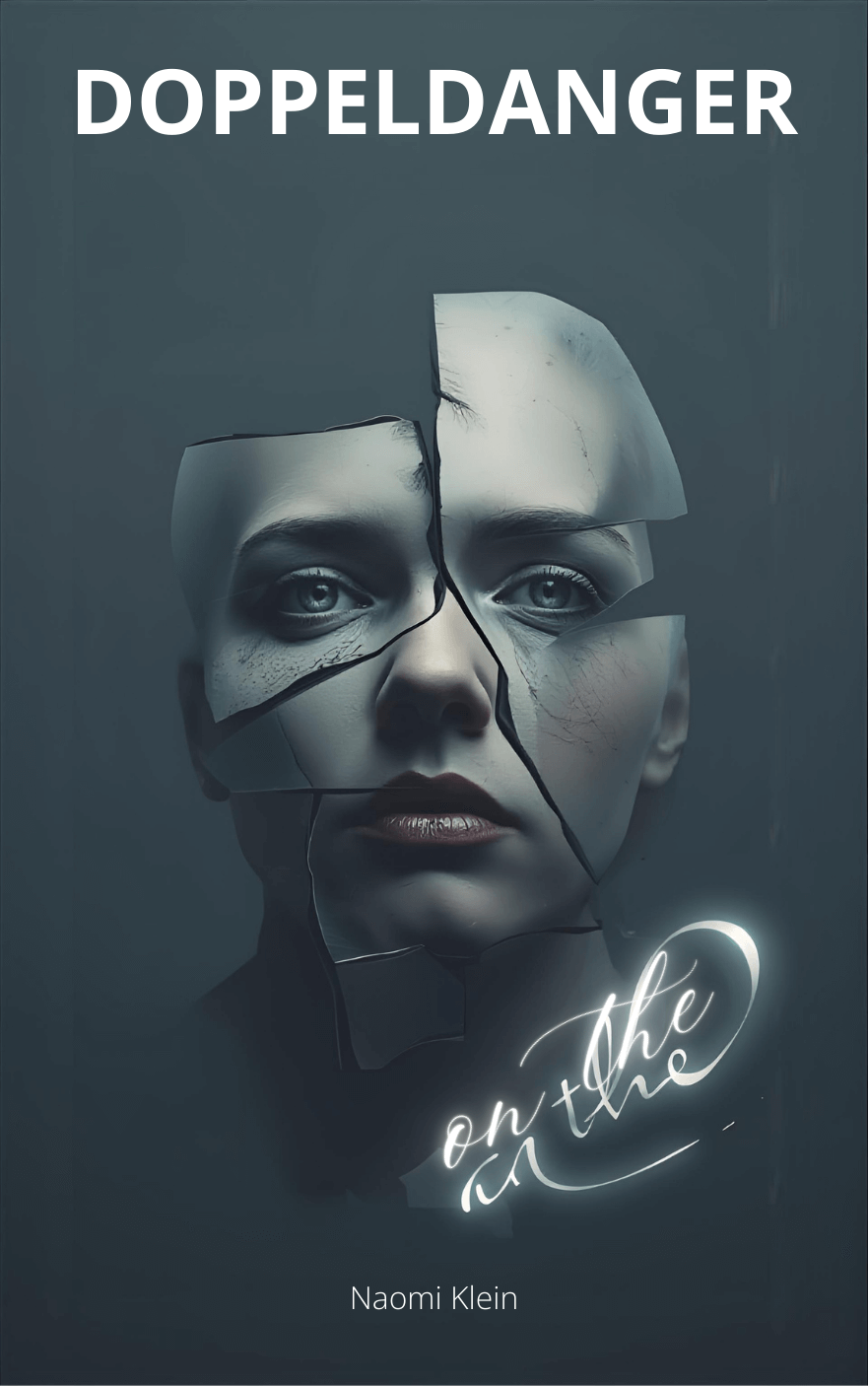
Doppelganger Book Summary
This Doppelganger Book Summary covers the key ideas, lessons, and takeaways in about 20 minutes.
Truth, identity, and doubles in a post-truth world
Klein ultimately calls for renewed commitment to critical thinking, collective responsibility, and empathy. Rather than scapegoating groups or surrendering to cynicism, she urges readers to confront structural inequalities and rebuild trust through accountability and transparency. The antidote to a world of destabilizing doubles is not isolation but solidarity grounded in shared evidence and humane values.
Helps with these goals
Want the complete 20-minute summary?
- Full structured summary
- Video Summary
- Podcast Summary
- Audio summary
- Key takeaways
- Exercises
- Quiz
- Highlights and notes
- Ask the book with AI
Want a Free Weekly Read?
Get a free summary every week straight to your mailbox.
Preview the Doppelganger book summary
Below is a preview of Sumizeit’s comprehensive human-written summary of Doppelganger by Naomi Klein. The full summary is 15-20 minutes long and covers the book’s key ideas in text, audio, visual, and video formats. Unlock the full 20 Minute Summary
In Doppelganger, Naomi Klein examines what it feels like to live in an era when truth seems slippery and shared reality is dissolving. The book begins with her personal experience of being mistaken for another public intellectual, Naomi Wolf, whose views increasingly diverged from Klein’s own. What starts as a case of mistaken identity becomes a powerful metaphor for a broader cultural condition: we are living among doubles—mirrored versions of people, ideas, and movements that look familiar but behave in disturbing ways.
Klein argues that modern digital systems have weakened our collective trust in institutions that once anchored public understanding—journalism, science, medicine, and academia. As misleading narratives spread rapidly online, distinctions between verified evidence and imaginative speculation blur. This confusion does not merely exist in fringe corners of the internet; it seeps into mainstream conversations, reshaping political life and personal identity.
She suggests that misinformation does not arise only from ignorance. It thrives in environments already marked by insecurity, inequality, and institutional failure. When people feel abandoned or betrayed by systems meant to protect them, they become more vulnerable to stories that claim to reveal hidden truths.
The Pandemic as an Accelerator of Doubt
The global health crisis served as a catalyst for this unraveling. During COVID-19, uncertainty was everywhere: lockdowns disrupted daily life, vaccines were developed at unprecedented speed, and public health policies shifted as new data emerged. This atmosphere of instability created fertile ground for suspicion.
According to Klein, conspiracy claims multiplied rapidly during this period . Narratives about secret plots, exaggerated dangers, and hidden agendas flourished. In the chaos, many people turned away from traditional medical authorities and instead embraced online personalities who promised clarity and dramatic revelations.
She does not argue that all skepticism is irrational. Governments sometimes communicated poorly and made mistakes. But she emphasizes that false narratives exploited legitimate fears—particularly among parents concerned about their children’s health. The result was a widening divide between those who trusted scientific institutions and those who believed those institutions were corrupt or deceptive.
Echo Chambers and the Collapse of Shared Facts
Klein devotes significant attention to the architecture of social media platforms. Algorithms are designed to maximize engagement, not accuracy. They learn what holds users’ attention and deliver more of the same, creating digital environments that reinforce existing beliefs.
These “filter bubbles” isolate individuals in self-confirming information loops . Over time, exposure to diverse viewpoints decreases, and people encounter fewer opportunities to challenge their assumptions. The ability to follow sustained, evidence-based reasoning weakens in favor of quick reactions to emotionally charged content.
The result is not simply disagreement—it is fragmentation. People inhabit parallel informational universes, each convinced of its own correctness. In this landscape, expertise loses authority. Scientists and journalists are viewed as just another group with “opinions,” rather than professionals bound by research standards and accountability.
Klein calls this the normalization of a “post-truth” mindset , where subjective belief carries the same weight as verified data.
Want the complete 20-minute summary?
- Full structured summary
- Video Summary
- Podcast Summary
- Audio summary
- Key takeaways
- Exercises
- Quiz
- Highlights and notes
- Ask the book with AI
Who should read Doppelganger?
Doppelganger is essential reading for anyone trying to understand why truth feels slippery in our digital age. It appeals to those concerned about misinformation, polarization, and the erosion of shared reality—from activists and educators to parents worried about their children's relationship with technology and information. The book combines personal narrative with cultural analysis, making it accessible to readers seeking both intellectual depth and relatable storytelling.
Why does Doppelganger matter?
In an era when conspiracy theories spread faster than corrections and entire communities inhabit different factual universes, Doppelganger offers a vital framework for understanding how we got here. Naomi Klein reveals that our crisis of truth isn't just about lying—it's about systems designed to maximize engagement over accuracy, exploit fear, and atomize us into fragmented selves. As misinformation continues to shape politics, health decisions, and social trust, this book provides essential tools for recognizing and resisting the mechanisms that fuel division.
What are the key themes in Doppelganger?
- Digital systems and algorithmic echo chambers eroding shared reality
- The psychological power of the doppelganger as metaphor for projection and scapegoating
- Misinformation as exploitation of legitimate fears and institutional failures
- Identity commodification in attention economies and brand culture
- Conspiracy narratives as distraction from structural inequality
- The normalization of subjective belief over verified evidence
- How pandemic uncertainty accelerated mass doubt and polarization
Want the complete 20-minute summary?
- Full structured summary
- Video Summary
- Podcast Summary
- Audio summary
- Key takeaways
- Exercises
- Quiz
- Highlights and notes
- Ask the book with AI
How can you apply ideas from Doppelganger?
- Evaluate your own media diet: identify which platforms and sources reinforce your existing beliefs and deliberately seek out credible, opposing perspectives to break echo chambers
- Teach critical media literacy by examining how algorithmic recommendations, headline sensationalism, and emotional language shape what content spreads
- When encountering misinformation, investigate what legitimate fears or institutional failures it exploits rather than dismissing believers as simply stupid
- Slow down your information consumption: resist the pressure for instant reactions and practice sustained, evidence-based reasoning on important issues
- Notice when you're projecting unwanted traits onto political opponents and examine those same tendencies honestly within your own communities and beliefs
- Support institutions and journalists committed to transparency, accountability, and correction—rebuilding trust requires consistent demonstration of responsibility
- Cultivate coherent identity and community bonds rather than fragmented online personas, creating stable ground for genuine solidarity and collective action
What common mistakes do readers make with Doppelganger?
- Assuming all skepticism is irrational or that institutional criticism automatically equals conspiracy belief—Klein emphasizes legitimate concerns are exploited, not invented
- Treating misinformation as merely a problem of individual ignorance rather than recognizing how systems profit from confusion and division
- Dismissing people who embrace false narratives as beyond reach, when understanding what fears and failures drive them opens possibilities for dialogue
- Underestimating how deeply algorithmic design shapes what we see and believe, rather than viewing social media platforms as passive neutral spaces
Sumizeit Exercises Apply what you've learned
Turn ideas from Doppelganger into action with a short guided reflection: identify the biggest takeaway, connect it to your life, and commit to one step you can take in the next 24 hours.
What is the expert analysis of Doppelganger?
Overview
Doppelganger is a provocative and timely work by Naomi Klein, a renowned Canadian writer and social critic celebrated for her incisive critiques of capitalism, media, and power structures. Building on her influential oeuvre that includes No Logo and The Shock Doctrine, Klein here turns her analytical lens toward the contemporary crisis of truth and identity in the digital age. The book’s significance lies in its synthesis of personal narrative, cultural analysis, and psychological theory to diagnose how digital technologies and social dynamics have fractured shared reality and fueled social fragmentation. Klein’s exploration of the “double” as a metaphor for distorted reflections of self and society offers a novel framework for understanding the complex interplay of misinformation, identity politics, and institutional distrust.
Core Thesis
Klein’s central argument is that the erosion of a shared, verifiable reality is not merely a byproduct of misinformation but a systemic phenomenon driven by digital platforms, social insecurity, and structural inequalities. She contends that the proliferation of “doubles”—mirrored yet distorted versions of individuals, ideas, and movements—embodies the cultural and psychological disorientation of our time. This crisis is accelerated by algorithmic echo chambers, the commodification of identity, and the exploitation of fear and anxiety, particularly in moments of societal upheaval such as the COVID-19 pandemic. Ultimately, Klein posits that overcoming this fragmentation requires renewed collective commitment to critical thinking, empathy, and structural accountability.
Strengths
- Interdisciplinary Approach: Klein adeptly weaves together political analysis, psychological theory, and cultural critique, enriching the discussion beyond conventional media studies.
- Metaphorical Depth: The use of the doppelganger as a conceptual device provides a compelling lens to understand identity crises at both individual and societal levels.
- Timely Case Studies: The book’s examination of pandemic-related misinformation and vaccine skepticism grounds abstract arguments in urgent real-world phenomena.
- Nuanced View of Skepticism: Klein distinguishes between legitimate doubt and conspiratorial thinking, avoiding simplistic demonization of all dissent.
- Insight into Digital Culture: The critique of social media’s attention economy and identity commodification captures the psychological toll of contemporary digital life.
Critiques & Counterarguments
- Evidence Scope and Balance: While rich in cultural analysis, some arguments rely heavily on anecdotal and symbolic evidence, occasionally lacking rigorous empirical support to substantiate claims about causality in misinformation spread.
- Oversimplification of Digital Effects: The portrayal of social media algorithms as primarily divisive may understate their complexity and the agency of users who can also encounter diverse perspectives online.
- Competing Research on Misinformation: Studies in cognitive psychology and communication suggest that misinformation resilience also depends on individual cognitive biases and social identity factors, which Klein touches on but could integrate more fully.
- Alternative Views on Post-Truth: Some scholars argue that the “post-truth” condition is less about digital technology per se and more about broader political-economic transformations, such as neoliberalism’s impact on public institutions—an angle Klein acknowledges but does not deeply explore.
- Potential for Agency and Resistance: The book’s focus on fragmentation and manipulation might underplay the capacity of communities and individuals to foster critical media literacy and rebuild trust, areas where emerging research offers hopeful insights.
Who Should Read This
Doppelganger is essential reading for scholars and practitioners in media studies, political science, psychology, and cultural criticism who seek a nuanced understanding of how digital technologies intersect with identity and truth in contemporary society. It also appeals to informed general readers concerned with the social implications of misinformation, polarization, and digital culture. Activists and policymakers interested in combating disinformation and rebuilding public trust will find Klein’s interdisciplinary perspective and call for solidarity particularly resonant. Ultimately, the book challenges anyone invested in the future of democratic discourse and collective action to reconsider how we engage with truth and each other in an increasingly fragmented world.
Frequently asked questions about the Doppelganger book summary
What is Doppelganger about?
Doppelganger by Naomi Klein explores how digital systems have destabilized truth and identity in modern life. The book begins with Klein's personal experience of being mistaken for another public intellectual, using that as a metaphor to examine how misinformation spreads, how echo chambers form, and how we project denied aspects of ourselves onto enemies—creating disturbing mirrors of ourselves and our societies.
Who should read Doppelganger?
Anyone concerned about misinformation, polarization, and the erosion of shared reality should read this book. It appeals to educators, parents, activists, journalists, and citizens trying to understand why truth feels slippery and how digital systems exploit our fears and insecurities. The book blends personal narrative with cultural analysis, making it accessible to readers seeking both intellectual rigor and relatable storytelling.
What are the main takeaways from Doppelganger?
The core insights of Doppelganger include: misinformation thrives on institutional failure and legitimate grievances, not just ignorance; algorithmic platforms amplify outrage over accuracy; scapegoating and projection distract from structural inequality; and fragmented digital identities weaken our capacity for collective action. Klein argues that rebuilding trust requires transparency, critical thinking, and solidarity grounded in shared evidence and empathy.
How does Klein use the concept of the doppelganger?
Klein employs the doppelganger as both a personal and cultural metaphor. Psychologically, it represents projection—the parts of ourselves we deny. Culturally, doubles appear as scapegoats in authoritarian narratives and as distorted mirror images of legitimate movements. This framework reveals how fear and shame transform into hostility when displaced onto others, fueling polarization and exclusionary politics.
Why does Klein focus on the COVID-19 pandemic?
The pandemic serves as a catalyst in Doppelganger because widespread uncertainty about lockdowns, vaccines, and shifting policies created fertile ground for conspiracy theories. Klein shows how legitimate concerns about institutional communication failures were exploited by those offering false certainty, accelerating mass doubt and polarization around health and science.
How do algorithmic echo chambers work according to Doppelganger?
Klein explains that social media algorithms are designed to maximize engagement, not accuracy. They learn what holds users' attention and deliver more of the same, creating self-reinforcing information bubbles. Over time, exposure to diverse viewpoints decreases, people encounter fewer opportunities to challenge their assumptions, and the ability to follow evidence-based reasoning weakens.
What does Klein say about vaccine misinformation and parental anxiety?
Doppelganger traces how earlier misinformation—particularly the debunked vaccine-autism link—laid groundwork for COVID-19 vaccine skepticism. Klein argues these narratives target parental fear by suggesting medical guidance could harm children. In cultures imposing perfectionism on parents, especially mothers, such messages resonate powerfully and exploit genuine love and concern.
How does Klein connect identity commodification to misinformation?
In Doppelganger, Klein argues that when personal identity becomes a marketable asset—harvested for data and evaluated for market value—people lose coherent selfhood. This fragmentation undermines the stable sense of self and community needed for collective action and trust, making people more vulnerable to extremism and manipulation.
About Sumizeit
Sumizeit is a profitable Scomy LLC company based in Miami, Florida. Our founders, Clemens Raemy and Weina Scott, are successful entrepreneurs with several exits. Sumizeit is a popular book summary app / micro learning app used by busy professionals and entrepreneurs with over 2,500 non-fiction book summaries and 10,000 podcast summaries in text, audio, visual, podcast, and video format. We also have stellar retention tools to make ideas stick - such as flashcards with spaced repetition, quizzes, streaks, highlighting and notes, daily challenges, riddles, mini-courses, meditation, and more. You won't only learn the idea, but also remember it. Over 90% of our users change their habits with Sumizeit.
Upgrade Now
Want the complete 20-minute summary?
- Full structured summary
- Video Summary
- Podcast Summary
- Audio summary
- Key takeaways
- Exercises
- Quiz
- Highlights and notes
- Ask the book with AI
Here's why readers love Sumizeit
Join thousands of learners getting smarter every day
"Great experience. Detailed summaries. Loved the gamification feature. Makes learning fun. Good customer service. I recommend Sumizeit to anyone. You'll learn a lot."
"I always felt busy but still wanting to keep up with the book discussion in my friend group. This was a great supplement to help me keep reading the books I find fun while keeping up with important books."
"I love this website. Instead of scrolling social media, I find myself learning a lot. I use it everyday. I recommend this app for anyone who is too busy and wants to get up to speed with their favorite books."
Doppelganger Book Summary PDF
Looking for a Doppelganger Book Summary PDF you can save and revisit offline? Our Doppelganger Book Summary PDF captures the book’s core ideas in a clean, printable format — the key frameworks, takeaways, and structure without the fluff. Download the Doppelganger Book Summary PDF when you want a reference you can annotate, share with your team, or review on the go. Get your Doppelganger Book Summary PDF from the download page below.
Download Doppelganger Book Summary PDFPeople also liked these summaries
Readers who explored Doppelganger often enjoyed these titles next.





Want the complete 20-minute summary?
- Full structured summary
- Video Summary
- Podcast Summary
- Audio summary
- Key takeaways
- Exercises
- Quiz
- Highlights and notes
- Ask the book with AI
Featured Book Titles
Popular Book Summaries at sumizeit, leading book summary app