


As an Amazon Associate, Sumizeit earns from qualifying purchases.
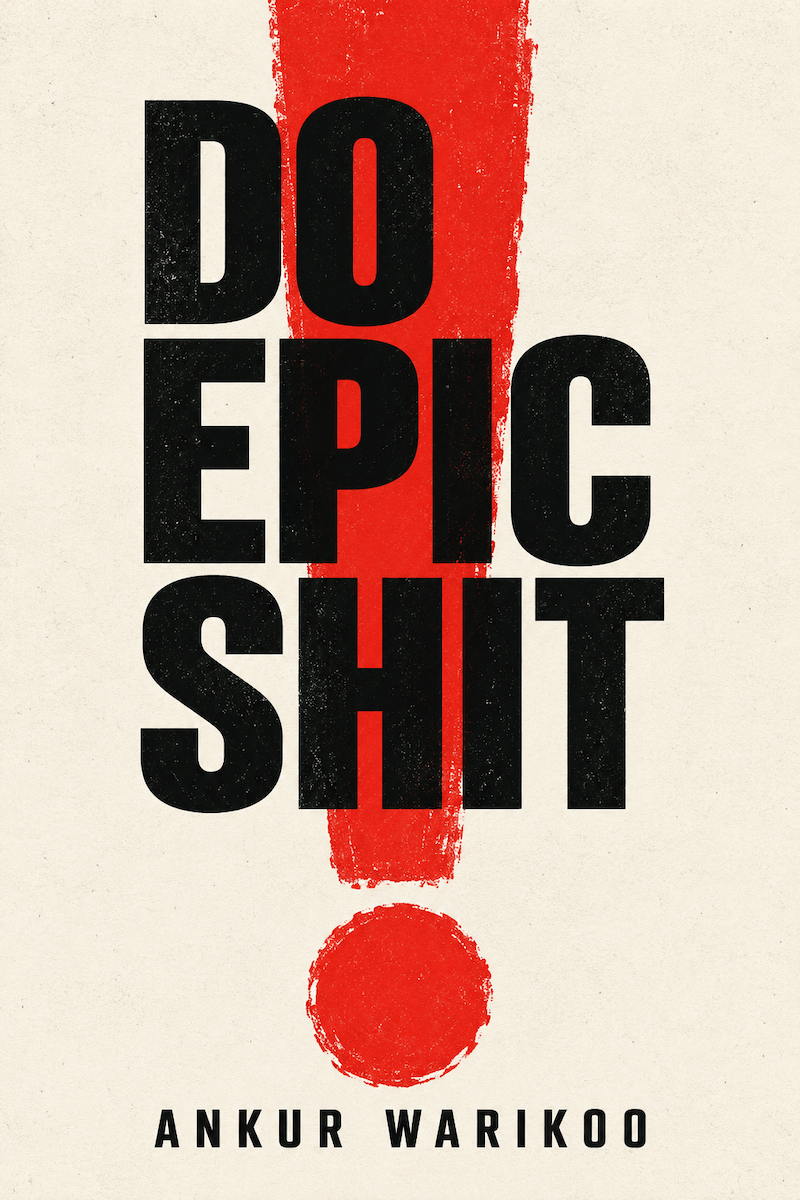
Do Epic Shit Book Summary
This Do Epic Shit Book Summary covers the key ideas, lessons, and takeaways in about 20 minutes.
Helps with these goals
Want the complete 20-minute summary?
- Full structured summary
- Video Summary
- Podcast Summary
- Audio summary
- Key takeaways
- Exercises
- Quiz
- Highlights and notes
- Ask the book with AI
What is in the Do Epic Shit book summary?
Below is a preview of Sumizeit’s expert-written summary of Do Epic Shit by Ankur Warikoo. The full summary covers the book’s key ideas in text, audio, and video.
Ankur Warikoo built his reputation as an entrepreneur and content creator in India, and Do Epic Shit is his attempt to distill everything he's learned about success, failure, money, and relationships into one practical roadmap. His starting argument is that most of us are chasing goals that were never really ours. We inherited them from our parents, our culture, or whatever version of success gets celebrated on social media, and then we wonder why hitting those goals doesn't actually make us happy.
The book splits roughly into two halves. The first is about mindset: redefining what success and failure mean to you personally, learning to sit with your emotions instead of being ruled by them, and getting comfortable with the discomfort that real growth requires. The second half is about execution: building habits that compound, overcoming procrastination, thinking like an entrepreneur regardless of your job title, leading with trust instead of control, managing money without fear or denial, and building relationships grounded in real self-awareness. Underneath all of it is one consistent message: stop outsourcing your definition of a good life to other people, and start building your own.
Redefine success and failure on your own terms
Warikoo opens by asking readers to interrogate the benchmarks they use to judge their own lives. Most of us never actually chose these benchmarks. We absorbed them: hit a certain salary by a certain age, land a job with the right title, buy the right house in the right neighborhood. These targets get set by comparison to everyone around us, not by asking what would actually make us feel fulfilled.
The problem with chasing externally defined success, Warikoo argues, is that it's a moving target. Even when you hit the number or the title, satisfaction doesn't stick around, because you never actually wanted that specific thing, you wanted the approval you thought it would bring. And approval from other people is famously unreliable and short-lived. He pushes readers to sit down and build their own personal definitions of success and failure, ones that map to what genuinely matters to them rather than what looks impressive from the outside. Once you're working from your own criteria, your accomplishments start to feel like an expression of who you actually are, instead of a box you checked to satisfy somebody else's expectations. That shift, he argues, is where real and lasting satisfaction comes from.
Failure is data, not a verdict
Warikoo spends real time reframing failure, because he thinks most people treat a setback as proof of their own inadequacy rather than as useful information. Throughout the book he's candid about his own failures, including businesses that didn't work out, and he uses those stories to model the attitude he's recommending: treating a mistake as a source of insight rather than a reason for self-punishment.
His argument is that the real learning in anyone's life happens specifically in the process of hitting obstacles and working through them, not in the moments when everything goes smoothly.
Want the complete 20-minute summary?
- Full structured summary
- Video Summary
- Podcast Summary
- Audio summary
- Key takeaways
- Exercises
- Quiz
- Highlights and notes
- Ask the book with AI
Who should read Do Epic Shit?
Do Epic Shit is for anyone who suspects they're chasing someone else's definition of success and wants to reclaim ownership of their own life. Whether you're an employee feeling stuck in a corporate role, an entrepreneur building something new, or someone struggling with money, relationships, or self-doubt, this book offers a practical roadmap. It's especially valuable for people in their twenties through forties who are ready to question inherited assumptions and build a life aligned with their actual values rather than external expectations.
Why does Do Epic Shit matter?
In a world of constant comparison through social media and cultural pressure to hit arbitrary milestones, Do Epic Shit arrives as a counterargument to outsourcing your definition of a good life. Ankur Warikoo cuts through the noise by offering a philosophy grounded in self-awareness, deliberate habit-building, and reframing failure as data rather than judgment. The book matters because it translates abstract ideas about personal fulfillment into concrete, actionable strategies you can implement immediately, whether you're managing your emotions, your money, your work, or your relationships.
What are the key themes in Do Epic Shit?
- Redefining success on your own terms instead of inheriting others' benchmarks
- Treating failure as useful feedback, not personal inadequacy
- Breaking the comparison trap by measuring progress against your own past
- Building lasting change through habits rather than chasing finish-line goals
- Thinking like an entrepreneur regardless of your job title
- Leading through trust and empowerment instead of control
- Developing emotional awareness to create space between feeling and action
- Understanding money as a neutral tool for freedom, not a source of shame
What are the key lessons from the Do Epic Shit book summary?
Most of your goals were never actually yours
We inherit success benchmarks from parents, culture, and social media without examining whether they align with what genuinely fulfills us. Identifying and replacing these borrowed goals with personal ones is the foundation of lasting satisfaction.
Approval-seeking is a moving target
Even when you hit an externally defined goal, satisfaction doesn't stick because you never actually wanted that specific thing—you wanted the approval it might bring. Other people's approval is unreliable and short-lived, which is why your own criteria matter far more.
Failure is data, not a verdict on your worth
Real learning happens when you hit obstacles and work through them, not when everything goes smoothly. Reviewing failures with curiosity instead of shame lets you spot patterns you can correct, building resilience and faster recovery.
Comparison is fundamentally unfair
Everyone starts from a different place with different resources, lucky breaks, and hard breaks. Measuring yourself against someone else's timeline is comparing two different races with different starting lines.
Track your own trajectory, not others' highlight reels
Instead of comparing yourself to classmates or strangers online, look at your own journey: where you started, what you've overcome, how far you've come. Progress measured against your own past self builds quiet contentment that comparison never can.
Your feelings are real but temporary
Even intense emotions like anger, panic, or heartbreak eventually fade, though they feel permanent in the moment. Recognizing this impermanence creates space between feeling and action, where better decisions happen.
Awareness is the gap where better choices live
Emotional regulation isn't about suppressing feelings but observing them without immediately acting on them. Mindfulness and meditation train you to notice feelings as passing experiences rather than permanent truths that dictate your behavior.
Habits beat goals for lasting change
Goals create finish lines with short-lived satisfaction, while habits are ongoing structures that keep paying dividends indefinitely. A fitness lifestyle generates more sustained benefit than training for a single marathon.
Your identity follows your consistent behavior
When you practice a behavior often enough, you stop thinking of it as something you do and start thinking of it as who you are, making the habit self-reinforcing rather than something requiring constant willpower.
Design your environment to do the heavy lifting
Place visual cues and remove friction to make good habits easier and bad ones harder. Keeping dumbbells visible next to your bed or your phone out of the bedroom nudges behavior without requiring daily willpower.
Procrastination is fear disguised as laziness
Procrastination rarely stems from laziness; it's usually fear of failure, success, or unfamiliar tasks. Getting honest about the underlying fear rather than blaming yourself for laziness lets you address the real problem.
Break intimidating tasks into manageable pieces
A task that feels impossible as a whole often becomes manageable once broken into smaller steps. This removes the loaded feeling of starting and makes the first step genuinely doable.
Entrepreneurship is a mindset, not just a business
Thinking like an entrepreneur means spotting problems, taking ownership of solutions, and driving change regardless of your title. You can bring this active, improvement-focused mindset to any role or pursuit.
Trust and autonomy produce better work than control
Micromanagement suppresses creativity and calculated risk-taking because the personal cost of visible mistakes outweighs the upside of trying something new. Teams given real autonomy and treated as owners produce more innovative work.
Composure under pressure is a learnable skill
A leader's emotional steadiness during crisis gives their whole team permission to stay calm and think clearly. This isn't a personality trait but a skill built through deliberate practice under progressively higher pressures.
Assets and liabilities determine your financial trajectory
Assets generate income or grow in value; liabilities drain resources. Avoiding debt on depreciating purchases while directing money toward appreciating assets—stocks, real estate, intellectual capital—protects your options over decades.
Understanding compound interest, taxes, and inflation is self-protection
Without grasping the mechanics that govern money, you're making financial decisions blind. Financial literacy isn't optional; it's essential protection against consequences that quietly erode your options over time.
Money is a neutral tool, not inherently corrupting
Limiting beliefs about wealth—inherited from family or culture—can quietly sabotage financial decision-making. Money's impact depends entirely on the intentions and choices of whoever holds it.
Financial security is freedom, not an end goal
Building wealth matters because it gives you the ability to pursue your actual goals, take on ambitious projects, and make choices without being constrained by financial pressure. The point is autonomy, not accumulation.
Self-acceptance is the foundation of healthy relationships
People project their own unresolved insecurities onto others, creating friction that has nothing to do with the other person. Honest self-reflection and self-compassion are prerequisites for genuine connection with others.
Want the complete 20-minute summary?
- Full structured summary
- Video Summary
- Podcast Summary
- Audio summary
- Key takeaways
- Exercises
- Quiz
- Highlights and notes
- Ask the book with AI
How can you apply ideas from Do Epic Shit?
- Write down your own personal definitions of success and failure, questioning which ones you genuinely chose versus inherited from others
- When you fail at something, sit with it for 24 hours before acting, then extract one specific lesson before moving forward
- Track your progress monthly by comparing your current self to your past self, not to peers or social media figures
- Identify one area where procrastination is holding you back, name the specific fear underneath it, and break the task into steps small enough to start today
- Redesign your physical environment this week to make one good habit easier and one bad habit harder
- In your next team meeting or project, identify one problem you can take ownership of solving rather than waiting for someone else to
- Audit your current money relationship by listing what limiting beliefs you carry about wealth, then deliberately challenge one
- Have one conversation this month where you actively listen to someone else's perspective without immediately filtering it through your own assumptions
What common mistakes do readers make with Do Epic Shit?
- Assuming that hitting an externally defined success metric will finally make you satisfied, when the real problem is that you never chose the metric
- Treating a single failure as permanent evidence of your inadequacy instead of as specific, correctable feedback about one attempt
- Acting on intense emotions in the moment without creating any gap for reflection, leading to decisions you regret once the feeling passes
- Building goals around finish lines instead of habits, so you experience brief satisfaction followed by immediate emptiness and a search for the next target
Sumizeit Exercises Apply what you've learned
Turn ideas from Do Epic Shit into action with a short guided reflection: identify the biggest takeaway, connect it to your life, and commit to one step you can take in the next 24 hours.
What is the expert analysis of Do Epic Shit?
Overview
Do Epic Shit by Ankur Warikoo stands as a significant contribution to contemporary self-improvement and entrepreneurial literature, particularly within the Indian context, but with universal applicability. Warikoo, a successful entrepreneur and influencer, leverages his lived experience and candid storytelling to craft a practical guide that intertwines mindset shifts with actionable habits. The book’s significance lies in its holistic approach—addressing success, failure, money, relationships, and leadership—not as isolated domains but as interconnected facets of a deliberately designed life. Warikoo’s voice is authentic and accessible, which has helped the book resonate widely, especially among young professionals navigating the pressures of modern achievement culture.
Core Thesis
At its core, Do Epic Shit argues that true fulfillment arises from rejecting externally imposed definitions of success and instead crafting a personal roadmap grounded in self-awareness and intentionality. Warikoo contends that much of contemporary dissatisfaction stems from pursuing goals inherited from cultural norms, familial expectations, or social media’s curated ideals. By redefining success and failure on one’s own terms, embracing failure as data rather than judgment, and cultivating habits that align with intrinsic values, individuals can build a life that is genuinely meaningful. The book emphasizes emotional regulation, financial literacy, entrepreneurial thinking, and relational empathy as essential tools for this transformation, advocating a proactive, trust-based leadership style and a mindset that views obstacles as growth opportunities.
Strengths
- Integrative Framework: Warikoo’s synthesis of mindset and execution offers readers a comprehensive blueprint that balances philosophical reflection with practical steps, avoiding the common pitfall of abstract platitudes.
- Authentic Voice and Vulnerability: The author’s openness about his own failures and financial missteps lends credibility and relatability, fostering trust and encouraging readers to embrace their imperfections.
- Emphasis on Emotional Intelligence: The nuanced discussion of emotional regulation, mindfulness, and empathy enriches the book beyond typical self-help fare, aligning it with contemporary psychological insights.
- Contextual Relevance: While universal in many respects, Warikoo’s Indian entrepreneurial background and cultural references provide a fresh perspective often underrepresented in global self-improvement literature.
- Practical Habit Design: The focus on environmental cues and habit formation reflects cutting-edge behavioral science, offering actionable strategies to overcome procrastination and sustain change.
Critiques & Counterarguments
- Potential Oversimplification of Complex Issues: The book’s reframing of procrastination as primarily fear-driven, while insightful, may underplay other psychological and systemic factors such as ADHD, burnout, or structural barriers that complicate motivation.
- Limited Engagement with Structural Inequality: Warikoo emphasizes individual agency and mindset but offers less consideration of how socioeconomic constraints and systemic inequities shape opportunities, which can limit the applicability of his advice for marginalized populations.
- Entrepreneurial Mindset as Panacea: The valorization of entrepreneurial thinking risks glossing over the value of stability and collective approaches to work and change, potentially alienating readers who prioritize community or non-capitalist values.
- Competing Psychological Models: Some schools of thought, such as Acceptance and Commitment Therapy (ACT), might critique the emphasis on controlling or reframing emotions, advocating instead for acceptance without judgment rather than cognitive distancing.
- Financial Advice Scope: While Warikoo’s financial literacy sections are practical, they may oversimplify complex economic realities; for example, the asset-liability distinction is useful but does not fully address the nuances of financial planning in volatile markets or diverse cultural contexts.
Who Should Read This
Do Epic Shit is ideally suited for ambitious young professionals, emerging entrepreneurs, and individuals seeking a grounded yet inspiring framework to navigate the pressures of modern life. Readers who feel trapped by inherited expectations or overwhelmed by the noise of social comparison will find Warikoo’s call to self-defined success particularly resonant. Additionally, those interested in practical psychology, habit formation, and leadership development will appreciate the book’s actionable insights. While the book’s cultural specificity enriches its texture, its core messages have broad appeal for anyone ready to undertake the challenging work of crafting a life aligned with their authentic values.
Frequently asked questions about the Do Epic Shit book summary
What is Do Epic Shit about?
Do Epic Shit by Ankur Warikoo is a practical guide to building a life aligned with your own values rather than inherited expectations. The book covers mindset shifts—like redefining success on your own terms and treating failure as data—and execution strategies for everything from habit-building and overcoming procrastination to managing money, leading others, and cultivating meaningful relationships. At its core, it's about rejecting default assumptions and actively designing a life of purpose and autonomy.
Who should read Do Epic Shit?
Do Epic Shit is ideal for anyone questioning whether they're chasing goals that were never actually theirs, including employees feeling stuck in corporate roles, entrepreneurs building ventures, and people wrestling with money, relationships, or self-doubt. The book appeals especially to people in their twenties through forties who are ready to examine inherited assumptions and take deliberate ownership of their own definitions of success.
What are the main takeaways from Do Epic Shit?
The main takeaways include: identify and replace borrowed success benchmarks with your own personal ones; treat failures as feedback, not judgment; measure progress against your own past rather than others' highlight reels; build lasting change through habits rather than goals; approach work with an entrepreneurial ownership mindset; lead through trust instead of control; get honest about money as a tool for freedom; and ground relationships in self-awareness and empathy. The overarching message is that a fulfilling life requires actively rejecting default settings and building one deliberately aligned with your actual values.
How does Do Epic Shit address the problem of comparison and social media?
Warikoo argues that comparing yourself to others is fundamentally unfair because everyone starts from different places with different resources and circumstances. Instead of measuring against peers or social media, he recommends redirecting that comparative energy inward—tracking your own trajectory, acknowledging what you've overcome, and measuring progress against your past self. This builds quiet contentment that external comparison can never deliver, because there's always another rung above on the comparison ladder.
What does Do Epic Shit say about failure?
Do Epic Shit reframes failure as valuable data rather than personal inadequacy. Warikoo argues that real learning happens specifically through hitting obstacles and working through them, not during smooth sailing. By reviewing past failures with curiosity instead of shame, you can spot patterns and correct them. He's candid about his own business failures and uses them to model the attitude that a setback is feedback you can learn from and improve on, not evidence that you're incapable.
How does Do Epic Shit approach financial literacy?
Warikoo treats financial literacy as essential self-protection that most people avoid out of embarrassment or discomfort. He distinguishes between assets (things that generate income or appreciate) and liabilities (things that drain resources, especially depreciating purchases bought on credit). He emphasizes understanding compound interest, taxes, and inflation as the mechanics that govern your financial life. His core message is that financial security isn't about accumulation for its own sake; it's about building freedom and options to pursue your actual goals and values.
What leadership philosophy does Do Epic Shit advocate?
Do Epic Shit advocates for leadership built on trust and autonomy rather than micromanagement. Warikoo argues that tight control suppresses the creativity and calculated risk-taking you need from your team, because people stop trying new things when the cost of visible mistakes outweighs the upside. He also emphasizes emotional composure as a leadership skill—your calm under pressure gives your team permission to think clearly during a crisis. Both trust and steadiness are learnable, not innate traits.
How does Do Epic Shit explain the difference between goals and habits?
Do Epic Shit argues that goals create finish lines with often disappointing post-achievement letdown, while habits are ongoing structures that keep generating benefits indefinitely. A goal like training for a marathon ends when you cross the finish line; a habit like living a fitness lifestyle generates compounding returns forever. Over time, consistent habits become part of your identity, making them self-reinforcing rather than something you have to force yourself to do through willpower alone.
About Sumizeit
Sumizeit is a profitable Scomy LLC company based in Miami, Florida. It has been helping readers learn from nonfiction books for 7 years with expert-written summaries in text, audio, podcast, and video.
Want the complete 20-minute summary?
- Full structured summary
- Video Summary
- Podcast Summary
- Audio summary
- Key takeaways
- Exercises
- Quiz
- Highlights and notes
- Ask the book with AI
Here's why readers love Sumizeit
Join thousands of learners getting smarter every day
"Great experience. Detailed summaries. Loved the gamification feature. Makes learning fun. Good customer service. I recommend Sumizeit to anyone. You'll learn a lot."
"I always felt busy but still wanting to keep up with the book discussion in my friend group. This was a great supplement to help me keep reading the books I find fun while keeping up with important books."
"I love this website. Instead of scrolling social media, I find myself learning a lot. I use it everyday. I recommend this app for anyone who is too busy and wants to get up to speed with their favorite books."
Do Epic Shit Book Summary PDF
Looking for a Do Epic Shit Book Summary PDF you can save and revisit offline? Our Do Epic Shit Book Summary PDF captures the book’s core ideas in a clean, printable format — the key frameworks, takeaways, and structure without the fluff. Download the Do Epic Shit Book Summary PDF when you want a reference you can annotate, share with your team, or review on the go. Get your Do Epic Shit Book Summary PDF from the download page below.
Download Do Epic Shit Book Summary PDFPeople also liked these summaries
Readers who explored Do Epic Shit often enjoyed these titles next.

Want the complete 20-minute summary?
- Full structured summary
- Video Summary
- Podcast Summary
- Audio summary
- Key takeaways
- Exercises
- Quiz
- Highlights and notes
- Ask the book with AI
Featured Book Titles
Popular Book Summaries at sumizeit, leading book summary app