


Prefer the print book? Buy on Amazon
As an Amazon Associate, Sumizeit earns from qualifying purchases.
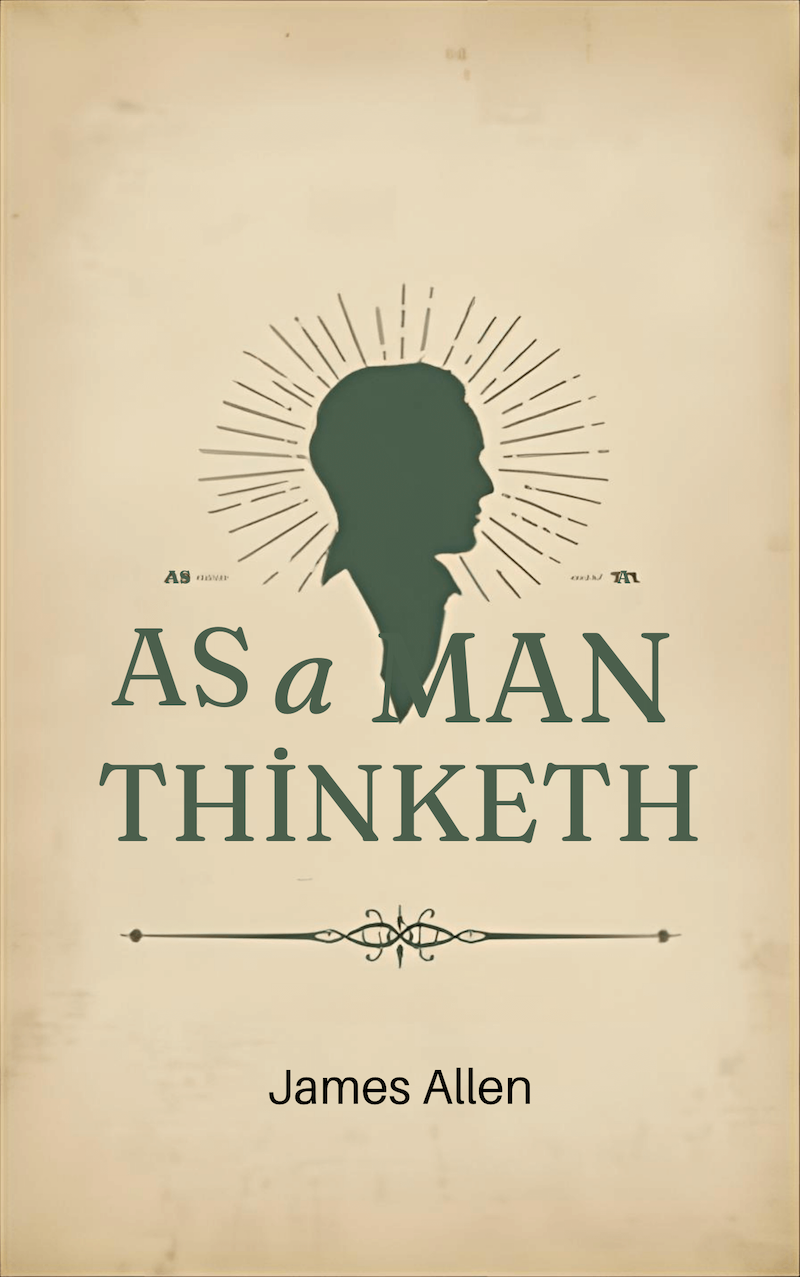
As a Man Thinketh Book Summary
This As a Man Thinketh Book Summary covers the key ideas, lessons, and takeaways in about 20 minutes.
Short Description:
As a Man Thinketh shows thoughts shape character and life outcomes.
Allen’s message is that personal responsibility is the foundation of personal freedom. Blame, complaint, and self-pity surrender control to external forces. Thought mastery returns control to the individual.
The path is simple, though not easy:
- Guard thoughts as one would guard a precious garden.
- Replace destructive patterns with empowering beliefs.
- Define a purpose and direct thought toward it.
- Persist through obstacles with disciplined thinking.
- Protect imagination and nurture ideals.
- Practice serenity and self-control daily.
Change your thoughts and you change your life. Every dream becomes possible when thought aligns with purpose, belief, and action. Every person holds within the power to rise to greatness.
Helps with these goals
Want a Free Weekly Read?
Get a free summary every week straight to your mailbox.
Preview the As a Man Thinketh book summary
Below is a preview of Sumizeit’s comprehensive human-written summary of As a Man Thinketh by James Allen. The full summary is 15-20 minutes long and covers the book’s key ideas in text, audio, visual, and video formats. Unlock the full 20 Minute Summary
James Allen’s As a Man Thinketh explores the extraordinary influence of thought on every part of a person’s life. Allen argues that thoughts act as the blueprint from which individuals construct their character, behavior, and destiny. Human beings are not passive recipients of fate; they are active creators of their circumstances through the mental patterns they choose to cultivate.
To illustrate this principle, consider two people who face similar hardships. One person believes they are a victim of life, constantly thinking, “Nothing ever works out for me.” Because of this internal state, they stop trying, avoid effort, and interpret every inconvenience as proof that they are cursed. Another person in the same situation thinks, “This is temporary. I’ll learn from this and rise stronger.” That mindset leads them to seek solutions, persist longer, and ultimately find opportunities. Their different thoughts shape very different futures—even though the external situation began the same.
Allen’s message is that when individuals recognize the power of their inner world, they shift from helplessness to mastery. They understand that no transformation begins externally. They must tend the inner soil of thought if they wish for a harvest of peace, success, or joy. Thought becomes the tool that shapes reality—not merely by wishing, but by generating action, perspective, and belief that drive behavior and outcomes.
Character as the Expression of Thought
Allen teaches that character is the direct result of accumulated thinking. Individuals become what they consistently think about because thoughts eventually translate into habits, and habits into character. This means no one is naturally noble or naturally corrupt; character is formed through repetition of thought.
For example, imagine someone who constantly thinks about injustice done to them in the past. They replay grievances repeatedly, nurturing resentment. Over time, these thoughts shape their identity—they become bitter, distrustful, defensive, and harsh in their interactions, because their inner narrative has become a defining trait. Their character is simply the outward expression of those internal thoughts.
Contrast this with a person who focuses on gratitude and kindness. They take time to reflect daily on what they appreciate, and intentionally seek the good in others. Their thoughts influence how they speak, act, and respond, eventually shaping them into a compassionate, trustworthy, and generous person. People admire them and want to be close to them—not due to luck, but due to discipline of thought.
Allen emphasizes that character can be deliberately shaped with conscious effort. Someone may wish to become more patient, confident, or courageous. The path begins not by forcing behavior but by repeatedly cultivating thoughts aligned with those traits: thinking calmly when provoked, imagining successful outcomes, or choosing hopeful interpretation rather than fear. Over time, these thoughts accumulate into inner strength, which then expresses outwardly.
Character is not granted by birth— it is earned through mental discipline.
How Thought Shapes Circumstances
One of Allen’s most challenging ideas is that external life reflects internal conditions. He claims circumstances do not create the person; they reveal the person.
Want the complete 20-minute summary?
- Full structured summary
- Video Summary
- Podcast Summary
- Audio summary
- Key takeaways
- Exercises
- Quiz
- Highlights and notes
- Ask the book with AI
Who should read As a Man Thinketh?
As a Man Thinketh appeals to anyone seeking personal transformation through mental discipline and self-improvement. This book is ideal for individuals struggling with self-doubt, limited circumstances, or lack of direction who are ready to take responsibility for their lives. It resonates with ambitious people, those recovering from setbacks, and anyone curious about the deep connection between inner beliefs and outer reality.
Why does As a Man Thinketh matter?
In an age of distraction and external blame, James Allen's message that thoughts shape destiny offers profound empowerment and clarity. The book cuts through victim mentality and gives readers a practical framework for taking control of their circumstances through deliberate thought cultivation. Over a century old, As a Man Thinketh remains remarkably relevant because it addresses the timeless struggle between passivity and agency, making it essential reading for anyone seeking lasting change.
What are the key themes in As a Man Thinketh?
- Thoughts as the foundation of character and destiny
- Personal responsibility and the rejection of victimhood
- The mind as a garden requiring intentional cultivation
- Purpose as the organizing principle of thought and action
- Mental discipline as the path to achievement
- The interconnection between inner beliefs and external circumstances
- Serenity and emotional mastery as ultimate freedom
- Vision and imagination as precursors to all creation
How can you apply ideas from As a Man Thinketh?
- Identify and journal about recurring negative thoughts, then deliberately replace them with empowering alternatives aligned with your goals
- Create a daily visualization practice where you vividly imagine yourself succeeding at a specific aim, engaging all five senses
- Establish a clear personal purpose or central aim, then regularly check decisions against this standard to maintain focus
- Practice mindfulness meditation to increase awareness of your thought patterns and strengthen your ability to choose thoughts rather than be controlled by them
- Reframe setbacks by asking what belief or lesson each challenge is revealing, transforming difficulty into instruction for growth
- Cultivate gratitude through daily reflection or journaling, intentionally training your mind to recognize and appreciate the good around you
- Study and associate with people who think at the level you aspire to reach, allowing their thoughts and energy to elevate your own
What common mistakes do readers make with As a Man Thinketh?
- Expecting external change without first transforming internal thought patterns; change must begin within
- Believing positive thinking alone creates results without aligned action; thought must direct purposeful behavior
- Using the principle to blame others for their circumstances without understanding you also control your own thoughts
- Abandoning effort after initial disappointment, interpreting setbacks as proof that the method doesn't work rather than as information to refine your approach
- Neglecting daily thought cultivation, assuming one insight or realization creates lasting change without ongoing mental discipline
Sumizeit Exercises Apply what you've learned
Turn ideas from As a Man Thinketh into action with a short guided reflection: identify the biggest takeaway, connect it to your life, and commit to one step you can take in the next 24 hours.
What is the expert analysis of As a Man Thinketh?
Overview
As a Man Thinketh, authored by James Allen in 1903, stands as a seminal work in the self-improvement and philosophical literature canon. Allen, a British philosopher and early pioneer of the personal development movement, crafts a compelling meditation on the profound influence of thought on human character, circumstance, and destiny. Despite its brevity, the book’s enduring significance lies in its synthesis of spiritual reflection, ethical responsibility, and practical psychology, offering readers a framework to reclaim agency over their lives through disciplined mental cultivation.
Core Thesis
At the heart of Allen’s treatise is the assertion that thought is the foundational architect of reality. He contends that individuals are not passive victims of fate but active creators of their character and external conditions through the quality and direction of their thinking. This mental activity, when consciously disciplined, shapes habits, which in turn forge character and ultimately manifest as life circumstances. Allen extends this principle to health, achievement, and serenity, arguing that mastery over thought is the prerequisite for meaningful transformation and fulfillment.
Strengths
- Timeless Psychological Insight: Allen’s linkage between thought patterns and character development anticipates modern cognitive-behavioral approaches, emphasizing the role of internal narrative in shaping identity and behavior.
- Accessible Metaphors: The botanical metaphor of the mind as a garden effectively communicates the necessity of intentional mental cultivation, making abstract ideas tangible and actionable.
- Holistic Approach: By integrating mental discipline with physical health, purpose-driven action, and emotional serenity, Allen presents a comprehensive vision of human flourishing that transcends mere motivational platitudes.
- Inspirational Examples: The use of historical figures and everyday scenarios grounds the philosophy in relatable contexts, illustrating the transformative power of thought across diverse domains.
- Ethical Emphasis: The insistence on personal responsibility and moral integrity as foundations of freedom and success elevates the work beyond self-help into the realm of ethical philosophy.
Critiques & Counterarguments
- Oversimplification of Causality: Allen’s thesis risks reducing complex social, economic, and psychological phenomena to mere products of individual thought. Contemporary research underscores the significant influence of structural factors and unconscious processes that thought alone cannot fully overcome.
- Limited Empirical Support: While modern psychology supports some mind-body connections, Allen’s broad claims about thought directly shaping health and external circumstances lack rigorous scientific validation and may inadvertently promote victim-blaming.
- Neglect of Emotional Complexity: The book underemphasizes the role of unconscious emotions, trauma, and mental illness, which can impair thought patterns and are not easily corrected by willpower or positive thinking.
- Competing Philosophical Views: Schools such as existentialism and certain strands of critical theory argue that external conditions and systemic constraints often limit individual agency, challenging Allen’s optimistic individualism.
- Potential for Misuse: The emphasis on thought mastery can be appropriated to justify neglect of social justice or to stigmatize those facing hardship, ignoring the multifaceted nature of human experience.
Who Should Read This
As a Man Thinketh is ideally suited for readers seeking a foundational philosophical perspective on personal responsibility and mental discipline. It appeals to those interested in the historical roots of self-improvement literature, as well as individuals drawn to introspective reflection on character and purpose. Professionals in psychology, coaching, and leadership may find its insights valuable as a complement to contemporary theories, while readers grappling with motivation, resilience, and ethical living will appreciate Allen’s clear, principled guidance. However, those looking for nuanced psychological analysis or social critique should approach the work as a philosophical and inspirational text rather than a comprehensive scientific manual.
Frequently asked questions about the As a Man Thinketh book summary
What is As a Man Thinketh about?
As a Man Thinketh by James Allen explores how thoughts shape every aspect of human life, including character, circumstances, health, and achievement. Allen argues that thoughts act as blueprints from which individuals construct their reality, and that by mastering their inner mental world, people gain the power to transform their external circumstances. The book emphasizes that personal transformation begins with conscious control of thought patterns rather than waiting for external change.
Who should read As a Man Thinketh?
Anyone seeking personal growth, greater responsibility for their life circumstances, and deeper understanding of how their beliefs shape outcomes will benefit from this book. It is particularly valuable for people struggling with self-doubt, feeling stuck, or looking to align their thoughts with ambitious goals. Readers already interested in personal development, philosophy, or the psychology of achievement will find it especially resonant and practical.
What are the main takeaways from As a Man Thinketh?
The core message is that life is shaped from within—your thoughts create your character, character shapes your actions, and actions construct your circumstances. Key takeaways include the importance of mental discipline, the need to define a clear purpose, the understanding that failure is instruction not judgment, and the recognition that serenity and inner mastery are the ultimate forms of power. Ultimately, Allen teaches that every individual possesses the creative power to transform their life by transforming their thoughts.
How does James Allen connect thoughts to physical health?
Allen argues that the mind profoundly affects the body, with emotional thoughts triggering physical responses. Chronic fear, anger, and anxiety produce tension, weakened immunity, and disease, while thoughts centered on peace and hope generate vitality and resilience. Allen acknowledges that medical treatment is necessary but emphasizes that true health requires mental harmony—without it, even physical interventions cannot produce lasting wellness.
What does James Allen mean by serenity as the highest expression of thought mastery?
Serenity refers to emotional stability and inner calm regardless of external circumstances. Allen describes it as true power and strength—the ability to think clearly, act wisely, and remain composed during crisis. Serenity is earned through self-control and discipline, allowing a person to influence others positively and navigate challenges with confidence. It is the crown achievement of mastering your thought life.
How can I apply As a Man Thinketh to achieve my goals?
Begin by defining a clear central purpose, then organize your daily thoughts around this aim. Replace doubt and fear with empowering beliefs about your capability. Practice visualization, taking time to vividly imagine your success. Finally, ensure your actions align with your elevated thoughts. The book emphasizes that achievement requires both elevated thinking and persistent disciplined action working together.
Does As a Man Thinketh suggest that positive thinking alone is enough?
No. Allen emphasizes that thought must be paired with aligned action. Positive thinking without effort produces no results; the book teaches that thoughts direct behavior, and behavior combined with belief produces outcomes. Thought is the blueprint, but achievement requires the actual construction work through persistent, disciplined action aligned with your purpose.
About Sumizeit
Sumizeit is a profitable Scomy LLC company based in Miami, Florida. Our founders, Clemens Raemy and Weina Scott, are successful entrepreneurs with several exits. Sumizeit is a popular book summary app / micro learning app used by busy professionals and entrepreneurs with over 2,500 non-fiction book summaries and 10,000 podcast summaries in text, audio, visual, podcast, and video format. We also have stellar retention tools to make ideas stick - such as flashcards with spaced repetition, quizzes, streaks, highlighting and notes, daily challenges, riddles, mini-courses, meditation, and more. You won't only learn the idea, but also remember it. Over 90% of our users change their habits with Sumizeit.
Upgrade Now
Here's why readers love Sumizeit
Join thousands of learners getting smarter every day
"Great experience. Detailed summaries. Loved the gamification feature. Makes learning fun. Good customer service. I recommend Sumizeit to anyone. You'll learn a lot."
"I always felt busy but still wanting to keep up with the book discussion in my friend group. This was a great supplement to help me keep reading the books I find fun while keeping up with important books."
"I love this website. Instead of scrolling social media, I find myself learning a lot. I use it everyday. I recommend this app for anyone who is too busy and wants to get up to speed with their favorite books."
As a Man Thinketh Book Summary PDF
Looking for a As a Man Thinketh Book Summary PDF you can save and revisit offline? Our As a Man Thinketh Book Summary PDF captures the book’s core ideas in a clean, printable format — the key frameworks, takeaways, and structure without the fluff. Download the As a Man Thinketh Book Summary PDF when you want a reference you can annotate, share with your team, or review on the go. Get your As a Man Thinketh Book Summary PDF from the download page below.
Download As a Man Thinketh Book Summary PDFPeople also liked these summaries
Readers who explored As a Man Thinketh often enjoyed these titles next.


Ready to read the whole thing?
- Full structured summary
- Video Summary
- Podcast Summary
- Audio summary
- Key takeaways
- Exercises
- Quiz
- Highlights and notes
- Ask the book with AI
Featured Book Titles
Popular Book Summaries at sumizeit, leading book summary app