


Prefer the print book? Buy on Amazon
As an Amazon Associate, Sumizeit earns from qualifying purchases.
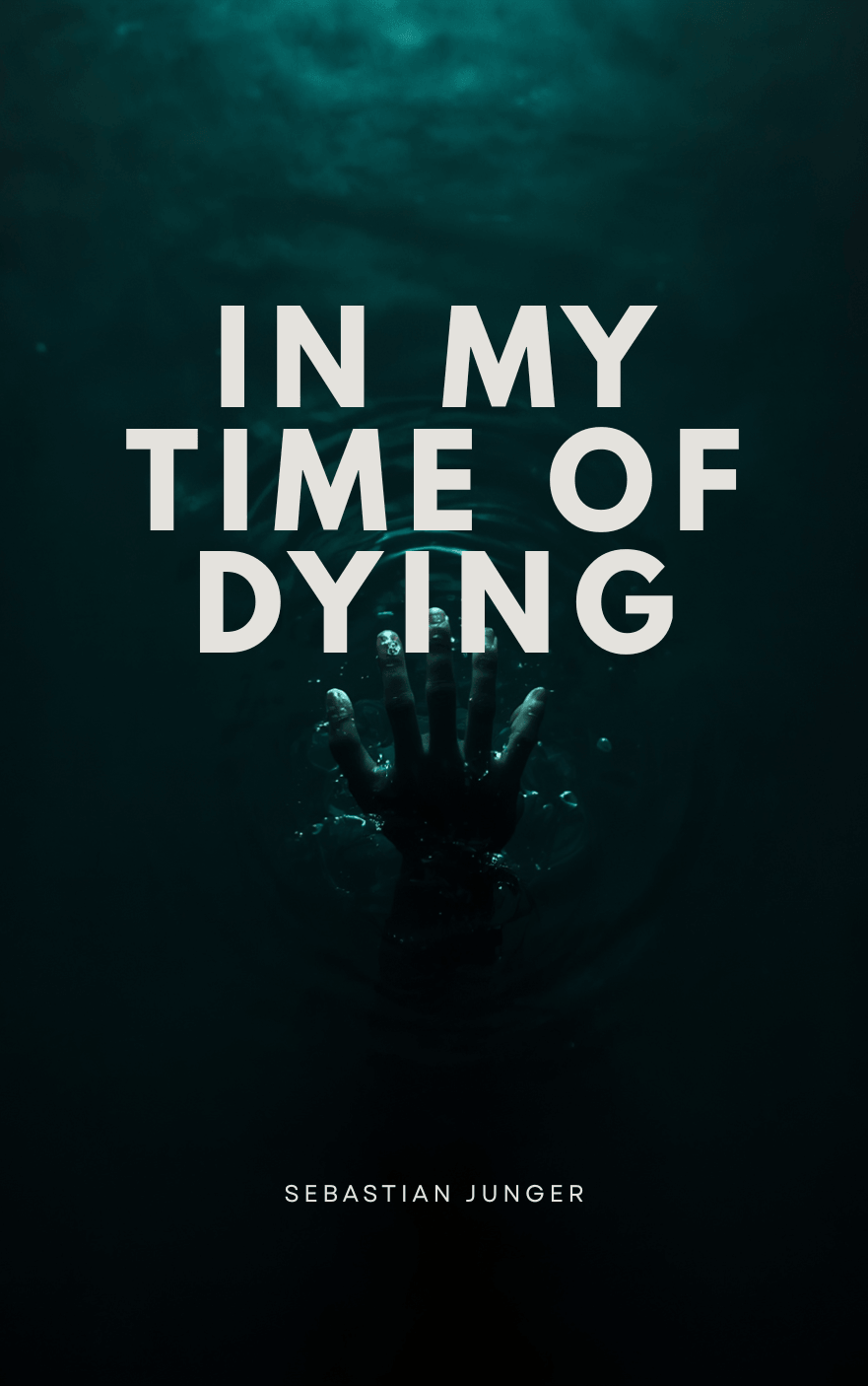
In My Time of Dying Book Summary
This In My Time of Dying Book Summary covers the key ideas, lessons, and takeaways in about 20 minutes.
Short Description:
A near-death experience reshapes one man’s view of life and death
At the same time, the book shows that death remains one of the greatest mysteries humans face. Science provides powerful tools to understand the body, yet it struggles to fully explain consciousness and the experiences reported at life’s edge. Junger does not offer definitive answers, but instead invites readers to sit with uncertainty—to accept that some aspects of existence may lie beyond current understanding. In doing so, he opens the door to a more nuanced view of life, one that embraces both knowledge and mystery.
Helps with these goals
Want a Free Weekly Read?
Get a free summary every week straight to your mailbox.
Preview the In My Time of Dying book summary
Below is a preview of Sumizeit’s comprehensive human-written summary of In My Time of Dying by Sebastian Junger. The full summary is 15-20 minutes long and covers the book’s key ideas in text, audio, visual, and video formats. Unlock the full 20 Minute Summary
Sebastian Junger’s In My Time of Dying begins not with abstract philosophy, but with a violent interruption of ordinary life. What starts as a vague discomfort in his abdomen gradually escalates into a catastrophic medical emergency that nearly ends his life. For months, he notices an unusual burning sensation beneath his chest—persistent yet not alarming enough to demand urgent care. But one day, while performing a routine physical task outdoors, the pain intensifies dramatically, accompanied by dizziness and a loss of coordination.
Within moments, his condition deteriorates into something far more serious. His ability to speak falters, his vision distorts, and he loses control of his body. His partner quickly recognizes the severity of the situation and insists on emergency medical help, overriding initial assumptions that he might be stable enough to remain at home. This decision proves critical.
During the ambulance ride, Junger drifts in and out of awareness. His blood pressure drops dangerously low, signaling massive internal bleeding. Even as sirens wail and urgency escalates, he becomes fixated on small details—like thirst—revealing how the mind clings to the familiar when confronted with mortality. By the time he reaches the hospital, he is on the brink of death.
Fighting for Survival in the Emergency Room
Upon arrival, medical staff quickly realize the seriousness of his condition. Despite moments of lucidity, Junger exists in a fragmented state—part conscious, part slipping away. He observes the faces of doctors and nurses, noting their urgency and concern. Their calm instructions contrast sharply with the chaos unfolding inside his body.
His condition is soon identified as severe internal bleeding caused by a ruptured aneurysm in an artery supplying his digestive system. This type of rupture is rare and extremely dangerous, particularly because the bleeding is not easily visible or accessible. The medical team must act quickly, but the path forward is uncertain.
Doctors begin immediate interventions, including blood transfusions and emergency imaging. One physician inserts a line into his neck to stabilize him, while others prepare for potential surgery. Junger’s body reacts violently—shivering from blood loss, overwhelmed by pain, and teetering on collapse.
Amid this physical crisis, something stranger occurs. He experiences a powerful vision: an immense void pulling him toward it. At the same time, he senses the presence of his deceased father, who appears to urge him to let go. This moment is deeply unsettling—not only because of its emotional intensity, but because it contradicts Junger’s lifelong commitment to rational, scientific thinking.
Refusing to surrender, he mentally resists the pull toward death, pleading—internally—for the doctors to save him. Then, everything goes dark.
A High-Stakes Medical Gamble
The diagnosis reveals a complex and precarious situation. The rupture occurred in a small artery near the pancreas, made vulnerable by abnormal blood flow caused by compression in a major artery. This forced blood into weaker vessels, eventually causing one to burst.
The challenge for doctors is immense: locate the source of bleeding within a body already flooded with blood, and repair it without pushing the…
Want the complete 20-minute summary?
- Full structured summary
- Video Summary
- Podcast Summary
- Audio summary
- Key takeaways
- Exercises
- Quiz
- Highlights and notes
- Ask the book with AI
Who should read In My Time of Dying?
In My Time of Dying is essential reading for anyone who has confronted mortality, experienced a health crisis, or questioned the limits of scientific explanation. It appeals to readers seeking a thoughtful exploration of consciousness, spirituality, and what it means to survive a brush with death. Those interested in how extraordinary experiences challenge our worldview will find Junger's introspective journey particularly compelling.
Why does In My Time of Dying matter?
Sebastian Junger's account of his near-fatal aneurysm rupture offers a rare, honest examination of death in an age increasingly dominated by medical rationalism. By weaving together medical drama, neuroscience, philosophy, and personal testimony from near-death survivors, the book addresses fundamental questions about consciousness that science has yet to answer. In a culture that often denies or medicalizes death, In My Time of Dying invites readers to sit with life's greatest mysteries rather than rush past them.
What are the key themes in In My Time of Dying?
- The fragility of human existence and the illusion of control
- The limits of scientific explanation when confronting consciousness
- Near-death experiences and their consistency across cultures
- Living with awareness of mortality after survival
- The tension between rational thinking and unexplainable experiences
- The role of the brain versus universal consciousness
- Transformation through confronting one's own death
How can you apply ideas from In My Time of Dying?
- Use Junger's experience to initiate conversations about mortality with loved ones, normalizing death as a topic rather than taboo
- Apply the book's exploration of consciousness to deepen philosophical reflection on what you believe about mind, spirit, and existence
- Implement gratitude practices inspired by Junger's heightened awareness of ordinary moments to enrich daily life
- Use the book's examination of near-death experiences to approach spiritual or unexplainable moments in your own life with curiosity rather than dismissal
- Reflect on how awareness of mortality can inform life choices, priorities, and relationships in meaningful ways
- Engage with the tension between science and spirituality to develop a more nuanced personal worldview
- Apply lessons about medical decision-making under crisis to advocate for creative problem-solving in healthcare situations
What common mistakes do readers make with In My Time of Dying?
- Assuming that surviving a near-death experience brings simple relief rather than complex, lingering psychological effects
- Dismissing near-death experiences as purely biological without considering alternative frameworks for understanding consciousness
- Believing that scientific materialism provides complete answers to questions about consciousness and what happens at death
- Failing to recognize that everyday gratitude practices can be cultivated without requiring a brush with mortality
Sumizeit Exercises Apply what you've learned
Turn ideas from In My Time of Dying into action with a short guided reflection: identify the biggest takeaway, connect it to your life, and commit to one step you can take in the next 24 hours.
What is the expert analysis of In My Time of Dying?
Overview
In My Time of Dying is a profound and introspective work by Sebastian Junger, an acclaimed journalist and author renowned for his explorations of human endurance and crisis. Known for his narrative prowess in works such as The Perfect Storm and War, Junger here shifts from external conflicts to an intimate confrontation with mortality. The book stands out for its candid, unflinching portrayal of a near-death experience and its philosophical inquiry into consciousness, bridging personal memoir with broader existential questions. Its significance lies in how it challenges the boundaries between empirical science and the ineffable mysteries surrounding death and awareness.
Core Thesis
Junger’s central argument is that confronting death is not merely a physiological event but a transformative psychological and philosophical juncture that exposes the fragility and profundity of human existence. While grounded in scientific understanding of the body’s mechanisms during trauma, the book posits that near-death experiences (NDEs) reveal phenomena that current neuroscience cannot fully explain. These experiences invite a reconsideration of consciousness—whether it is solely a brain product or possibly a more universal, fundamental force. Junger advocates for embracing uncertainty and acknowledges that some aspects of life and death transcend empirical explanation, urging a synthesis of scientific inquiry with openness to mystery.
Strengths
- Masterful Narrative and Emotional Honesty: Junger’s vivid recounting of his medical crisis immerses readers in the visceral reality of near-death, balancing clinical detail with emotional depth.
- Interdisciplinary Exploration: The book skillfully weaves medical science, neuroscience, philosophy, and cultural history, offering a rich, multifaceted perspective on death and consciousness.
- Bridging Science and Spirituality: Rather than dismissing spiritual experiences, Junger thoughtfully engages with them, fostering dialogue between empirical skepticism and metaphysical inquiry.
- Personal and Universal Resonance: By grounding abstract questions in his personal ordeal, Junger makes complex ideas accessible and relatable, inviting readers to reflect on their own mortality.
- Nuanced Treatment of Uncertainty: The author neither succumbs to dogmatic materialism nor uncritical mysticism, instead modeling intellectual humility and openness.
Critiques & Counterarguments
- Limited Scientific Rigor: While Junger references scientific theories about NDEs, the evidence presented is largely anecdotal and speculative, lacking rigorous empirical validation or engagement with the latest neuroscientific methodologies.
- Potential Oversimplification of Consciousness Debates: The discussion of consciousness as a universal force or receiver aligns with fringe theories such as biocentrism and quantum consciousness, which remain contentious and are not widely accepted within the scientific community.
- Cultural and Interpretative Variability of NDEs: Competing research emphasizes that near-death experiences are heavily influenced by cultural, psychological, and neurological factors, challenging the notion of a universal or transcendent phenomenon.
- Philosophical Counterpoints: Materialist philosophers argue that consciousness is an emergent property of brain processes, and that NDEs can be explained by neurochemical and physiological responses to trauma without invoking metaphysical explanations.
- Risk of Romanticizing Trauma: Some critics caution that framing near-death experiences as transformative or spiritually significant may inadvertently minimize the suffering and long-term psychological distress many survivors endure.
Who Should Read This
In My Time of Dying is ideally suited for readers who appreciate literary nonfiction that melds personal narrative with philosophical inquiry. It will resonate deeply with those interested in the intersections of medicine, psychology, and spirituality, as well as with individuals grappling with questions of mortality and consciousness. Scholars and thoughtful lay readers open to exploring the limits of scientific knowledge and the mysteries of human experience will find Junger’s work both challenging and enriching. It is particularly valuable for those seeking a nuanced, compassionate perspective on death that neither dismisses science nor ignores the profound existential questions that arise at life’s edge.
Frequently asked questions about the In My Time of Dying book summary
What is In My Time of Dying about?
In My Time of Dying by Sebastian Junger is a personal account of his near-fatal medical emergency caused by a ruptured aneurysm. The book combines medical drama with philosophical exploration of consciousness, examining Junger's vision of his deceased father during the crisis and investigating whether current science can fully explain near-death experiences and the nature of consciousness itself.
Who should read In My Time of Dying?
This book is ideal for readers interested in mortality, consciousness, and the intersection of science and spirituality. It appeals to those who have experienced health crises, faced existential questions, or felt unsatisfied with purely materialist explanations of human experience. Anyone curious about what near-death experiences reveal about the mind will find Junger's balanced exploration compelling.
What are the main takeaways from In My Time of Dying?
The book's core insights include the randomness of mortality, the limits of science in explaining consciousness, and the transformation that comes from confronting death directly. Junger demonstrates that survival reshapes how we perceive ordinary moments, that near-death experiences follow consistent patterns across cultures, and that acceptance of uncertainty may be more honest than forcing definitive answers about what lies at life's edge.
Does the book offer explanations for near-death experiences?
In My Time of Dying examines multiple explanations, including neurological responses to extreme stress, release of naturally occurring psychedelic compounds, and theories suggesting consciousness is universal rather than brain-generated. Rather than settling on one answer, Junger presents the scientific debate while remaining open to the possibility that current knowledge cannot fully account for these experiences.
How does Junger reconcile his scientific worldview with his spiritual experience?
Junger does not fully reconcile the two but instead models intellectual humility by acknowledging that his vision of his deceased father challenges his materialist assumptions without abandoning science. He explores alternative frameworks like biocentrism and quantum consciousness while maintaining respect for empirical inquiry, ultimately embracing uncertainty rather than forcing false certainty.
What role does Junger's medical emergency play in the book's larger argument?
The medical emergency serves as both personal narrative and philosophical catalyst. It demonstrates the fragility of human existence, forces Junger to confront questions about consciousness he had previously left unexamined, and provides a framework for investigating whether science and spirituality can coexist in understanding what it means to be human.
Is In My Time of Dying a self-help book or a philosophical exploration?
In My Time of Dying is primarily a philosophical exploration grounded in personal narrative rather than a prescriptive self-help guide. While readers may derive insights about gratitude and living with mortality, the book's main purpose is to investigate consciousness, examine near-death experiences, and invite readers into uncertainty rather than offer solutions.
About Sumizeit
Sumizeit is a profitable Scomy LLC company based in Miami, Florida. Our founders, Clemens Raemy and Weina Scott, are successful entrepreneurs with several exits. Sumizeit is a popular book summary app / micro learning app used by busy professionals and entrepreneurs with over 2,500 non-fiction book summaries and 10,000 podcast summaries in text, audio, visual, podcast, and video format. We also have stellar retention tools to make ideas stick - such as flashcards with spaced repetition, quizzes, streaks, highlighting and notes, daily challenges, riddles, mini-courses, meditation, and more. You won't only learn the idea, but also remember it. Over 90% of our users change their habits with Sumizeit.
Upgrade Now
Here's why readers love Sumizeit
Join thousands of learners getting smarter every day
"Great experience. Detailed summaries. Loved the gamification feature. Makes learning fun. Good customer service. I recommend Sumizeit to anyone. You'll learn a lot."
"I always felt busy but still wanting to keep up with the book discussion in my friend group. This was a great supplement to help me keep reading the books I find fun while keeping up with important books."
"I love this website. Instead of scrolling social media, I find myself learning a lot. I use it everyday. I recommend this app for anyone who is too busy and wants to get up to speed with their favorite books."
In My Time of Dying Book Summary PDF
Looking for a In My Time of Dying Book Summary PDF you can save and revisit offline? Our In My Time of Dying Book Summary PDF captures the book’s core ideas in a clean, printable format — the key frameworks, takeaways, and structure without the fluff. Download the In My Time of Dying Book Summary PDF when you want a reference you can annotate, share with your team, or review on the go. Get your In My Time of Dying Book Summary PDF from the download page below.
Download In My Time of Dying Book Summary PDFPeople also liked these summaries
Readers who explored In My Time of Dying often enjoyed these titles next.




Ready to read the whole thing?
- Full structured summary
- Video Summary
- Podcast Summary
- Audio summary
- Key takeaways
- Exercises
- Quiz
- Highlights and notes
- Ask the book with AI
Featured Book Titles
Popular Book Summaries at sumizeit, leading book summary app