


As an Amazon Associate, Sumizeit earns from qualifying purchases.
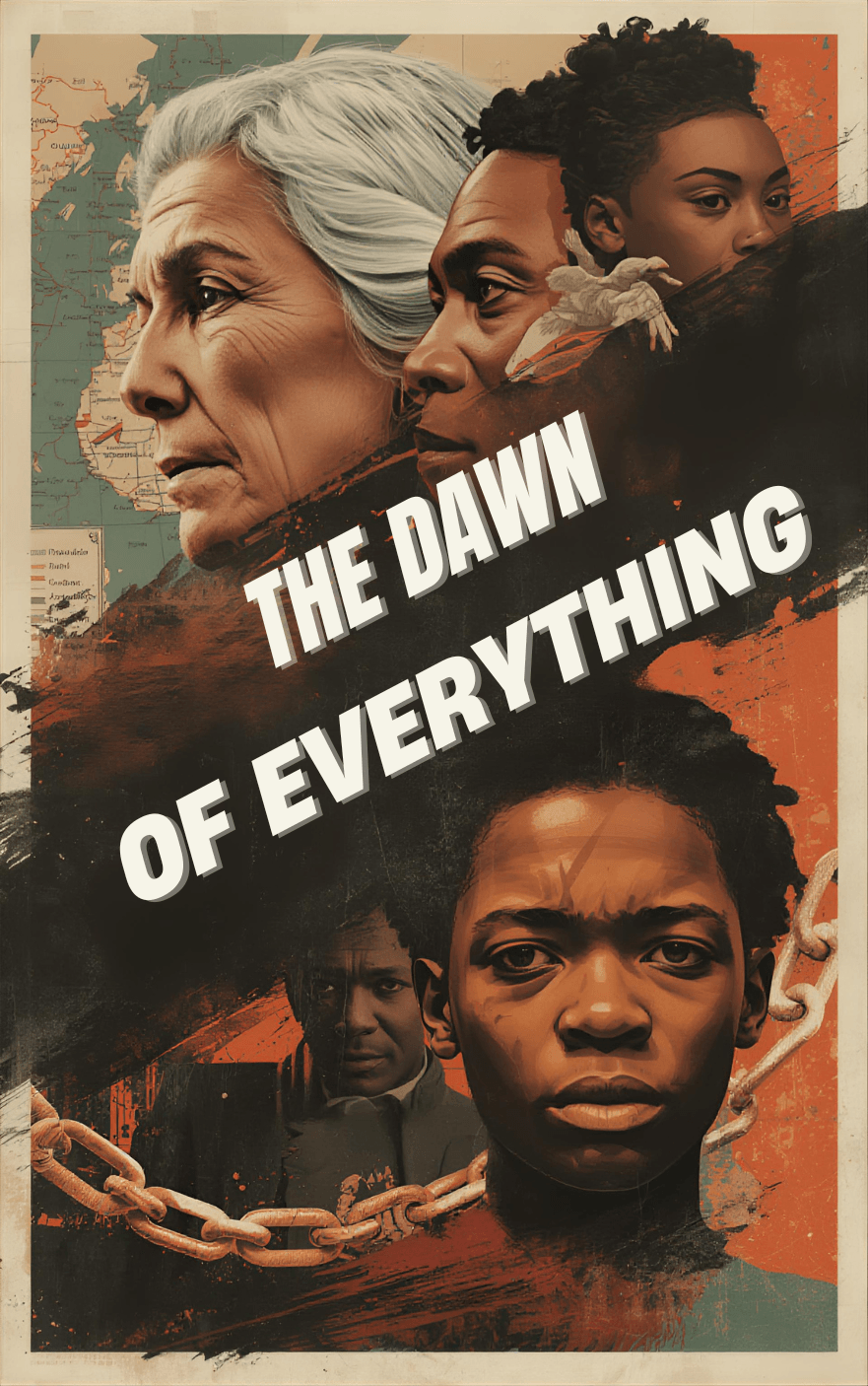
The Dawn of Everything Book Summary
This The Dawn of Everything Book Summary covers the key ideas, lessons, and takeaways in about 20 minutes.
What makes this insight powerful is its implication for the future. If inequality is not a fixed outcome of progress, then it can be questioned and changed. The book invites us to move beyond passive acceptance and recognize that social systems are human creations. Just as people in the past experimented with different ways of living, we too can imagine and build alternatives. The real limitation is not history or human nature—it is our willingness to think differently about what is possible.
Helps with these goals
Want the complete 20-minute summary?
- Full structured summary
- Video Summary
- Podcast Summary
- Audio summary
- Key takeaways
- Exercises
- Quiz
- Highlights and notes
- Ask the book with AI
What is in the The Dawn of Everything book summary?
Below is a preview of Sumizeit’s expert-written summary of The Dawn of Everything by David Graeber. The full summary covers the book’s key ideas in text, audio, and video.
For generations, people have been told a simple story about human history: early humans lived in small, equal groups, and as societies grew larger—especially with the rise of farming—they became more complex, hierarchical, and unequal. This narrative suggests that inequality is an unavoidable consequence of progress.
David Graeber and David Wengrow challenge this deeply rooted belief. They argue that this linear story is not only inaccurate but also limits how we think about what’s possible today. By examining anthropological and archaeological evidence, they reveal that human societies have always been far more varied, flexible, and creative than we assume.
Rather than progressing along a single path, humans have repeatedly experimented with different ways of organizing their lives. Equality, hierarchy, freedom, and authority have appeared in countless combinations across time. This means inequality is not inevitable—it is simply one of many possible arrangements.
Indigenous Thought and the Birth of Modern Ideas
One of the book’s most surprising arguments is that many ideas we associate with European intellectual history actually originated elsewhere. Specifically, the authors highlight how Indigenous peoples of North America played a major role in shaping Enlightenment thinking.
During early encounters between European settlers and Indigenous communities, there were extensive philosophical exchanges. Indigenous leaders, such as Kandiaronk of the Wendat people, engaged Europeans in debates about society, morality, and governance. These discussions were not one-sided; Indigenous thinkers offered sharp critiques of European life.
They questioned:
Why Europeans tolerated extreme inequality
Why they obeyed kings and rigid hierarchies
Why wealth accumulation was prioritized over well-being
Why punishment and coercion were central to justice
These critiques circulated widely in Europe and influenced thinkers during the Enlightenment, even though their Indigenous origins were often ignored or erased later.
This reframes the Enlightenment not as a purely European achievement, but as something shaped through cross-cultural dialogue.
A Different Understanding of Freedom
The book highlights a crucial distinction: many Indigenous societies did not organize themselves around equality as an abstract goal. Instead, they prioritized autonomy—each person’s ability to control their own life.
From this perspective, three core freedoms emerge:
The ability to leave one’s community and join another
The ability to refuse commands or authority
The ability to reshape social arrangements when needed
These freedoms created societies that were often egalitarian in practice, but not because they enforced strict equality. Instead, equality emerged naturally from the absence of domination.
In contrast, modern societies tend to value freedom in a more limited way. People may have personal liberties, but they are still bound by laws, institutions, and economic systems that restrict their ability to opt out or redesign society.
This comparison reveals how constrained our current concept of freedom actually is.
The Problem With the “Evolution of Society” Model
A central target of the book is the traditional anthropological model that divides human societies into stages:
Small, equal foraging groups
Larger tribal societies with some hierarchy
Chiefdoms with clearer ranking
Complex states with strong inequality
This model implies that all societies move in the same direction—from…
Want the complete 20-minute summary?
- Full structured summary
- Video Summary
- Podcast Summary
- Audio summary
- Key takeaways
- Exercises
- Quiz
- Highlights and notes
- Ask the book with AI
Who should read The Dawn of Everything?
This book is essential for anyone questioning whether modern inequality and hierarchy are inevitable features of human civilization. It appeals to students of history and anthropology, activists seeking to reimagine social systems, and curious readers who want a fresh perspective on how societies actually developed. If you've ever wondered whether different ways of organizing society are possible, this book directly challenges the assumptions that make current systems seem unchangeable.
Why does The Dawn of Everything matter?
The Dawn of Everything matters because the stories we tell about history shape what we believe is possible today. Most people accept a narrative that inequality emerged naturally as societies grew more complex, making hierarchy seem inevitable. By revealing this narrative as historically inaccurate, Graeber and Wengrow fundamentally challenge the assumption that modern systems are the only viable option. In an era of growing economic inequality and political polarization, this book reopens the question of whether alternative ways of organizing society are truly possible.
What are the key themes in The Dawn of Everything?
- Human societies are diverse, flexible, and constantly evolving rather than following a single evolutionary path
- Autonomy and freedom from domination were central to many historical societies, not just abstract equality
- Indigenous peoples profoundly influenced Enlightenment thinking, yet their intellectual contributions were erased from history
- Agriculture did not inevitably cause inequality; social outcomes depend on deliberate choices and cultural values
- People throughout history have actively designed and redesigned their social systems through conscious experimentation
- Modern narratives about progress serve political purposes and have justified colonialism, racism, and exploitation
- Current systems feel rigid because we've lost the habit of experimenting with alternative forms of social organization
- Reimagining the future requires breaking free from assumptions about what history says is inevitable
What are the key lessons from the The Dawn of Everything book summary?
The Linear Progress Narrative is a Myth
Societies have never followed a single evolutionary path from equality to hierarchy. Instead, humans have repeatedly combined features like hierarchy, equality, and autonomy in unexpected ways depending on circumstances and choices.
Indigenous Thinkers Shaped Enlightenment Philosophy
Figures like Kandiaronk of the Wendat people engaged in philosophical debates with Europeans about governance and society. Their critiques of European inequality and rigid hierarchy influenced Enlightenment thinking, though their contributions were later erased from history.
Autonomy, Not Just Equality, Matters
Many historical societies prioritized the ability to leave, refuse commands, and reshape social arrangements rather than enforcing strict equality. This emphasis on autonomy often produced egalitarian outcomes naturally, without formal enforcement.
Early Societies Were Far More Diverse Than We Assume
Some small-scale societies had slavery and clear hierarchies, while some large agricultural communities showed little inequality. This diversity proves people were making conscious choices about social structure, not passively evolving.
Agriculture Didn't Cause Inevitable Inequality
While farming created opportunities for accumulating surplus, many agricultural societies remained relatively equal. Examples like Çatalhöyük show that social outcomes depend on values and choices, not just economic conditions.
People Have Always Been Political Experimenters
Throughout history, humans have deliberately designed, adjusted, and reinvented their social systems. Some groups alternated between hierarchical and egalitarian structures seasonally, showing remarkable flexibility in organization.
The Primitive Egalitarian Tribe is a Flawed Concept
The assumption that early societies were uniformly simple and equal erases the actual complexity and agency of these communities. Historical evidence shows people in different regions made very different organizational choices even in similar environments.
Simplistic Narratives Served Political Purposes
Portraying egalitarian societies as primitive allowed scholars to dismiss their critiques of European systems. This logic reinforced ideas that hierarchy was natural and necessary, justifying colonialism and racism.
Modern Concepts of Freedom Are Narrower Than Historical Ones
Today's freedom is often limited to personal liberties within fixed institutions. Historical societies offered broader freedoms: the ability to leave, refuse authority, and fundamentally reshape social arrangements.
We've Lost the Habit of Social Experimentation
While earlier societies regularly restructured themselves when systems failed, modern states maintain stable, long-term hierarchies. This loss of experimental flexibility may be why contemporary inequality feels unchangeable.
Hierarchy and Complexity Are Not Synonymous
Large, complex societies don't require strict hierarchy, and small societies aren't necessarily equal. Complexity emerges from various organizational choices, not from a predetermined evolutionary logic.
Inequality Is Not an Inevitable Stage of Development
There is no historical law stating that societies must progress toward greater inequality. Inequality is simply one possible arrangement humans have chosen at different times, not an unavoidable outcome of progress.
Social Systems Are Human Creations, Not Natural Laws
The book emphasizes that governments, markets, and hierarchies are constructed by people and can be reconstructed. Understanding this undermines the idea that current systems are immutable.
Cultural Narratives Shape What We Believe Is Possible
The story we tell about history directly influences what futures we can imagine. When we accept that inequality is inevitable, we stop trying to create alternatives.
Historical Diversity Expands Contemporary Possibilities
By studying how differently humans have organized themselves, we gain evidence that alternatives to current systems are not just theoretical but historically grounded and practically achievable.
Power Became Entrenched Over Time, Not Inevitable From the Start
The authors suggest that certain forms of power gradually became harder to dismantle rather than being rooted in human nature. This implies that entrenched systems can potentially be dismantled through conscious effort.
Personal Autonomy Can Coexist With Collective Decision-Making
Historical examples show societies that balanced individual agency with community-level choices about governance and resources, challenging modern assumptions that autonomy and collective responsibility are opposed.
The Evidence Base for a Fixed Human Nature Is Weak
Graeber and Wengrow argue that humans are fundamentally creative and adaptable. The repeated reorganization of societies throughout history demonstrates that we are not locked into any single type of system.
Want the complete 20-minute summary?
- Full structured summary
- Video Summary
- Podcast Summary
- Audio summary
- Key takeaways
- Exercises
- Quiz
- Highlights and notes
- Ask the book with AI
How can you apply ideas from The Dawn of Everything?
- Challenge assumptions in your own thinking about what social, economic, or organizational systems are possible in your workplace, community, or society
- Examine the historical narratives you were taught and ask whether they served political purposes or oversimplified complex realities
- Experiment with different decision-making structures in groups you belong to rather than defaulting to hierarchical models
- Research the actual histories of communities you're interested in rather than accepting simplified evolutionary narratives
- Advocate for policies and institutions that prioritize autonomy and the ability to opt out, following historical examples of societies that valued these freedoms
- Foster conversations about what alternative futures might look like, recognizing that current systems are not the only possibilities
- Study how other cultures and historical periods solved problems differently to expand your sense of what is practically achievable
What common mistakes do readers make with The Dawn of Everything?
- Assuming that complexity automatically requires hierarchy and inequality, when many complex societies have maintained relatively egalitarian structures
- Treating the agricultural revolution as a simple cause of inequality, when the relationship is far more nuanced and dependent on cultural choices
- Believing that modern systems represent the pinnacle of human progress rather than just one possible arrangement among many
- Overlooking the intellectual contributions of Indigenous peoples and other non-European cultures to global ideas about freedom and governance
Sumizeit Exercises Apply what you've learned
Turn ideas from The Dawn of Everything into action with a short guided reflection: identify the biggest takeaway, connect it to your life, and commit to one step you can take in the next 24 hours.
What is the expert analysis of The Dawn of Everything?
Overview
The Dawn of Everything, co-authored by anthropologist David Graeber and archaeologist David Wengrow, represents a landmark intervention in the study of human history and social organization. Graeber, renowned for his incisive critiques of economic and political orthodoxy, and Wengrow, an expert in early civilizations, jointly dismantle entrenched narratives about societal evolution. Their work challenges the linear, deterministic story that equates progress with increasing hierarchy and inequality, offering instead a richly textured and pluralistic view of humanity’s past. This book is significant not only for its scholarly rigor but also for its profound implications for contemporary political and social thought.
Core Thesis
The central argument of The Dawn of Everything is that human societies have never followed a single, inevitable trajectory from egalitarianism to hierarchy. Contrary to the dominant model—which posits a straightforward evolution from small, equal foraging bands to complex, unequal states—the authors demonstrate through anthropological and archaeological evidence that humans have historically experimented with a wide variety of social arrangements. Equality and hierarchy have coexisted in multiple configurations, and freedom was often understood as autonomy rather than enforced equality. The book further contends that many foundational ideas of Western political thought, especially those associated with the Enlightenment, were influenced by Indigenous critiques and philosophies, thereby reframing the origins of modern ideas about freedom and governance as cross-cultural dialogues rather than purely European achievements.
Strengths
- Interdisciplinary Synthesis: By weaving together anthropology, archaeology, and intellectual history, the authors provide a holistic and nuanced account that transcends disciplinary silos.
- Revisionist Historical Perspective: The book compellingly challenges reductive evolutionary models, exposing their political underpinnings and colonial biases.
- Emphasis on Human Agency: It highlights the conscious choices made by past societies in structuring their social orders, thereby restoring complexity and intentionality to human history.
- Illumination of Indigenous Contributions: The recognition of Indigenous intellectual influence on the Enlightenment disrupts Eurocentric narratives and broadens our understanding of global intellectual history.
- Provocative Reframing of Freedom: The distinction between autonomy and abstract equality invites readers to reconsider contemporary conceptions of liberty and social justice.
Critiques & Counterarguments
- Selective Use of Evidence: While the book draws on a wide range of case studies, some critics may argue that the evidence is selectively interpreted to support the thesis, potentially underrepresenting societies where hierarchy was deeply entrenched and stable over long periods.
- Overgeneralization of Indigenous Influence: The assertion that Indigenous thought significantly shaped Enlightenment ideas, though illuminating, may overstate the extent of this influence given the complex and multifaceted origins of European intellectual movements.
- Neglect of Material Constraints: The emphasis on social experimentation might underplay the role of ecological, technological, and economic constraints that shape societal possibilities, which some scholars argue impose limits on social flexibility.
- Competing Anthropological Models: Other schools of thought, such as cultural evolutionism or Marxist historical materialism, offer frameworks that stress structural determinants and class dynamics, which challenge the book’s focus on agency and experimentation.
- Contemporary Applicability: While the authors encourage imagining alternatives to current hierarchies, skeptics might question the practicality of translating ancient social experiments into modern political reforms, given vastly different scales and complexities.
Who Should Read This
The Dawn of Everything is essential reading for scholars and students of anthropology, archaeology, history, and political philosophy who seek a critical reassessment of human social development. It also appeals to activists, policymakers, and intellectually curious readers interested in the roots of inequality and the possibilities for social transformation. Those engaged in debates about freedom, governance, and justice will find its reframing of historical narratives both challenging and inspiring. Ultimately, anyone who wishes to question deterministic views of progress and explore the rich diversity of human social life will benefit from this profound and provocative work.
Frequently asked questions about the The Dawn of Everything book summary
What is The Dawn of Everything about?
The Dawn of Everything challenges the widely accepted narrative that human societies inevitably progressed from small, equal groups to large, hierarchical states. David Graeber and David Wengrow argue that human societies have always been diverse, flexible, and creative in how they organize themselves. The book reveals that inequality is not an inevitable outcome of progress but rather one possibility humans have chosen at different times, suggesting that alternatives are genuinely possible.
Who should read The Dawn of Everything?
This book is essential for anyone who questions whether modern inequality and hierarchy are unchangeable features of human civilization. It appeals to students of history and anthropology, activists seeking alternatives to current systems, and any reader curious about how societies actually developed. If you've wondered whether different ways of organizing society are possible, or if you want to understand the historical foundations of contemporary assumptions about progress and hierarchy, this book directly addresses those questions.
What are the main takeaways from The Dawn of Everything?
The main takeaways are that the linear narrative of human progress toward inevitable hierarchy is historically inaccurate and serves political purposes. Humans have repeatedly experimented with diverse forms of social organization, and autonomy has been as important as equality in historical societies. Agriculture did not automatically cause inequality, Indigenous thinkers profoundly influenced Enlightenment philosophy, and modern systems are human constructions that can be reimagined rather than natural inevitabilities.
How did Indigenous peoples influence Enlightenment thinking?
Indigenous leaders like Kandiaronk of the Wendat people engaged in philosophical debates with European settlers about society, governance, and morality. They offered sharp critiques of European inequality, rigid hierarchies, and wealth accumulation. These conversations circulated in Europe and influenced Enlightenment thinkers, though the Indigenous origins of these ideas were largely erased from historical records.
Does agriculture necessarily lead to inequality?
No, according to Graeber and Wengrow. While agriculture created opportunities for accumulating surplus, many agricultural societies remained relatively equal. Archaeological evidence like Çatalhöyük shows large, organized communities with little evidence of social ranking. This suggests that social outcomes depend on deliberate choices and cultural values, not just economic conditions.
What is the difference between equality and autonomy in historical societies?
Many historical societies prioritized autonomy—each person's ability to control their own life—rather than enforcing strict equality. This autonomy included the ability to leave one's community, refuse commands, and reshape social arrangements. This emphasis on freedom from domination often produced egalitarian outcomes naturally, without formal enforcement.
Why do modern societies feel more rigid and unchangeable?
Unlike earlier societies that regularly restructured themselves when systems failed, modern states maintain stable, long-term hierarchies that are harder to dismantle. Graeber and Wengrow suggest we've lost the habit of experimenting with social structures, and cultural narratives have convinced us that inequality is inevitable. This has made it difficult to imagine and implement alternatives.
About Sumizeit
Sumizeit is a profitable Scomy LLC company based in Miami, Florida. It has been helping readers learn from nonfiction books for 7 years with expert-written summaries in text, audio, podcast, and video.
Want the complete 20-minute summary?
- Full structured summary
- Video Summary
- Podcast Summary
- Audio summary
- Key takeaways
- Exercises
- Quiz
- Highlights and notes
- Ask the book with AI
Here's why readers love Sumizeit
Join thousands of learners getting smarter every day
"Great experience. Detailed summaries. Loved the gamification feature. Makes learning fun. Good customer service. I recommend Sumizeit to anyone. You'll learn a lot."
"I always felt busy but still wanting to keep up with the book discussion in my friend group. This was a great supplement to help me keep reading the books I find fun while keeping up with important books."
"I love this website. Instead of scrolling social media, I find myself learning a lot. I use it everyday. I recommend this app for anyone who is too busy and wants to get up to speed with their favorite books."
The Dawn of Everything Book Summary PDF
Looking for a The Dawn of Everything Book Summary PDF you can save and revisit offline? Our The Dawn of Everything Book Summary PDF captures the book’s core ideas in a clean, printable format — the key frameworks, takeaways, and structure without the fluff. Download the The Dawn of Everything Book Summary PDF when you want a reference you can annotate, share with your team, or review on the go. Get your The Dawn of Everything Book Summary PDF from the download page below.
Download The Dawn of Everything Book Summary PDFPeople also liked these summaries
Readers who explored The Dawn of Everything often enjoyed these titles next.




Want the complete 20-minute summary?
- Full structured summary
- Video Summary
- Podcast Summary
- Audio summary
- Key takeaways
- Exercises
- Quiz
- Highlights and notes
- Ask the book with AI
Featured Book Titles
Popular Book Summaries at sumizeit, leading book summary app