


As an Amazon Associate, Sumizeit earns from qualifying purchases.
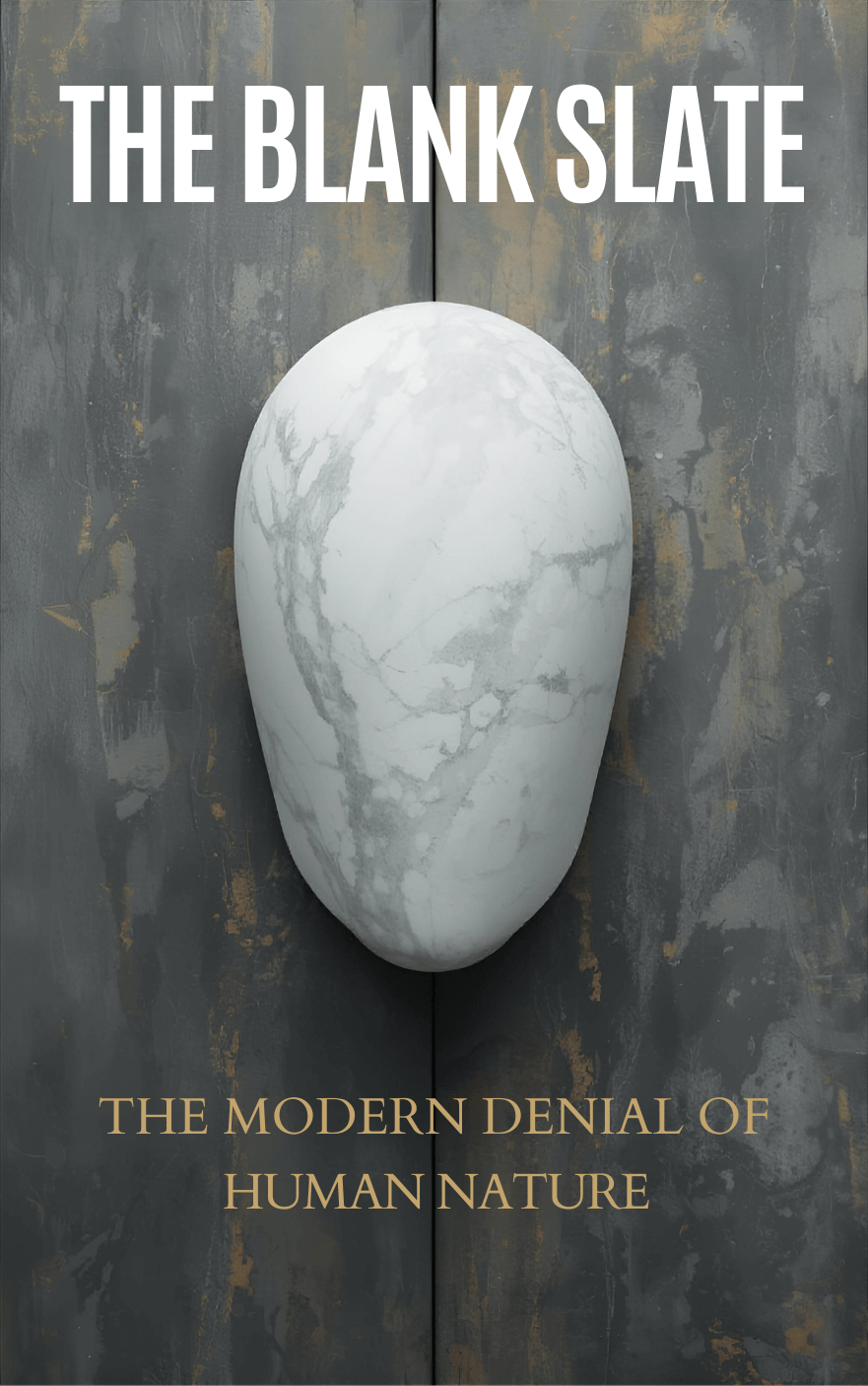
The Blank Slate Book Summary
This The Blank Slate Book Summary covers the key ideas, lessons, and takeaways in about 20 minutes.
Far from justifying inequality or cruelty, this perspective clarifies why fairness must be grounded in individual dignity rather than assumptions of sameness, why progress requires managing human flaws rather than wishing them away, and why freedom can coexist with scientific explanation. Accepting what we are does not limit what we can become; it allows reform to proceed with eyes open rather than blindfolded.
Helps with these goals
Want the complete 20-minute summary?
- Full structured summary
- Video Summary
- Podcast Summary
- Audio summary
- Key takeaways
- Exercises
- Quiz
- Highlights and notes
- Ask the book with AI
What is in the The Blank Slate book summary?
Below is a preview of Sumizeit’s expert-written summary of The Blank Slate by Steven Pinker. The full summary covers the book’s key ideas in text, audio, and video.
The Blank Slate presents a sweeping challenge to a deeply rooted idea that shaped much of modern thought: the belief that human beings enter the world without built-in psychological structure. In this work, The Blank Slate dismantles the comforting assumption that people are infinitely malleable, naturally kind, and guided by an immaterial mind floating above biology. Drawing on psychology, genetics, neuroscience, and evolutionary theory, the author argues instead that human nature has a definite shape—one molded by evolution, constrained by biology, and expressed through complex mental machinery.
Rather than treating this conclusion as politically dangerous or morally pessimistic, the book insists that acknowledging innate human traits is necessary for clear thinking about ethics, politics, gender, and child development. Denying biology, the author argues, does not eliminate injustice or cruelty; it merely blinds society to the forces that actually produce them. The work is both a critique of dominant intellectual traditions and an attempt to replace them with a scientifically grounded understanding of what people are really like.
The Dominant Story of the Mind in Modern Culture
For much of the twentieth century, educated opinion converged on a particular image of the human person. This image combined three philosophical commitments that reinforced one another. First, people were thought to be psychologically empty at birth, shaped almost entirely by social forces. Second, human beings were assumed to be naturally virtuous, corrupted only by defective institutions. Third, the mind was treated as something separate from the physical body, immune to biological explanation.
Together, these ideas produced a hopeful picture. If personalities and abilities were written entirely by experience, then reforming environments could erase inequality. If people were naturally good, then removing oppressive structures would unleash cooperation and peace. And if the mind floated free of biology, then freedom and moral responsibility could be preserved without friction.
This story became dominant not merely because it was elegant, but because it promised moral safety. It seemed to protect society from racism, sexism, fatalism, and authoritarianism. To question it, many feared, was to open the door to hierarchy, cruelty, and despair.
The Appeal of Psychological Emptiness
At the heart of the prevailing view lies the idea that human beings have no inborn psychological tendencies. According to this perspective, differences in temperament, intelligence, aggression, or empathy arise solely from upbringing, culture, and education. If two people differ, it must be because their environments differed.
This way of thinking gained traction because of its ethical implications. If everyone begins life with the same internal equipment, then disparities in wealth, achievement, or behavior must reflect injustice rather than nature. Crime becomes a failure of social policy. Educational gaps become evidence of unequal opportunity. Gender imbalances in professions are assumed to be artifacts of discrimination rather than preference or aptitude.
The attraction of this view is clear: it makes reform feel straightforward. Change the system, and people will change with it. Biology need not be confronted, and moral responsibility can be assigned upward to institutions rather than inward to individuals.
Want the complete 20-minute summary?
- Full structured summary
- Video Summary
- Podcast Summary
- Audio summary
- Key takeaways
- Exercises
- Quiz
- Highlights and notes
- Ask the book with AI
Who should read The Blank Slate?
The Blank Slate appeals to anyone seeking to understand why people behave as they do—from parents and educators to policymakers and thoughtful citizens. If you've wondered whether human nature is truly malleable or if biology shapes who we are, this book challenges assumptions you may not have realized you held. It's particularly valuable for those frustrated by utopian thinking that ignores human constraints, or conversely, for those worried that acknowledging biology leads to cruelty.
Why does The Blank Slate matter?
In an era of heated debates about inequality, gender, crime, and social progress, most people operate from hidden assumptions about human nature that block clear thinking. Steven Pinker's The Blank Slate reveals why denying biology doesn't protect society from injustice—it blinds us to the actual forces driving behavior. Understanding what humans actually are, rather than what we wish them to be, is essential for designing policies and relationships that work rather than backfire.
What are the key themes in The Blank Slate?
- Human nature has an innate structure shaped by evolution and genetics
- Moral equality doesn't require that people be psychologically identical
- Progress depends on managing human flaws, not denying them
- The mind is a physical system rooted in neuroscience, not a nonmaterial essence
- Acknowledging biological constraints enables more realistic and effective reform
- Conflict and self-interest are natural features of human life, not signs of societal failure
What are the key lessons from the The Blank Slate book summary?
The Blank Slate is not scientifically accurate
Decades of twin studies, genetic research, and neuroscience show that personality, intelligence, and temperament are significantly influenced by heredity, not shaped entirely by environment.
Innate human nature is not purely selfish or purely good
Humans evolved capacities for cooperation, empathy, and reciprocity alongside self-interest and aggression. We are neither natural saints nor natural villains.
Discrimination is wrong because it judges individuals by group averages
Fairness means treating people as individuals with their own capacities, not assuming they possess traits their statistical group may or may not have.
Acknowledging biology doesn't justify hierarchy or oppression
The error lies not in recognizing human variation, but in leaping from description of what is to moral permission of injustice.
Freedom and causation are compatible, not opposed
A choice arising from a person's character and reasoning is more authentically free than one produced by chance; determinism enables agency rather than erasing it.
Parents influence but don't determine their children's personalities
Children arrive with genetic dispositions that shape temperament and abilities; parenting matters, but cannot rewrite core traits.
Moral intuitions are evolved adaptations, not transcendent truths
Guilt, outrage, and empathy emerged to facilitate social cooperation, but can misfire or overreact in contexts far removed from ancestral environments.
Evolution explains cooperation without requiring innocence
Reciprocal altruism, reputation management, and group loyalty evolved because they enhanced survival, not because humans are naturally selfless.
Conflict arises from divergent interests, not societal corruption
Competition over resources, status, and mates is built into human motivation; lasting solutions must acknowledge and manage these incentives rather than assume they'll vanish.
Language and mental representation are physical processes
Thoughts, images, and linguistic meaning are products of neural computation, not floating in a nonmaterial realm separate from the brain.
Some sex differences have biological components alongside social ones
Research shows small but persistent average differences in cognitive profiles between males and females, suggesting both nature and nurture play roles.
Empirical truth matters more than comforting falsehood
Pretending humans are blank slates doesn't protect society from injustice; it only prevents us from understanding and addressing the real causes of harm.
Institutions encode solutions to recurring human problems
Traditions and social structures often reflect hard-won wisdom about how to manage conflict and cooperation; dismantling them thoughtlessly risks unintended consequences.
Realistic optimism is more durable than idealistic hope
Reform grounded in accurate models of human behavior is more likely to succeed than schemes built on the fantasy that changing environments will transform human nature.
Genes influence but don't determine behavior
Heredity biases individuals toward certain tendencies; environment interacts with these biases in complex ways, so biology is never destiny.
Neuroscience shows the mind is embedded in the brain
Damage to specific neural regions alters perception, memory, and personality predictably, demonstrating that mental states depend on physical processes.
Moral progress is possible without assuming humans are naturally good
Self-control, reason, and institutional incentives allow imperfect beings to build just systems; recognizing our flaws strengthens rather than weakens moral ambition.
Fairness should focus on equal opportunity, not equal outcomes
If individuals and groups differ in aptitudes or interests, justice means providing equal access and judging individuals on merit, not forcing identical results.
Evolutionary explanations don't excuse behavior—they explain it
Understanding why a tendency evolved does not make it moral or inevitable; explanation and justification are separate questions.
Human nature is universal despite cultural variation
Across diverse societies, people show similar motives around family, status, cooperation, and morality, suggesting evolutionary foundations underlying cultural diversity.
Want the complete 20-minute summary?
- Full structured summary
- Video Summary
- Podcast Summary
- Audio summary
- Key takeaways
- Exercises
- Quiz
- Highlights and notes
- Ask the book with AI
How can you apply ideas from The Blank Slate?
- Reassess parenting expectations by recognizing that you can nurture your child's temperament but cannot entirely reshape it; focus on support rather than control
- Design social policies by acknowledging human self-interest and conflict as normal, not failures—use incentives and institutions to align individual motives with collective good
- Improve hiring and opportunity by treating candidates as individuals, not representatives of demographic groups; use individual assessment rather than statistical stereotyping
- Manage organizational conflict by understanding that competition and divergent interests are natural; build systems that channel these forces productively rather than pretending harmony will emerge spontaneously
- Strengthen moral arguments by grounding them in individual dignity and fairness rather than false claims that everyone is identical or naturally virtuous
- Approach criminal justice and behavioral change by recognizing the role of incentives, character, and institutional design rather than expecting moral exhortation alone to transform behavior
- Guide personal growth by accepting your own innate temperament while deliberately cultivating skills, reasoning, and self-control to act according to your values
What common mistakes do readers make with The Blank Slate?
- Assuming that acknowledging biology leads to racism, sexism, or cruelty—when in fact denying biology often blinds us to real sources of injustice
- Treating small average group differences as proof of individual destiny—when science shows overlapping distributions and individual variation within groups far exceeds differences between groups
- Believing that realistic views of human nature make reform impossible—when in fact they make reform more honest and effective
- Expecting parental guidance to be all-determining in shaping personality—when genetics and peer influences often matter as much or more than parenting style
- Thinking that describing how the mind works physically undermines freedom or morality—when in fact understanding mechanisms clarifies how responsibility and choice operate within a lawful universe
Sumizeit Exercises Apply what you've learned
Turn ideas from The Blank Slate into action with a short guided reflection: identify the biggest takeaway, connect it to your life, and commit to one step you can take in the next 24 hours.
What is the expert analysis of The Blank Slate?
Overview
The Blank Slate by Steven Pinker is a landmark work that confronts and dismantles a pervasive intellectual orthodoxy: the belief in the mind as a blank slate at birth, shaped solely by culture and environment. Pinker, a distinguished cognitive psychologist and public intellectual, leverages interdisciplinary research from psychology, genetics, neuroscience, and evolutionary biology to argue for a biologically grounded understanding of human nature. This book is significant because it challenges comforting but scientifically untenable assumptions that have influenced ethics, politics, and social policy for decades, urging a more nuanced and empirically informed framework for thinking about human behavior and society.
Core Thesis
Pinker’s central argument is that human beings are not born as blank slates but with innate psychological structures shaped by evolution and biology. He contends that acknowledging these biological realities is essential—not morally dangerous—to understanding human nature, morality, freedom, and social progress. Rather than undermining equality or reform, recognizing innate differences fosters a more honest and effective approach to ethics and politics, one that respects individual dignity and the complexity of human motives.
Strengths
- Interdisciplinary Synthesis: Pinker masterfully integrates findings from multiple scientific disciplines, providing a comprehensive and accessible overview of human nature’s biological underpinnings.
- Clear Refutation of Prevailing Myths: The book systematically deconstructs the “blank slate,” “noble savage,” and “ghost in the machine” doctrines, exposing their logical and empirical weaknesses.
- Balanced Moral Perspective: Pinker carefully distinguishes descriptive biology from normative ethics, arguing that recognizing innate traits does not justify discrimination but rather grounds fairness in individuality.
- Nuanced Treatment of Human Complexity: The work acknowledges the interplay of genes and environment, the evolutionary basis of both cooperation and conflict, and the limits of social engineering.
- Engaging and Thought-Provoking: Pinker’s writing style is lucid and persuasive, making complex scientific ideas accessible without oversimplification.
Critiques & Counterarguments
- Potential Oversimplification of Gene-Environment Interaction: While Pinker emphasizes genetic influence, some critics argue that the dynamic interplay between biology and culture is more fluid and context-dependent than portrayed, cautioning against genetic determinism.
- Contestation from Social Constructivists: Opposing schools in sociology and anthropology stress the primacy of cultural and historical factors in shaping identity and behavior, arguing that Pinker underestimates the malleability and diversity of human experience.
- Ethical Concerns about Biological Explanations: Some philosophers and ethicists worry that biological explanations can be co-opted to justify inequality or reduce moral responsibility, despite Pinker’s careful disclaimers.
- Use of Evolutionary Psychology: Critics question the robustness of some evolutionary psychology claims, noting that hypotheses about ancestral environments and adaptive functions can be speculative and difficult to empirically validate.
- Political Implications and Risk of Conservatism: The book’s emphasis on human limits and skepticism toward utopian social engineering may be read as politically conservative, potentially discouraging ambitious reforms aimed at social justice.
Who Should Read This
The Blank Slate is essential reading for scholars and informed readers interested in the intersections of psychology, philosophy, and social theory. It appeals to those seeking a rigorous scientific perspective on human nature that challenges prevailing cultural assumptions. Social scientists, ethicists, policymakers, and anyone grappling with questions of morality, identity, and human potential will find Pinker’s arguments both illuminating and provocative. Moreover, readers committed to evidence-based discourse about society and human behavior will benefit from the book’s clarity and intellectual rigor.
Frequently asked questions about the The Blank Slate book summary
What is The Blank Slate about?
The Blank Slate by Steven Pinker challenges the widespread belief that humans are born as psychological blanks, shaped entirely by environment and experience. Instead, Pinker argues that human nature has an innate structure molded by evolution and genetics, and that acknowledging this reality—rather than denying it—provides a firmer foundation for honest thinking about ethics, politics, inequality, and social change.
Who should read The Blank Slate?
The Blank Slate appeals to anyone seeking to understand human behavior and social problems more clearly, including parents, educators, policymakers, and thoughtful citizens. It's essential reading for those frustrated by utopian thinking that ignores human constraints, as well as those concerned that accepting biology leads to injustice.
What are the main takeaways from The Blank Slate?
The core lessons are that denying human nature doesn't protect society but instead blinds us to real causes of behavior; moral equality doesn't require that people be identical; progress depends on managing human flaws rather than wishing them away; and freedom is compatible with scientific explanation of how the mind works. Accepting what humans actually are provides a clearer path to genuine reform.
Does The Blank Slate argue that genes determine everything?
No. Pinker argues that genes influence behavior and personality significantly, but they don't determine outcomes rigidly. Heredity biases individuals toward certain tendencies, and environment interacts with these biases in complex ways. Biology provides constraints and predispositions, not destiny.
If humans have innate self-interest, how is moral progress possible?
The Blank Slate explains that humans evolved capacities for cooperation, empathy, reasoning, and self-control alongside self-interest. These capacities allow imperfect beings to build moral systems through institutions, incentives, and cultural practices. Progress comes from managing human flaws realistically, not from denying them.
Does The Blank Slate justify discrimination or inequality?
No. Pinker argues that fairness means treating individuals on their own merits, not judging them by group statistics. Even if groups differ on average in some traits, discrimination is wrong because it violates individual dignity. Recognition of variation does not entail acceptance of hierarchy or injustice.
What does The Blank Slate say about parenting and nature versus nurture?
The book argues that while parenting matters significantly for values, skills, and attachment, core temperament appears substantially influenced by genetics. This realization can relieve parents of guilt over outcomes beyond their control and encourage a shift from trying to reshape children to supporting their development within their innate dispositions.
About Sumizeit
Sumizeit is a profitable Scomy LLC company based in Miami, Florida. It has been helping readers learn from nonfiction books for 7 years with expert-written summaries in text, audio, podcast, and video.
Want the complete 20-minute summary?
- Full structured summary
- Video Summary
- Podcast Summary
- Audio summary
- Key takeaways
- Exercises
- Quiz
- Highlights and notes
- Ask the book with AI
Here's why readers love Sumizeit
Join thousands of learners getting smarter every day
"Great experience. Detailed summaries. Loved the gamification feature. Makes learning fun. Good customer service. I recommend Sumizeit to anyone. You'll learn a lot."
"I always felt busy but still wanting to keep up with the book discussion in my friend group. This was a great supplement to help me keep reading the books I find fun while keeping up with important books."
"I love this website. Instead of scrolling social media, I find myself learning a lot. I use it everyday. I recommend this app for anyone who is too busy and wants to get up to speed with their favorite books."
The Blank Slate Book Summary PDF
Looking for a The Blank Slate Book Summary PDF you can save and revisit offline? Our The Blank Slate Book Summary PDF captures the book’s core ideas in a clean, printable format — the key frameworks, takeaways, and structure without the fluff. Download the The Blank Slate Book Summary PDF when you want a reference you can annotate, share with your team, or review on the go. Get your The Blank Slate Book Summary PDF from the download page below.
Download The Blank Slate Book Summary PDFPeople also liked these summaries
Readers who explored The Blank Slate often enjoyed these titles next.

Want the complete 20-minute summary?
- Full structured summary
- Video Summary
- Podcast Summary
- Audio summary
- Key takeaways
- Exercises
- Quiz
- Highlights and notes
- Ask the book with AI
Featured Book Titles
Popular Book Summaries at sumizeit, leading book summary app