


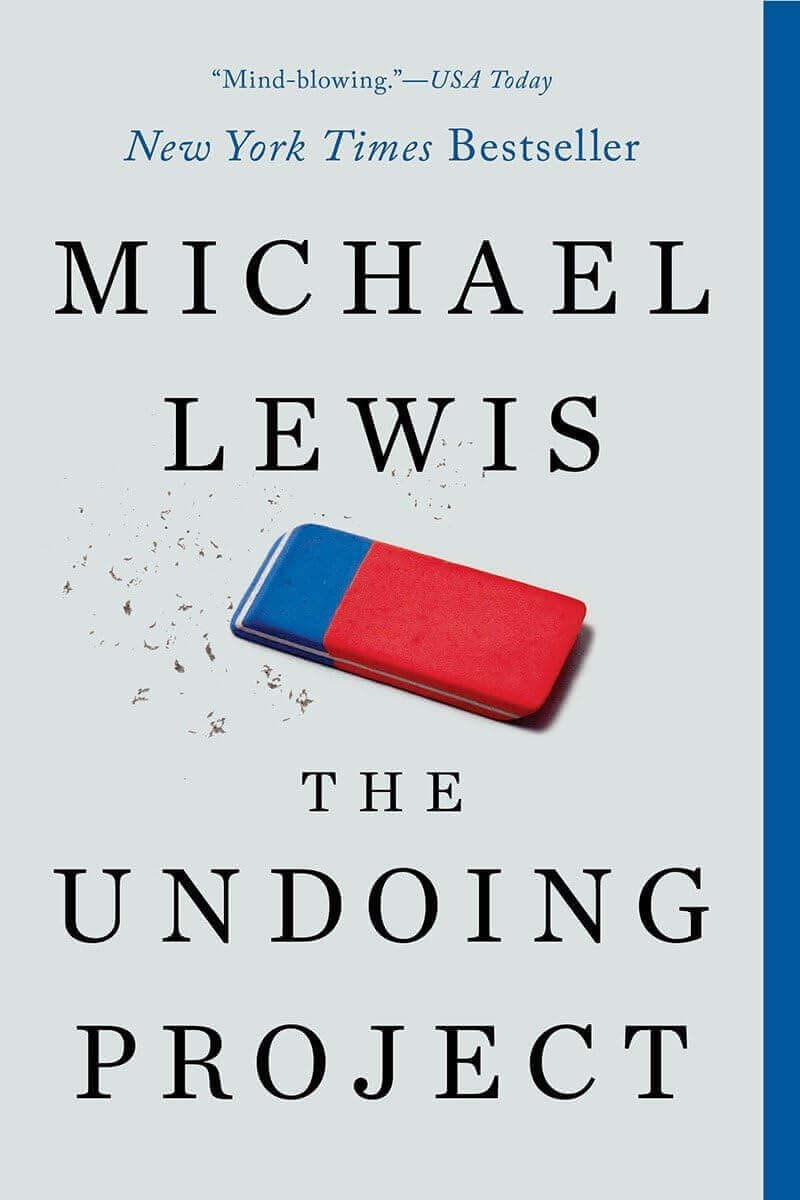
The Undoing Project Book Summary
This The Undoing Project Book Summary covers the key ideas, lessons, and takeaways in about 20 minutes.
Helps with these goals
Want the complete 20-minute summary?
- Full structured summary
- Video Summary
- Podcast Summary
- Audio summary
- Key takeaways
- Exercises
- Quiz
- Highlights and notes
- Ask the book with AI
What is in the The Undoing Project book summary?
Below is a preview of Sumizeit’s expert-written summary of The Undoing Project by Michael Lewis. The full summary covers the book’s key ideas in text, audio, and video.
Michael Lewis’s The Undoing Project is more than a biography—it’s a story about friendship, intellect, and how two men changed our understanding of the human mind. The book follows Daniel Kahneman and Amos Tversky, two Israeli psychologists who challenged the world’s assumptions about rationality. Together, they revealed that our decisions are not driven by logic and statistics, but by emotion, habit, and the subtle biases hidden in our thinking.
The two men came from dramatically different backgrounds. Kahneman, born in Tel Aviv in 1934, spent his childhood in Nazi-occupied France, constantly on the run with his family. The fear and uncertainty of those years left him deeply reflective and observant of human behavior. He became fascinated by the question of why people make bad judgments even when they have good intentions. After immigrating to Israel in 1946, he studied psychology at Hebrew University, where he began exploring how perception and intuition influence behavior.
Amos Tversky, born in Haifa in 1937, was almost Kahneman’s mirror image. Where Kahneman was self-doubting and reserved, Tversky was bold, confident, and endlessly curious. A paratrooper in the Israeli army, he once dove on a live grenade to save his unit—only to discover it was a dud. That fearlessness defined his approach to life and research. He combined a mathematician’s precision with a poet’s love of paradox, constantly looking for the elegant logic behind human mistakes.
When the two met at Hebrew University in the late 1960s, they were both teaching psychology but approached it differently. Kahneman studied how perception fooled the senses; Tversky studied how logic failed the mind. Their first conversation turned into an argument about human reasoning that lasted hours—and marked the beginning of a collaboration that would last decades. They spent endless days locked in their offices, arguing, laughing, and building theories that would redefine how the world understood decision-making. Their partnership was so close that colleagues joked, “They share a single mind in two bodies.”
The Myth of the Rational Mind
Before Kahneman and Tversky’s work, the dominant model in economics and psychology was that humans are rational actors who make decisions by weighing risks and rewards logically. This was the foundation of expected utility theory, a principle dating back to the 18th century. People were assumed to maximize benefit and minimize loss through careful calculation.
Kahneman and Tversky dismantled this assumption. Through hundreds of clever experiments, they proved that the human brain often substitutes intuition for logic, creating systematic, predictable errors. Their work exposed the gap between how we think we think and how we actually think.
They discovered that we use heuristics—mental shortcuts—to make complex judgments quickly. These shortcuts are efficient but flawed, leading to biases that distort perception and reasoning. What made their research so radical was not just the identification of these errors, but the discovery that they occur consistently across people, professions, and cultures. Bias wasn’t random—it was universal.
The Representativeness Heuristic: Mistaking Stereotypes for Truth
The first…
Want the complete 20-minute summary?
- Full structured summary
- Video Summary
- Podcast Summary
- Audio summary
- Key takeaways
- Exercises
- Quiz
- Highlights and notes
- Ask the book with AI
Who should read The Undoing Project?
The Undoing Project is essential for anyone who makes decisions—leaders, investors, doctors, policymakers, and anyone curious about why their own judgment sometimes fails them. Whether you're trying to understand market crashes, improve hiring decisions, or simply make better life choices, this book reveals the hidden patterns in how human minds actually work, not how we think they work.
Why does The Undoing Project matter?
In a world drowning in data and overconfident predictions, understanding cognitive bias has never been more critical. Michael Lewis's account of Kahneman and Tversky's discoveries explains why intelligent people make predictable mistakes and how recognizing these patterns can reshape decision-making across medicine, finance, law, and everyday life. Their work fundamentally changed how we understand the gap between rational thinking and how we actually think.
What are the key themes in The Undoing Project?
- The myth of human rationality and the power of intuitive shortcuts
- How systematic biases distort judgment across all fields and professions
- The role of friendship and collaboration in sparking intellectual breakthroughs
- Loss aversion and why we feel losses more intensely than gains
- Framing effects and how presentation shapes perception and choice
- Counterfactual thinking and how we mentally undo the past
- The transformation from expected utility theory to behavioral economics
What are the key lessons from the The Undoing Project book summary?
The representativeness heuristic makes us judge by resemblance, not probability
We decide based on how well something fits our mental template rather than actual statistical likelihood, leading us to confuse stereotypes with facts and make the conjunction fallacy.
The availability heuristic causes us to overweight memorable events
We estimate probability based on how easily examples come to mind, making vivid but rare events feel more common than they actually are, which distorts risk perception.
Anchoring bias makes arbitrary numbers shape our judgments
The first number we encounter acts as an invisible anchor that pulls all subsequent estimates toward it, even when we know the anchor is meaningless or random.
The law of small numbers causes us to see patterns where randomness exists
We wrongly assume that small samples should represent the larger population perfectly, leading us to overvalue limited data and mistake short-term streaks for skill.
Loss aversion means losses hurt roughly twice as much as equivalent gains please us
We're asymmetrically motivated by the prospect of loss, which explains why people hold losing investments, stick with familiar brands, and refuse favorable bets.
Framing effects show that identical outcomes produce opposite choices based on wording
Whether information is presented as gains or losses fundamentally changes risk tolerance and decision-making, even when the underlying data is mathematically identical.
Probability weighting causes us to overestimate small chances and underestimate large ones
We treat a 1% chance as more significant than it deserves and a 99% chance as less certain than it is, explaining why people buy lottery tickets and insurance simultaneously.
Prospect theory replaces the rational actor model with an emotion-driven one
Humans don't evaluate outcomes in absolute terms but relative to a reference point, making decisions fundamentally shaped by psychology rather than pure logic.
The simulation heuristic makes us regret near-misses more than distant ones
We mentally 'undo' the past by imagining small changes, and the easier we can imagine an alternate reality, the stronger our emotional response to what actually happened.
Unusual events trigger regret more easily than routine ones
A detour causing an accident feels more tragic than a routine drive that has the same outcome, because it's easier to imagine undoing the unusual action.
We regret actions more than inactions, even when inaction was costlier
Our tendency to mentally replay what we did (rather than what we failed to do) creates asymmetric regret that doesn't align with actual outcomes or consequences.
Recent causes are easier to undo mentally than distant ones
We more strongly regret decisions made recently than those made long ago, even if the earlier decision had larger consequences, because recency affects how easily we simulate alternatives.
The more plausible an alternate reality, the stronger the emotional response
Counterfactual thinking intensifies emotions when the alternative outcome feels realistic and close, explaining why missing a flight by five minutes hurts more than missing it by an hour.
Biases are universal, not random—they occur systematically across people and cultures
The breakthrough insight isn't just that humans are irrational, but that we're irrational in predictable, consistent ways that can be identified and potentially mitigated.
Mental shortcuts are efficient but fundamentally flawed
Heuristics allow us to make quick decisions in complex environments, but they consistently lead us astray because we substitute intuition for actual probability and logic.
How we think we think is radically different from how we actually think
We believe we reason logically and weigh evidence carefully, but experiments reveal we primarily rely on stories, patterns, and emotional shortcuts that often contradict rational analysis.
Overconfidence in expertise persists even after learning about biases
Even experts in behavioral economics and statistics fall victim to the same biases they study, showing that intellectual knowledge alone doesn't protect us from systematic error.
Friendship and intellectual collaboration can produce insights neither partner could achieve alone
Kahneman and Tversky's partnership—where their different temperaments and approaches complemented each other—sparked a revolution that changed how we understand human judgment.
Self-awareness about our blind spots is the foundation of wiser decision-making
The true value of understanding cognitive biases is humility—recognizing that certainty is often an illusion, which opens the path to making better choices.
Irrationality isn't a flaw but a feature of how humans interpret uncertainty
Rather than viewing human error as a bug to eliminate, we can understand it as part of how our minds naturally process complex, ambiguous information in a chaotic world.
Want the complete 20-minute summary?
- Full structured summary
- Video Summary
- Podcast Summary
- Audio summary
- Key takeaways
- Exercises
- Quiz
- Highlights and notes
- Ask the book with AI
How can you apply ideas from The Undoing Project?
- In hiring, replace gut feelings with objective scoring systems based on predefined criteria to avoid representativeness bias that mistakes likability for competence
- In investment decisions, predefine success and failure criteria before acting so emotions don't cloud judgment, and recognize loss aversion may cause you to hold losing positions too long
- In negotiations, generate your own estimate before hearing the other party's number to avoid anchoring bias shaping your baseline expectations
- In risk assessment, balance vivid stories with actual statistics—for example, recognize that terrorism fears often exceed heart disease risks despite the latter killing far more people
- In team leadership, establish a devil's advocate role or red team to challenge group assumptions and prevent overconfidence in short-term success streaks
- In personal finances, use automatic systems like retirement contributions to precommit to rational decisions and reduce the impact of loss aversion on saving behavior
- In medical settings, standardize diagnostic checklists to reduce the influence of availability bias and anchoring on doctors' interpretations of symptoms
What common mistakes do readers make with The Undoing Project?
- Believing that intelligence or expertise protects you from cognitive biases—studies show that smart people are often more confident in their biases, not less vulnerable to them
- Using recent vivid events as a guide for probability—the availability heuristic makes memorable but rare occurrences feel more common than statistical reality suggests
- Assuming that pointing out bias to someone will change their behavior—awareness alone rarely overcomes the automatic nature of heuristics and mental shortcuts
- Failing to distinguish between what your initial instinct tells you and what the data actually shows, leading to overconfidence in gut feelings despite evidence pointing elsewhere
- Neglecting to account for random variation and small sample sizes—the law of small numbers misleads us into seeing patterns, skill, or trends in limited data
- Not recognizing how framing language shapes your perception—the same choice presented as a loss versus a gain produces opposite decisions even with identical underlying facts
Sumizeit Exercises Apply what you've learned
Turn ideas from The Undoing Project into action with a short guided reflection: identify the biggest takeaway, connect it to your life, and commit to one step you can take in the next 24 hours.
What is the expert analysis of The Undoing Project?
Overview
The Undoing Project, authored by Michael Lewis, stands as a seminal work that transcends mere biography to explore the profound intellectual partnership between Daniel Kahneman and Amos Tversky. These two Israeli psychologists revolutionized our understanding of human cognition by dismantling the long-held belief in human rationality. Lewis, renowned for his ability to weave complex scientific ideas into compelling narratives, captures not only the scientific breakthroughs but also the nuanced dynamics of friendship and collaboration that fueled this paradigm shift. The book's significance lies in its illumination of the cognitive biases and heuristics that shape decision-making, influencing fields as diverse as economics, medicine, law, and public policy.
Core Thesis
The central argument of The Undoing Project is that human decision-making deviates systematically from the ideal of rationality posited by classical economics and psychology. Kahneman and Tversky reveal that our minds rely heavily on heuristics—mental shortcuts—that are efficient but prone to predictable biases. These biases, such as the representativeness heuristic, availability heuristic, and anchoring effect, distort our perception of reality and probability. Their prospect theory further challenges traditional economic models by incorporating the emotional asymmetry of loss aversion and the framing effect, demonstrating that humans evaluate outcomes relative to subjective reference points rather than absolute values. Ultimately, the book argues that irrationality is not an aberration but a fundamental feature of human cognition, with profound implications for understanding and improving decision-making.
Strengths
- Interdisciplinary Reach: Lewis skillfully connects psychological research with real-world applications across multiple domains, from finance to healthcare, making the science accessible and relevant.
- Compelling Narrative: The portrayal of Kahneman and Tversky’s friendship adds emotional depth and humanizes abstract scientific concepts, enhancing reader engagement.
- Clarity of Concepts: Complex ideas like heuristics, biases, and prospect theory are explained with vivid examples and experiments, such as the Linda problem and anchoring studies, facilitating comprehension without oversimplification.
- Practical Implementation: The inclusion of actionable lessons and reflection exercises bridges theory and practice, empowering readers to recognize and mitigate their own cognitive biases.
- Historical Context: The book situates the research within broader intellectual traditions and personal histories, enriching understanding of its transformative impact.
Critiques & Counterarguments
- Overemphasis on Biases: While the book highlights systematic errors, some critics argue it underrepresents the adaptive value of heuristics and the contexts in which intuitive judgments outperform analytical reasoning, as explored in Gigerenzer’s work on ecological rationality.
- Limited Scope of Rationality: The framing of human cognition as primarily irrational may neglect the nuanced interplay between intuitive and deliberative processes, as dual-process theories suggest a more dynamic relationship.
- Experimental Constraints: Many foundational experiments rely on artificial, laboratory-based tasks that may not fully capture decision-making complexity in naturalistic settings, raising questions about ecological validity.
- Evolution of Behavioral Economics: Subsequent research has refined or challenged aspects of prospect theory, such as the role of reference points and probability weighting, indicating that the model is not universally predictive.
- Cultural and Individual Variability: The universality of biases is debated; cross-cultural studies reveal variation in susceptibility to certain heuristics, suggesting that cognitive biases are influenced by social and environmental factors beyond innate mental architecture.
Who Should Read This
The Undoing Project is essential reading for scholars and practitioners in psychology, behavioral economics, and decision sciences, as well as professionals in finance, law, medicine, and public policy who seek to understand the cognitive underpinnings of human behavior. It also appeals to intellectually curious readers interested in the psychology of judgment, the nature of rationality, and the human stories behind scientific innovation. Those who appreciate a blend of rigorous research and narrative storytelling will find this book both enlightening and deeply engaging, offering insights that are as practical as they are profound.
Frequently asked questions about the The Undoing Project book summary
What is The Undoing Project about?
The Undoing Project by Michael Lewis is a biography of Daniel Kahneman and Amos Tversky, two Israeli psychologists whose groundbreaking research revealed that human decisions are driven by emotion and systematic biases rather than pure logic. The book chronicles their friendship and collaboration, which led to the discovery of heuristics, prospect theory, and behavioral economics—insights that fundamentally changed how we understand human judgment and decision-making.
Who should read The Undoing Project?
Anyone who makes decisions should read this book—leaders, investors, healthcare professionals, policymakers, and people curious about psychology and behavioral science. It's essential for those working in finance, law, medicine, or management who need to understand why intelligent people make predictable mistakes, as well as anyone interested in how friendship and collaboration spark intellectual breakthroughs.
What are the main takeaways from The Undoing Project?
The main takeaways are that human judgment relies on mental shortcuts (heuristics) that produce systematic biases; loss aversion makes us feel losses about twice as intensely as equivalent gains; framing effects show that how information is presented shapes decisions more than the facts themselves; and self-awareness about our cognitive blind spots is the foundation of wiser decision-making. The book also demonstrates how intellectual friendship can spark world-changing ideas.
What is prospect theory and why does it matter?
Prospect theory, developed by Kahneman and Tversky in 1979, explains that people don't evaluate outcomes logically but relative to a reference point, with losses feeling about twice as painful as equivalent gains feel pleasurable. This theory replaced the earlier assumption that humans are rational economic actors and became the foundation of behavioral economics, influencing everything from finance and policy to how governments design incentives and choices.
How do anchoring, availability, and representativeness biases affect real decisions?
Anchoring makes arbitrary numbers shape judgments—like how initial salary offers influence final negotiations or how suggested prices affect buying behavior. Availability bias causes people to overestimate risks of vivid events (like plane crashes) while underestimating common ones (like car accidents). Representativeness bias makes people judge probabilities by how well something fits a stereotype rather than by actual statistics, leading to hiring mistakes and medical misdiagnoses.
Why did Kahneman and Tversky's partnership break down?
As both men moved to North America, Tversky's charisma made him a celebrity while the more introverted Kahneman felt overshadowed, making their once-equal collaboration feel unbalanced. In the 1980s they drifted apart professionally, though they remained intellectually connected. When Tversky was diagnosed with terminal cancer in 1996, Kahneman returned to his side and they spoke almost daily until Tversky's death.
How has The Undoing Project's insights changed industries?
Kahneman and Tversky's research reshaped medicine (reducing diagnostic errors), finance (explaining bubbles and crashes), law (understanding jury behavior and sentencing bias), public policy (creating 'nudge units' that guide better choices), and artificial intelligence (teaching systems to recognize and correct human bias). Their work showed that irrationality is predictable and systematic, making it possible to design better systems that account for how humans actually think.
What is the simulation heuristic and how does it affect regret?
The simulation heuristic describes how people mentally 'undo' past events by imagining small changes to create alternate outcomes. Missing a flight by five minutes produces more regret than missing it by an hour because the near-miss feels easier to undo. This counterfactual thinking shapes how we experience grief, guilt, and regret based on how plausible the alternate reality feels, not on the actual consequences of what happened.
About Sumizeit
Sumizeit is a profitable Scomy LLC company based in Miami, Florida. It has been helping readers learn from nonfiction books for 7 years with expert-written summaries in text, audio, podcast, and video.
Want the complete 20-minute summary?
- Full structured summary
- Video Summary
- Podcast Summary
- Audio summary
- Key takeaways
- Exercises
- Quiz
- Highlights and notes
- Ask the book with AI
Here's why readers love Sumizeit
Join thousands of learners getting smarter every day
"Great experience. Detailed summaries. Loved the gamification feature. Makes learning fun. Good customer service. I recommend Sumizeit to anyone. You'll learn a lot."
"I always felt busy but still wanting to keep up with the book discussion in my friend group. This was a great supplement to help me keep reading the books I find fun while keeping up with important books."
"I love this website. Instead of scrolling social media, I find myself learning a lot. I use it everyday. I recommend this app for anyone who is too busy and wants to get up to speed with their favorite books."
The Undoing Project Book Summary PDF
Looking for a The Undoing Project Book Summary PDF you can save and revisit offline? Our The Undoing Project Book Summary PDF captures the book’s core ideas in a clean, printable format — the key frameworks, takeaways, and structure without the fluff. Download the The Undoing Project Book Summary PDF when you want a reference you can annotate, share with your team, or review on the go. Get your The Undoing Project Book Summary PDF from the download page below.
Download The Undoing Project Book Summary PDFPeople also liked these summaries
Readers who explored The Undoing Project often enjoyed these titles next.


Want the complete 20-minute summary?
- Full structured summary
- Video Summary
- Podcast Summary
- Audio summary
- Key takeaways
- Exercises
- Quiz
- Highlights and notes
- Ask the book with AI
Featured Book Titles
Popular Book Summaries at sumizeit, leading book summary app
