We are all going to die at some point, whether we like it or not. However, we have our entire lives to prepare for the end.
It is important to think honestly and clearly about what we want from our final years. We need to determine what we think is important and make sure that we make decisions early so that even if we are unable to make decisions, later on, our family knows our wishes.
As a society, we must also find a way to help improve the quality of life for the elderly. Whether this is about improving the way nursing homes operate or expanding the options for assisted living, there are ways that we as a society can work together to make our final years worth living.
As an Amazon Associate, Sumizeit earns from qualifying purchases.
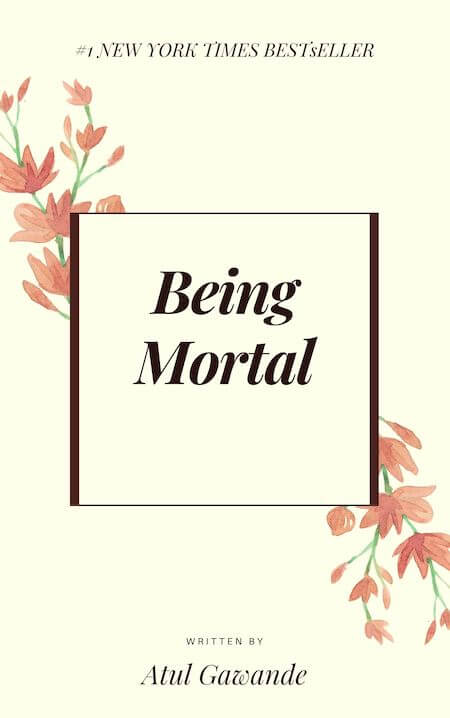
One of the things so many people struggle with is death and mortality. In Being Mortal: Medicine and What Matters in the End, Atul Gawande takes a look at society’s current approach to both dying and death. From the failures to the successes, this is a look at how to confront death in order to enjoy living.
There is an old saying that basically amounts to we all end up paying taxes and dying. And while we may get used to having to pay taxes, it is not as easy to accept the fact that we are mortal and we all die.
It’s important to accept the fact that we are mortal if we ever want a chance to truly enjoy our lives as we are living them. Thanks to current advances in medicine, many of us are living longer lives, which in turn is actually creating a bit of a problem as our inevitable death is seemingly dragged on.
The reality is, that we all need to find a way to embrace our own mortality and make death something that isn’t to be dreaded or even endured. While most people find themselves fearing death, as we get older we typically get more relaxed and even content with our lives. It is because of this sense of acceptance for our advancing age that we need to truly live our lives.
Thinking about being sick and dying is unpleasant, and yet it is something that we will all be confronted with at some point in our lives.
Being independent is one of the most important values for so many people, and it is something we fight for most of our lives. However, as we get older being completely independent is not really an option.
As you get older, you must accept the fact that there are certain limitations you must live with. This also requires accepting the help of others.
While we may not want to give up on our values, there is no reason we need to, even when getting much-needed help. As we get older, our perspective on life shifts. Getting older can help us to appreciate the simple pleasures of everyday life, rather than those “exciting experiences.”
On top of appreciating the little things more, we also find our relationship with our family and friends increasing in importance.
Oftentimes, when we think of “old age homes,” the image that comes to mind first is a building filled with rooms that are colorless and full of depression and an overall sense of dullness. And in many cases, this picture is actually rather accurate.
Many elderly people living in these homes are suffering from both loneliness and even boredom. They do not have a sense of purpose in their lives anymore.
In many cases, there is a very stringent routine and schedule put into place at nursing homes and care units. This strict schedule often infringes on the sense of autonomy that the individuals living there once had.
At one point, these were people who had a lot of freedom, and now they are being forced into a routine or schedule that they didn’t choose. They have also lost most of their privacy as well.
When it comes to having a caregiver, these are the people who find it easier to make the decision for the elder they are caring for, rather than working with them to come to a decision as a team.
Even patients who could do things on their own, but might need a little help find themselves having these things done for them because in the eyes of the caregiver it’s just easier and quicker to do it. And yet, this is the wrong thing to do because it makes the person you are supposed to be helping feel incapable, useless, and even small.
Although these medical facilities may deliver excellent care to their patients, they do so in a way that does not make these people feel like they are at home. They are left not feeling appreciated and it creates a perfect storm of depression and despair.
Excellent care is not just about proper medication and helping someone get dressed. It is also about making them feel like they are a person with needs and wants. It is showing them an appreciation for who they are and understanding them as an individual.
Nursing homes are known for being short-staffed and it is this lack of staff that contributes to this general lack of warmth and homeyness. This often leads to nurses and doctors having to take on multiple roles and not having enough time to actually connect with the people they are there to help.
The only real alternative to nursing homes and these institutionalized settings is being with family. And this is not always a great option when one considers how difficult it can be to manage the needs of someone older or dealing with an illness.
It’s also important to note that our family members may not always make the right decisions for us as we get older either.
In an effort to prolong our lives in our final years, we may often choose treatments that extend our life, even if it leaves us miserable. In many cases, this slow drawing out of our death is more harmful than good.
When we are choosing a plan of action in treating our health, we may find ourselves succumbing to a sense of delusional hope. It’s about waiting for a miracle that isn’t going to happen.
Unfortunately, there are doctors who do not always help their patients and their families to understand their terminal illness and what that means. At times, it is all about not wanting to crush anyone’s hope.
Some doctors have even admitted that they have offered patients treatments that they did not really believe would make a difference. This can lead to these patients making the decision to do treatments that end up decreasing their quality of life rather than extending it in a meaningful way.
Rather than valuing our quality of life, we put more value in the amount of time we are on this Earth. However, we should be putting more stake into living a meaningful life than how long we live.
In order for people to not only age gracefully, but also die the same way, we as a society need to find a way to promote services that allow people to remain autonomous even in their old age. At the same time, these services also need to offer guidance and compassion whenever it is needed.
One service such as this is assisted living. These services move away from the stringent schedules and control of a standard nursing home to offer an opportunity for older people to live a comfortable life with help when needed.
These communities allow people a chance to create a home for themselves in a space that is their own. Not only do they get to create their own home, but they also decide how to spend their time and even how much assistance they may need. They can decide how they want to live their lives.
While assisted living facilities are an excellent alternative, the author of the book Atul Gawande also wants people to consider the idea of taking the typical old-age home and bringing a new concept to the forefront.
An example of this would be taking inspiration from a nursing home in New York that not only created a garden for residents to enjoy but also invited kindergarten students to spend time with the elderly living there. And not only that, but they even brought in animals to help improve the quality of life of their residents.
This home saw a decrease in the number of prescriptions that residents needed and even the number of deaths per year dropped.
While some may ask what it is about these improvements that helped to extend the life of these residents, it is quite simple. By having a garden and animals to take care of, and children coming to visit them, they were given a new sense of purpose in their lives. All of this gave the residents a new reason to live.
As a society, we must find ways to manage both illnesses and getting older. And we must be able to communicate with others about what we want and need out of our lives.
We must remember that doctors are humans too, and they may be torn between being professional and offering their personal compassion.
In order for a doctor to really help their patients, they can’t necessarily offer just one or the other. Instead, there needs to be a healthy dose of both professionalism and compassion.
For patients who are seriously ill, doctors should be offering guidance that both informs them, while also being gentle. They should not be dictating to their patients, nor should they be lecturing them in any way.
There needs to be a middle ground for doctors so that they can guide their patients with compassion and information.
With aging and death requiring the involvement of not only family but also doctors, medical professionals need to improve their skills when it comes to communication and even listening. This will help to make them better when it comes to helping their patients.
Oftentimes, we have no desire to talk about death and age. This is especially true when we are talking about family and loved ones.
We usually don’t start to talk about these things until it’s too late already. This leads to decisions that are made in haste and goodbyes that are done with less dignity than we would have ever hoped.
In order to prevent this from happening, we need to have these important discussions early on so we can determine exactly what we want to happen when we are dying. And it is also about making decisions before you no longer can.
When we embrace our mortality and come to terms with both our fears and our hopes, you can feel like you are writing your own story the way you want to right up to the end.
Confronting our mortality will allow us as individuals and a society to make our final years not only less painful but also more meaningful. Even in our last years on this Earth, we can have a sense of purpose.
We are all going to die at some point, whether we like it or not. However, we have our entire lives to prepare for the end.
It is important to think honestly and clearly about what we want from our final years. We need to determine what we think is important and make sure that we make decisions early so that even if we are unable to make decisions, later on, our family knows our wishes.
As a society, we must also find a way to help improve the quality of life for the elderly. Whether this is about improving the way nursing homes operate or expanding the options for assisted living, there are ways that we as a society can work together to make our final years worth living.
Atul Gawande is an American surgeon, writer, and public health researcher. He works at Brigham and Women’s Hospital in Boston, MA, where he practices general and endocrine surgery. He works as a professor in the Department of Health Policy and Management at Harvard T.H. Chan School of Pubic Health and the Samuel O. Their Professor of Surgery at Harvard Medical School. He is also the executive director at Ariadne Labs, a joint center for health systems innovation, and serves as chairman of Lifebox, a nonprofit that is working to decrease the number of surgery deaths. He served as CEO of Haven, a healthcare company owned by Amazon, Berkshire Hathaway, and JP Morgan Chase from 2018 to 2020. He is the author of many writings about medicine and public health, often for The New Yorker and Slate.
He earned a bachelor’s degree in biology and political science from Stanford University in 1987. He was a Rhodes Scholar and earned an M.A in Philosophy, Politics, and Economics from Balliol College, Oxford in 1989. He received a Doctor of Medicine from Harvard Medical School in 1995. He earned a Master of Public Health from Harvard School of Public Health in 1999.
He worked for Al Gore’s 1988 presidential campaign and served as a healthcare lieutenant during Bill Clinton’s 1992 campaign. He became the senior advisor for the Clinton administration’s Department of Health and Human Services. He was head of one of three committees of the Clinton Health Care Task Force.
He became a staff writer for the New Yorker in 1988. He wrote an essay for the New Yorker in 2009 that compared the health care of two towns in Texas. This showed why health care cost more in one town than the other. Corporate, profit-maximizing culture drove up costs in one town, while in the other town, low-cost high-quality care as provided by the Mayo Clinic and other efficient health systems kept the prices lower. The article had an impact on President Obama’s thinking and strengthened his resolve to fix health care for all.
Gawande gave a TED talk in 2012 on “How do we heal medicine?”, which received over 1.9 million viewers.
Looking for a Being Mortal Book Summary PDF you can save and revisit offline? Our Being Mortal Book Summary PDF captures the book’s core ideas in a clean, printable format — the key frameworks, takeaways, and structure without the fluff. Download the Being Mortal Book Summary PDF when you want a reference you can annotate, share with your team, or review on the go. Get your Being Mortal Book Summary PDF from the download page below.
Download Being Mortal Book Summary PDFGet full access to 1,000+ book summaries with audio and video
Start Free Trial →
