


Prefer the print book? Buy on Amazon
As an Amazon Associate, Sumizeit earns from qualifying purchases.
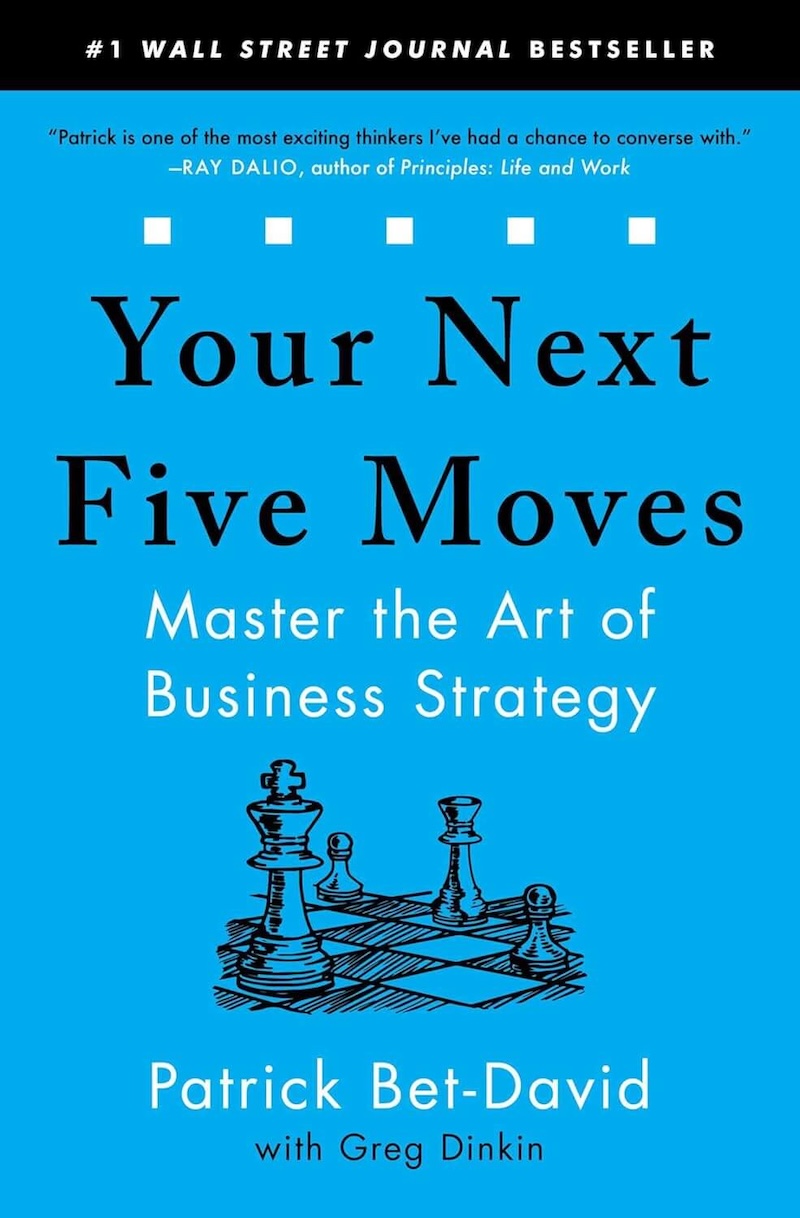
Your Next Five Moves Book Summary
This Your Next Five Moves Book Summary covers the key ideas, lessons, and takeaways in about 20 minutes.
Short Description:
Your Next Five Moves teaches strategic thinking to build extraordinary success.
Helps with these goals
Preview the Your Next Five Moves book summary
Below is a preview of Sumizeit’s comprehensive human-written summary of Your Next Five Moves by Patrick Bet-David. The full summary is 15-20 minutes long and covers the book’s key ideas in text, audio, visual, and video formats. Unlock the full 20 Minute Summary
In Your Next Five Moves, Patrick Bet-David delivers a blueprint for high-level strategic thinking rooted in the idea that success, whether in business or life, belongs to individuals who learn to anticipate the future instead of reacting to it. Much like a chess grandmaster who considers several move combinations before touching a single piece, Bet-David argues that leaders must train themselves to analyze the implications of decisions many steps ahead. This approach replaces impulsive decision-making with long-term architecture—one move constructed deliberately to support the next. The premise of the book is that clarity, strategy, and sequence—not speed or enthusiasm alone—determine outcomes. People often underestimate the power of preparation, overlooking how elite competitors orchestrate outcomes by thinking far beyond their immediate environment. Bet-David demonstrates that when you can consistently identify your next five moves, uncertainty transforms into direction, chaos becomes structured, and ambition becomes execution.
The First Move: Achieving Deep Self-Awareness
Before anyone can build a business, scale a team, or lead others, they must understand themselves with honesty and precision. Self-awareness is not merely understanding personality traits—it is the internal excavation required to uncover motivations, insecurities, strengths, weaknesses, and nonnegotiable values. Bet-David explains that many people spend their lives building castles on foundations they never inspected, pursuing goals that are inherited expectations rather than personal truths. As a result, even hard work leads them into careers that leave them drained, unfulfilled, or directionless. Bet-David introduces an exercise called the Personal Identity Audit, a rigorous internal assessment that forces individuals to confront uncomfortable questions: What drives you? What do you fear losing? What would you fight for? What do you refuse to tolerate? What legacy do you want to leave? These questions strip away artificial identities shaped by family expectations, social pressure, or imitation of others. Bet-David notes that the most destructive mistake a person can make is believing that someone else’s destiny is theirs. He uses the example of high-performing employees who leap into entrepreneurship assuming success will translate across contexts, only to discover that managing chaos, payroll risk, legal liability, and constant financial pressure overwhelms them. Many of them would have thrived as intrapreneurs—innovators inside established companies where they can exercise creativity without carrying existential risk. A powerful example Bet-David shares from his career is how he once hired talented individuals who claimed to want leadership but lost motivation once they realized the emotional burden and accountability required. Some went on to perform exceptionally well in supporting roles once they understood their true strengths and motivations. Self-awareness is also about embracing individuality. Bet-David encourages leaders to use what others might label weaknesses as strategic advantages. A naturally intense personality might repel casual acquaintances but attract high performers who crave challenge. A person obsessed with structure might create world-class systems. Quirks become strengths when integrated instead of hidden. Identifying nonnegotiable values also removes indecision during hardship. If integrity is nonnegotiable, no offer large enough can justify compromise.
Want the complete 20-minute summary?
- Full structured summary
- Video Summary
- Podcast Summary
- Audio summary
- Key takeaways
- Exercises
- Quiz
- Highlights and notes
- Ask the book with AI
Who should read Your Next Five Moves?
Your Next Five Moves is for entrepreneurs, business leaders, and ambitious professionals who want to think strategically rather than reactively. If you're building a company, scaling a team, or seeking to elevate your decision-making from tactical firefighting to intentional architecture, this book provides a framework for sustained success. It's particularly valuable for those who feel trapped in reactive leadership or who want to understand why some leaders consistently outmaneuver competitors.
Why does Your Next Five Moves matter?
In a world of rapid change and constant disruption, the ability to anticipate consequences and plan several moves ahead separates thriving organizations from those that collapse under uncertainty. Patrick Bet-David's framework teaches you to replace impulsive decision-making with long-term strategic thinking, transforming chaos into direction. Today's leaders need this mindset to navigate markets where speed, innovation, and foresight determine winners and losers.
What are the key themes in Your Next Five Moves?
- Strategic foresight—thinking multiple moves ahead like a chess master
- Self-awareness as the foundation for authentic leadership and decision-making
- Building high-performance teams and cultures aligned by principles rather than fear
- Speed and agility as decisive competitive advantages in modern business
- Systemization and metrics as tools for predictable, scalable growth
- Power dynamics, narrative control, and influence in complex negotiations
- Ego management and healthy paranoia as defenses against complacency
How can you apply ideas from Your Next Five Moves?
- Conduct a Personal Identity Audit to uncover your authentic motivations, fears, values, and legacy rather than pursuing inherited expectations
- Apply the Investment Time Return (ITR) method to categorize current tasks by impact and delegate everything below a strategic threshold
- Create a systematic decision-making process that forces root-cause analysis before proposing solutions to business problems
- Develop and document standardized processes for critical functions so knowledge isn't trapped in individual heads and operations scale predictably
- Establish publicly visible KPIs and metrics so your team has real-time visibility into performance and accountability becomes self-enforcing
- Design scenario plans for 40% revenue decline, key departures, market disruption, and regulatory change before crises arrive
- Build a leadership development pipeline by identifying high-potential people early and pushing them into uncomfortable responsibilities with mentorship
What common mistakes do readers make with Your Next Five Moves?
- Believing someone else's destiny is yours—pursuing goals shaped by family expectations, imitation, or inherited assumptions rather than personal truth
- Treating symptoms instead of root causes—spending thousands on marketing when the real problem is poor sales conversion at closing
- Failing to systemize knowledge—allowing critical processes to live only in one person's head, making the organization fragile and unscalable
- Neglecting speed as a competitive advantage—moving slowly in environments where technology and markets shift rapidly, allowing faster competitors to capture opportunities
Sumizeit Exercises Apply what you've learned
Turn ideas from Your Next Five Moves into action with a short guided reflection: identify the biggest takeaway, connect it to your life, and commit to one step you can take in the next 24 hours.
What is the expert analysis of Your Next Five Moves?
Overview
Your Next Five Moves by Patrick Bet-David stands out as a strategic manual tailored for ambitious leaders and entrepreneurs seeking to elevate their decision-making and organizational impact. Bet-David, an entrepreneur and founder of PHP Agency and Valuetainment, leverages his multifaceted background—from military service to business leadership—to fuse practical business acumen with psychological insight and historical perspective. The book’s significance lies in its synthesis of strategic foresight with personal development, offering a roadmap that transcends conventional business advice by emphasizing anticipatory thinking akin to a chess grandmaster’s approach.
Core Thesis
At its core, Bet-David’s thesis is that success is not a product of reactive or impulsive action but the result of deliberate, multi-step strategic planning. By identifying and executing the “next five moves,” individuals can transform uncertainty into clarity and chaos into structured progress. This framework insists that deep self-awareness, rigorous decision-making methodologies, team and culture building, accelerated growth through speed and leadership development, and systematized scalability are sequential pillars that collectively enable predictable and sustainable success. The work underscores the primacy of thinking several moves ahead to architect one’s destiny rather than merely responding to immediate circumstances.
Strengths
- Holistic Framework: The book excels in integrating psychological introspection with tactical business strategies, providing a comprehensive blueprint that addresses both internal mindset and external execution.
- Practical Illustrations: Bet-David’s use of vivid, real-world examples—from Silicon Valley startups to his own entrepreneurial journey—grounds abstract concepts in tangible scenarios, enhancing accessibility and applicability.
- Emphasis on Self-Awareness: The insistence on deep personal audit before strategic action is a refreshing corrective to the often superficial treatment of leadership identity in business literature.
- Focus on Leadership Multiplication: The advocacy for developing leaders rather than followers anticipates organizational scalability challenges and aligns with contemporary leadership theories emphasizing empowerment and delegation.
- Incorporation of Power Dynamics and Narrative Control: The exploration of influence, negotiation, and perception management adds a nuanced layer often neglected in straightforward strategy books.
Critiques & Counterarguments
- Potential Oversimplification of Complexity: While the “five moves” framework is elegant, real-world business environments often demand more fluid, iterative approaches that resist rigid sequencing. Complex adaptive systems theory suggests that emergent outcomes cannot always be pre-planned with such linearity.
- Limited Engagement with Contradictory Research: The book prioritizes anecdotal and experiential evidence over empirical studies, which may weaken its claims in the eyes of academic or evidence-based practitioners.
- Risk of Overemphasizing Speed: Bet-David’s valorization of speed as a competitive advantage may underplay scenarios where deliberate, slower decision-making yields better innovation and sustainability, as argued by proponents of design thinking and reflective leadership models.
- Individual-Centric Bias: The focus on self-awareness and personal leadership, while valuable, might understate systemic and structural factors—such as market conditions, socio-economic constraints, or organizational politics—that also critically shape outcomes.
- Negotiation and Power Strategies: The analogy to mafia structures and poker players, while colorful, may risk glamorizing manipulative tactics that conflict with ethical leadership frameworks emphasizing transparency and trust-building.
Who Should Read This
Your Next Five Moves is ideally suited for entrepreneurs, emerging leaders, and business strategists who are eager to cultivate a disciplined, forward-thinking mindset that transcends reactive problem-solving. Readers who appreciate a blend of psychological insight, strategic rigor, and practical entrepreneurship will find Bet-David’s approach compelling. It is particularly valuable for those at inflection points in their careers—whether launching ventures, scaling teams, or navigating complex negotiations—who seek a structured methodology to anticipate challenges and orchestrate success. However, readers looking for deeply academic or empirically grounded management theories may find the book’s approach more inspirational than scholarly.
Frequently asked questions about the Your Next Five Moves book summary
What is Your Next Five Moves about?
Your Next Five Moves by Patrick Bet-David is a strategic framework for building extraordinary success by learning to think multiple moves ahead, like a chess grandmaster. The book presents five essential moves: achieving deep self-awareness, mastering strategic decision-making, building high-performance teams, accelerating growth through speed and leadership development, and creating systems for predictable expansion. Bet-David argues that greatness belongs to those who architect their path intentionally rather than react to circumstances.
Who should read Your Next Five Moves?
This book is ideal for entrepreneurs, business leaders, executives, and ambitious professionals who want to elevate their strategic thinking and decision-making. It's particularly valuable if you're scaling a business, building a team, feeling trapped in reactive leadership, or wanting to understand why some leaders consistently outmaneuver competitors. Anyone seeking to transform from tactical firefighting to intentional long-term architecture will benefit from Bet-David's framework.
What are the main takeaways from Your Next Five Moves?
The main takeaways are: (1) self-awareness is the foundation for authentic leadership, (2) strategic thinking means mapping consequences several moves ahead, (3) high-performance culture is built through relentless principle reinforcement and productive friction, (4) speed and leadership development are the greatest multipliers of organizational capability, and (5) systems and visible metrics enable predictable, scalable growth. Fundamentally, Bet-David teaches that greatness is architected through intentional sequence, not hoped for through effort alone.
How does Your Next Five Moves help with decision-making?
Bet-David introduces several decision-making tools, including the Investment Time Return (ITR) method for prioritizing by impact, root-cause analysis to identify the real problem rather than symptoms, and scenario visualization to anticipate ripple effects. The book teaches you to replace emotional or habitual decision-making with analysis-based, probability-weighted thinking that considers consequences many steps ahead, transforming uncertainty into strategic clarity.
What is the Personal Identity Audit in Your Next Five Moves?
The Personal Identity Audit is a rigorous self-assessment exercise that forces you to confront uncomfortable questions about your true motivations, fears, nonnegotiable values, and desired legacy. It's designed to strip away artificial identities shaped by family expectations, social pressure, or imitation of others, revealing your authentic foundation for decision-making and direction.
How does Patrick Bet-David address team building and culture?
Bet-David emphasizes that success requires assembling teams aligned by vision, values, and commitment, then creating environments where they perform at their highest levels. He advocates for 'golden handcuffs'—equity, profit sharing, and leadership development—that create long-term loyalty beyond salary. Culture is built by defining clear principles and reinforcing them relentlessly through hiring, accountability, and modeling behavior that demonstrates those values.
What role does speed play in Your Next Five Moves?
Speed is presented as the most decisive competitive advantage in modern business. Bet-David breaks it into four categories: functioning speed (individual capability), processing speed (operational efficiency), expansion speed (market entry), and timing speed (executing at the right moment). Organizations that compress time cycles and move faster than competitors capture opportunities before others recognize them, making speed a core strategic multiplier.
How does Your Next Five Moves address scaling and systems?
Bet-David argues that sustained growth requires documented systems and visible metrics rather than reliance on individual talent or effort. Every business function—sales, marketing, finance, hiring—needs repeatable, documented processes that produce consistent results independent of who executes them. Publicly displayed KPIs create accountability and enable leaders to predict outcomes, prevent crises, and pursue growth with data-driven confidence instead of assumption.
About Sumizeit
Sumizeit is a profitable Scomy LLC company based in Miami, Florida. Our founders, Clemens Raemy and Weina Scott, are successful entrepreneurs with several exits. Sumizeit is a popular book summary app / micro learning app used by busy professionals and entrepreneurs with over 2,500 non-fiction book summaries and 10,000 podcast summaries in text, audio, visual, podcast, and video format. We also have stellar retention tools to make ideas stick - such as flashcards with spaced repetition, quizzes, streaks, highlighting and notes, daily challenges, riddles, mini-courses, meditation, and more. You won't only learn the idea, but also remember it. Over 90% of our users change their habits with Sumizeit.
Upgrade Now
Here's why readers love Sumizeit
Join thousands of learners getting smarter every day
"Great experience. Detailed summaries. Loved the gamification feature. Makes learning fun. Good customer service. I recommend Sumizeit to anyone. You'll learn a lot."
"I always felt busy but still wanting to keep up with the book discussion in my friend group. This was a great supplement to help me keep reading the books I find fun while keeping up with important books."
"I love this website. Instead of scrolling social media, I find myself learning a lot. I use it everyday. I recommend this app for anyone who is too busy and wants to get up to speed with their favorite books."
Your Next Five Moves Book Summary PDF
Looking for a Your Next Five Moves Book Summary PDF you can save and revisit offline? Our Your Next Five Moves Book Summary PDF captures the book’s core ideas in a clean, printable format — the key frameworks, takeaways, and structure without the fluff. Download the Your Next Five Moves Book Summary PDF when you want a reference you can annotate, share with your team, or review on the go. Get your Your Next Five Moves Book Summary PDF from the download page below.
Download Your Next Five Moves Book Summary PDFPeople also liked these summaries
Readers who explored Your Next Five Moves often enjoyed these titles next.

Ready to read the whole thing?
- Full structured summary
- Video Summary
- Podcast Summary
- Audio summary
- Key takeaways
- Exercises
- Quiz
- Highlights and notes
- Ask the book with AI
Featured Book Titles
Popular Book Summaries at sumizeit, leading book summary app