
Question 1 of 10


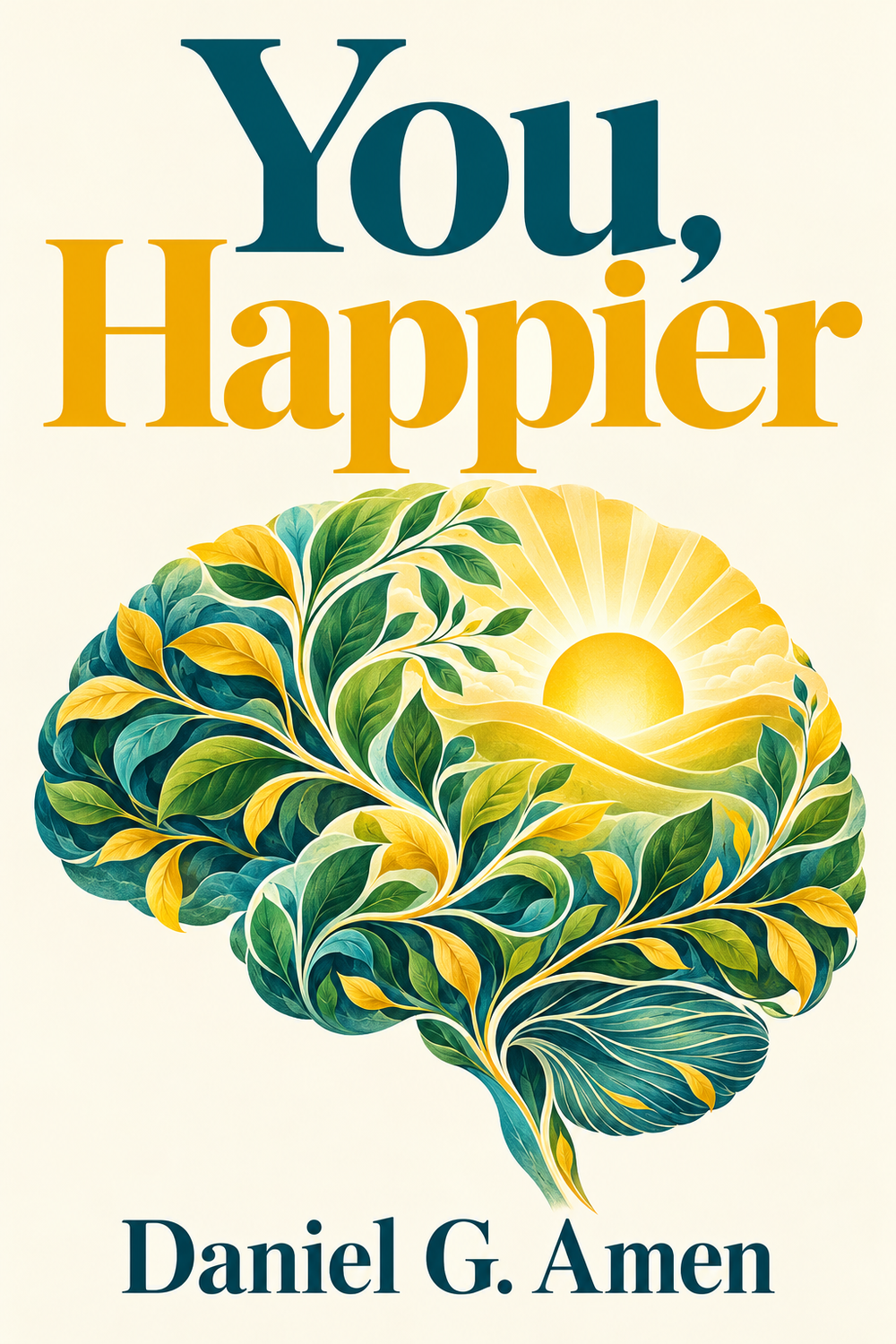
Prefer the print book? Buy on Amazon
As an Amazon Associate, Sumizeit earns from qualifying purchases.
Book Summary
You, Happier Book Summary
This You, Happier Book Summary covers the key ideas, lessons, and takeaways in about 20 minutes.
Short Description:
Amen shows how brain health, food, and mindset shape your happiness
Happiness doesn't come from willpower or positive thinking alone, and it doesn't come from your brain alone either. It starts with a healthy brain that gets good blood flow, low inflammation, solid sleep, protection from injury and toxins, and the right food and nutrients, and it grows when you add habits that train your thoughts toward gratitude and empathy, a life built around your real values, and close ties with other people. Know your brain type so you can work with your wiring instead of against it, and treat brain care as something you do early and every day, not something you do after things go wrong.
Helps with these goals
Want a Free Weekly Read?
Get a free summary every week straight to your mailbox.
Preview the You, Happier book summary
Below is a preview of Sumizeit’s comprehensive human-written summary of You, Happier by Daniel G. Amen. The full summary is 15-20 minutes long and covers the book’s key ideas in text, audio, visual, and video formats. Unlock the full 20 Minute Summary
Amen's big claim is simple. Happiness isn't only a mood or a mindset. It's something your brain produces, so if you want to feel better, you have to take care of the organ doing the producing. The book shows how the brain creates joy, why five different brain types experience it differently, how to protect your brain, what to eat, how to retrain your thinking, and how your values, relationships, and beliefs fill in the rest.
Your brain is a city built in layers
Amen compares the brain to a city where ancient buildings sit right next to modern ones. The oldest part is the brain stem and the cerebellum. They run the basics that keep you alive, like breathing, heart rate, and balance. The brain stem also makes key chemical messengers such as dopamine and serotonin, and it affects how fast your brain processes information. When those basics run poorly, joy has a hard time showing up.
On top of that sits the emotional brain, the limbic system. It stores your instincts and your likes and dislikes. It pushes you to bond with people and to build a home and a family. The hippocampus lives here too, and it helps with both emotion and memory.
The cortex is the newest layer. It handles language, abstract thought, imagination, and culture. It takes in sensory information, blends it with emotion from the limbic system, compares it with past experience, and sends it to the frontal lobes for judgment and decisions. It also spends a lot of time making up stories to explain how you feel, and it often does this without you noticing.
Three areas that shape how happy you feel
Amen zooms in on three spots. The orbitofrontal cortex sits low at the front of the brain and helps you spot pleasant experiences. Its center deals with the enjoyable ones, and its outer edge keeps a record of the unpleasant ones. Deep inside the basal ganglia is the nucleus accumbens, part of the reward system that drives you toward things that feel good. The basal ganglia also handle motivation and habit. The third area is the brain stem, which supplies dopamine, serotonin, and phenylethylamines. Those chemicals feed motivation, mood, and learning.
Happiness isn't just about turning all of that up. The urge to seek enjoyment in the orbitofrontal cortex and basal ganglia has to be balanced by calming the fear centers, such as the amygdala and the insular cortex. Joy comes from the interplay between the two.
Five brain types, five different roads to joy
Using brain imaging, Amen found that people don't all experience happiness the same way. He sorts brains into five types based on activity patterns and chemical balance. They are Balanced, Spontaneous, Persistent, Sensitive, and Cautious.
The Balanced type has steady emotions, good focus, and an easy time adapting. Activity and brain chemicals are well regulated, so these people tend to be dependable, methodical, and upbeat.
The Spontaneous type is inventive and happy to take risks.…
Want the complete 20-minute summary?
- Full structured summary
- Video Summary
- Podcast Summary
- Audio summary
- Key takeaways
- Exercises
- Quiz
- Highlights and notes
- Ask the book with AI
Who should read You, Happier?
You, Happier is for anyone seeking a scientific foundation for lasting happiness, whether you're struggling with mood, looking to optimize your wellbeing, or curious about how your brain works. It's especially valuable for people who want practical, personalized strategies rather than generic self-help advice, and for those interested in understanding why happiness looks and feels different from person to person.
Why does You, Happier matter?
In a world where anxiety and depression are rising, You, Happier by Daniel G. Amen shifts the conversation from willpower and positive thinking alone to brain health as the root of sustainable happiness. Understanding your brain type and caring for your brain through nutrition, sleep, and stress management offers a science-backed roadmap that works with your unique neurology instead of against it. This approach empowers you to make changes that actually stick because they're aligned with how your brain is wired.
What are the key themes in You, Happier?
- Brain health as the foundation for happiness
- Five distinct brain types with different happiness pathways
- The role of neurotransmitters and brain chemistry in mood
- Nutrition and lifestyle factors that protect brain function
- Thought patterns and cognitive retraining
- Values-driven living and purpose
- Relationships and social connection as essential to wellbeing
- Preventing brain decline before crisis strikes
How can you apply ideas from You, Happier?
- Identify your brain type through self-reflection or assessment, then tailor your happiness strategies to match your neurology—for example, scheduling novel experiences if you're Spontaneous or building calming rituals if you're Sensitive
- Switch to a whole-food diet rich in lean protein, colorful produce, healthy fats, and fiber while eliminating processed foods, sugary drinks, and refined carbs to support stable mood and brain function
- Conduct a one-month elimination diet removing common inflammatory triggers, then reintroduce foods one at a time to identify which ones personally drain or lift your mood
- Create a One Page Miracle that captures your core values, goals, and dreams across the Four Circles (biology, psychology, social, spiritual), then review it weekly to align your choices with what matters most
- Practice the Joyful Challenge or Glad Game daily to interrupt negative thought patterns and train your brain to notice good experiences, building mental resilience over time
- Establish sleep, exercise, and hydration habits that support blood flow, reduce inflammation, and keep your brain chemistry stable—treating these as non-negotiable brain health practices
- Use the RELATING framework—understanding, listening, asserting, togetherness, and forgiveness—to strengthen key relationships and activate the brain's social bonding and reward systems
What common mistakes do readers make with You, Happier?
- Assuming happiness is purely a mindset issue and neglecting the biological foundations of brain health like sleep, nutrition, and exercise
- Trying to follow a one-size-fits-all happiness formula without accounting for your unique brain type and its different needs, strengths, and vulnerabilities
- Eating processed comfort foods for mood boost without realizing they create inflammation and neurotransmitter imbalances that worsen mood over time
- Ignoring minor head injuries or sleep problems, not understanding that these accumulate and silently damage your brain's mood-producing capacity
- Relying on willpower and positive affirmations alone without addressing the underlying brain chemistry that drives your thoughts and emotions
Sumizeit Exercises Apply what you've learned
Turn ideas from You, Happier into action with a short guided reflection: identify the biggest takeaway, connect it to your life, and commit to one step you can take in the next 24 hours.
What is the expert analysis of You, Happier?
Overview
You, Happier is authored by Daniel G. Amen, a psychiatrist renowned for integrating brain imaging into mental health diagnostics and treatment. Amen’s work stands at the intersection of neuroscience, psychology, and self-improvement, aiming to translate complex brain science into practical strategies for enhancing happiness. This book is significant because it reframes happiness not merely as a subjective state or mindset but as a neurobiological phenomenon rooted in brain health and function. Amen’s approach is holistic, combining neuroanatomy, biochemistry, nutrition, psychology, and lifestyle factors to offer a comprehensive blueprint for cultivating joy.
Core Thesis
The central argument of You, Happier is that happiness emerges from a well-functioning brain supported by optimal physical health, balanced neurochemistry, and adaptive thought patterns. Amen posits that the brain’s layered architecture—from the primitive brain stem to the advanced cortex—plays distinct roles in generating joy, motivation, and emotional regulation. Crucially, he identifies five distinct brain types, each with unique activity patterns and chemical profiles, which shape individual pathways to happiness. Tailoring lifestyle, diet, supplements, and cognitive habits to one’s brain type enhances well-being more effectively than generic advice. Ultimately, happiness is portrayed as a dynamic interplay between brain physiology, mental habits, values, and social connectedness.
Strengths
- Integration of Neuroscience and Practical Guidance: Amen’s use of brain imaging to classify brain types provides a novel framework that personalizes strategies for happiness, moving beyond one-size-fits-all self-help approaches.
- Holistic View of Brain Health: The book emphasizes foundational elements such as blood flow, inflammation control, hormone balance, sleep quality, and toxin avoidance, underscoring the biological basis of mental states.
- Actionable Lifestyle Recommendations: From dietary advice focused on “happy foods” to specific supplements linked to neurotransmitter support, Amen offers concrete steps readers can take to improve brain function and mood.
- Cognitive and Emotional Tools: Techniques like the Joyful Challenge, the Glad Game, and naming the inner critic provide accessible methods to disrupt negative thought cycles and foster resilience.
- Emphasis on Values and Relationships: The book situates happiness within a broader context of living authentically according to one’s values and nurturing meaningful social bonds, supported by neuroscience insights.
Critiques & Counterarguments
- Evidence Base and Overgeneralization: While Amen’s brain typing is intriguing, the scientific validation for these five discrete brain types and their direct correlation to happiness strategies remains limited and somewhat anecdotal. The reliance on brain imaging to prescribe lifestyle changes risks oversimplifying complex neuropsychological phenomena.
- Reductionism of Happiness: Framing happiness primarily as a product of brain chemistry and structure may underplay sociocultural, existential, and environmental factors that also profoundly shape well-being. Philosophers and social psychologists emphasize meaning, purpose, and community in ways that transcend neurobiology.
- Supplement Recommendations: The endorsement of various supplements, while grounded in biochemical rationale, can be contentious given mixed clinical evidence on efficacy and safety. Critics argue that such advice should be individualized and medically supervised rather than broadly applied.
- Neglect of Structural and Systemic Issues: The book’s focus on individual brain health and habits may inadvertently minimize the impact of socioeconomic disparities, trauma, and systemic stressors that significantly affect mental health and happiness.
- Alternative Models of Happiness: Competing frameworks, such as positive psychology’s PERMA model (Positive emotion, Engagement, Relationships, Meaning, Accomplishment) or Buddhist conceptions of contentment, offer more expansive or different perspectives on happiness that do not hinge primarily on neurobiology.
Who Should Read This
You, Happier is ideal for readers who appreciate a scientific and biological lens on emotional well-being and are interested in personalized, brain-based strategies for improving mood and happiness. It appeals to those who seek a comprehensive, actionable guide that integrates nutrition, lifestyle, cognitive tools, and values clarification. Mental health practitioners, neuroscience enthusiasts, and self-improvement seekers who favor evidence-informed, practical advice will find value here. However, readers looking for a purely philosophical, sociocultural, or spiritual exploration of happiness may find the book’s neurocentric approach somewhat limiting.
Discussion questions for You, Happier Short questions you can actually use in a conversation
Frequently asked questions about the You, Happier book summary
What is You, Happier about?
You, Happier by Daniel G. Amen explains how brain health is the biological foundation of happiness, introducing five distinct brain types and showing how to optimize your happiness through targeted nutrition, sleep, stress management, thought retraining, values-driven living, and strong relationships. The book combines neuroscience with practical strategies tailored to how your individual brain works.
Who should read You, Happier?
You, Happier is for anyone seeking a science-based approach to lasting happiness, whether dealing with mood challenges or simply wanting to optimize wellbeing. It's especially valuable for people who appreciate neuroscience insights, those frustrated with generic self-help advice, and anyone interested in understanding why happiness feels different across individuals.
What are the main takeaways from You, Happier?
The main takeaways are that happiness starts with a healthy brain supported by good sleep, nutrition, and blood flow; knowing your brain type lets you work with your neurology instead of against it; your thoughts can be retrained toward gratitude and empathy; living by your values creates deep fulfillment; and strong relationships and social belonging are essential. Treating brain care as a daily practice, not an emergency measure, is key to sustainable happiness.
What are the five brain types in You, Happier?
The five brain types are Balanced (steady emotions and adaptability), Spontaneous (novelty-seeking and risk-taking), Persistent (goal-oriented and routine-loving), Sensitive (deeply empathetic and emotion-aware), and Cautious (alert and anxiety-prone). Each type has different happiness pathways, vulnerabilities, and optimal strategies for boosting mood and fulfillment.
How does nutrition affect happiness according to You, Happier?
Amen argues that nutrient-dense whole foods directly support neurotransmitter production and brain health, while processed foods spike inflammation and disrupt mood chemistry. The book recommends eating colorful produce, lean protein, healthy fats, and whole grains while eliminating processed items, and using an elimination diet to identify personal food triggers that drag down mood.
What is the One Page Miracle in You, Happier?
The One Page Miracle (OPM) is a practical tool that captures your core values, goals, and dreams across four life areas called the Four Circles: biology, psychology, social, and spiritual. You keep this page visible as a daily reminder to align your choices with your priorities, helping you build a life that generates genuine fulfillment and happiness.
What does RELATING mean in You, Happier?
RELATING is Amen's acronym for key habits that strengthen relationships and activate your brain's bonding and reward systems. It stands for understanding how others feel, listening closely, being assertive, spending meaningful time together, investing in togetherness, noting the good in others, and being willing to forgive—all essential for the social connection that sustains happiness.
About Sumizeit
Sumizeit is a profitable Scomy LLC company based in Miami, Florida. Our founders, Clemens Raemy and Weina Scott, are successful entrepreneurs with several exits. Sumizeit is a popular book summary app / micro learning app used by busy professionals and entrepreneurs with over 2,500 non-fiction book summaries and 10,000 podcast summaries in text, audio, visual, podcast, and video format. We also have stellar retention tools to make ideas stick - such as flashcards with spaced repetition, quizzes, streaks, highlighting and notes, daily challenges, riddles, mini-courses, meditation, and more. You won't only learn the idea, but also remember it. Over 90% of our users change their habits with Sumizeit.
Upgrade Now
Here's why readers love Sumizeit
Join thousands of learners getting smarter every day
"Great experience. Detailed summaries. Loved the gamification feature. Makes learning fun. Good customer service. I recommend Sumizeit to anyone. You'll learn a lot."
"I always felt busy but still wanting to keep up with the book discussion in my friend group. This was a great supplement to help me keep reading the books I find fun while keeping up with important books."
"I love this website. Instead of scrolling social media, I find myself learning a lot. I use it everyday. I recommend this app for anyone who is too busy and wants to get up to speed with their favorite books."
You, Happier Book Summary PDF
Looking for a You, Happier Book Summary PDF you can save and revisit offline? Our You, Happier Book Summary PDF captures the book’s core ideas in a clean, printable format — the key frameworks, takeaways, and structure without the fluff. Download the You, Happier Book Summary PDF when you want a reference you can annotate, share with your team, or review on the go. Get your You, Happier Book Summary PDF from the download page below.
Download You, Happier Book Summary PDFPeople also liked these summaries
Readers who explored You, Happier often enjoyed these titles next.


Ready to read the whole thing?
- Full structured summary
- Video Summary
- Podcast Summary
- Audio summary
- Key takeaways
- Exercises
- Quiz
- Highlights and notes
- Ask the book with AI
Featured Book Titles
Popular Book Summaries at sumizeit, leading book summary app
Atomic Habits Book Summary Rich Dad Poor Dad Book Summary The Four Agreements Book Summary The 48 Laws of Power Book Summary When Breath Becomes Air Book Summary Think and Grow Rich Book Summary