Question 1 of 5
Between 1995 and 2015, the remote workforce grew from what percentage to what percentage?
The summary states that between 1995 and 2015 the remote workforce grew from 9% to 37%.


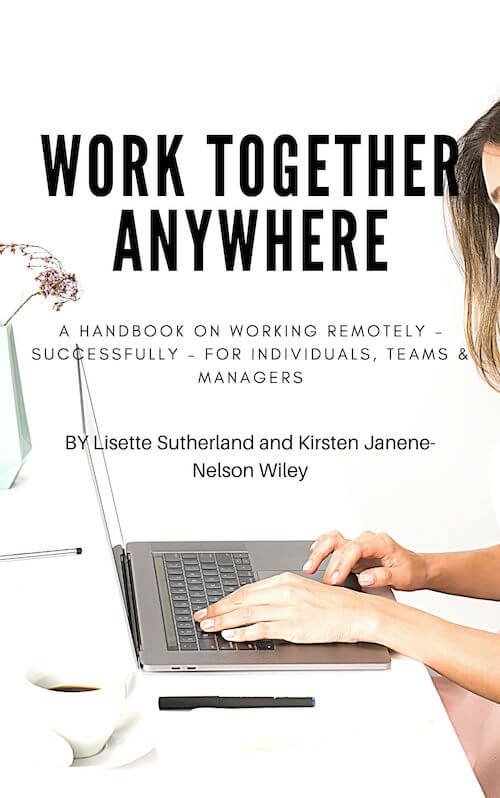
Prefer the print book? Buy on Amazon
As an Amazon Associate, Sumizeit earns from qualifying purchases.
This Work Together Anywhere Book Summary covers the key ideas, lessons, and takeaways in about 20 minutes.
Helps with these goals
Want a Free Weekly Read?
Get a free summary every week straight to your mailbox.
Below is a preview of Sumizeit’s comprehensive human-written summary of Work Together Anywhere by Lisette Sutherland and Kirsten Janene-Nelson Wiley. The full summary is 15-20 minutes long and covers the book’s key ideas in text, audio, visual, and video formats. Unlock the full 20 Minute Summary
Though the remote workforce has been growing in the last few years, the coronavirus pandemic has created an urgent need for remote work solutions - and fast! This book explores the benefits and challenges of a remote workforce, the tools you need to work efficiently from a remote office, and an overview of how remote work is a pivotal part of our changing world. Sutherland and Wiley also discuss the personal benefits that can come from remote work. The book offers an overview for not just managers but all remote employees on how to best adapt to a remote working world.
Between 1995 and 2015, the remote workforce has grown considerably, from only 9% to 37% of people in just twenty years. In 2016, nearly half of all employees reported working from home at least occasionally. The ability to work at home is easier than it’s ever been before because of advancements in file-sharing and messaging technology. It’s much easier to stay in touch and access important information from anywhere in the world.
There are many reasons that employers might consider going fully or partially remote. For one, it reduces overhead cost significantly. Studies have shown that companies can save up to $10,000 per worker per year by going remote. Having a remote workforce also has benefits in terms of finding and keeping the best talent. Many top employees want the flexibility of remote work and will gravitate toward companies that offer the option. Finding good talent is also easier if you don't mind hiring a remote employee – going remote opens up your job pool considerably, and can even mean searching the globe for candidates, rather than focusing your search locally. Companies can save money on salaries by hiring remote employees as well – you don't have to pay someone in Kansas as much as you would someone living in San Fransisco or Manhattan.
Many companies think they can’t work well together without colocating, or sharing an office space. But this couldn’t be farther from the truth. Startups and tech companies have proven for years that amazing products can be created collaboratively by employees located around the world.
The real key to successful remote work is high-bandwidth communication. You need to have an easy way to access and share files, communicate with your team, and connect on an interpersonal level. There are many solutions to these problems, including video conferencing, virtual office software, messaging programs, and more. File-sharing programs make it easy to access what you need when you need it and move files efficiently among team members.
Global teams might find it challenging to work together and manage differences in time zones. For this reason, some teams have started doing north-south, rather than east-west collaboration - for example, someone in New York would work with a team member in Argentina, while team members in…
Work Together Anywhere is essential for remote managers, team leads, and anyone adapting to distributed work environments. It's equally valuable for individual contributors seeking to thrive in remote roles, as well as business leaders evaluating whether remote work aligns with their organizational goals.
As remote work has shifted from optional perk to business necessity, understanding how to build productive, connected teams across distances has become critical. Lisette Sutherland and Kirsten Janene-Nelson Wiley provide practical frameworks and tools to help organizations avoid common pitfalls—from micromanagement to meeting fatigue—while capturing the genuine benefits of distributed work, including cost savings, access to global talent, and improved employee satisfaction.
Turn ideas from Work Together Anywhere into action with a short guided reflection: identify the biggest takeaway, connect it to your life, and commit to one step you can take in the next 24 hours.
Work Together Anywhere is a timely and practical handbook authored by Lisette Sutherland, an established expert in virtual collaboration, and Kirsten Janene-Nelson Wiley, a seasoned publishing professional. The book addresses the rapidly evolving landscape of remote work, accelerated by the global coronavirus pandemic, and offers comprehensive guidance for individuals, teams, and managers navigating this new paradigm. Its significance lies in synthesizing both the technological and human elements essential to remote work success, making it a valuable resource amid the ongoing transformation of workplace norms.
The central argument of Work Together Anywhere is that remote work is not only an inevitable shift in the modern workforce but also a beneficial one when managed with the right tools, trust, and communication strategies. The authors contend that productivity and employee satisfaction can be enhanced outside traditional office settings, provided organizations adopt appropriate technologies, foster interpersonal connections, and implement gradual, agile transitions. Ultimately, the book posits that remote work, far from being a temporary fix, is a sustainable model that can unlock global talent pools and reduce operational costs.
This book is ideal for managers and team leaders seeking to transition their teams to remote work effectively, as well as individual contributors aiming to thrive in distributed environments. Additionally, organizational strategists and HR professionals will find valuable insights into structuring remote work policies that balance productivity with employee well-being. Its accessible yet informed approach also makes it a useful primer for executives contemplating long-term remote or hybrid work models in their companies.
Try a few questions from the Work Together Anywhere quiz. Unlock the full summary for the full quiz and answers that will help the ideas stick.
Question 1 of 5
The summary states that between 1995 and 2015 the remote workforce grew from 9% to 37%.
Question 2 of 5
The summary notes that in 2016 nearly half of all employees reported working from home at least occasionally.
Question 3 of 5
The summary states studies have shown companies can save up to $10,000 per worker per year by going remote.
Question 4 of 5
The summary lists Last Pass (and Dashlane) as examples of password-management tools to consider for remote teams.
Question 5 of 5
The summary explains north-south collaboration with the example of someone in New York working with a team member in Argentina.
Work Together Anywhere by Lisette Sutherland and Kirsten Janene-Nelson Wiley is a practical handbook for remote work success. It covers the business case for remote teams, essential tools and technology, strategies for managing distributed workers, methods for building team culture across distances, and actionable solutions to common remote work challenges like time zone coordination and maintaining trust.
Remote managers, team leads, and organizational leaders evaluating distributed work should prioritize this book. However, it's equally valuable for individual contributors working remotely who want to improve their communication, productivity, and connection to their teams.
Key takeaways include: remote work can save $10,000+ per employee annually while expanding talent access globally; trust and outcome-based metrics matter far more than surveillance; high-quality communication tools and clear processes are essential; building team culture requires intentional effort through virtual celebrations and casual connection spaces; and incremental, agile-based transitions work better than sudden wholesale shifts to remote work.
Focus on measuring outcomes and goals rather than monitoring activity or hours. Avoid micromanagement, provide clear expectations, offer autonomy in how work gets done, celebrate accomplishments meaningfully, and maintain open communication. Regular check-ins and feedback loops help teams stay aligned without requiring constant surveillance.
Work Together Anywhere discusses file-sharing platforms like Google Docs, communication tools for messaging and video conferencing, password managers like LastPass, brainstorming tools like Web Whiteboard, virtual office software, and even physical tools like Rocketbook notepads with digital connectivity. The book emphasizes that the right combination depends on team size, workflow, and time zone distribution.
The book recommends several strategies: pair teams on north-south time zones (rather than east-west) to minimize overlap requirements, implement shift-based schedules where different employees cover different hours, record meetings for asynchronous viewing, and design workflows that don't require constant real-time collaboration. Shift-based approaches allow companies to provide 24-hour coverage while respecting work-life balance.
Establish clear meeting agendas, require a specific outcome for each meeting, record sessions for those who can't attend, use chat or hand-raise features to minimize interruptions, and implement meeting etiquette standards. Equally important: actively protect time for deep work by limiting unnecessary meetings and evaluating whether sync meetings are truly required.
Work Together Anywhere recommends using agile Scrum principles: make changes in small increments, evaluate results before broader rollout, build changes on each other, and include regular check-ins. If emergency transitions are necessary, prioritize clear communication, provide training on new tools, remain patient with the team, and actively solicit feedback on what's working and what needs adjustment.
Sumizeit is a profitable Scomy LLC company based in Miami, Florida. It has been helping readers learn from nonfiction books for 7 years with expert-written summaries in text, audio, podcast, and video.
Join thousands of learners getting smarter every day
"Great experience. Detailed summaries. Loved the gamification feature. Makes learning fun. Good customer service. I recommend Sumizeit to anyone. You'll learn a lot."
"I always felt busy but still wanting to keep up with the book discussion in my friend group. This was a great supplement to help me keep reading the books I find fun while keeping up with important books."
"I love this website. Instead of scrolling social media, I find myself learning a lot. I use it everyday. I recommend this app for anyone who is too busy and wants to get up to speed with their favorite books."
Looking for a Work Together Anywhere Book Summary PDF you can save and revisit offline? Our Work Together Anywhere Book Summary PDF captures the book’s core ideas in a clean, printable format — the key frameworks, takeaways, and structure without the fluff. Download the Work Together Anywhere Book Summary PDF when you want a reference you can annotate, share with your team, or review on the go. Get your Work Together Anywhere Book Summary PDF from the download page below.
Download Work Together Anywhere Book Summary PDFReaders who explored Work Together Anywhere often enjoyed these titles next.
Popular Book Summaries at sumizeit, leading book summary app