


As an Amazon Associate, Sumizeit earns from qualifying purchases.
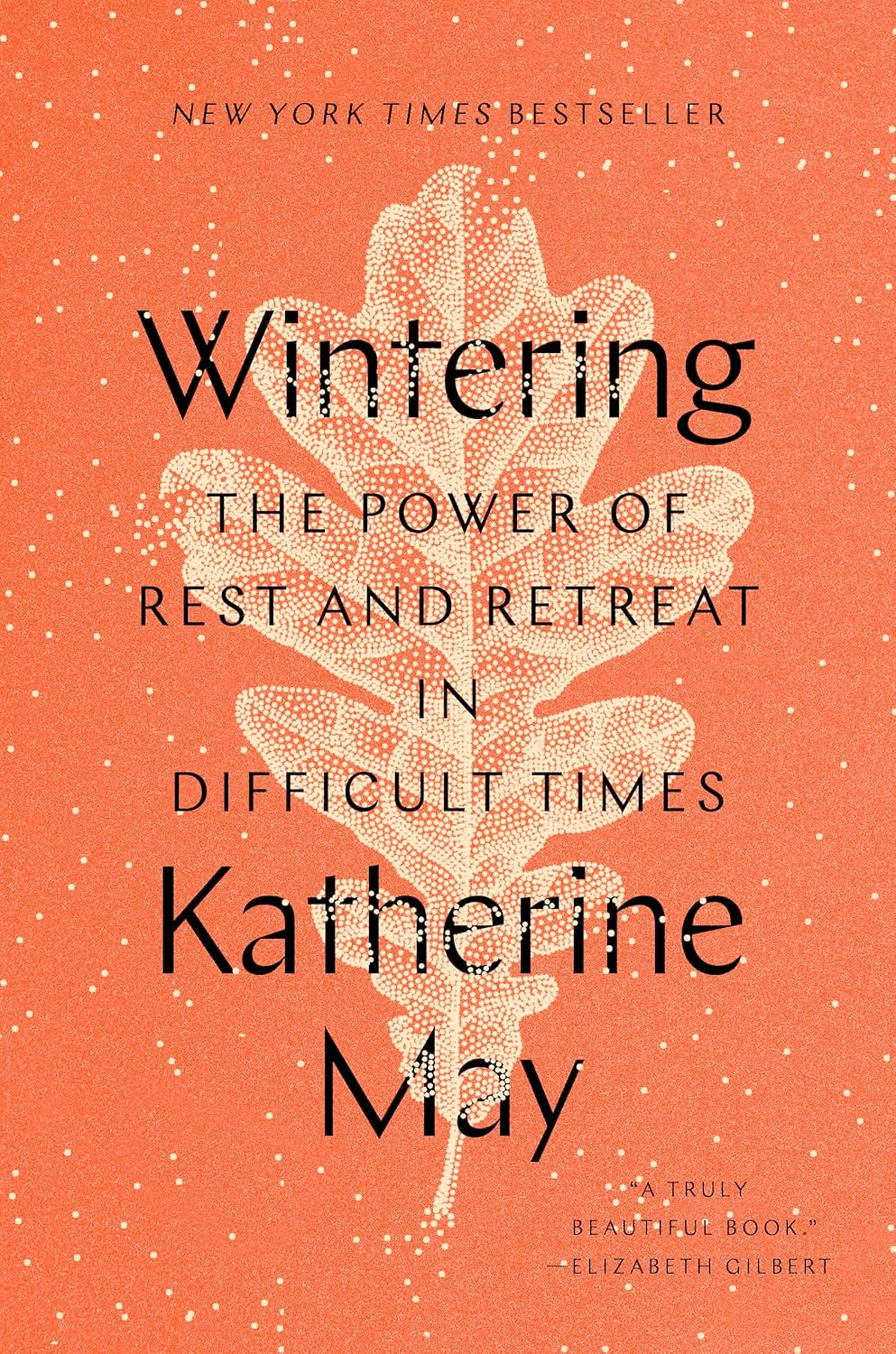
Wintering Book Summary
This Wintering Book Summary covers the key ideas, lessons, and takeaways in about 20 minutes.
The book’s central message is not about overcoming adversity quickly or transforming pain into productivity. It is about learning how to live when progress stalls, when energy disappears, and when identity unravels. Winter requires different skills: patience instead of ambition, care instead of effort, presence instead of planning.
By drawing on nature, culture, ritual, and personal experience, May constructs a language for suffering that is neither sentimental nor dismissive. She affirms that winter is real, unavoidable, and meaningful. It asks something of us—not achievement, but attention.
Ultimately, Wintering teaches that flourishing does not happen despite winter, but because of it. Growth is cyclical. Rest is productive in its own way. And survival, quietly achieved, is a profound form of success.
Helps with these goals
Want the complete 20-minute summary?
- Full structured summary
- Video Summary
- Podcast Summary
- Audio summary
- Key takeaways
- Exercises
- Quiz
- Highlights and notes
- Ask the book with AI
What is in the Wintering book summary?
Below is a preview of Sumizeit’s expert-written summary of Wintering by Katherine May. The full summary covers the book’s key ideas in text, audio, and video.
Wintering by Katherine May is a quiet, expansive meditation on the seasons of human life that arrive without invitation. Rather than treating hardship as a flaw to be corrected or a detour to be escaped, May reframes difficult periods as a distinct phase of living—one that demands its own rhythms, values, and forms of care. The book unfolds as both memoir and cultural inquiry, blending personal experience, nature writing, psychology, folklore, and history to argue that withdrawal, rest, and slowness are not signs of weakness but requirements for survival and renewal.
At its core, Wintering explores what happens when life freezes—when momentum collapses, identities fracture, and the familiar rules for progress no longer apply. These moments might come through illness, grief, burnout, failure, or profound change. May calls these periods “winters,” not to dramatize suffering, but to normalize it. Winter, in her framing, is not a mistake in the system. It is the system.
The book resists tidy solutions. It does not promise that hardship can be optimized or transformed into productivity. Instead, it offers permission: permission to stop pushing, to retreat, to tend quietly to what is essential, and to trust that growth sometimes happens underground, out of sight.
Winter as a Human Condition, Not a Personal Failure
May begins by dismantling the modern assumption that life should move in a constant upward trajectory. Contemporary culture prizes speed, visibility, and perpetual improvement. Against this backdrop, periods of stagnation or retreat are often interpreted as moral failings—evidence that someone has not tried hard enough or remained positive enough.
Wintering challenges this worldview by insisting that downturns are not anomalies. They are as intrinsic to human existence as flourishing. Just as trees shed leaves and animals conserve energy, people too require periods of contraction. Ignoring this reality does not eliminate winter; it only makes it more painful.
May describes wintering as a state of being cut off—emotionally, socially, or professionally. During these times, people may feel exiled from the lives they once recognized. Familiar identities no longer fit, and future plans lose clarity. Importantly, wintering is rarely chosen. It arrives through circumstance, often when resilience is already depleted.
By naming these experiences as seasonal rather than pathological, May reframes suffering as something that happens to us rather than something that is wrong with us. This shift alone becomes a form of relief. When hardship is understood as cyclical, it no longer demands immediate resolution. It asks instead for endurance, care, and time.
The Illusion of Endless Summer
Throughout the book, May critiques the cultural obsession with “summer”—a metaphor for productivity, sociability, and visible success. Modern life, she suggests, is structured as if winter should never come. Workplaces expect uninterrupted performance. Social media rewards constant engagement. Wellness culture often frames rest as something that must be earned.
This relentless expectation creates profound harm. When winter inevitably arrives, people are unprepared. They lack both language and rituals for slowness.
Want the complete 20-minute summary?
- Full structured summary
- Video Summary
- Podcast Summary
- Audio summary
- Key takeaways
- Exercises
- Quiz
- Highlights and notes
- Ask the book with AI
Who should read Wintering?
Wintering is for anyone navigating a difficult season of life—whether through illness, burnout, grief, failure, or profound change. If you've felt like you're falling behind or struggling to maintain productivity during hard times, this book speaks directly to your experience. It's also valuable for those supporting others through hardship, offering language and perspective that reduce shame and normalize withdrawal as a necessary phase of living.
Why does Wintering matter?
In a culture obsessed with constant productivity and upward momentum, Wintering by Katherine May arrives as a countercultural breath of permission. As burnout, mental health crises, and life-altering circumstances affect more people than ever, this book offers a radically different framework: that difficult seasons aren't failures to overcome but essential phases of human existence. In validating rest, slowness, and retreat, it challenges us to reimagine success itself.
What are the key themes in Wintering?
- Winter as a natural human condition, not a personal failure
- The illusion of endless summer and unsustainable productivity culture
- Rest and slowness as reparative necessities, not indulgences
- Ritual and routine as anchors during uncertainty
- The body's wisdom in guiding survival and healing
- Finding beauty and clarity through reduction and sparseness
- Integration over erasure: carrying winter's lessons forward
What are the key lessons from the Wintering book summary?
Hardship is cyclical, not pathological
Difficult periods arrive without invitation and are as intrinsic to human existence as flourishing. Reframing these times as seasonal rather than evidence of personal failure shifts them from shameful failure to natural rhythm.
Modern culture denies winter at its peril
Society structures itself as if winter should never come, leaving people unprepared with neither language nor rituals for slowness. This denial intensifies shame when hardship inevitably arrives.
Slowness is not laziness; it is recalibration
In winter, the nervous system is overwhelmed and rest becomes reparative rather than indulgent. Slowing down is a deliberate, skilled response to limitation, not a character flaw.
Listen to the body as an authority
Pain, fatigue, and numbness are signals deserving attention, not obstacles to override. The body knows its limits before the mind accepts them, and honoring this wisdom is foundational to healing.
Rituals create continuity in uncertainty
Daily rituals—lighting candles, preparing nourishing food, walking familiar paths—become gestures of care and psychological infrastructure. Their power lies in repetition and reliability, not novelty.
Winter strips life to essentials, revealing what truly matters
When ambition shrinks and survival becomes primary, illusions fall away. This exposure can be frightening, but it forces honest choices about values and priorities that summer's momentum allowed us to avoid.
Nature teaches survival without denial
Trees do not bloom in winter; animals conserve energy rather than maintain summer routines. Nature does not moralize rest—it treats it as functional wisdom humans can relearn.
Solitude differs fundamentally from isolation
When chosen or accepted, solitude is restorative; when imposed or internalized as rejection, it is damaging. Winter requires the right connections—those that offer safety rather than demand energy.
Creativity deepens during retreat, not just abundance
With fewer distractions and external validation demands, attention sharpens and focus deepens. Winter is a season for libraries and reflection, where creative work becomes exploration without pressure.
Preparation reduces panic but cannot eliminate winter
Building savings, cultivating relationships, and developing adaptable skills do not prevent hardship but make endurance possible. Awareness of vulnerability, paradoxically, fosters resilience.
Reemergence requires integration, not erasure
Spring arrives gradually, and emerging from winter does not mean returning to who you were before. Some losses are permanent, and those who have wintered carry this knowledge forward, reshaping future seasons.
Success in winter means stability, not output
Getting through the day without collapse becomes the achievement. Progress is measured by endurance and care, not by visible productivity or recognition.
Winter reveals what abundance conceals
Reduction exposes structure and beauty invisible during plenty. Unexpected sources of support and resilience become visible; small pleasures take on heightened significance.
The nervous system has legitimate limits
Overwhelm is not weakness but information. When the nervous system signals it cannot continue, that signal deserves respect and response, not force.
Survival itself is a profound form of success
In winter, quietly achieving survival—maintaining relationships, caring for dependents, persisting through fear—constitutes genuine accomplishment worthy of recognition.
Winter changes perception permanently
Those who have experienced wintering develop sharpened attention and heightened appreciation for simplicity. This altered perception cannot be unlearned and shapes all future seasons.
Want the complete 20-minute summary?
- Full structured summary
- Video Summary
- Podcast Summary
- Audio summary
- Key takeaways
- Exercises
- Quiz
- Highlights and notes
- Ask the book with AI
How can you apply ideas from Wintering?
- Establish small daily rituals—lighting a candle, brewing tea mindfully, or taking a familiar walk—to create continuity and psychological anchoring during difficult periods
- Practice cold water immersion or other grounding techniques to interrupt anxiety spirals and return attention to immediate bodily sensation
- Redefine success metrics during hard times from productivity and output to stability, rest, and simple persistence
- Curate selective relationships that offer safety and acceptance rather than demand energy; withdraw from those that drain without reciprocity
- Document what you discover matters most during winter—values, people, simple pleasures—and protect these insights as you emerge
- Prepare for potential winters before they arrive by building financial reserves, deepening meaningful relationships, and developing flexible skills
- Use winter periods for study, reading, and reflection rather than attempting to maintain normal output; treat this as legitimate work
What common mistakes do readers make with Wintering?
- Attempting to force yourself through winter using the same intensity that sustained summer—pace and pressure that no longer work and cause additional harm
- Hiding struggles and isolating completely, internalizing shame as if your inability to cope is unique rather than universal
- Treating winter as an interruption to real life rather than accepting it as life itself, leading to perpetual self-blame and urgency to escape
- Refusing rest as if accepting limitations is weakness, then burning out further; confusing slowness with laziness rather than recognizing it as skilled adaptation
Sumizeit Exercises Apply what you've learned
Turn ideas from Wintering into action with a short guided reflection: identify the biggest takeaway, connect it to your life, and commit to one step you can take in the next 24 hours.
What is the expert analysis of Wintering?
Overview
Wintering by Katherine May stands as a significant contribution to contemporary literature on human resilience, blending memoir, cultural critique, and natural philosophy. May, a British author and journalist, draws from her personal experience of hardship alongside a rich tapestry of folklore, psychology, and nature writing to challenge prevailing cultural narratives about productivity and success. The book’s resonance lies in its gentle yet profound redefinition of difficult life phases—not as aberrations or failures, but as essential, cyclical seasons that demand new forms of care and understanding.
Core Thesis
At the heart of Wintering is the argument that periods of hardship—whether illness, grief, burnout, or existential crisis—are not disruptions to be overcome swiftly or optimized for productivity, but intrinsic phases of human existence akin to natural seasons. May contends that modern society’s obsession with continuous growth, visibility, and relentless forward momentum obscures the necessity and value of “winter” phases, which require withdrawal, rest, and recalibration. By embracing winter as a natural and meaningful state, individuals can cultivate endurance, patience, and a deeper form of flourishing that integrates vulnerability rather than denying it.
Strengths
- Integrative Approach: May’s synthesis of personal narrative with cultural history, natural science, and folklore enriches the book’s texture, making abstract concepts tangible and emotionally resonant.
- Nuanced Treatment of Hardship: The refusal to romanticize suffering or offer facile solutions lends the work authenticity and depth, acknowledging the discomfort and isolation winter brings.
- Reframing of Rest and Slowness: By elevating slowness and ritual as vital survival strategies rather than signs of weakness, May challenges dominant productivity paradigms in a way that feels both radical and accessible.
- Attention to the Body: The emphasis on somatic experience and sensory awareness foregrounds the embodied nature of suffering and healing, a perspective often neglected in psychological discourse.
- Cultural and Ecological Literacy: Drawing parallels between human experience and natural cycles, May invites a broader ecological consciousness that situates personal hardship within a larger, cyclical framework.
Critiques & Counterarguments
- Limited Empirical Foundation: While rich in metaphor and personal insight, the book’s arguments rely heavily on anecdotal evidence and cultural observation, lacking rigorous empirical support from psychological or neuroscientific research on resilience and recovery.
- Potential Oversimplification of Complex Hardship: The framing of all difficult periods as “winter” risks glossing over the heterogeneity of suffering, including systemic inequalities, trauma, and mental illness, which may not fit neatly into seasonal metaphors or be resolved through rest and ritual alone.
- Romanticizing Nature’s Cycles: The appeal to natural cycles as models for human experience may obscure important differences between ecological processes and individual psychological realities, potentially encouraging passivity in contexts where active intervention is necessary.
- Contrasting Psychological Schools: Cognitive-behavioral and positive psychology approaches emphasize active coping and cognitive restructuring, which may conflict with May’s emphasis on endurance and acceptance, raising questions about the balance between acceptance and agency.
- Contemporary Cultural Contexts: The book’s critique of modern productivity culture is compelling but may underestimate the structural and economic constraints that limit individuals’ ability to “winter” safely, especially for marginalized populations lacking social or financial safety nets.
Who Should Read This
Wintering is ideally suited for readers seeking a compassionate and contemplative exploration of life’s inevitable downturns—those grappling with burnout, grief, chronic illness, or major life transitions who may feel alienated by dominant narratives of relentless progress. It will also appeal to individuals interested in nature writing, philosophy of resilience, and cultural history, as well as professionals in mental health and wellness fields looking for a nuanced framework that honors rest and vulnerability. However, readers seeking prescriptive self-help strategies or empirical psychological models may find the book’s poetic and meditative style less directly applicable.
Frequently asked questions about the Wintering book summary
What is Wintering about?
Wintering by Katherine May is a meditation on life's difficult seasons—periods of hardship, illness, burnout, grief, or profound change when momentum collapses and familiar identities no longer fit. Rather than treating these periods as failures to overcome quickly, May reframes them as essential phases of existence with their own logic and value. The book blends memoir, nature writing, psychology, and folklore to argue that rest, slowness, and withdrawal are not signs of weakness but survival skills necessary for renewal.
Who should read Wintering?
Wintering speaks to anyone currently navigating hardship or anticipating future difficulty. If you've struggled during illness, burnout, grief, failure, or major life change, this book offers validation and a new language for understanding your experience. It's equally valuable for those supporting others through hard times, caregivers, and anyone questioning why modern culture demands constant productivity. The book is for readers seeking permission to slow down and perspective that reduces shame.
What are the main takeaways from Wintering?
The central message is that difficult seasons are not interruptions to real life but essential phases requiring different skills: patience over ambition, care over effort, and presence over planning. May teaches that rest is reparative rather than indulgent, that slowness is skilled adaptation not laziness, and that survival itself constitutes profound success. Ultimately, Wintering argues that growth is cyclical—flourishing happens because of winter's lessons, not despite it—and that integration of hardship reshapes all future seasons with greater wisdom and compassion.
How does Katherine May define winter?
May defines winter as a state of being cut off—emotionally, socially, or professionally—when familiar identities no longer fit and future plans lose clarity. Winter is rarely chosen; it arrives through circumstance when resilience is depleted. Rather than treating it as pathological, May uses it as a metaphor for any difficult season when life freezes and momentum collapses. By naming these experiences as seasonal rather than permanent failings, she reframes suffering as something that happens to us rather than something wrong with us.
What role do rituals play in Wintering?
Rituals are central to surviving winter, functioning as psychological infrastructure that creates continuity and order when meaning feels fractured. May explores how societies historically marked winter through communal practices like solstice celebrations and shared meals. On a personal level, daily rituals—lighting candles, preparing nourishing food, walking familiar paths—become anchors and gestures of care when larger goals feel unreachable. Their power lies in repetition and reliability, offering reassurance that you are still here and that is enough for today.
Does Wintering promise that hardship leads to growth?
No. Wintering explicitly resists the narrative that hardship must be redeemed through triumph or transformed into productivity. May does not promise that suffering makes you stronger or that winter always yields obvious growth. Instead, she emphasizes integration: those who have wintered carry new knowledge about limits, vulnerability, and care that cannot be erased. Spring may arrive gradually, but it does not undo winter's impact. Survival is the achievement, and the traces winter leaves behind are evidence of that achievement.
How does Wintering challenge modern culture's approach to struggle?
May critiques contemporary culture's obsession with constant productivity, visible success, and perpetual upward momentum—what she calls the illusion of endless summer. This worldview denies that winter inevitably comes and leaves people unprepared with neither language nor rituals for slowness. When hardship arrives, people attempt to force themselves through with the same intensity that once worked, only to find it fails and compounds their shame. Wintering calls for recovering lost seasonal literacy and building cultural permission for rest, retreat, and withdrawal.
About Sumizeit
Sumizeit is a profitable Scomy LLC company based in Miami, Florida. It has been helping readers learn from nonfiction books for 7 years with expert-written summaries in text, audio, podcast, and video.
Want the complete 20-minute summary?
- Full structured summary
- Video Summary
- Podcast Summary
- Audio summary
- Key takeaways
- Exercises
- Quiz
- Highlights and notes
- Ask the book with AI
Here's why readers love Sumizeit
Join thousands of learners getting smarter every day
"Great experience. Detailed summaries. Loved the gamification feature. Makes learning fun. Good customer service. I recommend Sumizeit to anyone. You'll learn a lot."
"I always felt busy but still wanting to keep up with the book discussion in my friend group. This was a great supplement to help me keep reading the books I find fun while keeping up with important books."
"I love this website. Instead of scrolling social media, I find myself learning a lot. I use it everyday. I recommend this app for anyone who is too busy and wants to get up to speed with their favorite books."
Wintering Book Summary PDF
Looking for a Wintering Book Summary PDF you can save and revisit offline? Our Wintering Book Summary PDF captures the book’s core ideas in a clean, printable format — the key frameworks, takeaways, and structure without the fluff. Download the Wintering Book Summary PDF when you want a reference you can annotate, share with your team, or review on the go. Get your Wintering Book Summary PDF from the download page below.
Download Wintering Book Summary PDFPeople also liked these summaries
Readers who explored Wintering often enjoyed these titles next.



Want the complete 20-minute summary?
- Full structured summary
- Video Summary
- Podcast Summary
- Audio summary
- Key takeaways
- Exercises
- Quiz
- Highlights and notes
- Ask the book with AI
Featured Book Titles
Popular Book Summaries at sumizeit, leading book summary app
