


Prefer the print book? Buy on Amazon
As an Amazon Associate, Sumizeit earns from qualifying purchases.
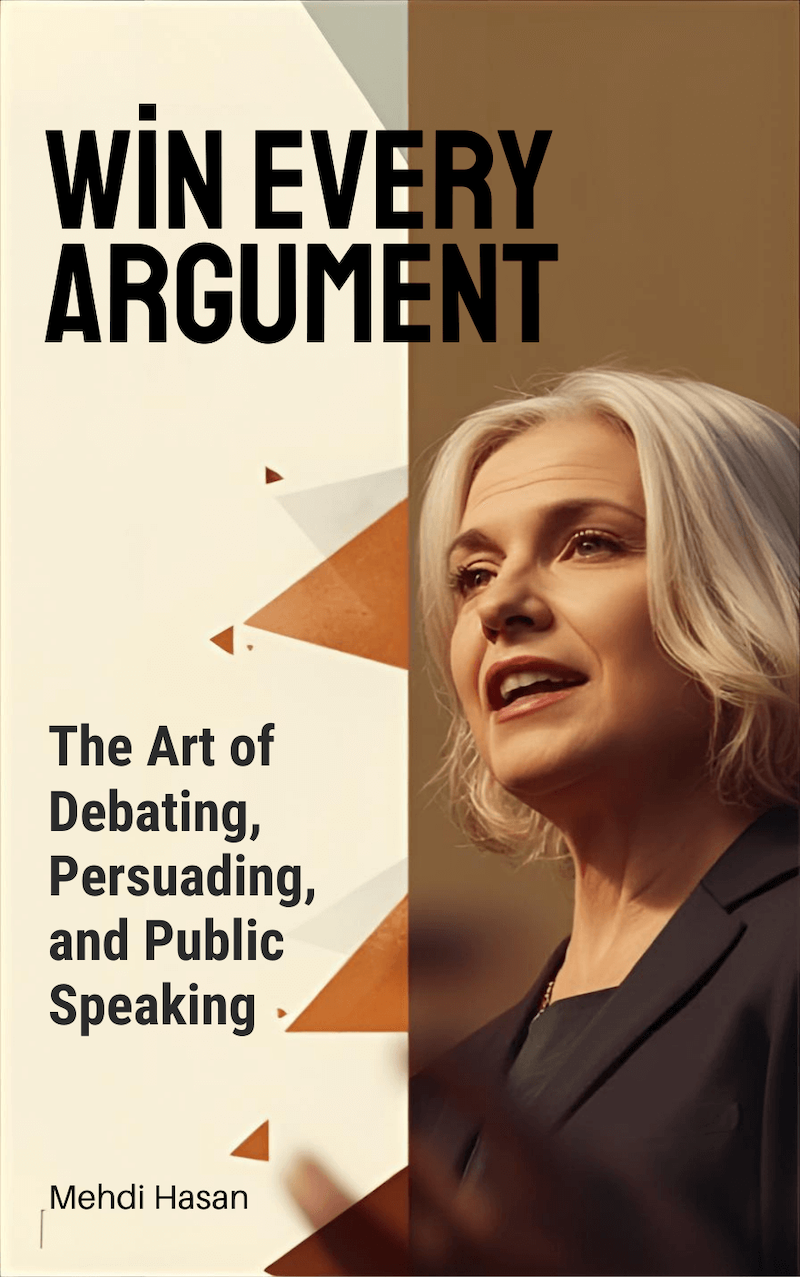
Win Every Argument Book Summary
This Win Every Argument Book Summary covers the key ideas, lessons, and takeaways in about 20 minutes.
Short Description:
Win Every Argument teaches persuasion through preparation and emotional intelligence.
Helps with these goals
Preview the Win Every Argument book summary
Below is a preview of Sumizeit’s comprehensive human-written summary of Win Every Argument by Mehdi Hasan. The full summary is 15-20 minutes long and covers the book’s key ideas in text, audio, visual, and video formats. Unlock the full 20 Minute Summary
Win Every Argument by Mehdi Hasan is a comprehensive guide to developing powerful persuasion skills and becoming an effective communicator in any setting—from public debates and professional negotiations to daily disagreements with friends or family. Hasan draws from his extensive experience as a political interviewer and broadcaster to illustrate how strategic speaking, emotional intelligence, evidence-based reasoning, and tactical techniques can shape outcomes. Rather than glorifying conflict, he argues that persuasive skill empowers individuals to defend truth, promote justice, and advocate for meaningful change. The book teaches readers how the most successful arguers win not because they are louder or more aggressive, but because they understand psychology, anticipate opposition, and speak with credibility and confidence.
Understanding the Psychology of Persuasion
Hasan emphasizes that persuasion begins not with speaking—but with understanding how people think. Decision-making is rarely governed by pure logic. People align with ideas that validate their beliefs, identity, and emotions. For example, climate scientists frequently lose public support not because the data is weak, but because they speak in technical language while opponents appeal to values like economic survival or personal freedom. In arguments like this, emotional framing often outweighs scientific accuracy.
A speaker trying to convince a skeptical crowd to support environmental reform might begin not with data on carbon emissions but with a personal story of a community devastated by wildfires or farmers losing crops due to drought. These emotional entry points establish empathy before introducing statistics. Hasan argues that audiences first need to feel something before they are willing to think something.
A practical example: a manager negotiating for new safety protocols might describe the real human impact of past injuries instead of leading with compliance regulations. By appealing first to concern for employee wellbeing, they create openness to later logistical details.
The Power of Storytelling in Persuasion
Humans connect more deeply to narrative than to raw information. A story acts as a bridge from abstract ideas to real-world experience. Hasan illustrates this with the example of public defenders who often rely on storytelling in court: rather than presenting their client as a list of facts, they depict them as a human being with struggles, relationships, and dreams. That narrative can influence sentencing more powerfully than isolated evidence.
Another example is politicians invoking specific citizens during speeches—such as referencing an immigrant who worked three jobs to support their family—to give policy discussions emotional texture. Teachers use stories to bring history or science to life; therapists use stories to help clients reinterpret trauma; activists use stories to expose injustice. Stories invite audiences to see themselves inside an argument rather than outside it.
The lesson: prepare several vivid anecdotes that illustrate your position, such as customer success stories in business, past project wins in a job interview, or personal turning points when discussing personal growth or ethics.
Using Humor as a Strategic Tool
Humor functions as a disarming tactic, making both the speaker and the audience more comfortable.
Want the complete 20-minute summary?
- Full structured summary
- Video Summary
- Podcast Summary
- Audio summary
- Key takeaways
- Exercises
- Quiz
- Highlights and notes
- Ask the book with AI
Who should read Win Every Argument?
This book is for anyone who wants to communicate more persuasively, whether in professional negotiations, public speaking, or everyday disagreements. Leaders, activists, professionals, students, and anyone seeking to influence others effectively will find actionable techniques grounded in real-world examples.
Why does Win Every Argument matter?
In an era of polarization and misinformation, the ability to argue effectively and ethically is more valuable than ever. Win Every Argument teaches readers how to defend truth, expose fallacies, and inspire meaningful change through skilled communication rather than aggression or manipulation.
What are the key themes in Win Every Argument?
- Persuasion as a learnable craft rooted in psychology and preparation
- The balance between emotional appeal and evidence-based reasoning
- Strategic thinking and anticipating opposition
- Confidence through mastery and deliberate practice
- Ethical argumentation as a force for justice and change
- Active listening as a competitive advantage
- Storytelling as a bridge between abstract ideas and human experience
How can you apply ideas from Win Every Argument?
- Open negotiations with personal stories or emotional context before presenting data or logical arguments about salary, contracts, or business proposals
- Prepare three key supporting points structured around the Rule of Three for presentations, pitches, or speeches to increase memorability and retention
- Use self-deprecating humor in tense meetings or conflicts to disarm defensiveness and shift energy toward collaboration rather than confrontation
- Research and document evidence—studies, citations, precedents, historical data—before high-stakes arguments to establish unquestionable credibility
- Practice anticipated objections and counterarguments aloud and with others to build fluency and confidence under real-world pressure
- Ask hypothetical questions in disagreements to reveal logical inconsistencies rather than stating criticisms directly, allowing others to discover flaws
- Use active listening in conversations to detect what opponents avoid or contradict, then reference their own words in rebuttals for maximum persuasive impact
- End presentations, speeches, and difficult conversations with a memorable story, emotional reminder, or clear call to action that audiences will remember long-term
What common mistakes do readers make with Win Every Argument?
- Leading with statistics and data when audiences need emotional resonance first; flooding listeners with facts before establishing empathy or relevance
- Relying on logic alone while ignoring how identity, values, and beliefs shape what people accept; underestimating the power of emotional framing
- Mocking opponents or using humor that alienates rather than disarms; humor that feels petty or mean-spirited backfires and damages credibility
- Preparing responses while listening instead of truly hearing what opponents say; missing opportunities to spot contradictions, logical gaps, or avoidance
- Rambling without clear structure, causing arguments to lose coherence and make conclusions forgettable; skipping the Rule of Three or other organizing frameworks
- Overlooking the power of endings and treating conclusions as afterthoughts; failing to rehearse final messages until they land with intentional emotional impact
Sumizeit Exercises Apply what you've learned
Turn ideas from Win Every Argument into action with a short guided reflection: identify the biggest takeaway, connect it to your life, and commit to one step you can take in the next 24 hours.
What is the expert analysis of Win Every Argument?
Overview
Win Every Argument is a compelling treatise on the art and science of persuasion authored by Mehdi Hasan, a distinguished journalist and political commentator renowned for his incisive interviewing skills and analytical rigor. Drawing from decades of experience in high-stakes media environments, Hasan crafts a manual that transcends mere rhetorical flourish, positioning argumentation as a disciplined, ethical practice essential for public discourse, leadership, and personal influence. The book’s significance lies in its synthesis of psychological insight, storytelling, humor, and strategic thinking, making it a timely and practical guide for navigating today’s polarized communicative landscape.
Core Thesis
Hasan’s central argument is that winning arguments is less about overpowering opponents with volume or aggression and more about mastering a multifaceted craft that integrates emotional intelligence, evidence-based reasoning, and strategic communication. Persuasion begins with understanding audience psychology—recognizing that people are moved first by emotion and identity before logic. Effective arguers deploy storytelling, humor, and structured reasoning to build credibility and connection, while employing tactical moves such as concessions and reframing to maintain control. Ultimately, Hasan contends that argumentation is a force for truth and justice, requiring preparation, empathy, and ethical intent rather than mere victory.
Strengths
- Integration of Psychology and Rhetoric: Hasan adeptly bridges cognitive science and classical rhetoric, emphasizing how emotional resonance precedes intellectual assent, a nuance often overlooked in persuasion literature.
- Practical, Real-World Examples: The book is richly illustrated with diverse scenarios—from political debates to workplace negotiations—grounding abstract principles in relatable contexts.
- Strategic Use of Humor and Storytelling: Hasan’s emphasis on narrative and humor as tools for disarming opposition and fostering rapport adds depth to conventional argument strategies.
- Ethical Framing of Argumentation: Rather than glorifying conflict, Hasan situates persuasion as a means to advocate for truth and justice, which elevates the discourse beyond mere competition.
- Clear Structural Guidance: The advocacy of frameworks like the Rule of Three and rehearsed conclusions provides readers with actionable methods to enhance clarity and memorability.
Critiques & Counterarguments
- Potential Oversimplification of Complex Debates: While Hasan’s strategies are effective for many contexts, some arguments—especially those involving deeply entrenched ideological divides—may resist persuasion through storytelling or humor alone, requiring more nuanced approaches.
- Limited Engagement with Opposing Schools of Thought: The book largely assumes persuasion is a linear process culminating in agreement, whereas deliberative democracy theorists emphasize dialogue and mutual understanding over “winning.”
- Risk of Manipulation: Though Hasan advocates ethical persuasion, the techniques—such as “judo moves” and setting traps—could be appropriated for manipulative ends, a tension that the book acknowledges but might understate.
- Evidence Selection Bias: The advice to use “potent facts” rather than overwhelming data is pragmatic but risks cherry-picking evidence, which opponents might exploit to accuse arguers of intellectual dishonesty.
- Contextual Limitations of Humor: Humor’s effectiveness is culturally contingent and can misfire, especially in cross-cultural or highly sensitive settings, a complexity that receives limited exploration.
Who Should Read This
Win Every Argument is ideal for professionals engaged in public speaking, negotiation, leadership, journalism, and activism who seek to refine their persuasive abilities with ethical rigor and psychological insight. It also benefits academics and students of communication, rhetoric, and political science interested in practical applications of argument theory. Moreover, anyone navigating contentious personal or social conversations will find Hasan’s blend of strategy and empathy invaluable for fostering influence without alienation. Readers looking for a principled yet pragmatic roadmap to persuasion in an era of misinformation and polarization will find this book both instructive and inspiring.
Frequently asked questions about the Win Every Argument book summary
What is Win Every Argument about?
Win Every Argument by Mehdi Hasan is a practical guide to developing persuasion skills and becoming an effective communicator in any setting—from professional negotiations and public debates to personal relationships. The book teaches readers how to combine emotional intelligence, evidence-based reasoning, storytelling, and strategic techniques to influence others ethically and defend truth.
Who should read Win Every Argument?
This book is for anyone who wants to communicate more persuasively, including leaders, professionals, activists, students, job interviewees, and people who engage in difficult conversations. Whether you're negotiating a salary, giving a presentation, debating in public, or navigating personal disagreements, the techniques apply widely.
What are the main takeaways from Win Every Argument?
The core message is that persuasion is a learnable craft grounded in preparation, storytelling, emotional intelligence, and confident delivery. Key takeaways include understanding how emotion precedes logic, using narrative to connect ideas to human experience, structuring arguments for clarity and retention, listening actively to reveal opportunities, and ending with memorable conclusions that inspire action.
How does Mehdi Hasan define winning an argument?
Hasan defines winning not as defeating opponents aggressively but as effectively communicating ideas that matter and inspiring meaningful action. Winning is about defending truth, exposing misinformation, and advocating for justice—using persuasive skill to influence opinions ethically rather than to dominate or humiliate others.
What is the relationship between emotion and logic in persuasion?
According to Win Every Argument, emotion opens the door while evidence wins long-term support. Audiences first need to feel something through stories, personal connection, or emotional framing before they are willing to think something. Once you establish emotional resonance, evidence and logic then solidify credibility and lasting conviction.
What specific techniques does the book teach for handling opposition?
Win Every Argument teaches rhetorical 'judo moves' including concession (acknowledging small truths in opponent arguments), preemptive rebuttal (addressing criticisms before opponents raise them), reframing (shifting perspective entirely), and setting intellectual traps (asking hypothetical questions that expose logic gaps). These techniques maintain control and momentum even when attacked.
How does active listening improve argumentation?
Active listening reveals opportunities by detecting logical fallacies, emotional cues, contradictions, and evasions. By truly hearing what opponents say rather than just preparing responses, you can use their own words against them in rebuttals and point out avoidance more effectively than arguing facts alone.
What role does preparation play in developing confidence?
Hasan emphasizes that confidence is a performance skill built through deliberate practice, not an innate trait. Rehearsing aloud, recording yourself, anticipating objections, and practicing in front of others builds fluency and makes outcomes feel familiar. Strong body language and mental strategies like visualization further reinforce confidence under pressure.
About Sumizeit
Sumizeit is a profitable Scomy LLC company based in Miami, Florida. Our founders, Clemens Raemy and Weina Scott, are successful entrepreneurs with several exits. Sumizeit is a popular book summary app / micro learning app used by busy professionals and entrepreneurs with over 2,500 non-fiction book summaries and 10,000 podcast summaries in text, audio, visual, podcast, and video format. We also have stellar retention tools to make ideas stick - such as flashcards with spaced repetition, quizzes, streaks, highlighting and notes, daily challenges, riddles, mini-courses, meditation, and more. You won't only learn the idea, but also remember it. Over 90% of our users change their habits with Sumizeit.
Upgrade Now
Here's why readers love Sumizeit
Join thousands of learners getting smarter every day
"Great experience. Detailed summaries. Loved the gamification feature. Makes learning fun. Good customer service. I recommend Sumizeit to anyone. You'll learn a lot."
"I always felt busy but still wanting to keep up with the book discussion in my friend group. This was a great supplement to help me keep reading the books I find fun while keeping up with important books."
"I love this website. Instead of scrolling social media, I find myself learning a lot. I use it everyday. I recommend this app for anyone who is too busy and wants to get up to speed with their favorite books."
Win Every Argument Book Summary PDF
Looking for a Win Every Argument Book Summary PDF you can save and revisit offline? Our Win Every Argument Book Summary PDF captures the book’s core ideas in a clean, printable format — the key frameworks, takeaways, and structure without the fluff. Download the Win Every Argument Book Summary PDF when you want a reference you can annotate, share with your team, or review on the go. Get your Win Every Argument Book Summary PDF from the download page below.
Download Win Every Argument Book Summary PDFPeople also liked these summaries
Readers who explored Win Every Argument often enjoyed these titles next.




Ready to read the whole thing?
- Full structured summary
- Video Summary
- Podcast Summary
- Audio summary
- Key takeaways
- Exercises
- Quiz
- Highlights and notes
- Ask the book with AI
Featured Book Titles
Popular Book Summaries at sumizeit, leading book summary app