


As an Amazon Associate, Sumizeit earns from qualifying purchases.
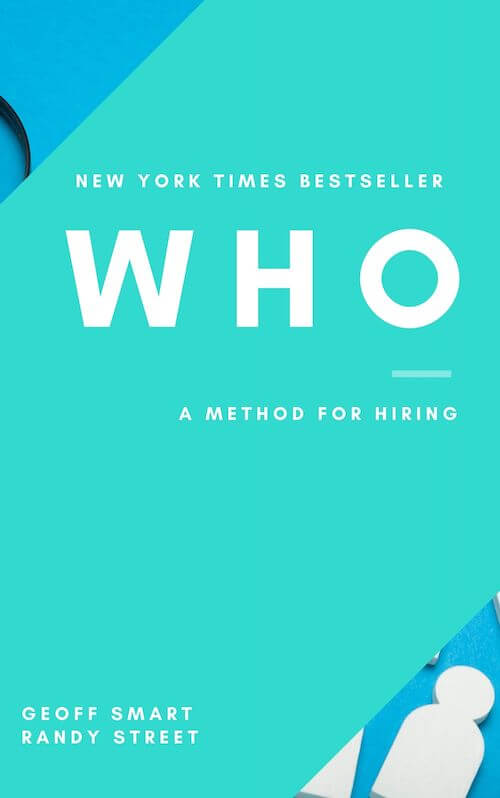
Who Book Summary
This Who Book Summary covers the key ideas, lessons, and takeaways in about 20 minutes.
Want the complete 20-minute summary?
- Full structured summary
- Video Summary
- Podcast Summary
- Key takeaways
- Exercises
- Quiz
- Highlights and notes
- Ask the book with AI
What is in the Who book summary?
Below is a preview of Sumizeit’s expert-written summary of Who by Geoff Smart,Randy Street. The full summary covers the book’s key ideas in text, audio, and video.
In this book, the authors argue that who you choose to hire can make or break your business, either costing or saving your company a fortune. They go on to explain how broken, outdated, but somehow still trendy hiring methods keep companies from finding the right people from the beginning and losing more with every inadequate hire. They propose their ultimate solution, the “A Method for Hiring”, which offers an organized way to find and recruit the best people for your company’s needs.
Hiring errors can be extremely costly. Choosing the wrong person typically ends up costing 15 times their salary.
When looking for your next employee, you’re hoping to strike gold. You want to find the person that will perform exceptionally, a part of the top 10% performers who can meet all the outcomes you set for them.
You’re probably wondering why in reality, hiring managers end up settling for less. In fact, managers make 50% of their overall mistakes during the hiring process, says famed management consultant Peter Drucker, costing their team money and resources by choosing the wrong person.
Just how much do hiring mistakes cost a company? The authors found that it costs, on average, 15 times the hire’s base salary. Some of these costs come from the hire’s poor decisions on the job, but a majority come from the labor needed to fire, replace, and then onboard new talent.
In other words, a bad hire is never worth the consequences. To stop this cycle of trial-and-error, the authors recommend stepping back and taking a close look at your hiring process. How can you select a reliable candidate from the beginning and avoid these extreme costs?
Bad hiring happens because managers use inadequate and outdated techniques to select their candidates instead of an organized system.
Where are hiring mangers going wrong? They may not understand the demands of the job or feel none of the candidates in their pool of potential hires meets their standards. But most of the time, managers hire the wrong people because their hiring process isn’t systematized.
Instead, hiring managers rely on what the authors call “voodoo hiring methods”, or methods that rely on short-cuts instead of careful and balanced evaluation.
For example, an “art critic” manager expects to understand a candidate based on a short first impression, likely to be fooled by appearances like the candidate’s charisma. A “prosecutor” may ask indirect and tricky questions in interviews to try and get the candidate to slip up, putting the candidate on the defensive. A “fortune-teller” manager asks candidates about hypothetical future problems which have little to do with the candidate’s ability to handle the current problem of the company while an “animal lover” asks bizarre questions like “what’s your spirit animal?”.
Not only do managers lean on unhelpful interview questions, but they squander interview time. A “chatterbox” manager spends the interview making small talk while a “suitor” spends it trying to sell the company, instead of collecting information about the potential hire.
Want the complete 20-minute summary?
- Full structured summary
- Video Summary
- Podcast Summary
- Key takeaways
- Exercises
- Quiz
- Highlights and notes
- Ask the book with AI
Who should read Who?
Who is essential for hiring managers, executives, and business leaders who want to build high-performing teams. Whether you're filling your first role or managing dozens of positions, this book provides a systematic approach to identifying and recruiting A-players who will drive real business results.
Why does Who matter?
Hiring mistakes are among the costliest errors a company can make, averaging 15 times an employee's base salary when accounting for poor performance, turnover, and replacement costs. In today's competitive talent market, having a structured hiring system gives companies a decisive advantage in finding exceptional people who fit both the role and the culture.
What are the key themes in Who?
- The true cost of bad hiring decisions
- Replacing subjective gut feeling with systematic processes
- Understanding job requirements before searching for talent
- Building and maintaining a candidate pipeline
- The art of deeper candidate assessment
- Reading between the lines with references
- Selling the opportunity to top candidates
- The distinction between A players and average performers
What are the key lessons from the Who book summary?
Bad hires cost 15 times their salary
When you factor in poor decisions, lost productivity, and replacement costs, a single wrong hire creates substantial financial damage that extends far beyond the initial salary investment.
Managers make 50% of their mistakes during hiring
According to management expert Peter Drucker, the hiring decision is where leaders make the most consequential errors, making it critical to apply rigorous thinking to the process.
Voodoo hiring methods waste time and money
Relying on first impressions, gut feelings, hypothetical questions, and personality tests leads to poor decisions because these approaches don't actually predict job performance.
Create a scorecard before you search
Define the job's mission, expected outcomes, and required competencies upfront so you know exactly what success looks like before evaluating any candidates.
Build your talent pool before you need it
Maintaining a network of 30 potential candidates and staying in regular contact means you're prepared to move quickly when positions open rather than scrambling to find people.
Network referrals are the most reliable source
Recommendations from trusted employees and industry contacts produce better-quality candidates than job postings or cold recruiting because the referrer has already vouched for capability.
Incentivize employee referrals
Offering bonuses for successful referrals creates a continuous stream of high-quality candidates and turns your workforce into talent scouts.
Use a four-stage interview process
Screening calls, detailed work history interviews (TopGrading), team focus interviews, and reference checks progressively deepen your understanding of each candidate.
TopGrading reveals the complete work history
By systematically reviewing each job, accomplishments, team dynamics, and reasons for leaving, you uncover patterns that predict how they'll perform in your role.
Involve multiple team members in interviews
Having at least three team members conduct 45-60 minute interviews provides diverse perspectives and prevents any single person's bias from driving the decision.
Compare candidates directly to the scorecard
During team interviews, use the scorecard as a reference tool to consistently evaluate whether candidates demonstrate the specific competencies and experience you need.
Listen between the lines with references
Faint praise, hesitations, and what references don't say are often more revealing than explicit statements; read the emotional tone carefully.
Ask references tough follow-up questions
Don't settle for surface-level responses; dig into specific examples of strengths, struggles, and performance ratings to validate what you've learned in interviews.
Contact unlisted references
People mentioned during interviews who aren't official references can provide candid insights that official references might withhold.
Selling the job is part of the process
Once you've identified your ideal candidate, you must actively recruit them by connecting the opportunity to what matters most in their life and career.
Use the five selling points strategically
Fit, family, freedom, fortune, and fun represent different motivations; identify which resonate with each candidate and address those specific needs.
Follow through on promises from day one
New hires often leave in their first months if the promised benefits don't materialize; honor your commitments to ensure retention of top talent.
Support candidate growth in early months
The first days and weeks matter enormously; great candidates leave when they feel they aren't developing, so invest in their success immediately.
Systemized hiring saves time and money
Though a thorough process takes effort upfront, each hour of diligent interviewing and assessment eliminates unsuitable candidates and prevents costly future mistakes.
A players outperform the average by significant margins
Focusing your energy on finding top 10% performers rather than settling for adequate candidates creates compounding value across the organization.
Want the complete 20-minute summary?
- Full structured summary
- Video Summary
- Podcast Summary
- Key takeaways
- Exercises
- Quiz
- Highlights and notes
- Ask the book with AI
How can you apply ideas from Who?
- Create a detailed scorecard for every open position that defines mission, outcomes, and required competencies
- Establish a system to maintain contact with 30 potential candidates per role even when you're not actively hiring
- Implement an employee referral bonus program and track which candidates came from internal referrals
- Design a four-step interview process and train all hiring managers to follow it consistently
- Develop a TopGrading interview guide that walks through each job in a candidate's career systematically
- Create a reference-checking template with specific questions about strengths, weaknesses, and performance ratings
- Identify what motivates each finalist candidate and craft an offer strategy around their primary motivators
What common mistakes do readers make with Who?
- Rushing to hire without a clear scorecard, leading to vague job descriptions and misaligned candidates
- Relying on first impressions and gut feelings instead of structured interviews that explore demonstrated track record
- Asking hypothetical or trick questions rather than delving into actual past performance and behavior
- Checking references only as a formality without pressing for honest assessments of strengths and real struggles
- Failing to actively sell the opportunity to top candidates, allowing them to choose competitors instead
Sumizeit Exercises Apply what you've learned
Turn ideas from Who into action with a short guided reflection: identify the biggest takeaway, connect it to your life, and commit to one step you can take in the next 24 hours.
What is the expert analysis of Who?
Overview
Who: The A Method for Hiring is a seminal work on recruitment authored by Dr. Geoff Smart and Randy Street, both seasoned experts in leadership consulting and talent acquisition. Dr. Smart, with a Ph.D. in Psychology and a background influenced by management luminary Peter Drucker, brings a rigorous, research-informed perspective. Randy Street complements this with extensive executive experience in sales, marketing, and leadership development. Together, they address a critical and costly challenge faced by organizations worldwide: hiring the right people. Their book stands out for its practical, systematized approach to hiring, grounded in decades of consulting with Fortune 500 companies and entrepreneurial ventures alike.
Core Thesis
The central argument of Who is that conventional hiring practices are fundamentally flawed, relying too often on intuition, superficial impressions, or outdated methods that lead to costly mistakes. The authors propose the “A Method for Hiring,” a structured four-step process designed to identify, attract, and secure “A players”—top performers who align precisely with a company’s mission and needs. This method emphasizes clarity in defining job roles, proactive talent sourcing, rigorous multi-stage interviewing, and strategic candidate engagement to minimize hiring errors and maximize organizational success.
Strengths
- Systematic Framework: The book excels in providing a clear, replicable hiring methodology that demystifies the recruitment process and replaces guesswork with disciplined evaluation.
- Practical Tools: The introduction of the “scorecard” to define mission, outcomes, and competencies offers a tangible way to align hiring decisions with organizational goals.
- Attention to Cost Implications: By quantifying the financial impact of bad hires—up to 15 times the employee’s salary—the authors compellingly argue the business imperative of improving hiring practices.
- Insightful Critique of Common Pitfalls: The identification of “voodoo hiring methods” and archetypes of ineffective interviewers provides a candid and relatable critique of widespread hiring errors.
- Emphasis on Relationship Building: Encouraging ongoing talent pool cultivation and referral incentives reflects a modern understanding of recruitment as a continuous strategic activity.
Critiques & Counterarguments
- Overemphasis on Top Performers: The focus on “A players” risks undervaluing the contributions of solid “B” or “C” employees who may be essential for team diversity and stability. Some organizational behavior research suggests that over-reliance on star performers can disrupt team cohesion and increase turnover.
- Potential Oversimplification of Fit: While the scorecard approach is valuable, the complexity of cultural and interpersonal fit may be underrepresented. Critics from organizational psychology emphasize that fit is dynamic and multifaceted, often requiring ongoing adjustment beyond initial hiring.
- Evidence Base and Generalizability: The book’s recommendations, though grounded in consulting experience, rely heavily on anecdotal and proprietary data. Independent empirical validation across diverse industries and organizational sizes is limited, which may challenge universal applicability.
- Changing Nature of Work: The rapid evolution of work environments, especially post-pandemic with remote and hybrid models, may require adaptations to the A Method. For example, assessing remote work competencies or digital collaboration skills might not be fully addressed.
- Interview Limitations: Despite advocating rigorous interviewing, psychological research consistently shows that interviews can be poor predictors of job performance due to biases and candidate impression management. Complementary assessment tools might be necessary.
Who Should Read This
Who is essential reading for senior executives, HR professionals, and hiring managers committed to elevating their recruitment strategy beyond intuition and tradition. It is particularly valuable for leaders in high-stakes industries where talent quality directly correlates with organizational performance and financial outcomes. Additionally, entrepreneurs and startup founders will find its structured approach crucial for building foundational teams. Those interested in the intersection of psychology, business strategy, and human capital management will appreciate the book’s blend of theory and actionable guidance.
Frequently asked questions about the Who book summary
What is Who about?
Who by Geoff Smart and Randy Street is a practical guide to hiring top talent systematically. The book presents the A Method for Hiring, a four-step process that helps leaders define job requirements clearly, build and search a candidate pipeline, conduct thorough interviews, and recruit top candidates by addressing what matters most to them. The book demonstrates that poor hiring is the costliest mistake leaders make, averaging 15 times an employee's base salary in total impact.
Who should read Who?
Who is essential for hiring managers, executives, entrepreneurs, and anyone responsible for building teams. Whether you're managing a small startup or overseeing multiple departments in a large organization, this book provides a structured approach to replacing guesswork with proven hiring methods. It's particularly valuable for leaders who want to reduce costly hiring mistakes and consistently attract A-players.
What are the main takeaways from Who?
The core takeaways are: (1) implement a four-step hiring method that includes creating a scorecard, building a talent pipeline, conducting structured interviews, and actively recruiting top candidates; (2) replace vague hiring instincts with systematic processes that evaluate candidates consistently; (3) recognize that hiring mistakes are incredibly expensive and preventable with the right approach; and (4) understand that selling the opportunity to great candidates is as important as assessing their fit.
How much does a bad hire really cost?
According to Who, a bad hire costs companies approximately 15 times the employee's base salary on average. This includes the direct costs of poor decisions and lost productivity, plus the indirect costs of finding a replacement, severance, and onboarding a new person. For example, a $50,000 salary hire could cost your company $750,000 when accounting for all these factors.
What is the A Method for Hiring?
The A Method for Hiring is a four-step process: (1) define your hiring needs by creating a scorecard that describes the job's mission, expected outcomes, and required competencies; (2) find candidates by building a talent pipeline, asking for referrals, and working with recruiters; (3) select the right person through a four-stage interview process including screening calls, TopGrading interviews, team interviews, and reference checks; and (4) recruit the candidate by identifying what matters most to them and offering to meet those needs.
What is TopGrading and why is it important?
TopGrading is a detailed, comprehensive interview that explores a candidate's complete work history from beginning to present. You ask about each job they held, what they were hired to do, whether they're proud of their accomplishments, who they worked with, and why they left. This method is important because it reveals patterns in how candidates perform, handle challenges, and progress through their careers—information far more predictive than hypothetical questions or first impressions.
How can I find top-quality candidates?
Who recommends three primary methods: (1) maintain a network referral system where employees recommend strong candidates and receive referral bonuses; (2) contact talented people in your network regularly and ask for introductions to other talented people, aiming to keep a list of about 30 potential candidates at all times; and (3) work with skilled recruiters who understand your business needs. Network referrals consistently produce the highest-quality candidates because they come pre-vetted by someone you trust.
What should I ask during reference checks?
Ask references about the context in which they worked with the candidate, their biggest strengths and notable struggles, a specific performance rating and the reasoning behind it, and any patterns you noticed in interviews. Go beyond official references and contact people the candidate mentioned. Pay close attention to tone and subtle cues—faint praise can be a warning sign. Don't accept vague answers; press for specific examples and honest assessments.
About Sumizeit
Sumizeit is a profitable Scomy LLC company based in Miami, Florida. It has been helping readers learn from nonfiction books for 7 years with expert-written summaries in text, audio, podcast, and video.
Want the complete 20-minute summary?
- Full structured summary
- Video Summary
- Podcast Summary
- Key takeaways
- Exercises
- Quiz
- Highlights and notes
- Ask the book with AI
Here's why readers love Sumizeit
Join thousands of learners getting smarter every day
"Great experience. Detailed summaries. Loved the gamification feature. Makes learning fun. Good customer service. I recommend Sumizeit to anyone. You'll learn a lot."
"I always felt busy but still wanting to keep up with the book discussion in my friend group. This was a great supplement to help me keep reading the books I find fun while keeping up with important books."
"I love this website. Instead of scrolling social media, I find myself learning a lot. I use it everyday. I recommend this app for anyone who is too busy and wants to get up to speed with their favorite books."
Who Book Summary PDF
Looking for a Who Book Summary PDF you can save and revisit offline? Our Who Book Summary PDF captures the book’s core ideas in a clean, printable format — the key frameworks, takeaways, and structure without the fluff. Download the Who Book Summary PDF when you want a reference you can annotate, share with your team, or review on the go. Get your Who Book Summary PDF from the download page below.
Download Who Book Summary PDFPeople also liked these summaries
Readers who explored Who often enjoyed these titles next.
Want the complete 20-minute summary?
- Full structured summary
- Video Summary
- Podcast Summary
- Key takeaways
- Exercises
- Quiz
- Highlights and notes
- Ask the book with AI
Featured Book Titles
Popular Book Summaries at sumizeit, leading book summary app
