


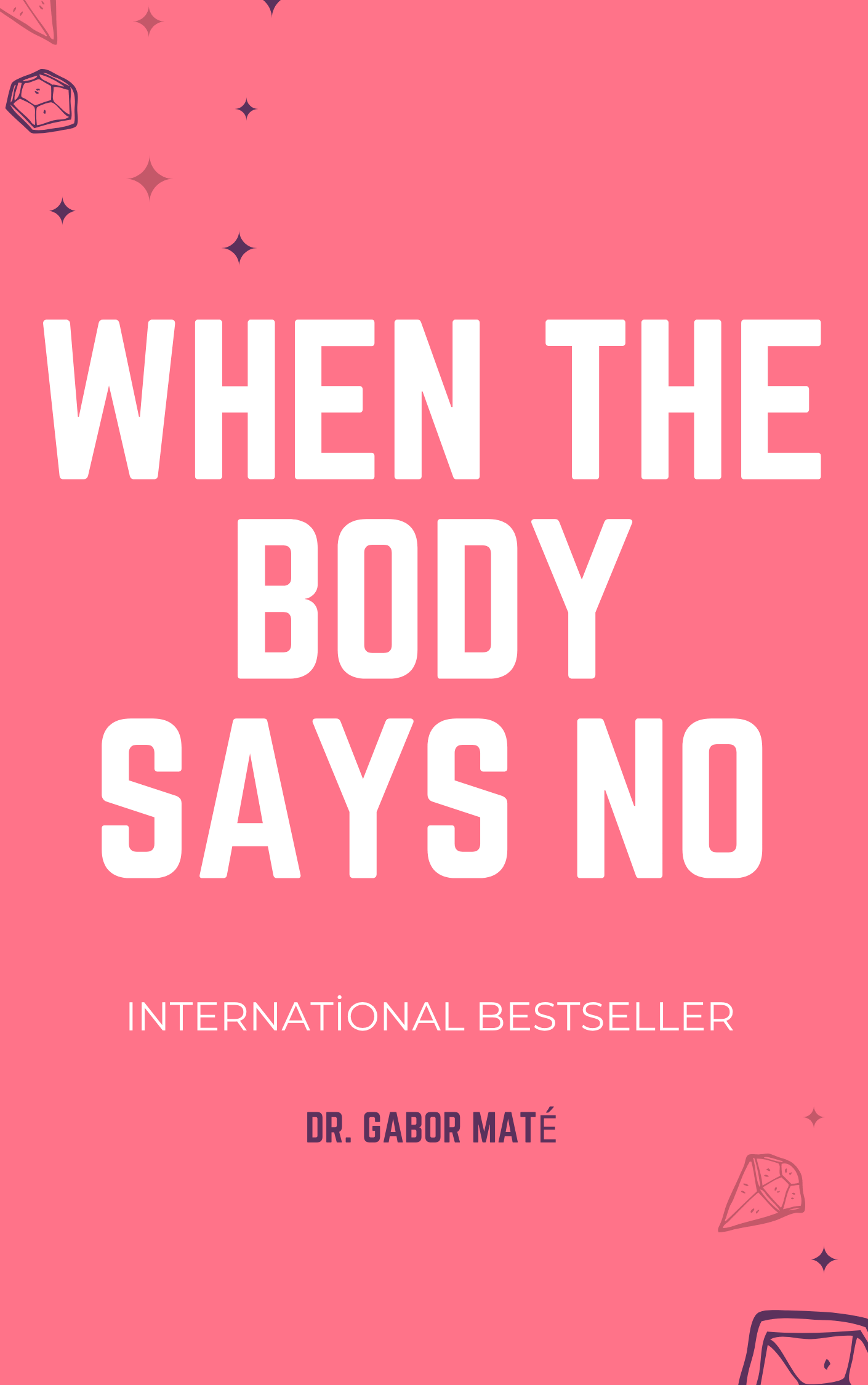
Prefer the print book? Buy on Amazon
As an Amazon Associate, Sumizeit earns from qualifying purchases.
When the Body Says No Book Summary
This When the Body Says No Book Summary covers the key ideas, lessons, and takeaways in about 20 minutes.
Short Description:
When the Body Says No shows chronic illness stems from suppressed emotions.
Helps with these goals
Want the complete 20-minute summary?
- Full structured summary
- Video Summary
- Podcast Summary
- Audio summary
- Key takeaways
- Exercises
- Quiz
- Highlights and notes
- Ask the book with AI
Want a Free Weekly Read?
Get a free summary every week straight to your mailbox.
Preview the When the Body Says No book summary
Below is a preview of Sumizeit’s comprehensive human-written summary of When the Body Says No by Dr. Gabor Maté. The full summary is 15-20 minutes long and covers the book’s key ideas in text, audio, visual, and video formats. Unlock the full 20 Minute Summary
When the Body Says No by Dr. Gabor Maté is an in-depth examination of how chronic emotional suppression and psychological stress shape the development and progression of physical disease. Maté argues that the mind and body cannot be separated: emotional experiences directly influence immune function, hormonal balance, and cellular processes. When people repeatedly silence their authentic feelings—especially anger, sadness, and fear—because they learned early in life that expressing them is unsafe or unacceptable, illness becomes the body’s final attempt to communicate needs that have long been ignored. Disease is not random misfortune but often a physiological manifestation of unaddressed emotional reality.
Chronic Stress as an Internal Biological Hazard
Maté differentiates between acute stress, which is short-term and adaptive, and chronic stress, which is constant and unresolved. The body is biologically equipped to handle temporary threats, but not persistent emotional pressure such as fear of disapproval, relational instability, perfectionism, loneliness, or responsibility overload.
Chronic stress keeps the body in a continuous fight-or-flight state, elevating stress hormones, weakening immune surveillance, and damaging tissues. Over time, the body loses its ability to recover.
Examples from the book include:
A respected nurse who ignored exhaustion and worked double shifts for years while caring for a spouse with dementia. She believed resting was selfish and developed severe rheumatoid arthritis, losing mobility in her hands—the very thing she depended on to help others.
A corporate executive who always appeared calm and controlled, even after the death of his son. He never acknowledged grief, telling others he was “fine,” and later developed ALS. His neurologist described him as “the most agreeable patient” he had ever treated.
A teacher suffering from migraines and IBS who continued teaching through debilitating symptoms because she feared letting anyone down. She grew up believing that expressing pain made her weak.
Maté argues that these individuals shared a common pattern: they pushed through emotional suffering until the body forced an involuntary shutdown.
How Childhood Shapes Stress Responses and Disease Vulnerability
Maté highlights that early attachment patterns strongly determine how adults handle stress. Children learn emotional strategies based on what ensures survival within their families.
If a child learns:
expressing needs leads to rejection or punishment,
anger results in withdrawal or fear,
love is conditional upon good behavior or compliance,
responsibility must be taken for emotionally unstable adults,
or that their feelings are too much,
then the child adapts by suppressing emotions, developing hyper-independence, or becoming the caretaker.
Further cases from Maté’s clinical records include:
A woman with breast cancer raised by a chronically ill mother and controlling father. She became the family harmonizer, never arguing, constantly supporting others, and apologizing when she received her diagnosis because she “didn’t want to upset anyone.”
A man with Crohn’s disease who grew up in a violent home. As a child he dissociated from emotional terror by disconnecting from his body. His digestive system later became the location of stored trauma, consistently reacting to suppressed fear.
A patient with scleroderma who described himself as unable…
Want the complete 20-minute summary?
- Full structured summary
- Video Summary
- Podcast Summary
- Audio summary
- Key takeaways
- Exercises
- Quiz
- Highlights and notes
- Ask the book with AI
Who should read When the Body Says No?
When the Body Says No is essential reading for anyone experiencing chronic illness, autoimmune conditions, or recurring health problems who sense an emotional component to their physical suffering. It's also valuable for caregivers, people-pleasers, and those who struggle with setting boundaries or expressing their authentic needs. Healthcare professionals seeking a deeper understanding of the mind-body connection will find evidence-based insights that challenge conventional medical practice.
Why does When the Body Says No matter?
This book arrives at a critical moment when chronic disease rates continue to climb despite advances in medical technology, suggesting that purely physical treatments miss a crucial dimension of human health. Dr. Maté's work bridges neuroscience and lived experience, validating what many patients sense but feel unable to articulate to their doctors. In a culture that valorizes productivity and self-sacrifice while stigmatizing vulnerability, understanding how suppressed emotions become embodied illness offers both explanation and hope for healing.
What are the key themes in When the Body Says No?
- The inseparability of emotional and physical health
- How childhood attachment patterns determine adult stress responses
- Chronic stress as a biological hazard that weakens immunity and damages tissues
- Illness as the body's boundary-setting mechanism when psychological boundaries fail
- Cultural conditioning that promotes emotional suppression and self-sacrifice
- The healing power of emotional authenticity and honest self-expression
Want the complete 20-minute summary?
- Full structured summary
- Video Summary
- Podcast Summary
- Audio summary
- Key takeaways
- Exercises
- Quiz
- Highlights and notes
- Ask the book with AI
How can you apply ideas from When the Body Says No?
- Notice and log your body's warning signs—fatigue, pain patterns, digestive changes—as signals that emotional needs are unmet rather than problems to simply manage
- Practice identifying suppressed emotions by checking in with your body throughout the day and naming what you feel rather than pushing through discomfort
- Learn to say no to requests without apologizing or over-explaining, starting with small, low-stakes situations to build this muscle
- Seek out therapy or counseling focused on attachment patterns and childhood conditioning to understand how you learned to suppress emotions and what alternative patterns are possible
- Prioritize building emotionally authentic relationships where you can express needs, disappointment, and vulnerability without fear of rejection
- Incorporate somatic practices like yoga, breathwork, massage, or dance to reconnect with bodily sensation and interrupt dissociation
- Evaluate your daily schedule and commitments to ensure you're not chronically overextending yourself in caretaking or people-pleasing roles that require emotional self-abandonment
What common mistakes do readers make with When the Body Says No?
- Assuming that managing illness through willpower, positive thinking, or medical treatment alone will work without addressing the emotional patterns driving the disease
- Viewing emotional suppression and self-sacrifice as character strengths rather than recognizing them as survival adaptations that carry a health cost
- Dismissing bodily symptoms as purely physical problems unrelated to stress, relationships, or emotional history
- Attempting to heal without examining and changing the childhood patterns and family dynamics that taught you to silence your needs
- Focusing exclusively on the present while ignoring how early attachment experiences still govern your responses to stress and conflict
Sumizeit Exercises Apply what you've learned
Turn ideas from When the Body Says No into action with a short guided reflection: identify the biggest takeaway, connect it to your life, and commit to one step you can take in the next 24 hours.
What is the expert analysis of When the Body Says No?
Overview
When the Body Says No is a seminal work by Dr. Gabor Maté, a Hungarian-Canadian physician renowned for his expertise in trauma, addiction, and mind-body medicine. This book stands out for its integrative approach, bridging clinical observations with emerging scientific research to elucidate the profound impact of emotional repression and chronic stress on physical health. Maté’s background—shaped by personal history and extensive medical practice—lends a compelling authenticity and urgency to his argument, positioning the book as a critical contribution to both medical and psychological literature.
Core Thesis
Maté’s central insight is that chronic emotional suppression and unresolved psychological stress are not peripheral but foundational contributors to the development and progression of serious physical illnesses. He contends that the mind and body operate as an inseparable unit, where unexpressed emotions—particularly anger, fear, and sadness—manifest biologically through immune dysfunction, hormonal imbalance, and cellular damage. Illness, therefore, is reframed not as random misfortune but as the body’s ultimate, involuntary communication of unmet emotional needs and breached boundaries.
Strengths
Holistic Integration: Maté masterfully synthesizes clinical case studies with interdisciplinary research from psychoneuroimmunology, neuroscience, and epigenetics, providing a robust theoretical and empirical foundation.
Compelling Clinical Vignettes: The detailed patient stories humanize complex scientific concepts, making the connection between emotional patterns and disease palpable and relatable.
Focus on Childhood and Trauma: By emphasizing early attachment and developmental influences, the book deepens understanding of how lifelong emotional coping mechanisms shape vulnerability to illness.
Cultural Critique: Maté situates individual pathology within broader societal values, challenging cultural norms that valorize productivity and self-sacrifice at the expense of emotional well-being.
Practical Healing Framework: The book offers actionable strategies for emotional awareness, boundary-setting, and authentic living, bridging theory with therapeutic application.
Critiques & Counterarguments
Evidence Limitations: While Maté cites numerous studies, some evidence is correlational rather than causal, leaving open questions about the directionality and universality of the mind-body link.
Potential Oversimplification: The book’s emphasis on emotional repression as a primary driver of disease risks underestimating genetic, environmental, and lifestyle factors that also critically influence health outcomes.
Dated or Anecdotal Examples: Some referenced studies and clinical anecdotes are drawn from older or culturally specific contexts, which may limit generalizability in diverse populations or evolving medical paradigms.
Competing Perspectives: Biomedical models emphasize pathogenetic and molecular mechanisms distinct from emotional causation, suggesting a more multifactorial etiology of chronic diseases than Maté’s framework might imply.
Risk of Victim-Blaming: Although Maté is careful to frame illness as a cultural symptom, there remains a delicate balance to avoid implying that patients are responsible for their diseases through emotional failings.
Who Should Read This
When the Body Says No is essential reading for healthcare professionals, psychologists, and researchers interested in psychosomatic medicine and trauma-informed care. It also offers profound insights for patients and lay readers seeking to understand the emotional dimensions of chronic illness. Those engaged in self-improvement, psychotherapy, or holistic health will find Maté’s compassionate approach and practical guidance invaluable for fostering emotional authenticity and integrative healing. Ultimately, this book speaks to anyone willing to reconsider the boundaries between mind and body and to embrace a more nuanced, empathetic view of health and disease.
Frequently asked questions about the When the Body Says No book summary
What is When the Body Says No about?
When the Body Says No by Dr. Gabor Maté examines how chronic emotional suppression and psychological stress directly manifest as physical disease. The book argues that when people repeatedly silence authentic emotions—especially anger, sadness, and fear—because they learned in childhood that expressing feelings is unsafe, the body eventually forces a confrontation through illness. Disease becomes the body's attempt to communicate unmet emotional needs and enforce boundaries the person cannot set psychologically.
Who should read When the Body Says No?
This book is essential for anyone with chronic illness or autoimmune conditions who suspects an emotional dimension to their suffering, as well as for caregivers, people-pleasers, and those who struggle with boundaries or authentic self-expression. Healthcare professionals seeking to integrate emotional history into medical understanding, and anyone experiencing stress-related symptoms or wondering why illness seems to align with periods of emotional suppression, will find valuable insights and validation.
What are the main takeaways from When the Body Says No?
The core takeaways are: chronic illness often originates in lifelong emotional patterns rooted in childhood rather than random misfortune; when someone cannot psychologically say no to demands, the body enforces boundaries through disease; healing requires reconnecting with suppressed emotions and building authentic relationships rather than relying on symptom management alone; and cultural values that promote self-sacrifice and emotional suppression create widespread vulnerability to chronic illness. The path forward involves authenticity, emotional expression, healthy boundaries, and therapeutic work on early conditioning.
How does childhood trauma contribute to adult illness according to Maté?
Dr. Maté argues that children learn emotional strategies for survival based on family dynamics—if expressing needs leads to rejection, anger brings withdrawal, or love is conditional, the child adapts by suppressing emotions and developing hyper-independence. These survival strategies persist into adulthood, keeping the body in chronic stress even when the original threats are gone. The accumulated emotional suppression weakens immune function and eventually manifests as physical disease, making early attachment patterns a primary determinant of adult health.
What is the scientific evidence Maté presents for the mind-body connection?
Maté draws on psychoneuroimmunology, neuroscience, and epigenetics research showing that stress suppresses natural killer cells responsible for destroying abnormal cells; chronic cortisol elevation damages immune coordination; social isolation increases inflammation and mortality more than smoking; and emotional environments in childhood influence gene expression. Studies cited include research showing emotionally expressive cancer patients have higher survival rates, emotionally repressed individuals have 40 times higher cancer mortality, and that assertiveness deficits correlate with autoimmune disease—all supporting the biological reality of emotional-physical disease links.
What does Maté mean by illness as the body's boundary-setting mechanism?
When someone chronically sacrifices their own needs, cannot say no, and suppresses legitimate anger or grief to maintain relationships or meet others' expectations, they've failed to establish psychological boundaries. The body then enforces a boundary through disease—forcing rest, receiving care, and attention to personal wellbeing. Illness becomes involuntary self-protection when voluntary boundary-setting has become psychologically impossible, making disease a final statement of the needs the person could not voice.
Can chronic illness be healed by addressing emotional patterns?
While Maté doesn't claim that emotional work alone cures disease, he argues that healing—becoming whole rather than controlling symptoms—requires addressing the emotional suppression and relational patterns underlying illness. This involves reconnecting with suppressed emotions, learning to say no without guilt, building authentic relationships, engaging in somatic practices, and working through childhood conditioning with therapeutic support. Many patients experience significant improvement when they address the emotional dimension alongside medical care.
Why do women develop autoimmune diseases at higher rates than men in Maté's analysis?
Dr. Maté argues that women are socially conditioned from childhood to prioritize caring for others without expecting reciprocal care, creating a systematic pattern of self-abandonment. This gendered emotional suppression and self-sacrifice aligns with women's disproportionately high rates of autoimmune disease, where the immune system attacks the body in a literal manifestation of attacking one's own needs. Cultural values that praise female self-sacrifice while stigmatizing female self-assertion create conditions for widespread chronic illness among women.
About Sumizeit
Sumizeit is a profitable Scomy LLC company based in Miami, Florida. Our founders, Clemens Raemy and Weina Scott, are successful entrepreneurs with several exits. Sumizeit is a popular book summary app / micro learning app used by busy professionals and entrepreneurs with over 2,500 non-fiction book summaries and 10,000 podcast summaries in text, audio, visual, podcast, and video format. We also have stellar retention tools to make ideas stick - such as flashcards with spaced repetition, quizzes, streaks, highlighting and notes, daily challenges, riddles, mini-courses, meditation, and more. You won't only learn the idea, but also remember it. Over 90% of our users change their habits with Sumizeit.
Upgrade Now
Want the complete 20-minute summary?
- Full structured summary
- Video Summary
- Podcast Summary
- Audio summary
- Key takeaways
- Exercises
- Quiz
- Highlights and notes
- Ask the book with AI
Here's why readers love Sumizeit
Join thousands of learners getting smarter every day
"Great experience. Detailed summaries. Loved the gamification feature. Makes learning fun. Good customer service. I recommend Sumizeit to anyone. You'll learn a lot."
"I always felt busy but still wanting to keep up with the book discussion in my friend group. This was a great supplement to help me keep reading the books I find fun while keeping up with important books."
"I love this website. Instead of scrolling social media, I find myself learning a lot. I use it everyday. I recommend this app for anyone who is too busy and wants to get up to speed with their favorite books."
When the Body Says No Book Summary PDF
Looking for a When the Body Says No Book Summary PDF you can save and revisit offline? Our When the Body Says No Book Summary PDF captures the book’s core ideas in a clean, printable format — the key frameworks, takeaways, and structure without the fluff. Download the When the Body Says No Book Summary PDF when you want a reference you can annotate, share with your team, or review on the go. Get your When the Body Says No Book Summary PDF from the download page below.
Download When the Body Says No Book Summary PDFPeople also liked these summaries
Readers who explored When the Body Says No often enjoyed these titles next.

Want the complete 20-minute summary?
- Full structured summary
- Video Summary
- Podcast Summary
- Audio summary
- Key takeaways
- Exercises
- Quiz
- Highlights and notes
- Ask the book with AI
Featured Book Titles
Popular Book Summaries at sumizeit, leading book summary app