


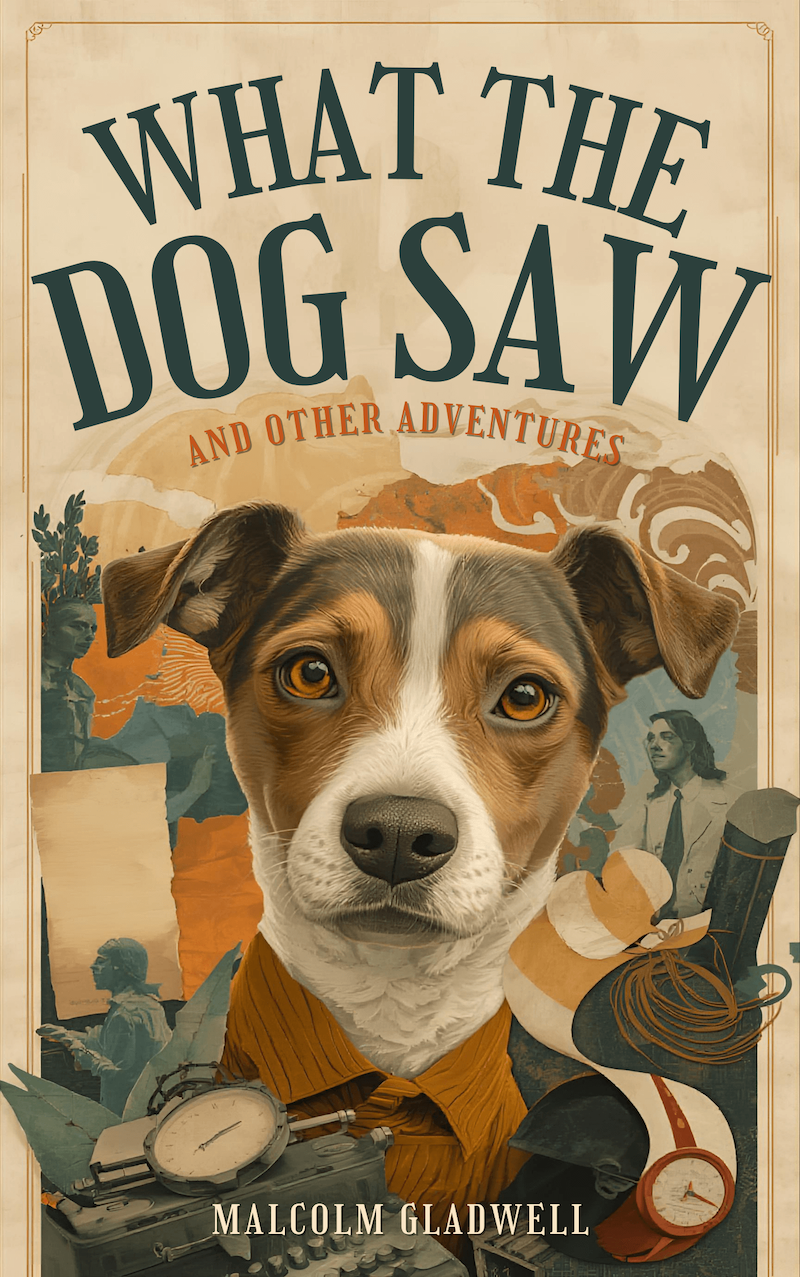
Prefer the print book? Buy on Amazon
As an Amazon Associate, Sumizeit earns from qualifying purchases.
What the Dog Saw and Other Adventures Book Summary
This What the Dog Saw and Other Adventures Book Summary covers the key ideas, lessons, and takeaways in about 20 minutes.
Short Description:
What the Dog Saw reveals genius emerges from context, not just talent.
Gladwell demonstrates that genius can emerge slowly, that intelligence does not guarantee effectiveness, and that institutions fail when they confuse individual brilliance with structural strength. He shows how intuition misleads in hiring, profiling, and evaluation, and why disciplined systems consistently outperform gut judgment.
Ultimately, the book encourages humility. The world is more complex than it appears, and the most important explanations often lie outside our immediate field of vision. To understand outcomes accurately, we must learn to see the world as others experience it—not as we assume it to be.
Helps with these goals
Preview the What the Dog Saw and Other Adventures book summary
Below is a preview of Sumizeit’s comprehensive human-written summary of What the Dog Saw and Other Adventures by Malcolm Gladwell. The full summary is 15-20 minutes long and covers the book’s key ideas in text, audio, visual, and video formats. Unlock the full 20 Minute Summary
What the Dog Saw and Other Adventures is a wide-ranging collection of essays in which Malcolm Gladwell invites readers to rethink how they understand people, success, failure, talent, and judgment. Rather than offering a single unifying theory, the book functions as a guided tour through hidden corners of everyday life—places where intuition often misleads us and where surface explanations obscure deeper truths. Gladwell’s central premise is deceptively simple: most of what we believe about human behavior is incomplete because we tend to see situations from only one angle. To understand outcomes accurately, we must learn to see the world the way someone—or something—else does.
Across dozens of essays originally published in The New Yorker, Gladwell explores obscure innovators, organizational breakdowns, psychological blind spots, and surprising systems that quietly shape outcomes. The title essay, which draws on the methods of dog trainer Cesar Millan, establishes the book’s metaphorical heart: understanding behavior requires adopting the perspective of the actor within a system rather than judging from the outside. This idea repeats itself throughout the collection, whether Gladwell is writing about late-blooming artists, flawed hiring practices, intelligence testing, criminal profiling, consumer preferences, or catastrophic institutional failures.
Rather than praising raw brilliance or instinctive judgment, the book consistently undermines myths about talent, intuition, and personality. Gladwell argues that success usually depends on systems, context, and persistence—not just individual genius. In doing so, he elevates “minor geniuses,” questions widely accepted professional practices, and shows how powerful forces often operate below the level of conscious awareness.
Minor Geniuses and the Myth of Early Brilliance
One of the most important ideas in What the Dog Saw is that extraordinary achievement does not always arrive early or dramatically. Gladwell draws heavily on economist David Galenson’s research into creativity, which distinguishes between two fundamentally different paths to innovation. On one path are conceptual innovators—individuals who achieve greatness early by executing a clear vision with speed and confidence. On the other are experimental innovators—those who progress slowly, refining their work over time through repetition, error, and gradual discovery.
The contrast between Pablo Picasso and Paul Cézanne serves as a defining example. Picasso revolutionized modern art while still young, working from strong ideas he could articulate clearly from the outset. Cézanne, by contrast, struggled for decades, unsure of where his work was headed and dissatisfied with his results until late in life. Yet Cézanne’s eventual contributions proved just as transformative as Picasso’s, if not more so.
Gladwell uses this distinction to dismantle the widespread belief that genius must announce itself early. In many fields—literature, music, filmmaking, science—some of the most influential contributions emerge from individuals who mature slowly. Writers like Daniel Defoe and Mark Twain produced their defining works later in life. Filmmakers such as Alfred Hitchcock reached their peak after decades of experimentation. These individuals were not late to talent; they were early to persistence.
This insight reframes how society evaluates promise and potential. If we prize speed and early recognition above endurance and depth, we risk overlooking entire…
Want the complete 20-minute summary?
- Full structured summary
- Video Summary
- Podcast Summary
- Audio summary
- Key takeaways
- Exercises
- Quiz
- Highlights and notes
- Ask the book with AI
Who should read What the Dog Saw and Other Adventures?
This book is for anyone who relies on snap judgments, hiring decisions, or intuitive assessments in their professional or personal life. It's especially valuable for leaders, managers, educators, and individuals who want to understand why their first impressions often mislead them and how to make better decisions by looking beyond surface-level explanations.
Why does What the Dog Saw and Other Adventures matter?
In an age of fast decisions and overconfidence in gut instinct, Malcolm Gladwell's essays expose the hidden systems and contexts that actually shape outcomes—from organizational success to creative achievement. The book challenges widely accepted myths about talent, intelligence, and personality that influence everything from hiring practices to educational standards, offering readers a more accurate framework for understanding human behavior and institutional performance.
What are the key themes in What the Dog Saw and Other Adventures?
- The unreliability of first impressions and snap judgments
- Context and systems matter more than individual brilliance
- Late bloomers and slow innovation are as valuable as early genius
- Intelligence and talent are incomplete predictors of success
- Structured processes outperform intuitive decision-making
- Behavior is shaped by environment, not fixed personality
How can you apply ideas from What the Dog Saw and Other Adventures?
- Redesign hiring processes to use structured interviews with standardized questions and consistent evaluation criteria rather than relying on chemistry and intuition
- Identify and nurture late bloomers in your organization by providing long-term support and patience rather than expecting immediate returns
- Build systems and processes that distribute responsibility and reduce dependence on rare individual talent for critical functions
- When evaluating performance or behavior, explicitly consider situational and contextual factors rather than defaulting to personality explanations
- Question your first impressions of candidates, employees, and colleagues by actively seeking disconfirming evidence instead of unconsciously confirming initial judgments
- Create institutional permission and financial support for slow, experimental work rather than demanding quick results and early wins
- Examine how non-verbal communication and presence shape perceptions in teaching, leadership, and client interactions
What common mistakes do readers make with What the Dog Saw and Other Adventures?
- Assuming that intelligence, credentials, or impressive interviews predict actual job performance without structured validation
- Dismissing slow-developing talent as mediocre rather than recognizing that late bloomers often produce the most transformative work
- Attributing others' behavior to fixed personality traits while ignoring the situational and environmental factors shaping their actions
- Confusing organizational brilliance with institutional stability, leading to overlooked structural weaknesses beneath a facade of talent and innovation
Sumizeit Exercises Apply what you've learned
Turn ideas from What the Dog Saw and Other Adventures into action with a short guided reflection: identify the biggest takeaway, connect it to your life, and commit to one step you can take in the next 24 hours.
What is the expert analysis of What the Dog Saw and Other Adventures?
Overview
What the Dog Saw and Other Adventures is a seminal collection of essays by Malcolm Gladwell, a journalist and author renowned for his ability to distill complex social science research into engaging narratives. This work stands out for its exploration of human behavior, success, and failure through unconventional perspectives. Gladwell’s stature as a bestselling author and cultural commentator lends the book considerable weight, positioning it as a significant contribution to popular nonfiction that challenges readers to rethink assumptions about talent, intuition, and organizational dynamics.
Core Thesis
The central argument of What the Dog Saw is that understanding human behavior and outcomes requires adopting perspectives beyond our immediate intuition or first impressions. Gladwell contends that success and failure are less about innate genius or raw talent and more about context, systems, persistence, and the often invisible forces shaping decisions and actions. By urging readers to “see the world the way someone—or something—else does,” he reveals how surface-level explanations obscure deeper truths and how structured processes often outperform instinctive judgments.
Strengths
- Nuanced Perspective on Talent: Gladwell’s distinction between conceptual and experimental innovators offers a compelling reframing of creativity and achievement, emphasizing the value of persistence and gradual mastery over early brilliance.
- Interdisciplinary Synthesis: The essays draw on psychology, economics, organizational theory, and sociology, weaving diverse research into accessible stories that illuminate complex phenomena.
- Critique of Intuition and Instinct: By exposing the limitations of snap judgments and unstructured decision-making, Gladwell provides practical insights into hiring, evaluation, and leadership that resonate with both lay readers and professionals.
- Emphasis on Systems and Context: The book’s focus on systemic factors over individual heroics challenges prevailing cultural narratives, promoting a more holistic understanding of success and failure.
- Engaging Storytelling: Gladwell’s narrative style, rich with vivid examples—from Enron’s collapse to dog training—makes complex ideas memorable and thought-provoking.
Critiques & Counterarguments
- Oversimplification of Complex Issues: Some critics argue that Gladwell’s essays, while accessible, occasionally reduce multifaceted phenomena to neat dichotomies or catchy narratives, which may gloss over important nuances and countervailing evidence.
- Selective Use of Evidence: The reliance on anecdotal cases and selective studies can give the impression of broader generalizability than warranted, risking confirmation bias in support of his theses.
- Competing Research on Talent and Intelligence: While Gladwell downplays IQ’s predictive power beyond a threshold, other research highlights the multifactorial and domain-specific nature of intelligence, suggesting a more complex interplay than the book acknowledges.
- Debates on Intuition: Contrary to Gladwell’s skepticism, some psychological and decision-making research supports the value of expert intuition under certain conditions, indicating that the dismissal of instinct may be too categorical.
- Contextual Variability: The emphasis on situational factors and systems may underappreciate the role of individual agency and personality traits that consistently influence behavior across contexts, as argued by trait theorists in psychology.
Who Should Read This
What the Dog Saw and Other Adventures is ideal for readers interested in psychology, business, and social science who appreciate thoughtful, well-crafted essays that challenge conventional wisdom. It appeals to professionals in management, human resources, education, and organizational leadership seeking to deepen their understanding of decision-making and performance. Additionally, intellectually curious readers who enjoy exploring the hidden dynamics behind everyday phenomena will find Gladwell’s work both enlightening and stimulating. The book’s accessible style also makes it suitable for those new to these topics but eager to engage with sophisticated ideas about human behavior and success.
Frequently asked questions about the What the Dog Saw and Other Adventures book summary
What is What the Dog Saw and Other Adventures about?
What the Dog Saw and Other Adventures is a collection of essays by Malcolm Gladwell that challenges common assumptions about talent, intelligence, success, and human behavior. The book argues that understanding people and outcomes requires adopting different perspectives and recognizing that systems, context, and time matter far more than raw talent or gut instinct.
Who should read What the Dog Saw and Other Adventures?
This book is ideal for managers, educators, leaders, and anyone who makes hiring or evaluation decisions. It's also valuable for people interested in psychology, organizational behavior, and gaining a more nuanced understanding of why their first impressions and intuitions often mislead them.
What are the main takeaways from What the Dog Saw and Other Adventures?
The main takeaways include: genius can emerge slowly rather than early, intelligence is overvalued as a predictor of success, systems outperform intuition in decision-making, behavior is shaped by context more than fixed personality, and first impressions mislead despite feeling accurate. Gladwell emphasizes that understanding complex outcomes requires looking beyond surface explanations and seeing situations from multiple perspectives.
How does Gladwell explain the difference between early and late bloomers?
Gladwell draws on economist David Galenson's research to distinguish between conceptual innovators who achieve greatness early with clear visions (like Picasso) and experimental innovators who progress slowly through trial and error (like Cézanne). Both paths produce equally transformative results, yet society undervalues patience and overvalues precocity.
What does What the Dog Saw reveal about hiring and interviews?
The book exposes how unstructured interviews are unreliable—interviewers form snap judgments within moments and then unconsciously confirm those impressions. Gladwell argues that structured interviews with standardized questions and consistent evaluation criteria dramatically improve hiring accuracy by limiting bias.
Why does Gladwell critique the 'talent obsession' in organizations?
Gladwell uses Enron as a cautionary example of how overvaluing individual brilliance while neglecting systems and processes leads to institutional collapse. When organizations prioritize identifying and promoting stars, collaboration erodes, ethical safeguards weaken, and structural weaknesses remain invisible.
What role does context play in What the Dog Saw?
Context is central to Gladwell's argument. He shows that behavior varies dramatically across situations and that small environmental changes—time pressure, authority figures, perceived norms—alter how people act more than fixed personality traits. Most people chronically underestimate situational influences when evaluating others.
How does What the Dog Saw challenge the value of IQ testing?
Gladwell examines research showing that intelligence has only a modest relationship with professional success. While cognitive ability matters to a baseline level, factors like emotional awareness, practical judgment, conscientiousness, and domain-specific knowledge predict performance far better than IQ scores.
About Sumizeit
Sumizeit is a profitable Scomy LLC company based in Miami, Florida. Our founders, Clemens Raemy and Weina Scott, are successful entrepreneurs with several exits. Sumizeit is a popular book summary app / micro learning app used by busy professionals and entrepreneurs with over 2,500 non-fiction book summaries and 10,000 podcast summaries in text, audio, visual, podcast, and video format. We also have stellar retention tools to make ideas stick - such as flashcards with spaced repetition, quizzes, streaks, highlighting and notes, daily challenges, riddles, mini-courses, meditation, and more. You won't only learn the idea, but also remember it. Over 90% of our users change their habits with Sumizeit.
Upgrade Now
Here's why readers love Sumizeit
Join thousands of learners getting smarter every day
"Great experience. Detailed summaries. Loved the gamification feature. Makes learning fun. Good customer service. I recommend Sumizeit to anyone. You'll learn a lot."
"I always felt busy but still wanting to keep up with the book discussion in my friend group. This was a great supplement to help me keep reading the books I find fun while keeping up with important books."
"I love this website. Instead of scrolling social media, I find myself learning a lot. I use it everyday. I recommend this app for anyone who is too busy and wants to get up to speed with their favorite books."
What the Dog Saw and Other Adventures Book Summary PDF
Looking for a What the Dog Saw and Other Adventures Book Summary PDF you can save and revisit offline? Our What the Dog Saw and Other Adventures Book Summary PDF captures the book’s core ideas in a clean, printable format — the key frameworks, takeaways, and structure without the fluff. Download the What the Dog Saw and Other Adventures Book Summary PDF when you want a reference you can annotate, share with your team, or review on the go. Get your What the Dog Saw and Other Adventures Book Summary PDF from the download page below.
Download What the Dog Saw and Other Adventures Book Summary PDFPeople also liked these summaries
Readers who explored What the Dog Saw and Other Adventures often enjoyed these titles next.


Ready to read the whole thing?
- Full structured summary
- Video Summary
- Podcast Summary
- Audio summary
- Key takeaways
- Exercises
- Quiz
- Highlights and notes
- Ask the book with AI
Featured Book Titles
Popular Book Summaries at sumizeit, leading book summary app