


As an Amazon Associate, Sumizeit earns from qualifying purchases.
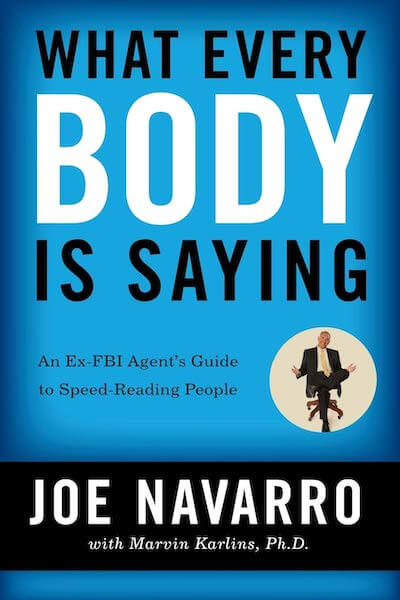
What Every Body Is Saying Book Summary
This What Every Body Is Saying Book Summary covers the key ideas, lessons, and takeaways in about 20 minutes.
Helps with these goals
Want the complete 20-minute summary?
- Full structured summary
- Video Summary
- Podcast Summary
- Audio summary
- Key takeaways
- Exercises
- Quiz
- Highlights and notes
- Ask the book with AI
What is in the What Every Body Is Saying book summary?
Below is a preview of Sumizeit’s expert-written summary of What Every Body Is Saying by Joe Navarro. The full summary covers the book’s key ideas in text, audio, and video.
Wouldn’t it be great if you could tell if someone was being truthful just by looking at them?
Well, you can! FBI agents use body language every day to determine whether someone is lying or being truthful.
“Just as careful listening is critical to understanding our verbal pronouncements, so careful observation is vital to comprehending our body language.”- Joe Navarro
In, “What Every Body Is Saying,” by Joe Navarro, you discover the tips and tricks of how to read someone’s body language in order to figure out their true intentions and feelings.
Nonverbal Communication is Reliable
Approximately 60-65% of communication is nonverbal. And, this nonverbal communication is vital to understanding a person’s true feelings.
Nonverbal communication consists of things such as facial movements, hand gestures, posture, and tone of voice.
Human communication is much more than the spoken word. It is made up of many pieces and you must look at all of it in order to get the full picture.
In fact, nonverbal communication is so strong it can create friendships even if the two people do not speak the same language.
Nonverbal gestures are actually stronger than the spoken word because people perform them instinctively and subconsciously. There is a lot of truth to be found in body language.
For example, when interrogating a suspect of a crime, you might ask them the direction they were traveling. Their mouth may say one direction, but their hand gesture might say another by pointing right instead of left. This would indicate that they are not being truthful because the body language and their words do not match up.
All About The “Honest Brain”
The brain has three parts: the limbic brain, the stem, and the neocortex.
The limbic brain or the “honest brain” communicates information that our words do not express.
The limbic brain is responsible for our survival and it’s always working. It is in charge of all of our survival responses. This part of the brain reacts to all of the things around us instantly, so there is no time to filter reactions before they are expressed.
When the “honest brain” reacts to something, it connects with the nervous system to emit an automatic response. This causes our bodies to show our true feelings through body language without us even being conscious of it.
The “freeze, flight, or fight” response is a popular one. Oftentimes, people freeze if they are caught doing something they know they’re not supposed to be doing. This is actually an instinct hardwired into the nervous system that is supposed to protect us from predators who might be preying on us.
Today, fight or flight are not necessarily used in the literal sense. We don’t often try to fight and we don’t often run away from harmful predators. However, this instinct is still very much present in our behaviors.
The fight response nowadays would be insulting someone or being sarcastic towards them. Or, maybe even teasing them.
Today, a flight response might be ignoring…
Want the complete 20-minute summary?
- Full structured summary
- Video Summary
- Podcast Summary
- Audio summary
- Key takeaways
- Exercises
- Quiz
- Highlights and notes
- Ask the book with AI
Who should read What Every Body Is Saying?
This book is ideal for anyone who wants to understand what people really think and feel beneath their words. Whether you're a business professional conducting negotiations, a law enforcement officer conducting interviews, a manager evaluating team dynamics, or simply someone who wants to be more perceptive in daily interactions, What Every Body Is Saying by Joe Navarro provides practical tools for reading nonverbal cues. It's especially valuable for those who work in high-stakes environments where detecting deception or understanding true intentions matters.
Why does What Every Body Is Saying matter?
In a world where communication extends far beyond spoken words, understanding body language is essential for building trust, detecting dishonesty, and making better decisions about people. Joe Navarro draws on his 25 years as an FBI agent to reveal that approximately 60-65% of communication is nonverbal, and this silent language is often more honest than what people say. As digital communication increases, the ability to read in-person nonverbal cues has become even more valuable for personal relationships, business dealings, and security matters.
What are the key themes in What Every Body Is Saying?
- The limbic brain drives honest, unconscious reactions
- Nonverbal communication is stronger than spoken words
- Body language reveals deception when words and gestures conflict
- Context and baseline behavior are essential to accurate interpretation
- The lower body (legs and feet) provides more reliable signals than the face
- Pacifying behaviors indicate stress and discomfort
- Universal nonverbal clusters point to genuine emotions
What are the key lessons from the What Every Body Is Saying book summary?
The Honest Brain Controls Automatic Reactions
The limbic brain, or 'honest brain,' creates instinctive physical responses before we have time to filter them. Understanding this helps explain why body language often contradicts what people say verbally.
Don't Focus Too Much on Facial Expressions
Since childhood, people learn to control their facial expressions through social conditioning. The legs, feet, and torso provide more reliable indicators of true feelings than smiles or other facial cues.
Feet and Legs Don't Lie
Our lower extremities reveal comfort or discomfort more honestly than our upper bodies. Feet pointing away or crossed legs with tension indicate withdrawal, while open leg positioning suggests engagement and confidence.
The Torso Reveals Comfort or Conflict
Bodies naturally orient toward what we like and away from what makes us uncomfortable. Fronting (facing directly), leaning forward, and open splaying indicate comfort, while crossing arms and leaning back suggest defensiveness.
Arms Broadcast Emotional States
Happy emotions cause arms to expand away from the body, while sad or upset states cause arms to contract inward. This protective arm positioning reflects our emotional state without conscious control.
Hands Reveal Stress and Trustworthiness
Visible hands indicate honesty and confidence, while hidden hands trigger distrust. Hand position, grip strength, and tremors all communicate different messages about nervousness, dominance, or deception.
Pacifying Behaviors Signal Emotional Discomfort
When stressed or questioned, people unconsciously engage in self-soothing actions like neck touching, lip pressing, or nail biting. Recognizing these behaviors helps identify when someone feels threatened or uncomfortable.
Establish a Baseline Before Judging Behavior
Understanding how someone acts in their normal, comfortable state is crucial for detecting when they deviate from it. Without knowing their baseline, you cannot accurately identify deceptive or stressed behavior.
Look for Behavioral Clusters, Not Single Gestures
A single gesture can be misinterpreted, but multiple related behaviors pointing to the same conclusion create a reliable picture. Always examine groups of nonverbal cues together rather than analyzing them in isolation.
Verbal and Nonverbal Communication Must Align
When words and body language conflict, the body tells the truth. Liars often experience delays in their gestures while they construct false narratives, creating a noticeable disconnect.
Context Is Everything in Body Language Interpretation
The same gesture can mean different things in different situations. Crossed arms might indicate defensiveness in one context but simply warmth in another, requiring careful attention to environmental factors.
Recognize Universal Nonverbal Behaviors
Some body language signals transcend culture and language, like genuine smiles that engage the eyes or pointing gestures. These universal behaviors provide reliable communication signals across diverse populations.
Understand the Fight, Flight, or Freeze Response
These survival instincts manifest in modern contexts as sarcasm, avoidance, or freezing when caught. Recognizing these reflexive behaviors helps explain why people react the way they do under pressure.
Be Subtle When Observing Others
If people realize they're being analyzed, they will adjust their behavior to seem more acceptable. Discreet observation without staring is essential to seeing authentic body language and genuine emotional responses.
Sweaty Hands Don't Necessarily Mean Lying
Physical responses like sweating, shaking, or trembling can indicate nervousness, excitement, caffeine intake, or anxiety rather than deception. Context and consistency with baseline behavior are needed to interpret accurately.
Shoulder Position Indicates Confidence or Insecurity
Shoulders shrugged up toward the ears signal discomfort and insecurity, while relaxed shoulders indicate confidence. This subtle cue communicates emotional state without words.
Develop Situational Awareness Alongside Body Language Skills
Accurate body language reading requires understanding both the nonverbal cues and the larger context. Situational awareness of environmental details helps you interpret gestures correctly within their proper frame.
Genuine Smiles Engage More Muscles Than Fake Ones
Real smiles lift the entire mouth and engage the eyes (crow's feet), while forced smiles only lift the corners of the mouth. This distinction helps detect insincerity and forced pleasantness.
Never Suggest Someone Is Lying During an Interview
Directly accusing someone of dishonesty causes them to adjust their behavior defensively. Maintaining comfort and open dialogue while observing body language yields better insights than confrontation.
Adapt Your Thesis to Your Findings, Not Vice Versa
Confirmation bias can lead you to force evidence into a predetermined conclusion. Stay open-minded and let the body language evidence guide your interpretation rather than forcing interpretation to match your initial assumption.
Want the complete 20-minute summary?
- Full structured summary
- Video Summary
- Podcast Summary
- Audio summary
- Key takeaways
- Exercises
- Quiz
- Highlights and notes
- Ask the book with AI
How can you apply ideas from What Every Body Is Saying?
- Conduct more effective job interviews by watching candidates' body language for signs of confidence, honesty, or stress
- Improve negotiation outcomes by detecting when counterparts are uncomfortable with proposed terms or being insincere
- Build stronger relationships by recognizing genuine interest and engagement versus polite discomfort in social situations
- Enhance security and safety by identifying suspicious behavior patterns in crowds or concerning interactions
- Become a better manager by reading team members' true feelings about projects, feedback, and workplace dynamics
- Improve customer service interactions by identifying genuine satisfaction versus forced politeness
- Make better hiring and dating decisions by recognizing alignment between what people say and what their bodies communicate
What common mistakes do readers make with What Every Body Is Saying?
- Overanalyzing a single gesture without considering context or the person's baseline behavior
- Focusing exclusively on facial expressions when the lower body and torso reveal more honest information
- Assuming all nervous behaviors indicate lying, when anxiety, excitement, or caffeine can produce the same physical responses
- Failing to recognize that different cultures have different nonverbal communication norms and meanings
- Staring intensely at someone while trying to read them, which causes them to alter their behavior and invalidates your observations
Sumizeit Exercises Apply what you've learned
Turn ideas from What Every Body Is Saying into action with a short guided reflection: identify the biggest takeaway, connect it to your life, and commit to one step you can take in the next 24 hours.
What is the expert analysis of What Every Body Is Saying?
Overview
What Every Body Is Saying is a seminal work by Joe Navarro, a former FBI agent with extensive expertise in behavioral analysis and nonverbal communication. Drawing on his 25 years of experience in counterintelligence and behavioral assessment, Navarro offers readers a comprehensive guide to decoding body language as a means to uncover hidden emotions and intentions. The book’s significance lies in its practical application of psychological principles to everyday interactions, making it a valuable resource not only for professionals in law enforcement and negotiation but also for anyone interested in enhancing interpersonal understanding.
Core Thesis
Navarro’s central argument is that the human body involuntarily reveals truths about our feelings and intentions through nonverbal cues governed by the limbic brain—the so-called “honest brain.” Because these instinctive physical reactions precede conscious control, they provide a more reliable window into genuine emotions than spoken words, which can be consciously manipulated. By carefully observing clusters of body language signals within their situational context and comparing them to an individual’s baseline behavior, one can discern authenticity, deception, and emotional states.
Strengths
- Authoritative Perspective: Navarro’s FBI background lends considerable credibility, grounding the book’s insights in real-world behavioral analysis and law enforcement experience.
- Comprehensive Coverage: The book systematically dissects nonverbal communication across multiple body regions—legs, torso, arms, hands—highlighting often overlooked cues such as foot positioning and subtle gestures.
- Practical Framework: Navarro’s “Ten Commandments of Non-Verbal Communication” provide a structured methodology for readers to apply observational skills thoughtfully and contextually.
- Integration of Neuroscience: The explanation of the limbic brain’s role in generating involuntary signals enriches the understanding of why body language can be more truthful than verbal communication.
- Emphasis on Baseline Behavior: The insistence on establishing an individual’s normal behavior before interpreting deviations is a nuanced approach that guards against misreading isolated gestures.
Critiques & Counterarguments
- Potential Oversimplification: While the book advocates for reading clusters of behavior, some interpretations may risk oversimplifying complex psychological states, as body language can be ambiguous and culturally variable.
- Contextual Limitations: Navarro stresses situational awareness, yet the book occasionally underrepresents how cultural differences profoundly affect nonverbal expressions, which can lead to misinterpretation in diverse settings.
- Reliability of Nonverbal Cues: Contemporary research in psychology suggests that while some body language signals correlate with certain emotions, they are not infallible indicators of deception or truthfulness, challenging the notion of a universal “honest brain” signal.
- Competing Schools of Thought: Scholars like Paul Ekman emphasize microexpressions as key to detecting deception, a concept less emphasized here, indicating alternative or complementary frameworks exist for interpreting nonverbal behavior.
- Real-World Evidence: In high-stakes environments, such as courtrooms, reliance on body language alone has been criticized for leading to false positives and wrongful judgments, underscoring the need for corroborating evidence beyond behavioral observation.
Who Should Read This
This book is ideal for readers seeking to deepen their understanding of human behavior through the lens of nonverbal communication. It is particularly valuable for professionals in law enforcement, psychology, negotiation, sales, and leadership who require enhanced skills in detecting deception and building rapport. Additionally, individuals interested in self-improvement and interpersonal dynamics will find Navarro’s insights practical for everyday social interactions. However, readers should approach the material with an awareness of its limitations and supplement it with broader psychological and cultural knowledge.
Frequently asked questions about the What Every Body Is Saying book summary
What is What Every Body Is Saying about?
What Every Body Is Saying by Joe Navarro is a guide to reading and interpreting body language to understand people's true feelings, intentions, and whether they're being truthful. Navarro, a former FBI agent, teaches readers how to recognize nonverbal cues from the face, limbs, torso, and entire body to detect deception and authentic emotion. The book explains that approximately 60-65% of communication is nonverbal and that body language often reveals truths that words conceal.
Who should read What Every Body Is Saying?
This book is ideal for law enforcement professionals, security personnel, business negotiators, managers, and anyone seeking to better understand others. It's valuable for those who work in high-stakes environments where detecting deception matters, as well as for people who simply want to improve their interpersonal skills and become more perceptive. Anyone interested in psychology, communication, or human behavior will find practical insights applicable to daily life.
What are the main takeaways from What Every Body Is Saying?
The main takeaways are that the limbic brain drives honest, unconscious reactions before we filter them, that nonverbal communication is more reliable than spoken words, and that detecting deception requires observing clusters of behaviors rather than single gestures. The book emphasizes establishing a baseline of someone's normal behavior first, understanding context, looking especially at the lower body and torso, and recognizing that words and body language must align for truthfulness.
Why is body language more honest than words?
Body language is more honest because it's controlled by the limbic brain, which creates automatic, instinctive responses before the conscious mind has time to filter them. Since childhood, people learn to control their facial expressions and spoken words through social conditioning, but the body's unconscious reactions—especially from the legs, feet, and torso—are harder to fake. Liars experience physiological stress that manifests in body language inconsistencies with their words.
How can I tell if someone is lying using body language?
Look for a mismatch between their words and body language, such as saying they're going left while pointing right. Watch for pacifying behaviors like neck touching or lip pressing when uncomfortable questions arise, and observe if their gestures are delayed while they construct false narratives. Most importantly, establish their baseline behavior first, then identify when they deviate from their normal patterns—changes in behavior are more reliable indicators of deception than isolated gestures.
What does the limbic brain have to do with body language?
The limbic brain, or 'honest brain,' is responsible for survival instincts and automatic reactions that occur before conscious control kicks in. It controls the fight, flight, or freeze response and creates involuntary physical expressions of our true feelings and fears. Because these reactions are hardwired and instinctive, the limbic brain bypasses our learned ability to deceive, making it the source of honest body language that often contradicts what we consciously choose to say.
Why should I focus on legs and feet rather than the face?
People learn from childhood to control their facial expressions—smiling when they don't feel happy, hiding negative reactions to maintain social harmony. The face becomes skilled at deception through social conditioning. The legs and feet, however, are less monitored and controlled, making them more honest indicators of comfort, engagement, and discomfort. Feet pointing away, crossed legs with tension, and other lower-body signals reveal what someone really thinks without the filter of social conditioning.
What is a baseline behavior and why does it matter?
Baseline behavior is how someone normally acts, stands, gestures, and communicates when they're comfortable and in their natural state. It matters because you cannot accurately identify deception or stress without knowing what's normal for that specific person. By observing their baseline first, you create a reference point to spot when they deviate—those deviations are what indicate discomfort, lying, or emotional distress, making the baseline comparison essential for accurate body language reading.
About Sumizeit
Sumizeit is a profitable Scomy LLC company based in Miami, Florida. It has been helping readers learn from nonfiction books for 7 years with expert-written summaries in text, audio, podcast, and video.
Want the complete 20-minute summary?
- Full structured summary
- Video Summary
- Podcast Summary
- Audio summary
- Key takeaways
- Exercises
- Quiz
- Highlights and notes
- Ask the book with AI
Here's why readers love Sumizeit
Join thousands of learners getting smarter every day
"Great experience. Detailed summaries. Loved the gamification feature. Makes learning fun. Good customer service. I recommend Sumizeit to anyone. You'll learn a lot."
"I always felt busy but still wanting to keep up with the book discussion in my friend group. This was a great supplement to help me keep reading the books I find fun while keeping up with important books."
"I love this website. Instead of scrolling social media, I find myself learning a lot. I use it everyday. I recommend this app for anyone who is too busy and wants to get up to speed with their favorite books."
What Every Body Is Saying Book Summary PDF
Looking for a What Every Body Is Saying Book Summary PDF you can save and revisit offline? Our What Every Body Is Saying Book Summary PDF captures the book’s core ideas in a clean, printable format — the key frameworks, takeaways, and structure without the fluff. Download the What Every Body Is Saying Book Summary PDF when you want a reference you can annotate, share with your team, or review on the go. Get your What Every Body Is Saying Book Summary PDF from the download page below.
Download What Every Body Is Saying Book Summary PDFPeople also liked these summaries
Readers who explored What Every Body Is Saying often enjoyed these titles next.



Want the complete 20-minute summary?
- Full structured summary
- Video Summary
- Podcast Summary
- Audio summary
- Key takeaways
- Exercises
- Quiz
- Highlights and notes
- Ask the book with AI
Featured Book Titles
Popular Book Summaries at sumizeit, leading book summary app
