Question 1 of 5
In the book's introduction, what do the authors call "The Script"?
The summary defines "The Script" as the societal belief to follow school→job→work→save→retire at 65.


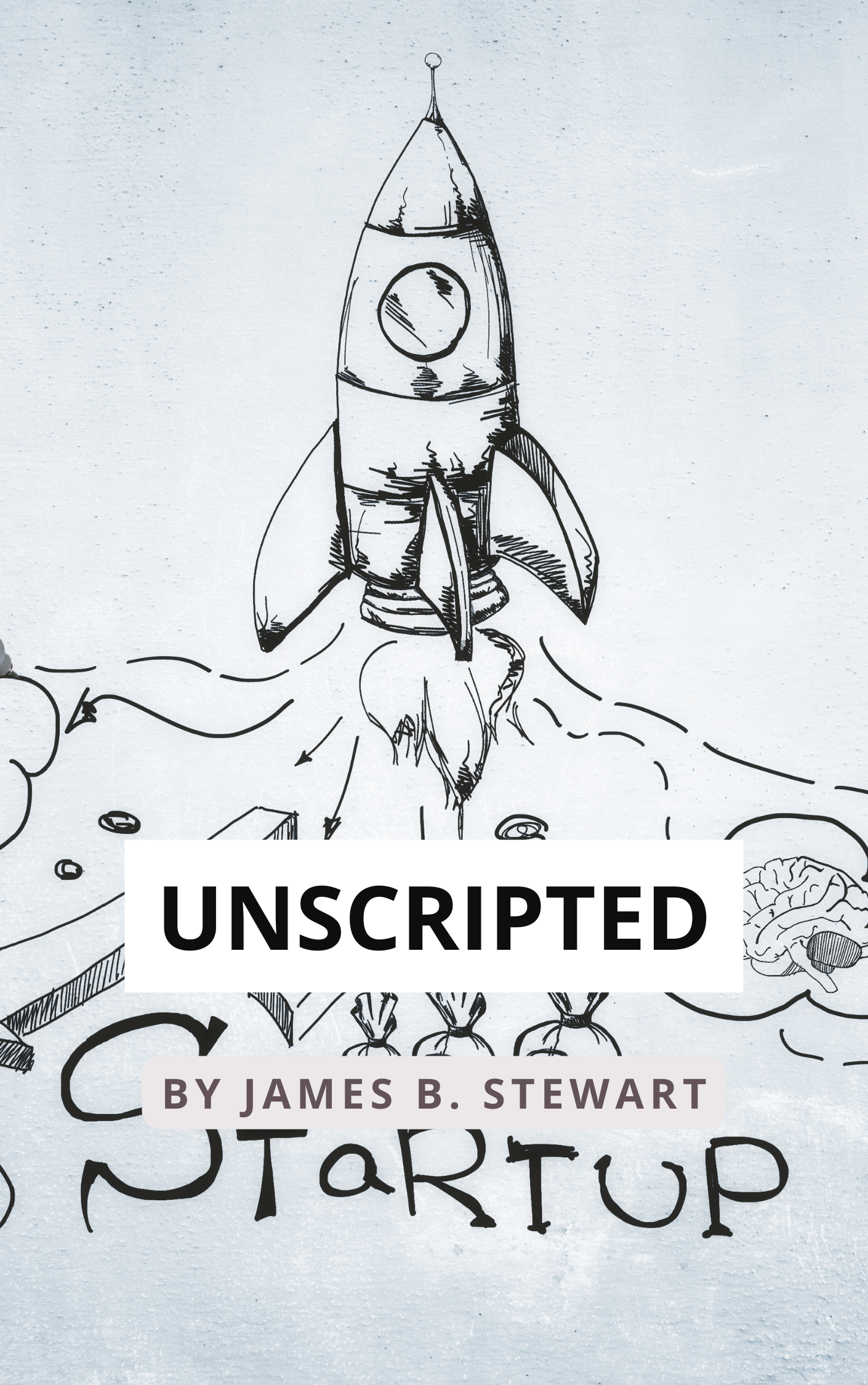
Prefer the print book? Buy on Amazon
As an Amazon Associate, Sumizeit earns from qualifying purchases.
This Unscripted Book Summary covers the key ideas, lessons, and takeaways in about 20 minutes.
Helps with these goals
Want a Free Weekly Read?
Get a free summary every week straight to your mailbox.
Below is a preview of Sumizeit’s comprehensive human-written summary of Unscripted by James B. Stewart and Rachel Abrams. The full summary is 15-20 minutes long and covers the book’s key ideas in text, audio, visual, and video formats. Unlock the full 20 Minute Summary
"Unscripted: Life, Liberty, and the Pursuit of Entrepreneurship" is a book by James B. Stewart and Rachel Abrams that aims to inspire readers to break free from the conventional path of a scripted life and take control of their own destiny by pursuing entrepreneurship.
The book begins with the authors' own stories of how they broke free from their scripted lives to become successful entrepreneurs. They share the lessons they learned along the way, including the importance of taking risks, being persistent, and surrounding oneself with a network of supportive people.
The authors then go on to discuss the flaws in the traditional path of going to school, getting a job, and working for someone else. They argue that this path often leads to a life of mediocrity, where one is trapped in a cycle of earning just enough to pay bills, without ever achieving true financial freedom or fulfillment.
Instead, the authors encourage readers to embrace the principles of entrepreneurship, including taking calculated risks, finding a need in the market, creating a unique value proposition, and building a team of like-minded individuals to help achieve one's goals.
The authors also provide practical advice for aspiring entrepreneurs, such as how to find a mentor, how to overcome fear and self-doubt, and how to balance work and life. They stress the importance of continuous learning and personal development, and encourage readers to be adaptable and willing to pivot when necessary.
Throughout the book, the authors use real-world examples of successful entrepreneurs to illustrate their points and inspire readers. They emphasize that there is no one-size-fits-all approach to entrepreneurship, and that each person's journey will be unique.
Overall, "Unscripted" is a powerful and inspiring call to action for anyone who feels trapped in a scripted life and wants to pursue their dreams of financial freedom and personal fulfillment through entrepreneurship. The book offers practical advice, real-world examples, and a wealth of wisdom and inspiration for anyone who is ready to take the leap and create their own unscripted life.
Chapter 1: Introduction - The authors introduce the concept of "The Script," which is the societal belief that one should go to school, get a job, work hard, save money, and retire at 65. They argue that this script is outdated and no longer works in today's economy, and that the only way to truly achieve financial freedom is through entrepreneurship.
Chapter 2: The Unscripted Entrepreneurial Framework - The authors introduce the Unscripted Entrepreneurial Framework, which is a way of thinking about entrepreneurship that emphasizes the importance of creating value, solving problems, and providing a unique offering to the marketplace. They argue that this framework is essential for anyone looking to start their own business.
Chapter 3: Fastlane to the Slow Lane - The authors contrast the Fastlane (entrepreneurship) with the Slow Lane (traditional employment). They argue that the Slow Lane is a trap that keeps people stuck in the rat race, while the Fastlane offers the potential for real wealth…
Unscripted by James B. Stewart and Rachel Abrams is for anyone feeling trapped in traditional employment who yearns for financial independence and control over their destiny. This book speaks to aspiring entrepreneurs, career-changers, and individuals skeptical of the conventional school-to-job-to-retirement path. If you're ready to challenge societal expectations and build wealth on your own terms, this guide offers both inspiration and practical frameworks to get started.
In today's rapidly changing economy, the traditional script of lifetime employment and pension security no longer guarantees financial freedom or fulfillment. Unscripted provides a timely alternative roadmap for building genuine wealth through entrepreneurship and strategic thinking. As economic uncertainty grows, understanding how to create value, build systems, and leverage opportunities becomes increasingly critical to achieving the life you want.
Turn ideas from Unscripted into action with a short guided reflection: identify the biggest takeaway, connect it to your life, and commit to one step you can take in the next 24 hours.
Unscripted: Life, Liberty, and the Pursuit of Entrepreneurship is a collaborative work by James B. Stewart and Rachel Abrams, both accomplished journalists with deep experience in business and finance reporting. Stewart, a Pulitzer Prize-winning author, and Abrams, a seasoned writer on finance and technology, bring a journalistic rigor and narrative clarity to this exploration of entrepreneurship. The book stands out as a contemporary manifesto urging readers to reject conventional societal expectations—the so-called "script"—and instead embrace entrepreneurship as a pathway to financial freedom and personal fulfillment. Its significance lies in its comprehensive, practical approach to entrepreneurship, combining personal anecdotes, real-world examples, and actionable frameworks designed to inspire and guide aspiring entrepreneurs.
The central argument of Unscripted is that the traditional life script—education, employment, saving, and retirement—is increasingly obsolete in a rapidly evolving economy. Stewart and Abrams contend that true financial independence and meaningful fulfillment are attainable primarily through entrepreneurship. They propose a paradigm shift: from passive participation in the workforce to active creation and value generation via entrepreneurial ventures. The authors emphasize the necessity of adopting an entrepreneurial mindset characterized by risk tolerance, adaptability, and relentless value creation. They advocate for a flexible, iterative approach to business development, underscoring the importance of solving real market problems, building scalable systems, and cultivating supportive teams.
Unscripted is ideally suited for ambitious individuals dissatisfied with conventional career trajectories—those who are contemplating entrepreneurship or seeking practical guidance on how to break free from traditional employment paradigms. It will resonate with readers who appreciate a blend of motivational narrative and actionable frameworks, particularly aspiring entrepreneurs, early-stage startup founders, and professionals interested in personal development and financial independence. Additionally, readers with an interest in contemporary critiques of economic and social norms will find the book thought-provoking. However, those seeking an academic or deeply data-driven analysis of entrepreneurship may find the book’s approach more inspirational than empirical.
Try a few questions from the Unscripted quiz. Unlock the full summary for the full quiz and answers that will help the ideas stick.
Question 1 of 5
The summary defines "The Script" as the societal belief to follow school→job→work→save→retire at 65.
Question 2 of 5
The summary contrasts the Fastlane (entrepreneurship) with the Slow Lane and says the Fastlane offers potential for real wealth.
Question 3 of 5
The Entrepreneurial Loop is described as the iterative process of identifying a problem, testing, refining, and scaling.
Question 4 of 5
The summary states the "Three Ds" are Discovery (identify/validate), Development (build/model), and Deployment (scale/execute).
Question 5 of 5
The "Four Ps" in the summary are Product, People, Processes, and Profit; Product is one of them.
Unscripted by James B. Stewart and Rachel Abrams is a comprehensive guide encouraging readers to abandon the traditional script of school-to-job-to-retirement and instead pursue entrepreneurship as a path to true financial freedom and fulfillment. The book combines personal entrepreneurial journeys with practical frameworks, real-world examples, and actionable strategies for building successful businesses that create lasting wealth and personal control.
Unscripted is ideal for aspiring entrepreneurs, career-changers, and anyone feeling trapped in traditional employment who wants to take control of their financial future. It's particularly valuable for people skeptical of conventional career paths, those seeking meaningful work aligned with personal values, and individuals ready to embrace calculated risk-taking and continuous learning.
Key takeaways include rejecting outdated societal scripts, taking full ownership of your life and career, and focusing on creating genuine value for others as the foundation of wealth. The book emphasizes building scalable systems rather than trading time for money, assembling aligned teams, maintaining financial discipline, and developing an entrepreneurial mindset that embraces challenges and rapid iteration over perfect planning.
The book contrasts the Fastlane (entrepreneurship) with the Slow Lane (traditional employment), arguing that employment caps income based on time available while entrepreneurship allows for leveraged, scalable wealth creation. Entrepreneurship enables you to build systems and multiply your impact through people, technology, and processes rather than limiting growth to your personal work hours.
The book introduces several frameworks including the Entrepreneurial Loop (iterative problem-solving), the Three Ds (Discovery, Development, Deployment), the Four Ps (Product, People, Processes, Profit), and the Golden Rules of Entrepreneurship. These frameworks help entrepreneurs focus on customer needs, maintain adaptability, take calculated risks, build strong teams, and stay financially disciplined.
Unscripted combines both inspiration and practical guidance, offering actionable strategies on finding mentors, overcoming fear and self-doubt, identifying market opportunities, building teams, managing finances, creating effective marketing, and scaling systems. The authors emphasize that execution matters more than perfect planning and encourage testing ideas quickly with real customers.
The book defines financial freedom not just as earning more money but as creating multiple income streams, managing expenses mindfully, and building scalable systems that don't require your constant input. True financial freedom comes through entrepreneurship and strategic value creation rather than climbing the corporate ladder or hoping for pension security.
Yes, Unscripted is designed for readers at various stages, from those just considering entrepreneurship to experienced business builders. The book emphasizes that entrepreneurial traits can be developed and nurtured by anyone, and it provides foundational frameworks and mindset guidance that prepare new entrepreneurs to identify opportunities, validate ideas, and take action despite uncertainty.
Sumizeit is a profitable Scomy LLC company based in Miami, Florida. It has been helping readers learn from nonfiction books for 7 years with expert-written summaries in text, audio, podcast, and video.
Join thousands of learners getting smarter every day
"Great experience. Detailed summaries. Loved the gamification feature. Makes learning fun. Good customer service. I recommend Sumizeit to anyone. You'll learn a lot."
"I always felt busy but still wanting to keep up with the book discussion in my friend group. This was a great supplement to help me keep reading the books I find fun while keeping up with important books."
"I love this website. Instead of scrolling social media, I find myself learning a lot. I use it everyday. I recommend this app for anyone who is too busy and wants to get up to speed with their favorite books."
Looking for a Unscripted Book Summary PDF you can save and revisit offline? Our Unscripted Book Summary PDF captures the book’s core ideas in a clean, printable format — the key frameworks, takeaways, and structure without the fluff. Download the Unscripted Book Summary PDF when you want a reference you can annotate, share with your team, or review on the go. Get your Unscripted Book Summary PDF from the download page below.
Download Unscripted Book Summary PDFReaders who explored Unscripted often enjoyed these titles next.
Popular Book Summaries at sumizeit, leading book summary app