


Prefer the print book? Buy on Amazon
As an Amazon Associate, Sumizeit earns from qualifying purchases.
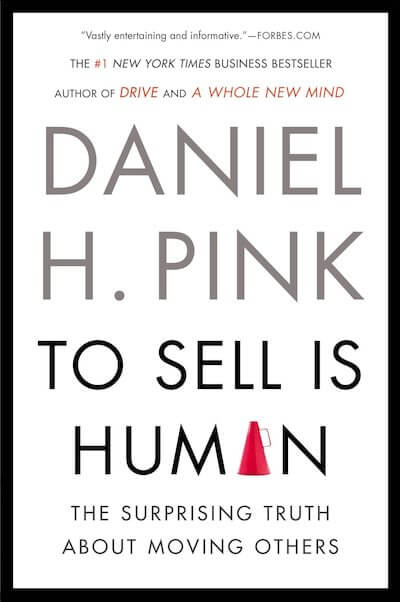
To Sell Is Human Book Summary
This To Sell Is Human Book Summary covers the key ideas, lessons, and takeaways in about 20 minutes.
Short Description:
Successful selling requires listening, perspective, and resilience after rejection.
Helps with these goals
Want a Free Weekly Read?
Get a free summary every week straight to your mailbox.
Preview the To Sell Is Human book summary
Below is a preview of Sumizeit’s comprehensive human-written summary of To Sell Is Human by Daniel Pink. The full summary is 15-20 minutes long and covers the book’s key ideas in text, audio, visual, and video formats. Unlock the full 20 Minute Summary
Can you think of a job that doesn’t require you to sell something?
We didn’t think so.
Though you may not be treading door to door to sell people on a new product or candy bars for a baseball fundraiser, every job has some sort of selling element that’s necessary to the successful running of a company.
In “To Sell Is Human” Daniel Pink explains that as humans, we are all “in sales”. This rings especially true nowadays when most millennials are jumping on the entrepreneur bus and saying ‘buh-bye’ to the 9-5.
Persuading, convincing, and influencing all find their way into every job in the market. It’s not always about money. Sometimes, it’s simply selling an idea.
“The ability to move others to exchange what they have for what we have is crucial to our survival and our happiness.”- Daniel Pink
After reading these insights from Pink, you’ll understand that as humans, our job is to sell. And, he will teach you how to do it right in the modern world.
Honesty and Service
Unfortunately, salespeople usually get a pretty bad rep. They are known for pushing and pushing until they finally get the customer to buy or walk away in annoyance.
The classic example we all think of is the used car salesman who tries to swindle the customer without the appropriate knowledge to buy. However, things have changed since we have the internet, an unlimited resource for information.
Because of the internet, sellers have followed suit and become more transparent with their information, as they know the customer could easily just ‘look it up’ online.
And, because everyone is so honest and forthcoming now, the classic motto “Always Be Selling” has become very outdated.
Understand Others
In order to successfully sell something, it’s important to see things from another’s perspective.
Sellers, to contradict popular belief, are not always outgoing fast-talkers. Someone who is fast-talking to their customers probably isn’t listening to their customer’s needs. The best salespeople are the ones who can be friendly and offer suggestions, yet also sit back and listen to what the customer is saying.
“Extraverts, in other words, often stumble over themselves. They can talk too much and listen too little, which dulls their understanding of others’ perspectives. They can fail to strike the proper balance between asserting and holding back, which can be read as pushy and drive people away.”- Daniel Pink
Attunement means understanding what others are thinking, not what they are feeling. Empathy is understanding how others are feeling. And, though, it is nice to be empathetic, being attuned to what others are thinking is much more important in selling.
People in power tend to stick to their own perspectives, which makes it harder for them to become attuned to others.
A powerful sales tool that helps people to know you understand what they are thinking is mimicry. This is the act of mimicking with small gestures what the other person is doing.
Want the complete 20-minute summary?
- Full structured summary
- Video Summary
- Podcast Summary
- Audio summary
- Infographic
- Key takeaways
- Exercises
- Quiz
- Highlights and notes
- Ask the book with AI
Who should read To Sell Is Human?
To Sell Is Human is for anyone who wants to master the art of persuasion and influence in their career and personal life. Whether you're an entrepreneur, manager, teacher, or professional in any field, this book reveals that selling—in its modern form—is a universal skill everyone needs. If you've felt uncomfortable with traditional sales tactics or want to understand how to move people toward your ideas, this book offers a refreshing, human-centered approach.
Why does To Sell Is Human matter?
In today's transparent, internet-connected world, the old aggressive sales tactics no longer work. Daniel Pink's To Sell Is Human shows why selling has evolved from pushy transactions to genuine human connection and problem-solving. As more people become entrepreneurs and knowledge workers, the ability to persuade, influence, and help others see new perspectives has become essential to success in virtually every profession.
What are the key themes in To Sell Is Human?
- Selling is a universal human skill, not limited to salespeople
- Transparency and honesty have replaced aggressive sales tactics
- Attunement—understanding what others think—beats empathy alone
- Listening and asking questions matter more than talking and answering
- Resilience and buoyancy help overcome inevitable rejection
- Purpose and genuine desire to help drive sales success
How can you apply ideas from To Sell Is Human?
- Reframe your job description to identify the persuasion and influence elements, then develop those skills intentionally
- Practice active listening in conversations by asking clarifying questions and repeating back what you hear before responding
- Replace scripted pitches with flexible frameworks that allow you to adapt based on customer input and energy
- Use subtle mimicry in conversations—mirror body language and repeat key phrases—to build subconscious rapport
- Develop your buoyancy by creating a personal resilience practice, such as positive self-talk routines after setbacks
- Ask diagnostic questions to uncover customer problems before presenting solutions, building credibility as a problem-solver
- Craft short, memorable pitches using rhyming or rhythm to increase recall and cut through information overload
- Limit your product or solution recommendations to three or fewer strong options to aid customer decision-making
What common mistakes do readers make with To Sell Is Human?
- Assuming that being talkative and outgoing automatically makes you a good salesperson when listening skills matter more
- Relying on high-pressure tactics and aggressive closing techniques that worked in the past but now backfire in a transparent world
- Presenting too many options or features, overwhelming the customer and paralyzing their decision-making process
- Failing to personalize your approach, treating every customer the same rather than understanding their unique situation and needs
- Blaming yourself entirely for rejections instead of examining external factors, which erodes confidence and resilience
Sumizeit Exercises Apply what you've learned
Turn ideas from To Sell Is Human into action with a short guided reflection: identify the biggest takeaway, connect it to your life, and commit to one step you can take in the next 24 hours.
What is the expert analysis of To Sell Is Human?
Overview
To Sell Is Human by Daniel Pink is a compelling exploration of the evolving nature of sales and persuasion in contemporary society. Pink, an accomplished author and former speechwriter for Vice President Al Gore, brings a multidisciplinary approach rooted in psychology, social science, and behavioral economics. His work challenges the traditional, often negative stereotypes of salespeople by reframing selling as a universal human activity intrinsic to everyday life and professional success. This book is significant for its timely reassessment of what it means to influence others in an age dominated by information accessibility and shifting workplace dynamics.
Core Thesis
Pink’s central argument is that selling is no longer confined to the stereotypical image of the pushy salesperson but is a fundamental human skill necessary across all professions and social interactions. He posits that everyone is "in sales" because persuasion, convincing, and moving others to exchange ideas or goods are essential to survival and happiness. The book emphasizes a modernized approach to sales grounded in honesty, attunement to others’ perspectives, buoyancy in the face of rejection, and purpose-driven interactions. Pink advocates for a shift from aggressive selling tactics to empathetic, service-oriented strategies that prioritize understanding and addressing the needs of others.
Strengths
- Reframing Sales as Universal: Pink successfully democratizes the concept of selling, making it relevant to a broad audience beyond traditional sales roles.
- Integration of Behavioral Science: The book draws on contemporary research in psychology and social science, lending credibility and depth to its insights.
- Practical, Actionable Advice: Techniques such as attunement, buoyancy, and improvisation offer readers concrete strategies to improve their persuasive abilities.
- Human-Centered Perspective: Emphasizing empathy, listening, and ethical engagement counters the negative stigma often associated with sales.
- Accessible and Engaging Style: Pink’s clear prose and use of memorable concepts (e.g., rhyming pitches) make complex ideas approachable and applicable.
Critiques & Counterarguments
- Overgeneralization of Sales: While the universal framing of sales is compelling, it risks diluting the specificity and complexity of professional sales roles, which often require specialized skills and knowledge beyond persuasion.
- Limited Empirical Evidence: Some of Pink’s claims rely heavily on anecdotal examples and popular psychology rather than rigorous, peer-reviewed research, which may weaken the argument’s scientific foundation.
- Potential Oversimplification of Human Motivation: The distinction between attunement (understanding thoughts) and empathy (understanding feelings) is insightful but may oversimplify the nuanced interplay of cognitive and emotional factors in persuasion.
- Contrasting Views on Persuasion: Alternative schools of thought, such as those emphasizing rational choice theory or hard negotiation tactics, might challenge Pink’s emphasis on empathy and buoyancy as universally effective strategies.
- Changing Digital Landscape: The book’s examples and advice, while modern, may not fully account for the rapid evolution of digital communication platforms and algorithm-driven marketing that increasingly mediate sales interactions.
Who Should Read This
To Sell Is Human is ideal for professionals across fields who seek to enhance their persuasive communication and interpersonal influence, including entrepreneurs, marketers, educators, and managers. It also appeals to readers interested in self-improvement and social psychology, offering a fresh perspective on everyday interactions. Those skeptical of traditional sales tactics or who feel daunted by the idea of selling will find Pink’s humane and ethical approach particularly resonant. However, readers looking for deeply technical sales methodologies or exhaustive empirical studies may need to supplement this book with more specialized literature.
Frequently asked questions about the To Sell Is Human book summary
What is To Sell Is Human about?
To Sell Is Human by Daniel Pink argues that selling—in its modern form—is a universal skill essential to every profession and human interaction. The book reframes selling from aggressive transactions to genuine human connection, emphasizing listening, understanding others' perspectives, and solving real problems. Pink provides insights and practical strategies for mastering persuasion and influence in today's transparent, information-rich world.
Who should read To Sell Is Human?
Anyone who wants to improve their ability to persuade, influence, and move others toward action should read this book. This includes entrepreneurs, managers, teachers, professionals, and knowledge workers—essentially anyone whose job involves convincing others or selling ideas. If you've felt uncomfortable with traditional sales tactics or want a human-centered approach to persuasion, this book offers a refreshing perspective.
What are the main takeaways from To Sell Is Human?
The main takeaways include: selling is a universal skill everyone needs, not just salespeople; honesty and transparency are now mandatory in a fact-checking world; listening and asking questions matter more than talking; understanding what others think (attunement) is more valuable than empathy alone; resilience and buoyancy help you recover from rejection; and genuine purpose—wanting to help others—drives both success and happiness. The book emphasizes that modern selling is fundamentally about human connection and solving real problems.
How does Daniel Pink define attunement and why is it important?
Attunement is the ability to understand what others are thinking, as opposed to empathy, which is understanding how they feel. Pink argues that attunement is more important in sales because it allows you to truly grasp the customer's perspective, needs, and concerns. While empathy is valuable, attunement enables you to ask better questions, listen more carefully, and position solutions that genuinely address what the customer actually needs rather than what you assume they feel.
What does Pink say about rejection and how do you overcome it?
Pink introduces the concept of buoyancy—the ability to bounce back from rejection—as a learnable skill, not an innate talent. He recommends using positive self-talk to reinforce your ability to succeed, treating rejection as external (blaming circumstances rather than yourself), and maintaining a resilient mindset. By viewing setbacks as temporary and outside your control, you preserve confidence and motivation to keep trying.
Why does Pink say the internet has changed sales?
The internet has made transparency and honesty mandatory in sales because customers can instantly fact-check any claim online. This has rendered old high-pressure, manipulative tactics obsolete—salespeople who aren't forthcoming lose credibility immediately. As a result, the modern sales approach must focus on genuine helpfulness, honest information, and building trust rather than aggressive persuasion.
What is the importance of asking questions in modern sales?
Pink emphasizes that asking the right questions is now more valuable than having all the right answers. By asking diagnostic and clarifying questions, salespeople can uncover the root causes of customer problems and position themselves as valuable problem-solvers rather than order-takers. This approach builds credibility, demonstrates genuine understanding, and leads to better solutions that actually fit the customer's needs.
About Sumizeit
Sumizeit is a profitable Scomy LLC company based in Miami, Florida. Our founders, Clemens Raemy and Weina Scott, are successful entrepreneurs with several exits. Sumizeit is a popular book summary app / micro learning app used by busy professionals and entrepreneurs with over 2,500 non-fiction book summaries and 10,000 podcast summaries in text, audio, visual, podcast, and video format. We also have stellar retention tools to make ideas stick - such as flashcards with spaced repetition, quizzes, streaks, highlighting and notes, daily challenges, riddles, mini-courses, meditation, and more. You won't only learn the idea, but also remember it. Over 90% of our users change their habits with Sumizeit.
Upgrade Now
Here's why readers love Sumizeit
Join thousands of learners getting smarter every day
"Great experience. Detailed summaries. Loved the gamification feature. Makes learning fun. Good customer service. I recommend Sumizeit to anyone. You'll learn a lot."
"I always felt busy but still wanting to keep up with the book discussion in my friend group. This was a great supplement to help me keep reading the books I find fun while keeping up with important books."
"I love this website. Instead of scrolling social media, I find myself learning a lot. I use it everyday. I recommend this app for anyone who is too busy and wants to get up to speed with their favorite books."
To Sell Is Human Book Summary PDF
Looking for a To Sell Is Human Book Summary PDF you can save and revisit offline? Our To Sell Is Human Book Summary PDF captures the book’s core ideas in a clean, printable format — the key frameworks, takeaways, and structure without the fluff. Download the To Sell Is Human Book Summary PDF when you want a reference you can annotate, share with your team, or review on the go. Get your To Sell Is Human Book Summary PDF from the download page below.
Download To Sell Is Human Book Summary PDFPeople also liked these summaries
Readers who explored To Sell Is Human often enjoyed these titles next.



Ready to read the whole thing?
- Full structured summary
- Video Summary
- Podcast Summary
- Audio summary
- Infographic
- Key takeaways
- Exercises
- Quiz
- Highlights and notes
- Ask the book with AI
Featured Book Titles
Popular Book Summaries at sumizeit, leading book summary app