
Question 1 of 10


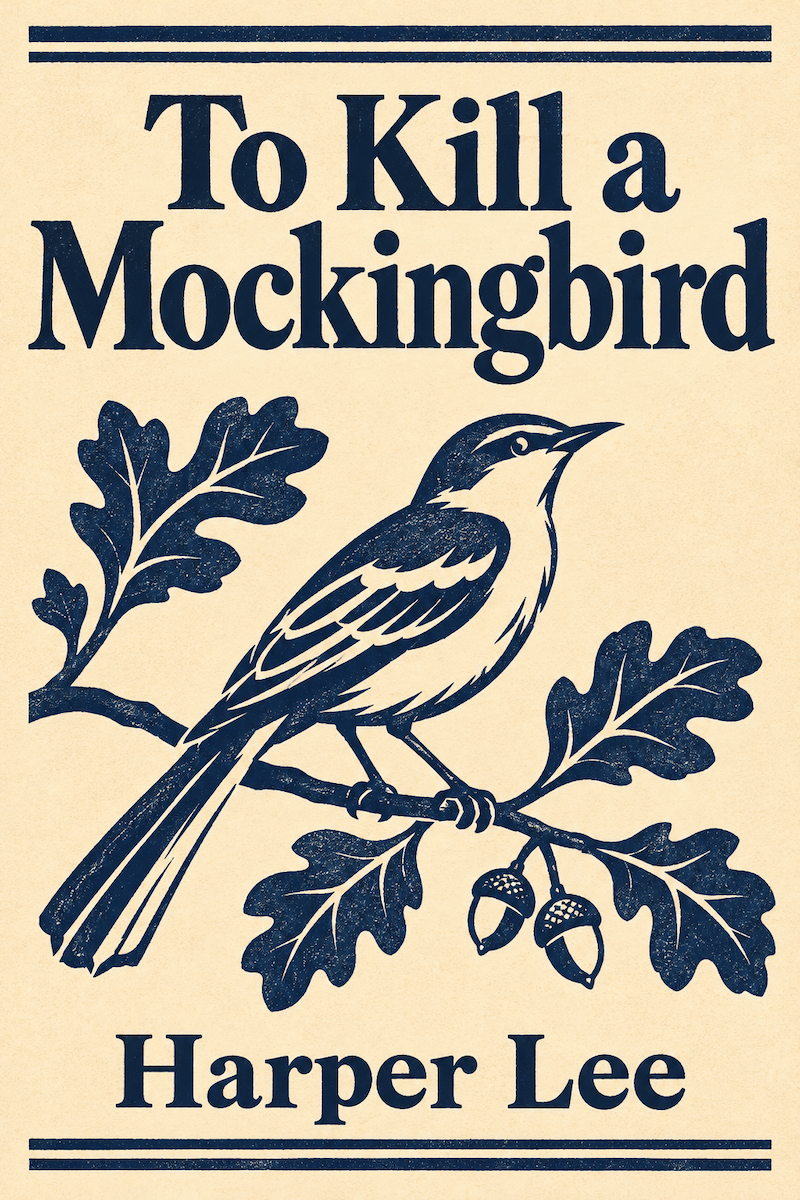
Prefer the print book? Buy on Amazon
As an Amazon Associate, Sumizeit earns from qualifying purchases.
Book Summary
To Kill a Mockingbird Book Summary
This To Kill a Mockingbird Book Summary covers the key ideas, lessons, and takeaways in about 20 minutes.
Short Description:
A kid’s view of a racist trial in 1930s Alabama and what real courage means
The book argues that real decency means looking at other people with empathy before judging them, especially the ones who are easy to hurt or easy to blame, like Tom Robinson and Boo Radley. Atticus never wins the big fight against prejudice, but he shows his kids how to stand for what's right even when the odds are stacked against them, and Scout grows up learning to see the world from someone else's point of view.
Helps with these goals
Preview the To Kill a Mockingbird book summary
Below is a preview of Sumizeit’s comprehensive human-written summary of To Kill a Mockingbird by Harper Lee. The full summary is 15-20 minutes long and covers the book’s key ideas in text, audio, visual, and video formats. Unlock the full 20 Minute Summary
The story happens in Maycomb, Alabama, a sleepy town in the middle of the Great Depression. Money is tight. Everybody knows everybody. And the old rules about race and class decide who gets respect and who doesn't.
Scout Finch tells it, looking back at three years of her childhood, from about age six to nine. She lives with her older brother Jem and their father Atticus, a lawyer and a widower. Their mother died when Scout was too young to remember her. Calpurnia, the family cook, helps raise them with a firm hand.
The book runs on two tracks. One is a kid's tale about a spooky neighbor. The other is a trial that puts the whole town on the spot. By the end you can see they were never separate stories. Both are about how people treat what they don't understand.
The summer of Dill and Boo Radley
Each summer a small, talkative boy named Dill comes to Maycomb to stay with his aunt next door. He joins Scout and Jem, and the three of them fix on the Radley house down the street. A man named Arthur Radley, nicknamed Boo, lives inside. He hasn't been seen in daylight for years. Town gossip says he's dangerous, and the kids add their own wild details.
They dare each other to touch the house. They act out Boo's supposed life as a game until Atticus tells them to stop making fun of a neighbor. Then strange things start happening. Someone leaves small gifts in a knothole of an oak tree on the Radley lot. Gum. Old coins. Two carved soap figures that look a lot like Scout and Jem. A broken watch. One day Boo's brother Nathan fills the hole with cement and says the tree is sick.
Jem later gets his pants snagged on a fence while sneaking around the Radley yard at night, and he leaves them behind. When he goes back, the pants are folded and sewn up, waiting for him. On a freezing night, Miss Maudie's house burns down. Scout stands outside in the cold watching, and a blanket ends up around her shoulders without her noticing who put it there. Atticus figures it out. Boo did it. He has been watching over these kids the whole time.
First grade and Atticus's lessons
Scout starts school and runs straight into trouble. Her new teacher, Miss Caroline, comes from outside the county and doesn't know how things work in Maycomb. When Scout tries to explain why a classmate named Walter Cunningham won't take a lunch quarter, a poor farm family's pride, the teacher punishes her.
Atticus doesn't scold her. He gives her a rule she carries through the whole book. You can't really understand a person until you look at things from where they stand, as if you climbed into their skin and walked around in it. He also tells her to keep going to school and to bend a little with people like Miss Caroline.
The same…
Want the complete 20-minute summary?
- Full structured summary
- Video Summary
- Podcast Summary
- Audio summary
- Key takeaways
- Exercises
- Quiz
- Highlights and notes
- Ask the book with AI
Who should read To Kill a Mockingbird?
To Kill a Mockingbird is essential reading for anyone interested in understanding American racial injustice, moral courage, and the complexity of growing up. Teachers, students, parents, and readers seeking literary classics that explore empathy and ethics will find profound value in Harper Lee's masterpiece. It speaks to anyone who has questioned whether doing the right thing is worth it when the world seems against you.
Why does To Kill a Mockingbird matter?
This novel remains urgently relevant because it examines how prejudice, injustice, and systemic inequality persist even when good people try to fight them. Harper Lee's exploration of empathy—learning to see the world through another person's eyes—offers a timeless lesson for a society still grappling with racism and moral compromise. The book challenges readers to confront uncomfortable truths about their own communities and themselves. Its central message, that real courage means standing for what's right despite certain defeat, continues to inspire activism and ethical thinking across generations.
What are the key themes in To Kill a Mockingbird?
- Empathy and perspective-taking as the foundation of moral understanding
- The gap between legal justice and actual fairness in a prejudiced society
- Moral courage defined not by strength but by doing right despite defeat
- The danger of prejudgment and the harm of stereotyping innocent people
- Innocence lost through exposure to systemic evil and racial injustice
- The quiet heroism of those who live outside society's judgment
- Growing up and learning to see complexity in the adults around you
How can you apply ideas from To Kill a Mockingbird?
- Practice walking in someone else's shoes before judging their behavior or choices by deliberately considering their circumstances and constraints
- Recognize when you or your community are maintaining harmful systems out of habit rather than conviction, and question whether you would want to defend them
- Stand up for what's right even in small situations where you're certain to lose or face social consequences, building a habit of moral courage
- Look for quiet acts of integrity in people your community has dismissed or underestimated, recognizing that moral worth is not correlated with status
- When facing injustice in institutions or communities, work to plant seeds of doubt in others' minds about accepted narratives, understanding that small shifts in thinking matter
- Teach children to think critically and treat them as capable of moral reasoning rather than simply imposing values on them
- Protect the vulnerable and innocent from unnecessary public exposure and judgment, recognizing that sometimes procedural justice must bend to human dignity
What common mistakes do readers make with To Kill a Mockingbird?
- Assuming that legal innocence and social acceptance are the same thing, rather than recognizing that laws can enforce injustice
- Believing that exposing racism and prejudice will automatically change people's minds, when collective social pressure often reinforces existing hierarchies
- Judging people based on their family background, economic status, or how they appear, missing the individual character beneath social categories
- Thinking that one person's moral stand against injustice is insignificant, when seed-planting and boundary-pushing gradually shift what a society accepts
Sumizeit Exercises Apply what you've learned
Turn ideas from To Kill a Mockingbird into action with a short guided reflection: identify the biggest takeaway, connect it to your life, and commit to one step you can take in the next 24 hours.
What is the expert analysis of To Kill a Mockingbird?
Overview
To Kill a Mockingbird, penned by Harper Lee and published in 1960, stands as a monumental work in American literature. Rooted deeply in the social fabric of the Deep South during the Great Depression, the novel explores entrenched racial and class prejudices through the innocent yet perceptive eyes of Scout Finch. Lee’s background, growing up in Monroeville, Alabama, infuses the narrative with authenticity and nuanced regional detail. The book’s Pulitzer Prize recognition and enduring presence in both literary and educational spheres underscore its significance as a profound commentary on justice, morality, and human empathy.
Core Thesis
At its heart, To Kill a Mockingbird posits that true moral integrity arises from empathy—understanding others by metaphorically “climbing into their skin and walking around in it.” Through the juxtaposition of childhood innocence and the harsh realities of racial injustice, Lee argues that societal prejudice is a learned blindness that can be challenged by compassion and courage. Atticus Finch embodies this ideal, teaching his children to uphold justice even when the odds are overwhelmingly against them, while the narrative reveals the complexities of human nature beyond simplistic binaries of good and evil.
Strengths
- Masterful Characterization: The novel’s characters, from Atticus to Boo Radley, are richly drawn and serve as vessels for exploring themes of empathy, courage, and moral complexity.
- Interweaving of Childhood and Social Critique: By filtering the narrative through Scout’s youthful perspective, Lee effectively contrasts innocence with the ingrained prejudices of Maycomb, deepening the emotional impact.
- Timeless Moral Lessons: The book’s exploration of justice, racial inequality, and moral courage transcends its historical setting, resonating with readers across generations.
- Symbolism: The motif of the mockingbird as a symbol of innocence and undeserved suffering is both subtle and powerful, reinforcing the ethical core without didacticism.
- Balanced Narrative Structure: The parallel storytelling of the children’s fascination with Boo Radley and the courtroom drama creates a layered reading experience that enriches the central themes.
Critiques & Counterarguments
- Idealization of Atticus Finch: While Atticus is a moral beacon, some critics argue he is portrayed with near-unquestioned virtue, which can oversimplify the complexities of racial attitudes even among well-meaning whites in the South.
- Limited Agency of Black Characters: Despite the novel’s focus on racial injustice, Black characters like Tom Robinson and Calpurnia often remain peripheral, serving primarily to advance the white protagonists’ moral development rather than having fully realized inner lives.
- Historical and Social Context Oversimplified: The narrative’s framing can be seen as somewhat sanitized, glossing over the systemic brutality of Jim Crow laws and the broader societal complicity in racism.
- Competing Perspectives on Justice: Critical race theory and more recent scholarship highlight that the novel’s faith in the legal system and individual morality may underestimate the entrenched structural barriers that perpetuate injustice beyond individual acts of courage.
- Reception and Interpretation Variance: Some readers and scholars challenge the novel’s portrayal of racial dynamics as paternalistic, suggesting that it centers white savior narratives rather than empowering Black voices.
Who Should Read This
To Kill a Mockingbird is essential reading for those interested in American literature, social justice, and moral philosophy. It is particularly valuable for readers seeking to understand the historical context of racial prejudice in the United States and the ethical challenges of confronting injustice. Educators and students will find its accessible narrative style coupled with profound thematic depth ideal for fostering critical discussions about empathy, courage, and the complexities of human behavior. Additionally, anyone interested in the interplay between childhood innocence and societal realities will appreciate Lee’s nuanced storytelling.
Discussion questions for To Kill a Mockingbird Short questions you can actually use in a conversation
Frequently asked questions about the To Kill a Mockingbird book summary
What is To Kill a Mockingbird about?
To Kill a Mockingbird by Harper Lee is a 1960 novel set in 1930s Alabama that follows Scout Finch's coming-of-age as her father, lawyer Atticus Finch, defends Tom Robinson, a Black man falsely accused of assaulting a white woman. Woven through the trial are Scout's childhood adventures, including her fascination with the mysterious neighbor Boo Radley. The novel explores themes of racial injustice, moral courage, and the development of empathy as Scout learns to see the world through others' eyes.
Who should read To Kill a Mockingbird?
To Kill a Mockingbird is essential for students of American literature, anyone interested in understanding racial injustice and moral philosophy, and readers seeking to deepen their empathy and ethical thinking. Teachers assign it widely because it speaks to adolescents navigating questions of right and wrong, while adults find renewed meaning in its exploration of how good people respond to systemic injustice. It appeals to anyone who has wondered whether standing up for what's right matters when the odds are stacked against you.
What are the main takeaways from To Kill a Mockingbird?
The central insight of To Kill a Mockingbird is that real courage means doing what's right even when you're certain to lose, and that empathy—genuinely understanding another person's perspective—is the foundation of moral life. The novel reveals that legal systems reflect the prejudices of those running them, and that protecting the innocent and vulnerable sometimes requires acting outside strict rules. Harper Lee argues that individuals rarely win large battles against injustice, but their moral stands plant seeds of doubt that gradually change how communities think.
Why is the mockingbird so important in To Kill a Mockingbird?
The mockingbird is a symbol for innocence and goodness in the novel. Atticus explains that mockingbirds should be protected because they only make music for people to enjoy and never harm anything, making them a test of moral decency. Tom Robinson and Boo Radley are both mockingbirds—innocent, harmless people who become targets of prejudice and violence simply because society has deemed them vulnerable. The title encapsulates the book's central moral question: whom do we choose to protect?
How does Atticus Finch model moral courage in the novel?
Atticus demonstrates moral courage by defending Tom Robinson even though he knows he will lose the case and face social hostility for challenging racial norms. He teaches his children that true courage is not fearlessness but the willingness to do what's right despite certainty of failure, a lesson he illustrates through Mrs. Dubose's example. Atticus persists with integrity even when spat upon and humiliated, showing his children that moral commitments must be stronger than social approval.
What happens to Tom Robinson in To Kill a Mockingbird?
Despite clear evidence of his innocence, Tom Robinson is convicted by an all-white jury in a trial where Atticus Finch proves that the white victim Mayella Ewell was injured by someone left-handed, and Tom's left arm is useless. After conviction, Tom is imprisoned while awaiting appeal, but before the appeal can proceed, he is shot seventeen times while allegedly trying to escape jail. His death is largely shrugged off by the town, marking a tragic turning point that deepens Jem's disillusionment with justice.
How does Scout grow and change throughout To Kill a Mockingbird?
Scout begins as a curious but judgmental child who readily believes town gossip about Boo Radley and doesn't understand poverty or social complexity. Through her father's lessons and her experiences during the trial, she learns to see the world from others' perspectives and to recognize that people are more complicated than first appearances suggest. By the novel's end, she has developed genuine empathy and moral understanding, recognizing both the invisible heroism of Boo Radley and the systemic injustice that destroys Tom Robinson.
What role does Boo Radley play in To Kill a Mockingbird?
Boo Radley, the reclusive neighbor the children fear and mock, emerges as the novel's true moral hero. Though isolated and powerless, he secretly watches over Scout and Jem, leaving them gifts and ultimately saving their lives by stopping Bob Ewell's attack. Boo represents innocence victimized by society's judgment and cruelty, and his story parallel's Tom Robinson's—both are mockingbirds who deserve protection but are instead hunted. Scout's final act of walking Boo home and seeing the neighborhood from his perspective captures the novel's central lesson about empathy.
About Sumizeit
Sumizeit is a profitable Scomy LLC company based in Miami, Florida. Our founders, Clemens Raemy and Weina Scott, are successful entrepreneurs with several exits. Sumizeit is a popular book summary app / micro learning app used by busy professionals and entrepreneurs with over 2,500 non-fiction book summaries and 10,000 podcast summaries in text, audio, visual, podcast, and video format. We also have stellar retention tools to make ideas stick - such as flashcards with spaced repetition, quizzes, streaks, highlighting and notes, daily challenges, riddles, mini-courses, meditation, and more. You won't only learn the idea, but also remember it. Over 90% of our users change their habits with Sumizeit.
Upgrade Now
Here's why readers love Sumizeit
Join thousands of learners getting smarter every day
"Great experience. Detailed summaries. Loved the gamification feature. Makes learning fun. Good customer service. I recommend Sumizeit to anyone. You'll learn a lot."
"I always felt busy but still wanting to keep up with the book discussion in my friend group. This was a great supplement to help me keep reading the books I find fun while keeping up with important books."
"I love this website. Instead of scrolling social media, I find myself learning a lot. I use it everyday. I recommend this app for anyone who is too busy and wants to get up to speed with their favorite books."
To Kill a Mockingbird Book Summary PDF
Looking for a To Kill a Mockingbird Book Summary PDF you can save and revisit offline? Our To Kill a Mockingbird Book Summary PDF captures the book’s core ideas in a clean, printable format — the key frameworks, takeaways, and structure without the fluff. Download the To Kill a Mockingbird Book Summary PDF when you want a reference you can annotate, share with your team, or review on the go. Get your To Kill a Mockingbird Book Summary PDF from the download page below.
Download To Kill a Mockingbird Book Summary PDFPeople also liked these summaries
Readers who explored To Kill a Mockingbird often enjoyed these titles next.


Ready to read the whole thing?
- Full structured summary
- Video Summary
- Podcast Summary
- Audio summary
- Key takeaways
- Exercises
- Quiz
- Highlights and notes
- Ask the book with AI
Featured Book Titles
Popular Book Summaries at sumizeit, leading book summary app
Atomic Habits Book Summary Rich Dad Poor Dad Book Summary The Four Agreements Book Summary The 48 Laws of Power Book Summary When Breath Becomes Air Book Summary Think and Grow Rich Book Summary