


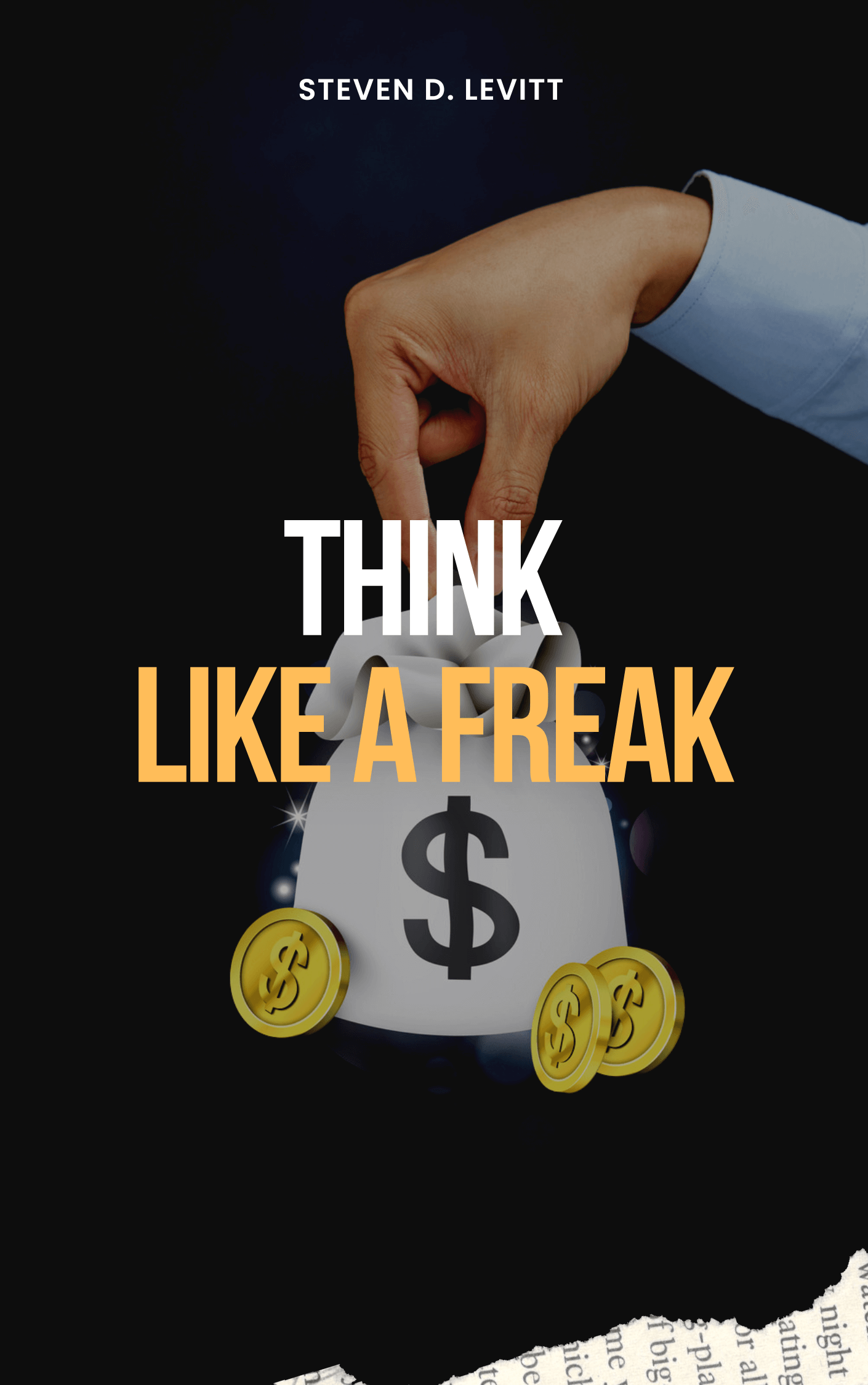
Prefer the print book? Buy on Amazon
As an Amazon Associate, Sumizeit earns from qualifying purchases.
Think Like a Freak Book Summary
This Think Like a Freak Book Summary covers the key ideas, lessons, and takeaways in about 20 minutes.
Short Description:
Think Like a Freak teaches unconventional thinking to solve problems.
Preview the Think Like a Freak book summary
Below is a preview of Sumizeit’s comprehensive human-written summary of Think Like a Freak by Stephen J. Duber and Steven Levitt. The full summary is 15-20 minutes long and covers the book’s key ideas in text, audio, visual, and video formats. Unlock the full 20 Minute Summary
Traditions and conventions are touted as universal solutions to all our problems, but that’s hardly true. With a changing world comes changing problems, and that means conventional wisdom is just a catchy way of offering you outdated solutions to modern problems. Conventional wisdom will fail you all the time, especially if you rely on it blindly.
Think Like a Freak helps you break the shackles of conventional wisdom in your mind. It gives you the tools to think on your own two feet and to question everything, even the experts. You can either be popular or right — to think like a freak means you have chosen the latter. Thinking like a freak also means to figure out the real reasons that drive human behavior so that you can come up with creative solutions to modern-day problems. And most importantly, conventional wisdom can.
Conventional wisdom will fail you time and time again
Relying on conventional wisdom is often a recipe for disaster. Conventional wisdom isn’t based on statistical evidence, which is why it can fail you at any time. Thinking like a freak means to deny conventional wisdom altogether and think on your feet. The downside to this is that you’ll be unpopular. People will criticize you for being the odd one out. It’s up to you whether you want to be right or popular.
In a soccer penalty, a goalkeeper jumps to his right 57% of the time because most soccer players are right-footed. He jumps to the left 41% of the time and stays put 2% of the time. So, shooting straight through is the kicker’s best bet. Doesn’t that defy all common sense? Yet, the math speaks for itself.
Admit that you don’t know and trust no one
It’s hard to admit we don’t know about something because we don’t want to appear stupid. But being honest about it actually makes you more credible. People acknowledge your honesty, and when you do have something to say, it will not fall on deaf ears. People will know that your opinions are well-informed and you have a clear reason to speak. In addition, admitting that you don’t know makes you open to learning.
Experts fall into the trap of trying not to appear stupid. They bluff when they can’t answer something. If they are an expert, they have the power to mislead people by passing on the wrong information. That’s why never trust anyone who gives you information blindly, even the experts. Ask the hard questions like what evidence do they have to back their claims. Thinking like a freak means trusting no one, not even the experts.
Look past the public discourse
Public discourse is almost always biased. It’s driven by buzzwords and what’s trendy. That’s what the media presents as well because it makes money with what’s trending, not what’s true. Let’s say a news anchor talks about the decline of education in America.
Want the complete 20-minute summary?
- Full structured summary
- Video Summary
- Podcast Summary
- Audio summary
- Key takeaways
- Exercises
- Quiz
- Highlights and notes
- Ask the book with AI
Who should read Think Like a Freak?
Think Like a Freak is ideal for anyone tired of accepting conventional wisdom as truth and ready to question the status quo. If you're a business leader, student, problem-solver, or simply someone who wants to make better decisions by thinking independently, this book offers you a framework for doing so. Skeptics, data enthusiasts, and people who want to stand apart from popular opinion will find this especially valuable.
Why does Think Like a Freak matter?
In a world saturated with trending narratives and surface-level explanations, Think Like a Freak teaches you how to see beyond the noise and uncover what's actually true. Modern problems demand modern thinking, not recycled conventional wisdom that often fails us. The book equips you with practical tools to solve real problems more effectively and make decisions that align with evidence rather than popularity.
What are the key themes in Think Like a Freak?
- Questioning and rejecting conventional wisdom
- The power of data-driven thinking
- Understanding hidden incentives behind human behavior
- Thinking like a child: maintaining curiosity and wonder
- Looking beyond symptoms to find root causes
- The cost of popularity versus the value of being right
- How to persuade through listening and storytelling
- Knowing when to quit versus when to persist
How can you apply ideas from Think Like a Freak?
- Audit your own decision-making: identify areas where you follow conventions without questioning them, then research the actual evidence behind those practices
- When presented with an expert opinion, ask for the data and methodology—don't accept claims at face value regardless of the source's credentials
- Before accepting a public narrative about a problem, dig deeper to find the actual root cause and the variables that media coverage missed
- Observe people's behavior rather than listening only to their words to understand what truly motivates them in business and personal relationships
- When trying to persuade someone, first listen to and acknowledge their perspective, then share your reasoning through stories rather than statistics
- Create small behavioral tests or filters in hiring, partnerships, or decisions to reveal character and attention to detail
- Periodically evaluate whether you're pursuing something out of habit or sunk costs rather than because it still serves your goals and happiness
What common mistakes do readers make with Think Like a Freak?
- Assuming that because something is popular, it must be true or work for your situation—popularity doesn't equal evidence
- Dismissing unconventional ideas without examining the data behind them, simply because they challenge comfortable assumptions
- Trusting experts or authorities without asking for evidence or understanding their incentives and potential biases
- Quitting too quickly when facing challenges, or conversely, staying committed to failing projects due to sunk costs rather than current circumstances
Sumizeit Exercises Apply what you've learned
Turn ideas from Think Like a Freak into action with a short guided reflection: identify the biggest takeaway, connect it to your life, and commit to one step you can take in the next 24 hours.
What is the expert analysis of Think Like a Freak?
Overview
Think Like a Freak is a collaborative work by Stephen J. Dubner and Steven Levitt, both renowned for their innovative approach to economic and social analysis. Levitt, an award-winning economist at the University of Chicago, and Dubner, a seasoned journalist and author, merge their expertise to challenge conventional wisdom and advocate for a data-driven, inquisitive mindset. This book extends the legacy of their earlier bestseller, Freakonomics, by providing readers with practical tools to rethink problems through unconventional lenses. Its significance lies in its accessible yet intellectually rigorous invitation to question established norms and to embrace skepticism, curiosity, and empirical evidence in decision-making.
Core Thesis
The central argument of Think Like a Freak is that conventional wisdom is often misleading or outright wrong, especially when applied uncritically to contemporary problems. The authors contend that real progress comes from rejecting popular but simplistic answers and instead adopting a mindset characterized by humility, curiosity, and rigorous analysis. By "thinking like a freak," individuals learn to question assumptions, identify root causes rather than superficial symptoms, and leverage incentives and human behavior insights to craft innovative solutions. This approach demands intellectual courage, as it often entails choosing to be right over being popular.
Strengths
- Engaging and Accessible Style: The authors skillfully translate complex economic and behavioral concepts into relatable anecdotes and practical advice, making the book appealing to a broad audience without sacrificing intellectual depth.
- Empirical Foundation: The emphasis on statistical evidence and real-world experiments grounds the book’s insights in data rather than ideology or intuition.
- Encouragement of Intellectual Humility: By advocating for admitting ignorance and questioning experts, the book fosters a healthy skepticism essential for critical thinking.
- Focus on Root Causes: The insistence on digging beneath surface-level explanations to uncover underlying drivers of behavior or phenomena exemplifies sound analytical practice.
- Practical Application: The book offers actionable strategies, such as leveraging incentives and understanding social norms, which readers can apply in diverse contexts from personal decisions to business challenges.
Critiques & Counterarguments
- Overreliance on Anecdotes: While the book is rich in illustrative stories, some critics argue that these anecdotes occasionally substitute for systematic evidence, risking overgeneralization from limited cases.
- Potential Oversimplification: The call to reject conventional wisdom wholesale may overlook situations where traditional knowledge is robust and beneficial, thereby underestimating the nuance in complex social systems.
- Neglect of Emotional and Cultural Factors: The authors emphasize rational incentives and statistical reasoning, yet human behavior is also deeply influenced by emotions, identity, and cultural context, which may resist purely economic explanations.
- Competing Schools of Thought: Behavioral economics and psychology offer alternative models that sometimes challenge the economic incentive framework favored by Levitt and Dubner, highlighting cognitive biases and irrationalities that complicate the neat cause-effect relationships suggested.
- Real-World Constraints: The ideal of thinking independently and contrarian is laudable but may be impractical in environments where social conformity, institutional inertia, or information asymmetry limit individual agency.
Who Should Read This
Think Like a Freak is ideal for intellectually curious readers who seek to sharpen their critical thinking skills and challenge prevailing assumptions. It is especially valuable for professionals in business, policy-making, education, and social sciences who grapple with complex problems requiring innovative solutions. Additionally, readers interested in behavioral economics, psychology, and decision-making will find the book’s insights stimulating. Those open to questioning authority, embracing uncertainty, and applying data-driven reasoning to everyday challenges will benefit most from this provocative and enlightening work.
Frequently asked questions about the Think Like a Freak book summary
What is Think Like a Freak about?
Think Like a Freak by Stephen J. Dubner and Steven Levitt teaches you how to question conventional wisdom and make better decisions through data-driven thinking and curiosity. The book challenges you to think independently, look past surface-level explanations, understand the hidden incentives behind human behavior, and ultimately make choices based on evidence rather than popularity or tradition.
Who should read Think Like a Freak?
Anyone willing to challenge popular opinion and think independently should read this book. It's especially valuable for business leaders, problem-solvers, students, data enthusiasts, and people who want to make smarter decisions without blindly following conventional wisdom. If you're tired of accepting surface-level explanations and want to uncover what's actually true, this book is for you.
What are the main takeaways from Think Like a Freak?
The core takeaway is that modern problems require modern thinking, not recycled conventional wisdom. Key takeaways include: question everything including experts, admit what you don't know, look past symptoms to find root causes, maintain childlike curiosity, understand what truly motivates people, listen before persuading, and know when to quit. Success comes from being right rather than popular, backed by data and evidence.
How does Think Like a Freak help with decision-making?
The book provides a framework for making better decisions by teaching you to examine data, question assumptions, and think unconventionally. It helps you avoid the trap of following popular opinions, identify the real incentives driving behavior, and look beyond obvious explanations to find actual solutions. By thinking like a freak, you make choices based on evidence and curiosity rather than trends or tradition.
What does it mean to think like a freak?
Thinking like a freak means being willing to question everything, reject conventional wisdom, and stand apart from the crowd in pursuit of what's actually true. It requires maintaining curiosity, examining data carefully, admitting ignorance, and choosing to be right over being popular. A freak doesn't belong in the crowd, but when armed with evidence and independent thinking, they make far better decisions.
How do incentives relate to understanding human behavior?
Think Like a Freak emphasizes that incentives are the hidden drivers of all human behavior. The book shows that what motivates people isn't always what we assume—it's often what others are doing or subtle social pressures rather than logical reasons. By understanding and identifying real incentives, you can better predict behavior, solve problems, and influence outcomes.
Does Think Like a Freak suggest you should always quit?
No—the book challenges the conventional wisdom saying 'never quit' by arguing that every situation is different. Sometimes quitting is the right choice for your happiness, while other times persistence is warranted. Think Like a Freak teaches you to evaluate each circumstance individually rather than following a universal rule, and to avoid staying in bad situations simply because of sunk costs.
Why does Think Like a Freak emphasize childlike curiosity?
Children approach the world without preset expectations and naturally explore to understand how things work. Adults, by contrast, often expect certain outcomes and stop questioning. By reclaiming childlike curiosity, you notice patterns others miss, see problems from multiple angles, and develop more creative solutions. This curiosity is essential to thinking like a freak and breaking free from conventional thinking.
About Sumizeit
Sumizeit is a profitable Scomy LLC company based in Miami, Florida. Our founders, Clemens Raemy and Weina Scott, are successful entrepreneurs with several exits. Sumizeit is a popular book summary app / micro learning app used by busy professionals and entrepreneurs with over 2,500 non-fiction book summaries and 10,000 podcast summaries in text, audio, visual, podcast, and video format. We also have stellar retention tools to make ideas stick - such as flashcards with spaced repetition, quizzes, streaks, highlighting and notes, daily challenges, riddles, mini-courses, meditation, and more. You won't only learn the idea, but also remember it. Over 90% of our users change their habits with Sumizeit.
Upgrade Now
Here's why readers love Sumizeit
Join thousands of learners getting smarter every day
"Great experience. Detailed summaries. Loved the gamification feature. Makes learning fun. Good customer service. I recommend Sumizeit to anyone. You'll learn a lot."
"I always felt busy but still wanting to keep up with the book discussion in my friend group. This was a great supplement to help me keep reading the books I find fun while keeping up with important books."
"I love this website. Instead of scrolling social media, I find myself learning a lot. I use it everyday. I recommend this app for anyone who is too busy and wants to get up to speed with their favorite books."
Think Like a Freak Book Summary PDF
Looking for a Think Like a Freak Book Summary PDF you can save and revisit offline? Our Think Like a Freak Book Summary PDF captures the book’s core ideas in a clean, printable format — the key frameworks, takeaways, and structure without the fluff. Download the Think Like a Freak Book Summary PDF when you want a reference you can annotate, share with your team, or review on the go. Get your Think Like a Freak Book Summary PDF from the download page below.
Download Think Like a Freak Book Summary PDFPeople also liked these summaries
Readers who explored Think Like a Freak often enjoyed these titles next.
Ready to read the whole thing?
- Full structured summary
- Video Summary
- Podcast Summary
- Audio summary
- Key takeaways
- Exercises
- Quiz
- Highlights and notes
- Ask the book with AI
Featured Book Titles
Popular Book Summaries at sumizeit, leading book summary app