


Prefer the print book? Buy on Amazon
As an Amazon Associate, Sumizeit earns from qualifying purchases.
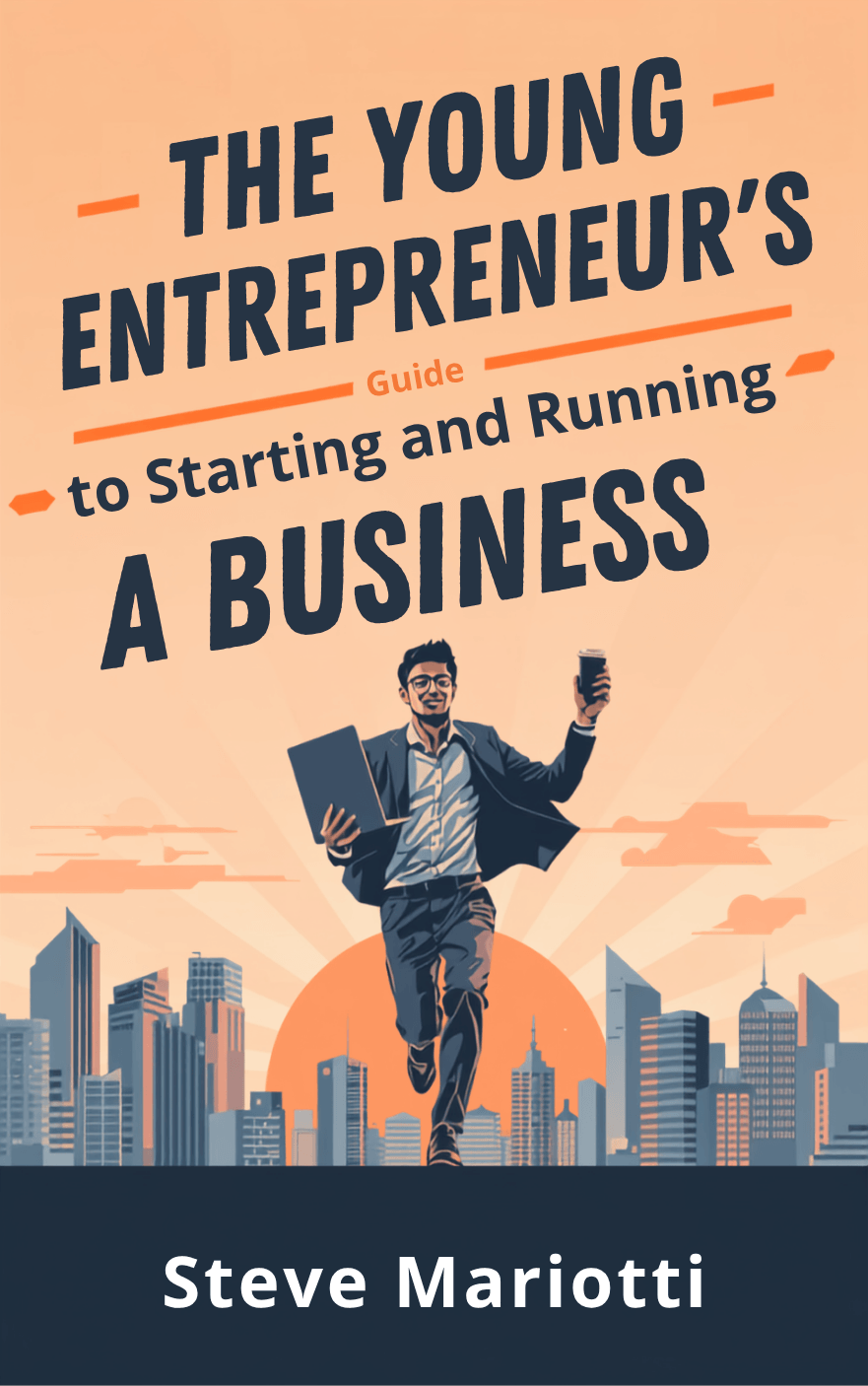
The Young Entrepreneur's Guide to Starting and Running a Business Book Summary
This The Young Entrepreneur's Guide to Starting and Running a Business Book Summary covers the key ideas, lessons, and takeaways in about 20 minutes.
Short Description:
A young entrepreneur's guide to launching, funding, and running a business
Helps with these goals
Want a Free Weekly Read?
Get a free summary every week straight to your mailbox.
Preview the The Young Entrepreneur's Guide to Starting and Running a Business book summary
Below is a preview of Sumizeit’s comprehensive human-written summary of The Young Entrepreneur's Guide to Starting and Running a Business by Steve Mariotti. The full summary is 15-20 minutes long and covers the book’s key ideas in text, audio, visual, and video formats. Unlock the full 20 Minute Summary
Steve Mariotti opens the book by framing entrepreneurship as more than opening a store or launching an app. He describes it as a mindset, a way of seeing the world that lets you take charge of your own path instead of waiting for someone else to hand you an opportunity. Anyone can develop this mindset regardless of where they start out. It comes down to noticing chances other people overlook and then weighing what you might gain against what you might lose before you act. For Mariotti, that combination of vision and clear eyed risk assessment is the real engine behind every successful venture, not luck or a rare personality type.
The Basic Math Behind Turning a Profit
A huge share of business success comes down to one simple move. You find something you can buy for less than people are willing to pay for it, and you sell it at that higher price. The book tells the story of Michelle Araujo, who built her clothing resale business, A La Mode, on exactly this idea. She bought trendy pieces cheaply in New York City, where they were easy to find, then resold them in her hometown, where demand ran high and supply did not. That price gap let her pay her own way through college while running the business full time. Mariotti suggests a rough rule for beginners. Charge about double what you paid for the item, since that markup usually covers your costs and still leaves room for profit.
Every Decision Comes With a Trade Off Between Risk and Reward
Running a business always means putting something on the line in hopes of getting something better back. Mariotti defines risk as the chance of loss and reward as the payoff you're chasing. Bigger, bolder moves tend to carry the possibility of bigger payoffs, which is part of why some entrepreneurs are willing to sacrifice more when the potential upside looks especially attractive. The book illustrates this through Julia, a young founder who started a company selling blended fruit drinks. She poured her own money and time into the business because she wanted real financial success, not just a side project. When her employee Mary suggested a new smoothie combination, sales jumped, showing how a single good idea from the right person at the right moment can shift the whole trajectory of a company.
Making More Out of Limited Resources
Entrepreneurs matter to an economy because they take scarce things, time, money, energy, raw materials, and turn them into products and services people actually want. Mariotti calls this the creative combination of limited resources into something new. He points to Henry Ford as the clearest example in the book. Before Ford introduced the assembly line, cars took a long time to build and required many skilled workers, which made them expensive and out of reach for most families.
Want the complete 20-minute summary?
- Full structured summary
- Video Summary
- Podcast Summary
- Audio summary
- Key takeaways
- Exercises
- Quiz
- Highlights and notes
- Ask the book with AI
Who should read The Young Entrepreneur's Guide to Starting and Running a Business?
This book is ideal for young people, students, and first-time entrepreneurs who want to launch a business but lack a clear roadmap. Whether you're in high school, college, or early in your career, Mariotti's practical approach works for anyone serious about building something from the ground up, regardless of background or current resources.
Why does The Young Entrepreneur's Guide to Starting and Running a Business matter?
Entrepreneurship has become an essential skill in today's economy, yet most people never learn how to start or run a business. The Young Entrepreneur's Guide to Starting and Running a Business fills that gap by breaking entrepreneurship into teachable, actionable steps that anyone can master. In an era of economic uncertainty and rapid change, the ability to spot opportunities, manage risk, and build something of value has never been more valuable.
What are the key themes in The Young Entrepreneur's Guide to Starting and Running a Business?
- Entrepreneurship as a learnable mindset, not an inborn talent
- The fundamental economics of buying low and selling high
- Risk assessment and measured decision-making
- Building businesses from limited resources through creative combinations
- Core entrepreneurial traits that can be developed over time
- From idea validation to legal structure and financial management
- Marketing, branding, and connecting with the right customers
- Planning for growth and eventual exit from the start
How can you apply ideas from The Young Entrepreneur's Guide to Starting and Running a Business?
- Identify a price gap in your local market by researching what items cost wholesale versus retail, then test selling a small batch to validate demand
- Create a competitive analysis matrix for businesses similar to your idea by visiting as a customer, documenting their strengths and weaknesses, and identifying where you can differentiate
- Draft a simple cost-benefit analysis for a business idea you're considering, listing all expected benefits, subtracting projected costs, and calculating whether the net is positive enough to pursue
- Define your ideal customer using demographic, geographic, and psychographic details, then validate this profile by surveying or interviewing real people in that group
- Build a basic financial dashboard tracking your income statement, cash flow, and break-even point monthly, using simple spreadsheets or accounting software
- Design a one-page marketing plan covering your target customer, product differentiators, pricing strategy, place of sale, and three specific promotional tactics
- Map out a simple exit strategy for your business even before launch, asking what you'd want a buyer or investor to know about its long-term potential and your vision for scaling
What common mistakes do readers make with The Young Entrepreneur's Guide to Starting and Running a Business?
- Assuming entrepreneurship requires a rare personality type or special talent when it's actually a learnable set of skills anyone can build with practice
- Jumping into a business idea without testing it first through market research, customer validation, or cost-benefit analysis
- Neglecting financial management because numbers don't come naturally, then facing cash flow crises that could have been prevented with basic tracking
- Overcomplicating the business or getting lost in daily operations instead of stepping back to notice competitive threats and new opportunities emerging around you
Sumizeit Exercises Apply what you've learned
Turn ideas from The Young Entrepreneur's Guide to Starting and Running a Business into action with a short guided reflection: identify the biggest takeaway, connect it to your life, and commit to one step you can take in the next 24 hours.
What is the expert analysis of The Young Entrepreneur's Guide to Starting and Running a Business?
Overview
The Young Entrepreneur's Guide to Starting and Running a Business is authored by Steve Mariotti, a pioneering educator and advocate for entrepreneurship education, particularly among underserved youth. Mariotti’s extensive background as a financial analyst and educator, combined with his founding of the Network for Teaching Entrepreneurship, lends this work both practical grounding and a socially conscious perspective. The book stands out as a comprehensive primer designed not only to demystify business fundamentals but also to cultivate an entrepreneurial mindset accessible to young readers and novices alike. Its significance lies in bridging the gap between abstract business theory and actionable, real-world application through vivid storytelling and clear frameworks.
Core Thesis
Mariotti’s central argument is that entrepreneurship is fundamentally a learnable skill set rather than an innate talent reserved for a select few. He frames entrepreneurship as a mindset characterized by vision, risk assessment, creativity in resource allocation, persistence, and continual learning. The book systematically guides readers through the entrepreneurial journey—from opportunity recognition and risk evaluation to legal structuring, financial management, marketing, and eventual growth or exit planning. This holistic approach underscores that success in business is less about luck or personality and more about disciplined, informed decision-making and adaptability.
Strengths
- Accessible and Practical Frameworks: Mariotti excels at breaking down complex business concepts into digestible, actionable steps, such as cost-benefit analysis, SWOT, and opportunity cost, making entrepreneurship approachable for young or inexperienced readers.
- Use of Real Entrepreneurial Stories: The inclusion of diverse case studies—from Michelle Araujo’s resale business to Ray Kroc’s McDonald’s franchise—grounds theoretical lessons in tangible examples, enhancing reader engagement and comprehension.
- Emphasis on Mindset and Traits: By highlighting traits like courage, curiosity, discipline, and persistence as cultivable rather than innate, the book empowers readers to see entrepreneurship as an attainable path.
- Comprehensive Scope: The book covers the full entrepreneurial lifecycle, including often overlooked topics like legal structures, inventory management, and exit strategies, providing a well-rounded education.
- Socially Conscious Perspective: Mariotti’s background and advocacy for accessible entrepreneurship education imbue the book with a commitment to inclusivity and real-world relevance.
Critiques & Counterarguments
- Oversimplification of Risk and Reward: While the book rightly emphasizes risk assessment, its framing sometimes implies a linear relationship between risk size and reward potential, which behavioral economics and empirical studies have shown to be more complex and context-dependent.
- Limited Attention to Structural Barriers: The assertion that anyone can develop an entrepreneurial mindset may underplay systemic inequalities such as access to capital, social networks, and education, which significantly influence entrepreneurial outcomes.
- Reliance on Classic Examples: The book’s frequent references to iconic figures like Henry Ford and Ray Kroc, while illustrative, may feel dated in the context of today’s rapidly evolving digital economy and startup ecosystems driven by technology and innovation.
- Potential Underestimation of Innovation-Driven Models: Mariotti’s emphasis on buying low and selling high as a fundamental formula may overlook the disruptive potential of innovation-led ventures where value creation transcends simple price arbitrage.
- SWOT and Similar Tools as Incomplete Predictors: The book’s endorsement of analytical tools such as SWOT analysis is useful but may give a false sense of certainty; real-world entrepreneurship often involves unpredictable market dynamics and emergent challenges that defy neat categorization.
Who Should Read This
This book is ideally suited for young aspiring entrepreneurs, educators in business or economics, and novice founders seeking a foundational understanding of entrepreneurship. Its clear language and step-by-step guidance make it particularly valuable for high school and college students or those from non-business backgrounds who want to develop a practical skill set and mindset. Additionally, educators and mentors working with underserved populations will find Mariotti’s inclusive approach and real-world examples especially resonant. While seasoned entrepreneurs or those seeking advanced strategic insights may find the content introductory, the book remains a vital resource for anyone embarking on the entrepreneurial journey.
Frequently asked questions about the The Young Entrepreneur's Guide to Starting and Running a Business book summary
What is The Young Entrepreneur's Guide to Starting and Running a Business about?
The Young Entrepreneur's Guide to Starting and Running a Business by Steve Mariotti is a practical handbook that teaches entrepreneurship as a learnable skill rather than an inborn talent. It covers the complete arc of starting and running a business, from recognizing opportunities and testing ideas, to managing finances, marketing effectively, and planning for growth or exit.
Who should read The Young Entrepreneur's Guide to Starting and Running a Business?
This book is ideal for young people, students, and first-time entrepreneurs who want concrete guidance on starting a business. It works whether you're in high school, college, early in your career, or simply curious about building something of value, regardless of your background or current resources.
What are the main takeaways from The Young Entrepreneur's Guide to Starting and Running a Business?
The main takeaways include that entrepreneurship is a developable skill, not a rare talent; that successful businesses often start by finding price gaps and gradually scale; that every decision involves calculating risk versus reward; and that testing ideas, understanding finances, and staying disciplined are more important than luck or personality type. The book also emphasizes the importance of knowing your customers, differentiating from competitors, and planning for growth from the beginning.
How do I find a business idea worth pursuing?
Ideas come from both personal sources—your own interests, skills, and experiences—and external sources like market gaps, cultural shifts, and new technology. The strongest ideas blend both. Look at your social circles for recurring problems, stay curious about trends, and treat everyday annoyances as potential business opportunities rather than just complaints.
What is the basic formula for making a profit?
The fundamental formula is finding something you can buy for less than people are willing to pay, then selling it at that higher price. A rough starting point is doubling your cost to cover expenses and create profit margin, though this varies by industry and product type.
What financial documents does every entrepreneur need to understand?
Every founder should master three core financial documents: the income statement (which tracks profit), the cash flow statement (which tracks money moving in and out), and the balance sheet (which shows what the business owns versus what it owes). Keeping careful records of every dollar earned and spent is the foundation all three depend on.
How do I differentiate my business from competitors?
You can differentiate through better quality, sharper pricing, extra convenience, or features your competitors don't offer. Small operational choices like longer hours, faster service, free delivery, or better customer service can be enough to tip a customer's decision in your favor. Start by analyzing what competitors do well and where they fall short, then build your advantage in the gaps.
What traits do successful entrepreneurs share?
Steve Mariotti highlights traits like willingness to face risk, the ability to spot opportunities others overlook, continuous curiosity and learning, persistence in the face of setbacks, and discipline in managing priorities and staying organized. Importantly, none of these traits are inborn—they're all skills that can be developed and strengthened over time.
About Sumizeit
Sumizeit is a profitable Scomy LLC company based in Miami, Florida. Our founders, Clemens Raemy and Weina Scott, are successful entrepreneurs with several exits. Sumizeit is a popular book summary app / micro learning app used by busy professionals and entrepreneurs with over 2,500 non-fiction book summaries and 10,000 podcast summaries in text, audio, visual, podcast, and video format. We also have stellar retention tools to make ideas stick - such as flashcards with spaced repetition, quizzes, streaks, highlighting and notes, daily challenges, riddles, mini-courses, meditation, and more. You won't only learn the idea, but also remember it. Over 90% of our users change their habits with Sumizeit.
Upgrade Now
Here's why readers love Sumizeit
Join thousands of learners getting smarter every day
"Great experience. Detailed summaries. Loved the gamification feature. Makes learning fun. Good customer service. I recommend Sumizeit to anyone. You'll learn a lot."
"I always felt busy but still wanting to keep up with the book discussion in my friend group. This was a great supplement to help me keep reading the books I find fun while keeping up with important books."
"I love this website. Instead of scrolling social media, I find myself learning a lot. I use it everyday. I recommend this app for anyone who is too busy and wants to get up to speed with their favorite books."
The Young Entrepreneur's Guide to Starting and Running a Business Book Summary PDF
Looking for a The Young Entrepreneur's Guide to Starting and Running a Business Book Summary PDF you can save and revisit offline? Our The Young Entrepreneur's Guide to Starting and Running a Business Book Summary PDF captures the book’s core ideas in a clean, printable format — the key frameworks, takeaways, and structure without the fluff. Download the The Young Entrepreneur's Guide to Starting and Running a Business Book Summary PDF when you want a reference you can annotate, share with your team, or review on the go. Get your The Young Entrepreneur's Guide to Starting and Running a Business Book Summary PDF from the download page below.
Download The Young Entrepreneur's Guide to Starting and Running a Business Book Summary PDFPeople also liked these summaries
Readers who explored The Young Entrepreneur's Guide to Starting and Running a Business often enjoyed these titles next.

Ready to read the whole thing?
- Full structured summary
- Video Summary
- Podcast Summary
- Audio summary
- Key takeaways
- Exercises
- Quiz
- Highlights and notes
- Ask the book with AI
Featured Book Titles
Popular Book Summaries at sumizeit, leading book summary app