


Prefer the print book? Buy on Amazon
As an Amazon Associate, Sumizeit earns from qualifying purchases.
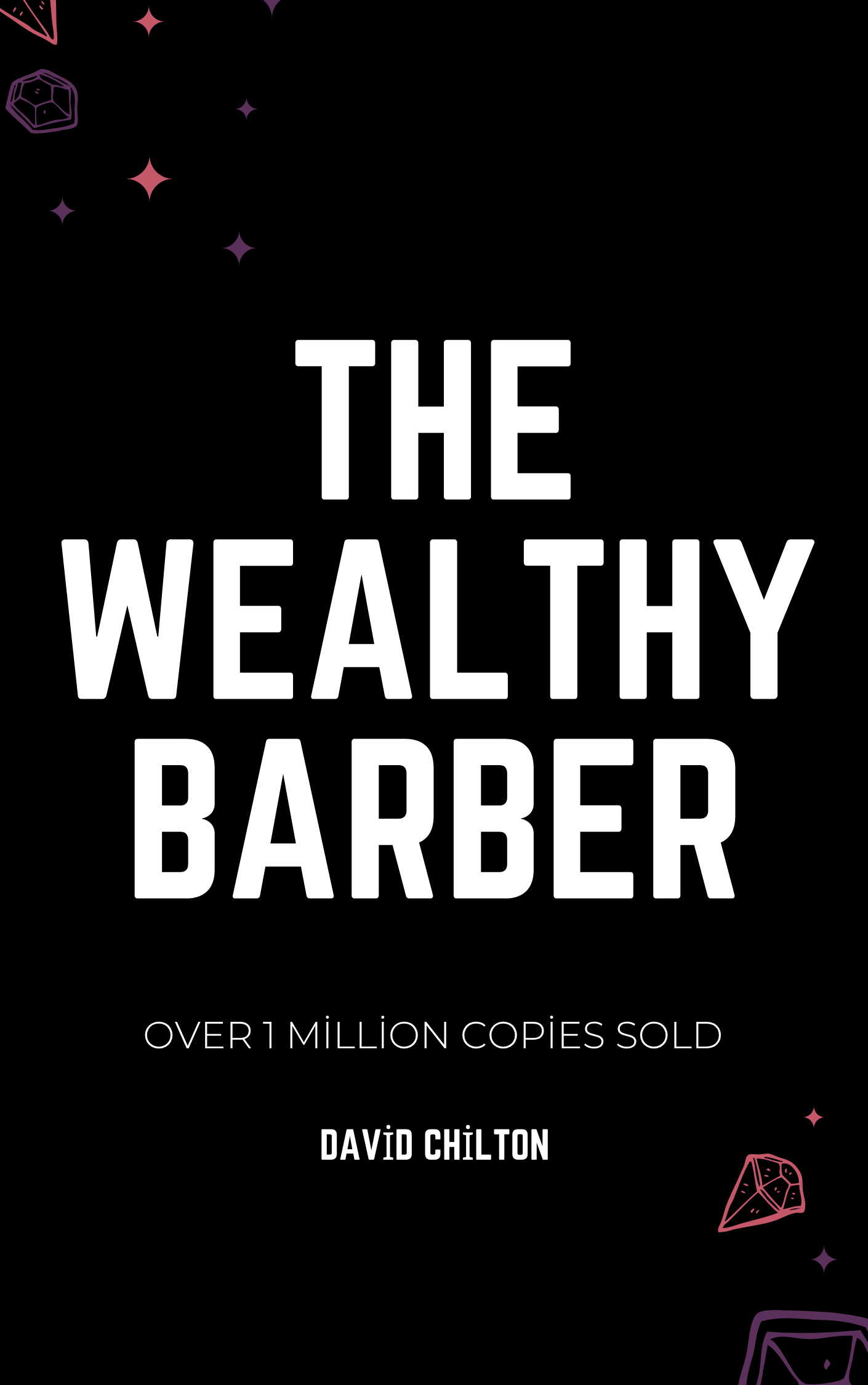
The Wealthy Barber Book Summary
This The Wealthy Barber Book Summary covers the key ideas, lessons, and takeaways in about 20 minutes.
Short Description:
The Wealthy Barber teaches wealth builds through simple, disciplined habits.
The book’s greatest message is that time is the most valuable financial resource. Small contributions made early and maintained faithfully can grow into astonishing wealth through compounding. The key is to start now, automate smart decisions, and avoid emotional financial choices. The boring path is the winning path. If a barber can quietly build a substantial fortune with modest earnings, any dedicated person can achieve the same.
Helps with these goals
Want the complete 20-minute summary?
- Full structured summary
- Video Summary
- Podcast Summary
- Audio summary
- Key takeaways
- Exercises
- Quiz
- Highlights and notes
- Ask the book with AI
Want a Free Weekly Read?
Get a free summary every week straight to your mailbox.
Preview the The Wealthy Barber book summary
Below is a preview of Sumizeit’s comprehensive human-written summary of The Wealthy Barber by David Chilton. The full summary is 15-20 minutes long and covers the book’s key ideas in text, audio, visual, and video formats. Unlock the full 20 Minute Summary
The Wealthy Barber uses a fictional storyline to explain personal finance in an approachable, entertaining way. Instead of overwhelming readers with charts, formulas, and technical vocabulary, the book follows three ordinary people who are confused about money and unsure where to start. Dave, a schoolteacher afraid of making financial mistakes; Tom, an auto-plant worker living paycheck to paycheck while trying to support his family; and Cathy, a small-business owner earning well but lacking direction, all feel embarrassed about their lack of financial knowledge. They turn to Roy, their barber, after discovering that he has quietly accumulated substantial wealth despite working in a modest occupation.
The premise is deliberately surprising: if a barber earning average wages can retire wealthy, the principles he uses must be simple, repeatable, and accessible. Through monthly haircut meetings, Roy teaches financial concepts through stories, relatable analogies, personal examples, and real-world success and failure cases. The narrative shows the transformation of people who initially feel overwhelmed by money but gradually build confidence by taking straightforward, consistent actions.
Paying Yourself First: The Automatic Habit That Guarantees Saving
Roy introduces the group to the cornerstone rule of wealth building: pay yourself first. Saving must be automated and occur before any bills or discretionary spending—otherwise the money will disappear. He insists that saving cannot be based on willpower, self-control, or leftover funds, because there are never leftovers. Instead, a fixed percentage—at least 10% of gross income—must be automatically transferred into savings or investments immediately upon receiving each paycheck.
Tom initially protests, claiming that his income is too small to save anything. Roy challenges him to commit for one month. Tom sets up automatic deduction from his paycheck and discovers that he barely notices the difference. Instead of feeling deprived, he simply becomes more thoughtful. He packs lunches instead of buying them, cancels unused subscriptions, waits for discounts on necessary items, and avoids spontaneous spending. Tom admits that previously he had believed he had an earning problem, but what he really had was a spending awareness problem.
Roy illustrates how early saving creates dramatic results. He presents the example of two young workers: one who saves a small amount starting in early adulthood and stops after ten years, and another who delays saving for a decade but then invests steadily for thirty years. Even though the second person saves far more money in total, the first ends up with a larger retirement balance because the early contributions enjoyed decades of compounding. Roy explains that time is the most powerful variable in personal finance, and that waiting even a few years can reduce future wealth by hundreds of thousands of dollars.
Compounding: How Time Turns Small Contributions Into Massive Gains
Roy explains compounding—the engine of wealth—in simple terms. When money earns interest and that interest begins earning its own interest year after year, savings grow faster and faster.
Want the complete 20-minute summary?
- Full structured summary
- Video Summary
- Podcast Summary
- Audio summary
- Key takeaways
- Exercises
- Quiz
- Highlights and notes
- Ask the book with AI
Who should read The Wealthy Barber?
The Wealthy Barber is ideal for anyone feeling overwhelmed by personal finance, regardless of income level or background. Whether you're a young professional just starting out, a midcareer worker struggling to save, or someone approaching retirement unprepared, this book makes money management accessible and actionable. If you've avoided financial planning because it feels too complex or intimidating, David Chilton's conversational approach through relatable characters will change how you think about building wealth.
Why does The Wealthy Barber matter?
In a world of increasingly complex financial products and overwhelming information, The Wealthy Barber cuts through the noise to reveal that wealth-building is fundamentally simple and behavioral, not mathematical. As pensions decline, inflation erodes purchasing power, and individuals bear greater responsibility for their financial futures, the timeless principles in this book become more relevant than ever. By proving that ordinary people with ordinary incomes can achieve extraordinary financial security, Chilton empowers readers to take control of their financial destiny starting today.
What are the key themes in The Wealthy Barber?
- Paying yourself first through automation eliminates the need for willpower
- Compounding is the engine of wealth and rewards early, consistent investing
- Time is the most valuable financial asset—starting early matters more than starting big
- Financial success is behavioral, not mathematical—discipline beats intelligence
- Intentional spending, not deprivation, is the path to smart money management
- Simple, diversified investing outperforms speculation and market timing
- Strategic home ownership can build wealth when approached responsibly
Want the complete 20-minute summary?
- Full structured summary
- Video Summary
- Podcast Summary
- Audio summary
- Key takeaways
- Exercises
- Quiz
- Highlights and notes
- Ask the book with AI
How can you apply ideas from The Wealthy Barber?
- Set up automatic paycheck deductions of at least 10% to savings or investments immediately upon receiving income, before bills and discretionary spending
- Track your spending for one month to identify unconscious purchases—subscriptions, coffee, convenience items—and redirect those funds to automated savings
- Open a low-cost mutual fund or index fund account and commit to regular monthly contributions regardless of market conditions
- Review your employer's 401(k) or retirement plan matching and contribute at least enough to capture the full match—this is free money
- Evaluate your current credit card debt and create a repayment plan, then implement strict rules against new credit card balances for discretionary spending
- Calculate whether your mortgage payment allows you to continue regular investment contributions; if not, reconsider the size or timing of your home purchase
- Review your life insurance coverage and replace expensive cash-value policies with affordable term insurance if you have dependents
- Create or update your will and organize essential financial documents, designating a reliable executor to manage your estate
What common mistakes do readers make with The Wealthy Barber?
- Waiting for the 'perfect time' to invest instead of starting immediately with whatever amount is possible—even small early contributions compound into far greater wealth
- Believing you need a high income to build wealth when the behavior of consistent saving and investing matters far more than salary size
- Panic-selling investments during market downturns, locking in losses and missing subsequent recoveries—the buyers who continued investing during crashes earned exceptional returns
- Stretching to afford a home purchase without calculating total homeownership costs, then discovering that mortgage payments prevent continuing regular investments
- Declining employer 401(k) matching contributions to have more take-home pay, thereby leaving tens of thousands in free money and exponentially more compounding gains on the table
Sumizeit Exercises Apply what you've learned
Turn ideas from The Wealthy Barber into action with a short guided reflection: identify the biggest takeaway, connect it to your life, and commit to one step you can take in the next 24 hours.
What is the expert analysis of The Wealthy Barber?
Overview
The Wealthy Barber, authored by Canadian entrepreneur and investor David Chilton, stands as a landmark contribution to personal finance literature. Its significance lies in transforming complex financial principles into accessible, relatable guidance through storytelling rather than dry technical exposition. Chilton’s approachable narrative style and use of everyday characters demystify money management, making it one of the best-selling personal finance books in North America. His background in economics and practical investment experience underpin the book’s credibility, while his role as a financial literacy advocate amplifies its cultural impact.
Core Thesis
The central argument of The Wealthy Barber is that financial independence is achievable not through high income or esoteric knowledge, but through the disciplined application of simple, consistent habits over time. Key among these is the principle of “paying yourself first” by automating savings and investments before addressing expenses. Chilton emphasizes the power of compounding, steady investing in diversified funds, prudent homeownership, avoidance of high-interest debt, and responsible retirement and estate planning. Ultimately, he argues that behavioral consistency and time are the most potent forces in wealth accumulation, accessible to anyone regardless of starting point.
Strengths
- Engaging Storytelling: By embedding financial lessons within a fictional narrative, Chilton effectively lowers barriers to understanding and sustains reader interest.
- Practical and Actionable Advice: The book distills personal finance into clear, manageable steps such as automatic savings, dollar-cost averaging, and avoiding emotional investing.
- Timeless Principles: Core concepts like compounding and diversification remain foundational despite changing economic conditions.
- Behavioral Focus: Emphasizing psychology and habit formation over technical jargon addresses the root causes of financial mismanagement.
- Balanced View on Homeownership: Chilton neither idealizes nor demonizes owning a home, instead presenting nuanced scenarios that reveal both risks and rewards.
Critiques & Counterarguments
- Oversimplification of Market Dynamics: The book’s strong advocacy for index funds and avoidance of stock picking may understate the potential benefits of active management in certain contexts, especially for sophisticated investors.
- Limited Discussion of Income Inequality and Structural Barriers: Chilton’s thesis assumes a baseline ability to save, which may not hold for individuals facing systemic economic hardships or precarious employment.
- Potentially Dated Examples: While principles are timeless, some anecdotes and financial products discussed (e.g., specific mutual funds or mortgage conditions) might not fully reflect current market realities or innovations like robo-advisors and fintech solutions.
- Behavioral Nuances Underexplored: Although behavioral finance is acknowledged, the complexity of emotional investing and cognitive biases could be more deeply addressed to help readers understand and overcome these challenges.
- Competing Research on Debt: Emerging perspectives suggest that strategic use of low-interest debt can be a tool for wealth building, contrasting with Chilton’s categorical caution against credit card and other consumer debt.
Who Should Read This
The Wealthy Barber is ideal for readers beginning their journey toward financial literacy—those who feel intimidated by traditional finance books or overwhelmed by jargon. It suits individuals seeking a foundational understanding of personal finance through relatable storytelling and practical advice. Additionally, educators and financial advisors can find value in Chilton’s narrative approach as a tool for client engagement. While experienced investors may find some content elementary, the behavioral insights and emphasis on consistency remain universally relevant.
Frequently asked questions about the The Wealthy Barber book summary
What is The Wealthy Barber about?
The Wealthy Barber by David Chilton is a personal finance book that uses fictional storytelling to teach practical money management principles. Three financially confused people discover that their barber, Roy, has quietly accumulated substantial wealth despite modest earnings, and they learn from him through monthly conversations that wealth-building is simple, behavioral, and accessible to anyone willing to follow consistent habits.
Who should read The Wealthy Barber?
Anyone feeling overwhelmed by personal finance, regardless of income level, should read this book. It's ideal for young professionals beginning their careers, midcareer workers struggling to save, people approaching retirement unprepared, and anyone who has avoided financial planning because it felt too complex or intimidating. The conversational approach makes money management accessible even to complete beginners.
What are the main takeaways from The Wealthy Barber?
The core message is that financial independence comes from simple, disciplined habits practiced consistently, not from luck or high income. Key takeaways include: pay yourself first through automatic savings of at least 10%, leverage compounding by investing early and holding long-term, diversify through index funds rather than chasing stocks, buy homes strategically without preventing regular investing, and protect wealth through insurance and estate planning. Time is your most valuable asset—starting early matters more than starting big.
How much should I save according to The Wealthy Barber?
David Chilton recommends saving at least 10% of gross income automatically before any other expenses. The specific percentage matters less than the consistency and automation; most people discover they can save this amount with minor spending adjustments. The key is that savings must happen automatically before bills and discretionary spending, or the money will disappear.
What does The Wealthy Barber say about investing?
The book recommends avoiding individual stock picking and market timing, which even professional money managers struggle to beat. Instead, invest steadily in low-cost, diversified mutual funds or index funds through dollar-cost averaging—investing a fixed amount at regular intervals regardless of market price. Consistency and patience matter far more than trying to time the market or chase trends.
Does The Wealthy Barber recommend buying a house?
The Wealthy Barber recommends strategic home ownership, not automatic purchasing. A house can build wealth through appreciation and leverage, but only if the mortgage payment doesn't prevent continuing regular investments and if you're prepared for hidden costs like maintenance, repairs, insurance, and property taxes. If a mortgage forces you to stop investing, renting is the better choice.
What is The Wealthy Barber's stance on credit card debt?
The book strongly warns against credit card debt, calling it the opposite of investing because compounding works against the borrower. High interest rates (often 20%+) mean a small purchase balloons to multiple times its original cost. The author emphasizes that most people trap themselves in debt not through emergencies but through unconscious convenience spending that compounds into overwhelming balances.
How does David Chilton explain compounding in The Wealthy Barber?
Chilton explains compounding as earning interest on your interest, accelerating wealth growth over decades. He uses examples like a $500 monthly investment at 10% returns accumulating over one million dollars in thirty years, with most of that growth coming from returns on returns rather than contributions. He illustrates that investors who start early but stop after ten years often accumulate more wealth than those who start late but contribute for thirty years, proving that time is the most powerful variable in personal finance.
About Sumizeit
Sumizeit is a profitable Scomy LLC company based in Miami, Florida. Our founders, Clemens Raemy and Weina Scott, are successful entrepreneurs with several exits. Sumizeit is a popular book summary app / micro learning app used by busy professionals and entrepreneurs with over 2,500 non-fiction book summaries and 10,000 podcast summaries in text, audio, visual, podcast, and video format. We also have stellar retention tools to make ideas stick - such as flashcards with spaced repetition, quizzes, streaks, highlighting and notes, daily challenges, riddles, mini-courses, meditation, and more. You won't only learn the idea, but also remember it. Over 90% of our users change their habits with Sumizeit.
Upgrade Now
Want the complete 20-minute summary?
- Full structured summary
- Video Summary
- Podcast Summary
- Audio summary
- Key takeaways
- Exercises
- Quiz
- Highlights and notes
- Ask the book with AI
Here's why readers love Sumizeit
Join thousands of learners getting smarter every day
"Great experience. Detailed summaries. Loved the gamification feature. Makes learning fun. Good customer service. I recommend Sumizeit to anyone. You'll learn a lot."
"I always felt busy but still wanting to keep up with the book discussion in my friend group. This was a great supplement to help me keep reading the books I find fun while keeping up with important books."
"I love this website. Instead of scrolling social media, I find myself learning a lot. I use it everyday. I recommend this app for anyone who is too busy and wants to get up to speed with their favorite books."
The Wealthy Barber Book Summary PDF
Looking for a The Wealthy Barber Book Summary PDF you can save and revisit offline? Our The Wealthy Barber Book Summary PDF captures the book’s core ideas in a clean, printable format — the key frameworks, takeaways, and structure without the fluff. Download the The Wealthy Barber Book Summary PDF when you want a reference you can annotate, share with your team, or review on the go. Get your The Wealthy Barber Book Summary PDF from the download page below.
Download The Wealthy Barber Book Summary PDFPeople also liked these summaries
Readers who explored The Wealthy Barber often enjoyed these titles next.

Want the complete 20-minute summary?
- Full structured summary
- Video Summary
- Podcast Summary
- Audio summary
- Key takeaways
- Exercises
- Quiz
- Highlights and notes
- Ask the book with AI
Featured Book Titles
Popular Book Summaries at sumizeit, leading book summary app