


As an Amazon Associate, Sumizeit earns from qualifying purchases.
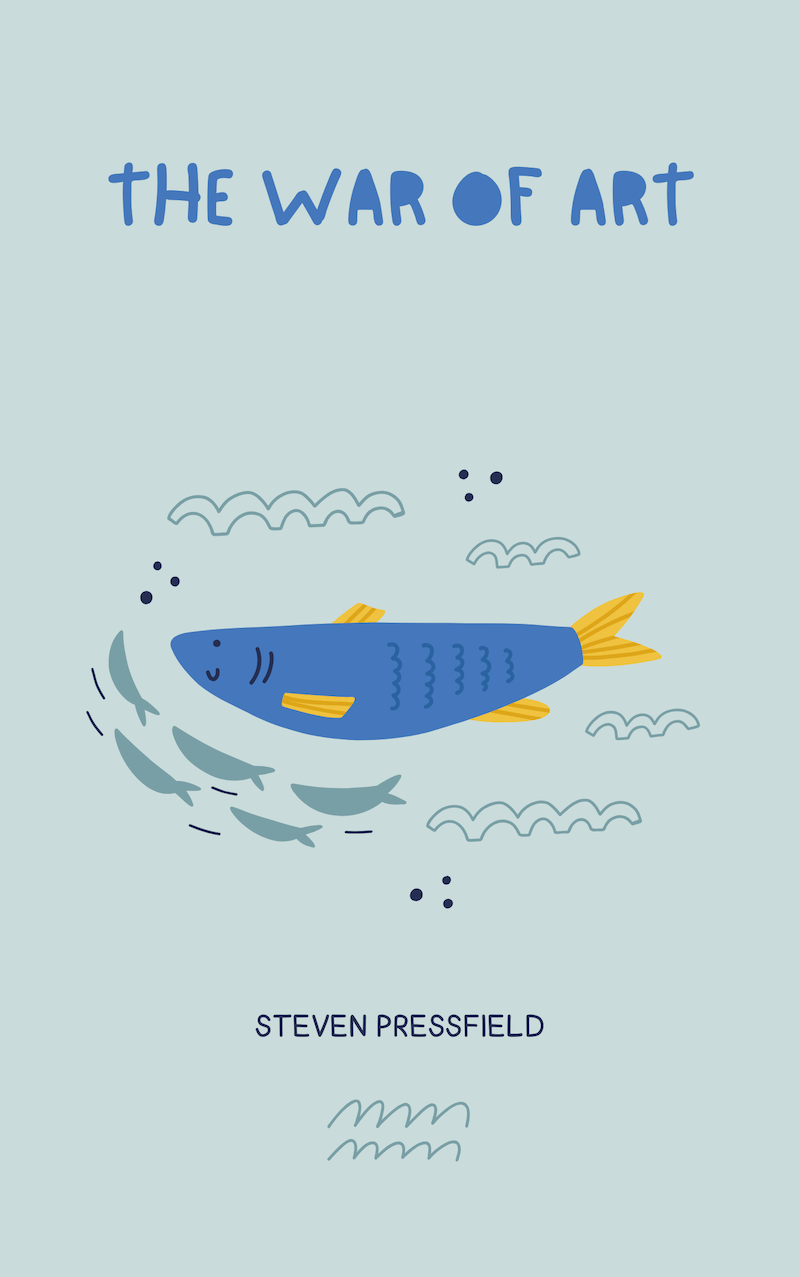
The War of Art Book Summary
This The War of Art Book Summary covers the key ideas, lessons, and takeaways in about 20 minutes.
The book teaches that professionals don’t wait for motivation; they rely on ritual and resilience. They turn fear into guidance, boredom into patience, and repetition into freedom. The creative life is not about luck or talent but devotion—the willingness to face fear, overcome Resistance, and work faithfully toward one’s calling.
Pressfield’s message transcends art—it applies to anyone striving to live with purpose. By turning pro, aligning with the Self, and honoring the creative spirit, we not only make great work—we become who we were always meant to be.
Helps with these goals
Want the complete 20-minute summary?
- Full structured summary
- Video Summary
- Podcast Summary
- Audio summary
- Key takeaways
- Exercises
- Quiz
- Highlights and notes
- Ask the book with AI
What is in the The War of Art book summary?
Below is a preview of Sumizeit’s expert-written summary of The War of Art by Steven Pressfield. The full summary covers the book’s key ideas in text, audio, and video.
Steven Pressfield’s The War of Art is a deeply insightful guide to understanding and defeating the inner obstacles that prevent individuals from realizing their creative and professional potential. It is both a practical manual and a spiritual manifesto for artists, writers, entrepreneurs, and anyone pursuing meaningful work. The central message is that our biggest adversary is not external circumstances or lack of talent—it is an internal force that Pressfield calls Resistance, a shape-shifting enemy that feeds on fear, procrastination, and self-doubt.
The book is divided into three main parts: Defining Resistance, Combating Resistance, and Beyond Resistance. Through these, Pressfield builds a compelling argument that creative success depends less on inspiration and more on perseverance, discipline, and faith in something higher than ourselves.
Resistance: The Hidden Enemy
Pressfield describes Resistance as an invisible yet powerful internal force that emerges whenever we try to rise above mediocrity or pursue growth. It manifests as procrastination (“I’ll start when I’m ready”), perfectionism, endless preparation, self-sabotage, and addiction. Unlike physical enemies, Resistance doesn’t announce itself—it disguises itself as reason, comfort, or responsibility.
For example, an aspiring writer might spend months researching writing software instead of actually writing. A musician might wait for the “right mood” to compose. A would-be entrepreneur might endlessly plan without ever launching. In each case, Resistance wins by keeping them from starting.
Pressfield insists that Resistance is not personal—it’s universal. Everyone experiences it, from Michelangelo to modern creators. The stronger the Resistance, the more certain it is that the project in question matters deeply to our soul. Instead of fighting it with guilt or self-criticism, we must recognize its presence as proof that we are on the right path.
Turning Pro: The Path to Mastery
One of Pressfield’s most powerful concepts is the distinction between the amateur and the professional. Amateurs treat creative work as an indulgence—they quit when they face obstacles or when enthusiasm fades. Professionals, however, treat their craft as a calling and a duty. They show up every day, regardless of whether they feel inspired or confident.
For example, a professional novelist writes even on bad days, knowing that persistence sharpens skill. A professional athlete trains when tired or unmotivated, because discipline builds consistency. The professional accepts payment for their labor, respects deadlines, and sees art as a job that deserves commitment.
Pressfield compares the moment an artist “turns pro” to a rite of passage—it’s the day they stop waiting for external validation and start taking full responsibility for their creative destiny. By turning pro, we shift from dependency on mood or approval to an identity built on integrity and mastery.
Fear as a Compass
Fear, according to Pressfield, is not an obstacle to avoid—it’s a compass pointing toward what truly matters. The tasks we fear most are often the ones that would transform us the most. The writer who fears finishing their manuscript fears exposure; the painter who avoids showing their work fears judgment; the entrepreneur afraid to pitch fears failure.
Want the complete 20-minute summary?
- Full structured summary
- Video Summary
- Podcast Summary
- Audio summary
- Key takeaways
- Exercises
- Quiz
- Highlights and notes
- Ask the book with AI
Who should read The War of Art?
The War of Art is essential for creative professionals, entrepreneurs, and anyone pursuing meaningful work who struggles with procrastination and self-doubt. Whether you're a writer, artist, business founder, or professional seeking to unlock your potential, this book speaks directly to the internal obstacles that sabotage progress. If you've ever delayed starting a project or questioned whether you have what it takes, Pressfield's insights will resonate deeply.
Why does The War of Art matter?
In a world obsessed with talent and inspiration, The War of Art reframes the creative struggle as a battle against an internal force called Resistance—the universal enemy that keeps us from realizing our potential. The book matters today because it offers practical wisdom on how discipline, consistency, and courage matter far more than inspiration or natural ability. By understanding Resistance as a compass pointing toward growth rather than a sign of failure, readers can transform their relationship with fear and finally take action on their deepest goals.
What are the key themes in The War of Art?
- Resistance as an invisible internal force that prevents growth
- The distinction between amateurs and professionals
- Fear as a guide to what truly matters
- Discipline and ritual over inspiration and motivation
- Authenticity and discovering your true creative calling
- The sacred partnership between effort and divine inspiration
- The Self versus the Ego in creative work
What are the key lessons from the The War of Art book summary?
Resistance Is Universal, Not Personal
Everyone from Michelangelo to modern creators experiences Resistance. Recognizing it as a universal force—not a personal failing—helps you stop blaming yourself and start fighting the real enemy.
The Stronger the Resistance, the More Important the Goal
Fear and obstacles are proportional to the significance of your project. When Resistance feels intense, it's a sign you're on the right path toward meaningful work.
Amateurs Wait for Permission; Professionals Give It to Themselves
The turning point comes when you stop seeking external validation and treat your work as a calling worthy of daily commitment, regardless of mood or inspiration.
Inspiration Follows Action, Not the Reverse
Waiting for inspiration before starting is backwards. Showing up consistently and doing the work attracts inspiration and momentum.
Fear Is a Compass, Not a Stop Sign
The tasks and projects you fear most often point to where your greatest growth lies. Courage means acting despite fear, not in the absence of it.
Discipline Is More Reliable Than Inspiration
A consistent ritual—a set time, place, and practice—builds the dependable foundation that inspiration alone can never provide.
Resistance Manifests as Disguised Procrastination
Resistance hides behind reasonable-sounding activities like research, planning, or waiting for the right conditions. Real progress comes through direct engagement with the work itself.
Turning Pro Means Accepting Payment and Deadlines
Professionalism isn't just mindset; it includes respecting the material worth of your work, honoring timelines, and treating creativity as a job deserving full commitment.
Detach Your Self-Worth From Outcomes
Professionals separate personal identity from critical reviews or praise. This emotional detachment allows you to focus on process and improvement rather than validation.
Authenticity Requires Outgrowing Old Versions of Yourself
Living true to your calling often means letting go of relationships, identities, or roles that no longer align. This loss is evolution, not tragedy.
The Self and the Ego Are Not the Same
The Ego seeks safety and status quo; the Self yearns for growth and transcendence. Aligning with your Self opens access to authenticity and flow.
Success Can Be as Frightening as Failure
Many people unconsciously sabotage themselves because success requires leaving comfort zones and changing identities. Fear of success is as real and powerful as fear of failure.
Craft Is the Bridge Between Mysticism and Mastery
Technical skill, discipline, and respect for your medium's mechanics are not in conflict with inspiration—they're what make inspiration possible.
Ritual and Ceremony Strengthen Receptivity
Whether it's a pre-work meditation or a sacred space, ritual signals to yourself and the universe that you're ready to create. It's not superstition; it's preparation.
Resistance Never Truly Disappears; It Only Retreats
You don't overcome Resistance once and move past it forever. It's a lifelong opponent that requires daily confrontation through committed action.
Discomfort Signals Growth and Evolution
When you feel genuinely uncomfortable in your creative work or life, it's often proof that you're stretching beyond old limits and becoming someone new.
Childhood Passions Reveal Your Authentic Calling
Return to what you loved before social conditioning took hold. These early interests often point to your true creative fingerprint and life's work.
Consistency Builds Invisible Progress
Daily work accumulates in ways that aren't immediately visible. Trust that showing up consistently compounds into mastery and breakthrough over time.
The Muse Favors Those Already Working
Inspiration is not lightning that strikes randomly; it's momentum that builds when you're already in motion. Dedication is the invitation to inspiration.
Creation Is a Spiritual Act, Not Just Production
Pressfield teaches that making art—or pursuing any meaningful work—is an act of transcendence and partnership with something larger than yourself.
Want the complete 20-minute summary?
- Full structured summary
- Video Summary
- Podcast Summary
- Audio summary
- Key takeaways
- Exercises
- Quiz
- Highlights and notes
- Ask the book with AI
How can you apply ideas from The War of Art?
- Establish a daily creative ritual: a set time, place, and routine that signals to your mind and body that it's time to work, regardless of motivation
- Identify and name your Resistance by tracking what activities you use to procrastinate on your most important work
- Use fear as navigation: when you notice intense fear around a project, recognize it as proof that the work matters deeply to your growth
- Shift from amateur to professional mindset by committing to showing up for your craft daily, treating it as a job worthy of compensation and respect
- Create emotional boundaries between your self-worth and the reception of your work by separating personal identity from critique or praise
- Rediscover your authentic calling by reflecting on childhood passions and asking what you would pursue if failure were impossible
- Build technical skill and discipline in your craft by dedicating consistent time to learning the mechanics and structure of your medium
What common mistakes do readers make with The War of Art?
- Waiting for inspiration or the perfect mood before starting work—inspiration follows action, not the other way around
- Confusing preparation and research with actual creative progress; unlimited planning is often just Resistance in disguise
- Believing your fear or struggle is a personal flaw rather than a universal sign that your work matters and growth is near
- Treating success as the end goal rather than recognizing it as a transformation that requires you to outgrow comfort and old identities
Sumizeit Exercises Apply what you've learned
Turn ideas from The War of Art into action with a short guided reflection: identify the biggest takeaway, connect it to your life, and commit to one step you can take in the next 24 hours.
What is the expert analysis of The War of Art?
Overview
The War of Art by Steven Pressfield stands as a seminal work in the realm of creativity and self-discipline, offering profound insights into the psychological barriers that hinder artistic and professional achievement. Pressfield, an accomplished novelist and screenwriter, draws from his own prolonged struggles with creative inertia to craft a manifesto that resonates deeply with artists, entrepreneurs, and anyone engaged in meaningful work. Since its publication in 2002, the book has become a touchstone for understanding the internal dynamics of resistance and the disciplined mindset required to overcome it.
Core Thesis
At the heart of The War of Art lies the concept of Resistance—an insidious, internal adversary manifesting as procrastination, fear, self-doubt, and rationalization that thwarts creative and professional progress. Pressfield argues that Resistance is universal and inevitable, but not insurmountable. The key to transcending it is adopting the mentality of the “professional” who shows up daily, embraces discipline, and treats creative labor as a sacred duty rather than a whimsical pursuit. Furthermore, Pressfield posits that fear is not an obstacle but a compass indicating the significance of the task, and that authentic creativity emerges from a partnership between disciplined effort and a higher, often spiritual, source of inspiration.
Strengths
- Psychological Clarity: Pressfield’s articulation of Resistance as a universal internal force provides a clear framework for understanding procrastination and self-sabotage, making abstract struggles tangible and actionable.
- Practical Wisdom: The distinction between the amateur and the professional offers a pragmatic roadmap for cultivating consistency, discipline, and resilience—qualities essential for sustained creative work.
- Integration of Spirituality and Craft: By invoking the Muse and framing creativity as a sacred act, the book elevates the creative process beyond mere technique, appealing to readers who seek deeper meaning in their work.
- Accessible and Motivational: The concise, aphoristic style combined with relatable examples makes complex psychological and philosophical ideas approachable without diluting their profundity.
- Timelessness: The themes of fear, discipline, and authenticity transcend specific industries or eras, granting the book enduring relevance.
Critiques & Counterarguments
- Oversimplification of Resistance: While Resistance is a compelling metaphor, the book tends to universalize internal struggle without sufficiently accounting for external systemic barriers such as socioeconomic constraints, mental health issues, or institutional discrimination that also impede creative work.
- Romanticization of Suffering: Pressfield’s valorization of struggle and discomfort as necessary for growth may inadvertently glorify burnout or unhealthy work habits, neglecting the importance of balance and self-care emphasized in contemporary psychology.
- Lack of Empirical Evidence: The book’s insights, though resonant, are largely anecdotal and philosophical rather than grounded in rigorous scientific research, limiting their applicability in evidence-based therapeutic or organizational contexts.
- Alternative Psychological Models: Competing frameworks, such as self-determination theory or cognitive-behavioral approaches, offer more nuanced understandings of motivation and procrastination that incorporate autonomy, competence, and relatedness, which Pressfield’s model only implicitly addresses.
- Potential Cultural Bias: The emphasis on individual perseverance and the “professional ethic” reflects a Western, perhaps capitalist, ethos that may not translate seamlessly across diverse cultural contexts where collective values or different conceptions of creativity prevail.
Who Should Read This
The War of Art is ideally suited for creators, entrepreneurs, and professionals grappling with internal blocks to productivity and seeking a philosophical yet practical framework to cultivate discipline and authenticity. It appeals especially to those who resonate with a spiritual or existential dimension to their work and who appreciate a direct, motivational style. While its insights are broadly applicable, readers interested in a more empirical or systemic analysis of creative barriers may need to supplement Pressfield’s work with other psychological or sociological literature. Ultimately, anyone committed to overcoming inertia and embracing the rigors of sustained creative effort will find this book a powerful catalyst for transformation.
Frequently asked questions about the The War of Art book summary
What is The War of Art about?
The War of Art by Steven Pressfield is a guide to identifying and defeating Resistance—an internal force of fear, procrastination, and self-doubt that prevents people from pursuing meaningful creative and professional work. The book teaches that greatness requires discipline, courage, and daily commitment rather than inspiration or talent, and that turning pro and aligning with your authentic self are the paths to creative freedom and mastery.
Who should read The War of Art?
The War of Art is essential for creatives, entrepreneurs, writers, artists, and anyone pursuing meaningful work who struggles with procrastination and self-doubt. It's also valuable for professionals seeking to unlock their potential and live with greater purpose. If you've ever delayed starting a project or questioned your ability to succeed, this book offers transformative insights.
What are the main takeaways from The War of Art?
The main takeaways are: Resistance is a universal internal force that all creators face; fear and discomfort are signs you're on the right path toward growth; professional discipline and daily ritual matter far more than inspiration; and authenticity requires courage to outgrow old identities. Pressfield teaches that creative success is less about talent and more about showing up consistently, treating work as sacred, and aligning with your true self.
How do amateurs differ from professionals according to Pressfield?
According to Pressfield, amateurs treat creative work as an indulgence and quit when enthusiasm fades or obstacles appear. Professionals, by contrast, show up every day regardless of mood, treat their craft as a calling deserving full commitment, accept payment for their work, respect deadlines, and separate their self-worth from outcomes. Turning pro is the pivotal moment when you stop waiting for external validation and take full responsibility for your creative destiny.
What does Pressfield mean by Resistance?
Resistance is Pressfield's term for an invisible internal force that emerges whenever you try to grow or pursue meaningful work. It manifests as procrastination, perfectionism, endless preparation, self-sabotage, and addiction—disguising itself as reason, comfort, or responsibility. The stronger the Resistance, the more important the work is to your soul. Pressfield teaches that Resistance is universal and not a personal flaw; it's your signal to keep going.
How can I use fear as a guide in my creative work?
Pressfield teaches that fear is a compass pointing toward what truly matters and where you'll experience the greatest growth. The tasks you fear most—finishing a manuscript, showing your work, pitching an idea—are exactly where transformation lies. Courage isn't being fearless; it's acting in spite of fear. By following your fear instead of fleeing it, you walk the path of creative evolution and personal breakthrough.
Why does Pressfield say inspiration follows action?
Pressfield argues that waiting for inspiration before starting is backwards. Inspiration arises through consistent effort and showing up daily, not before. When you establish a discipline and ritual—showing up at the same time and place—you invite momentum and creative flow. The Muse favors those already working; dedication attracts inspiration rather than the reverse.
About Sumizeit
Sumizeit is a profitable Scomy LLC company based in Miami, Florida. It has been helping readers learn from nonfiction books for 7 years with expert-written summaries in text, audio, podcast, and video.
Want the complete 20-minute summary?
- Full structured summary
- Video Summary
- Podcast Summary
- Audio summary
- Key takeaways
- Exercises
- Quiz
- Highlights and notes
- Ask the book with AI
Here's why readers love Sumizeit
Join thousands of learners getting smarter every day
"Great experience. Detailed summaries. Loved the gamification feature. Makes learning fun. Good customer service. I recommend Sumizeit to anyone. You'll learn a lot."
"I always felt busy but still wanting to keep up with the book discussion in my friend group. This was a great supplement to help me keep reading the books I find fun while keeping up with important books."
"I love this website. Instead of scrolling social media, I find myself learning a lot. I use it everyday. I recommend this app for anyone who is too busy and wants to get up to speed with their favorite books."
The War of Art Book Summary PDF
Looking for a The War of Art Book Summary PDF you can save and revisit offline? Our The War of Art Book Summary PDF captures the book’s core ideas in a clean, printable format — the key frameworks, takeaways, and structure without the fluff. Download the The War of Art Book Summary PDF when you want a reference you can annotate, share with your team, or review on the go. Get your The War of Art Book Summary PDF from the download page below.
Download The War of Art Book Summary PDFPeople also liked these summaries
Readers who explored The War of Art often enjoyed these titles next.


Want the complete 20-minute summary?
- Full structured summary
- Video Summary
- Podcast Summary
- Audio summary
- Key takeaways
- Exercises
- Quiz
- Highlights and notes
- Ask the book with AI
Featured Book Titles
Popular Book Summaries at sumizeit, leading book summary app