


Prefer the print book? Buy on Amazon
As an Amazon Associate, Sumizeit earns from qualifying purchases.
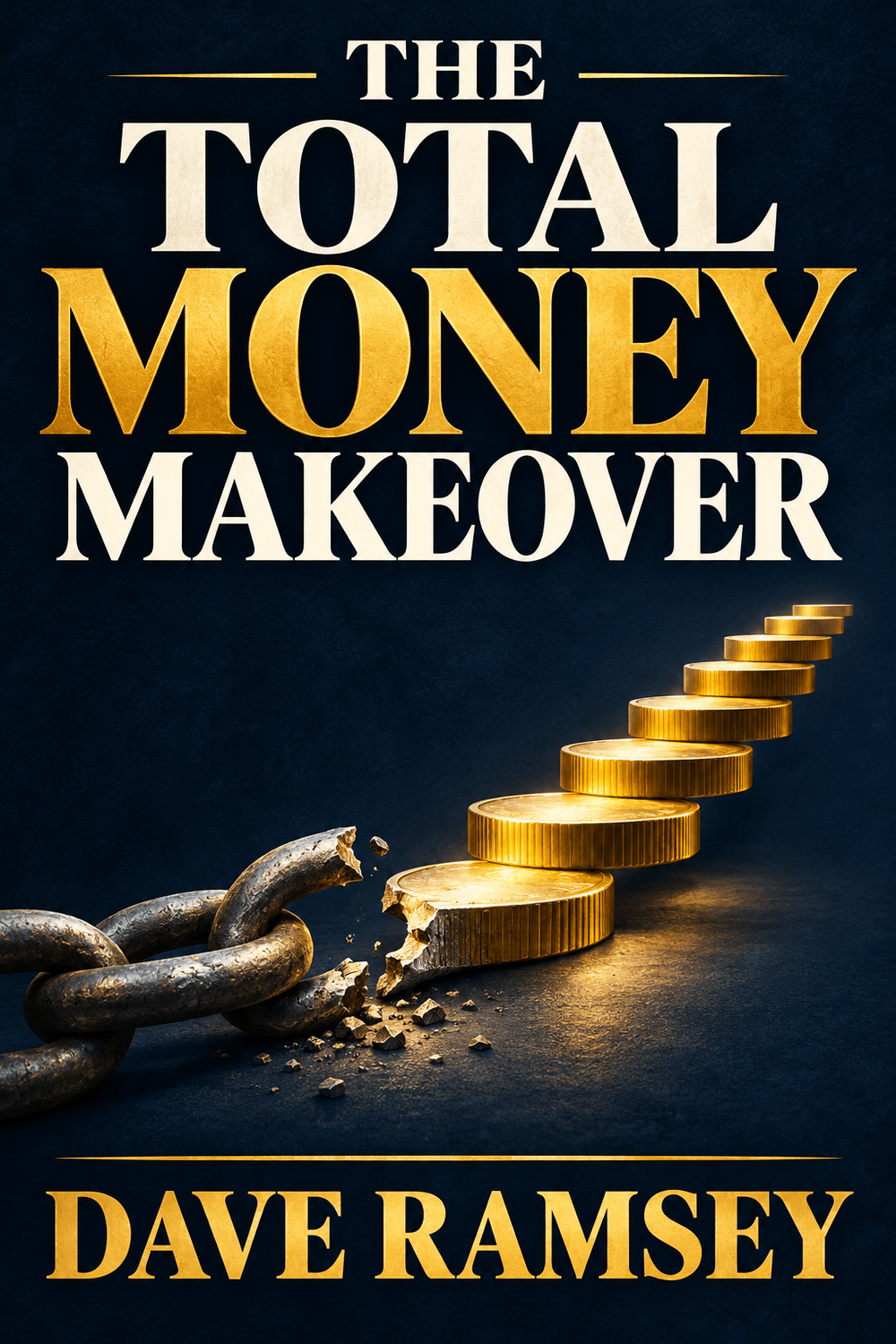
The Total Money Makeover Book Summary
This The Total Money Makeover Book Summary covers the key ideas, lessons, and takeaways in about 20 minutes.
Short Description:
Dave Ramsey’s seven step plan to get out of debt and build wealth for good.
Helps with these goals
Preview the The Total Money Makeover book summary
Below is a preview of Sumizeit’s comprehensive human-written summary of The Total Money Makeover by Dave Ramsey. The full summary is 15-20 minutes long and covers the book’s key ideas in text, audio, visual, and video formats. Unlock the full 20 Minute Summary
Dave Ramsey opens with a blunt claim. If you're buried in debt, can't cover a surprise bill, and never seem to get ahead, the cause is the person in your mirror. A bigger paycheck won't fix it. Neither will a windfall or a new job. What fixes it is admitting that your own choices put you here, then making different ones.
That sounds harsh, but Ramsey means it as good news. If you caused the mess, you can clean it up. His program has no secret formula and no clever investing trick. It's a set of plain rules in a fixed order. Live on a written budget, buy only what you can pay for today, wipe out debt, save for emergencies, invest, and pay off your house. He says it works whether you earn a lot or owe a lot.
He points to the 2008 financial crisis as proof that shaky habits get exposed sooner or later. A storm shows you where a house is weak, and a recession does the same to your finances. Banks, companies, and families piled on risk and debt while times were good. When the economy turned, the damage spread to plenty of people who looked comfortable but had no cushion. Ramsey borrows a point from Jim Collins, who wrote in How the Mighty Fall that failure starts with feeling invincible. You feel sure your job is safe, so you buy on credit and skip saving. Ramsey's line is that a turkey can fly in a tornado, but that doesn't make it a bird that flies. Habits that only work in good times aren't sound habits.
The makeover challenge
Ramsey learned this the hard way. In his late twenties he borrowed heavily to buy real estate and became a millionaire on paper. Within three years he was bankrupt, with a wife and two small kids. He started reading everything he could about money and about how wealthy people handle it. His conclusion was that he didn't lack information. He lacked discipline.
He puts a number on it. Handling money well is 80 percent behavior and 20 percent knowledge. Most people already know what they should do. They just don't do it, because changing habits is hard. The book hands you the knowledge. The other 80 percent is on you.
The program's motto, in plain terms, is this. Live in a way most people won't for a few years, so that later you can live in a way most people can't. You skip the new car, the bigger house, and the big TV on credit. You may work extra hours. The payoff is security down the road.
Ramsey fills the book with real couples to show it can be done. Mark and Kari had student loans, a car lease, credit card balances, and a big mortgage. They switched from credit to cash, took an honest look at their income, and chose to live below it.
Want the complete 20-minute summary?
- Full structured summary
- Video Summary
- Podcast Summary
- Audio summary
- Key takeaways
- Exercises
- Quiz
- Highlights and notes
- Ask the book with AI
Who should read The Total Money Makeover?
The Total Money Makeover is for anyone drowning in debt, living paycheck to paycheck, or feeling trapped by financial stress. Whether you earn a modest income or a six-figure salary, this book speaks to people ready to stop blaming circumstances and take control through behavioral change. It's especially valuable for those who've tried financial fixes before but lack a clear, step-by-step roadmap.
Why does The Total Money Makeover matter?
Financial stress is a leading cause of divorce, health problems, and anxiety, yet most people never receive formal education about money management. The Total Money Makeover cuts through marketing noise and cultural pressure to show that wealth-building isn't about earning more—it's about spending less and acting with discipline. In an economy where the average person is one emergency away from crisis, Ramsey's proven seven-step system offers a concrete path to security and freedom.
What are the key themes in The Total Money Makeover?
- Money is primarily a behavior problem, not an information problem
- Debt is a tool of the lender, not the borrower
- Small, consistent actions compound into transformational results
- Social pressure and the desire to impress others sabotage financial progress
- Denial and myths about debt are the biggest obstacles to change
- Written budgets and intentional planning eliminate financial chaos
- Wealth-building requires sacrifice now for security later
How can you apply ideas from The Total Money Makeover?
- Create a written monthly budget before each month begins, assigning every dollar of income to a category until income equals spending
- Build a $1,000 emergency fund immediately by cutting expenses and working extra hours—most people achieve this in under a month
- List all debts except your mortgage from smallest to largest balance and attack the smallest one while paying minimums on others
- Sell unnecessary items, pause 401(k) contributions (if debts take 18+ months), or take a second job to accelerate debt payoff
- Replace credit cards and high-rate car loans with a strategy to buy used vehicles with cash and upgrade gradually as you save
- Use a debit card for convenience while building a written budget to control spending habits without credit card temptation
- Once debts are eliminated, expand your emergency fund to 3-6 months of expenses in a money market account for immediate access
- Invest 15% of gross income across four types of growth stock mutual funds: growth and income, growth, international, and aggressive growth
What common mistakes do readers make with The Total Money Makeover?
- Assuming a higher income or windfall will fix money problems when the real issue is spending behavior that will simply scale up
- Comparing your finances to friends and neighbors who are also in debt, thinking 'normal' debt means you're doing fine
- Skipping the written budget because nothing bad happens immediately—then wondering where all your money goes
- Trying to tackle all debts at once or targeting highest interest rates first, which drains motivation before seeing real progress
- Financing a car over 5-6 years to lower the payment, not realizing the $5.9 million compounding opportunity lost over a lifetime
- Believing you need a credit card to build credit, when in reality you only need a score if you plan to keep borrowing
Sumizeit Exercises Apply what you've learned
Turn ideas from The Total Money Makeover into action with a short guided reflection: identify the biggest takeaway, connect it to your life, and commit to one step you can take in the next 24 hours.
What is the expert analysis of The Total Money Makeover?
Overview
The Total Money Makeover by Dave Ramsey is a seminal work in the personal finance genre, notable for its straightforward, behavior-centric approach to financial health. Ramsey, a former real estate investor who experienced bankruptcy firsthand, leverages his personal journey and extensive experience as a radio host and financial counselor to advocate a disciplined, no-nonsense path out of debt and into wealth. The book’s significance lies in its accessibility and practical framework, which has resonated widely, especially among middle-class Americans seeking financial stability without reliance on complex investment strategies.
Core Thesis
At the heart of Ramsey’s argument is the assertion that financial problems are fundamentally behavioral problems. Knowledge alone is insufficient; success requires disciplined action and a commitment to changing spending habits. His step-by-step program emphasizes living within one’s means, eliminating debt through a “debt snowball” method, building emergency savings, investing prudently, and ultimately achieving financial freedom. Ramsey’s thesis challenges cultural norms that normalize debt and credit dependency, advocating instead for a lifestyle of intentional frugality and long-term planning.
Strengths
- Behavioral Focus: Ramsey’s emphasis on behavior over financial acumen addresses a critical, often overlooked dimension of personal finance—psychology and habit formation.
- Clear, Actionable Steps: The “baby steps” provide a structured, sequential roadmap that is easy to understand and implement, reducing overwhelm for readers.
- Real-Life Examples: The inclusion of detailed case studies humanizes the advice, demonstrating its applicability and inspiring readers through relatable success stories.
- Cultural Critique: The book incisively critiques societal myths about debt, credit cards, and consumerism, encouraging readers to resist peer pressure and marketing tactics.
- Holistic Approach: Beyond debt elimination, Ramsey addresses insurance, estate planning, retirement, and charitable giving, offering a comprehensive financial philosophy.
Critiques & Counterarguments
- Over-Simplification of Debt: Ramsey’s blanket condemnation of all debt overlooks nuanced financial strategies where debt can be leveraged responsibly, such as low-interest mortgages or business loans that generate returns exceeding borrowing costs.
- Interest Rate and Return Assumptions: The optimistic 12% average return on growth stock mutual funds and an 8% safe withdrawal rate are higher than many contemporary financial planners recommend, potentially setting unrealistic expectations.
- Neglect of Socioeconomic Diversity: The program assumes a level of income stability and spare capacity to save or work extra hours, which may not be feasible for lower-income individuals facing systemic barriers or unpredictable expenses.
- Alternative Financial Philosophies: Competing schools, such as the FIRE (Financial Independence, Retire Early) movement, emphasize aggressive investing and sometimes tolerate strategic debt, contrasting with Ramsey’s conservative, debt-averse stance.
- Limited Engagement with Credit Building: While Ramsey dismisses credit scores as measures of debt affinity, credit history plays a critical role in accessing affordable credit and housing; some argue his approach may complicate credit building for younger readers.
Who Should Read This
The Total Money Makeover is ideal for readers who struggle with debt, lack financial discipline, or feel overwhelmed by complex financial advice. It is particularly suited for those who appreciate a behavioral, stepwise methodology and seek a clear, motivational framework to regain control over their finances. Individuals new to personal finance, families seeking to unify money management, and those disillusioned by quick-fix schemes will find Ramsey’s grounded, no-excuses approach both practical and empowering. However, readers with advanced financial knowledge or those interested in nuanced investment strategies might find the book’s prescriptions overly rigid or simplistic.
Frequently asked questions about the The Total Money Makeover book summary
What is The Total Money Makeover about?
The Total Money Makeover by Dave Ramsey is a personal finance guide that teaches readers how to eliminate debt and build wealth through a seven-step system focused on behavior change rather than complex investing strategies. Ramsey argues that financial problems are primarily behavioral, not informational, and provides a straightforward roadmap: budget, save $1,000, pay off all debt, build an emergency fund, invest for retirement, save for college, and pay off your mortgage.
Who should read The Total Money Makeover?
This book is ideal for anyone struggling with debt, living paycheck to paycheck, or feeling overwhelmed by financial stress regardless of income level. It's especially valuable for people seeking a clear, step-by-step plan rather than theoretical concepts, and for those ready to take personal responsibility for their financial situation. Even high earners benefit if they're unsure why money never seems to accumulate despite good income.
What are the main takeaways from The Total Money Makeover?
The core takeaways are: money management is 80% behavior and 20% knowledge; debt is a tool of lenders, not borrowers; wealth compounds slowly but reliably through consistent sacrifice; peer pressure and social comparison destroy financial progress; and the seven-step system works regardless of income if followed with discipline. Ramsey emphasizes that getting wealthy is simple but not easy, requiring years of focused effort while others around you continue financing their lifestyles.
What are the seven baby steps in The Total Money Makeover?
The seven steps are: save $1,000 for emergencies; pay off all debt except the mortgage using the debt snowball method; expand the emergency fund to 3-6 months of expenses; invest 15% of gross income for retirement; save for college; pay off the house with a 15-year mortgage; and finally, enjoy your wealth through fun, continued investing, and giving. Each step builds on the previous one, and the order is crucial to success.
How does the debt snowball method work?
List all debts except your mortgage from smallest to largest balance, ignoring interest rates. Pay minimum amounts on everything except the smallest debt, throwing every extra dollar at it. Once that debt is gone, add what you were paying on it to the next smallest debt's payment. This creates a 'snowball' effect where the payment amount grows, providing psychological wins early and building momentum. Most people complete this step by cutting spending, working extra, and staying focused.
Does Dave Ramsey recommend using credit cards?
No. Ramsey argues that credit cards are designed to make people spend more and that you don't need them to build credit—you only need a credit score if you plan to keep borrowing. He recommends debit cards for convenience and protection on car rentals and online purchases. Studies show people spend 47% more with credit cards than cash, and Ramsey views the psychological push to borrow as not worth the rewards or convenience.
What does Dave Ramsey say about car payments?
Ramsey is very critical of car payments, noting that a typical $495 monthly payment invested over 40 years would grow to nearly $6 million. He recommends saving for 10 months, buying a $5,000 used car with cash, and continuing to save and upgrade. Leasing is the most expensive option, and financing new cars wastes wealth because vehicles lose about 60% of value in four years. Most millionaires buy 2-3 year old used cars with cash.
How much should you invest for retirement according to The Total Money Makeover?
Ramsey recommends investing 15% of your gross income for retirement, not counting employer matches or Social Security. He suggests starting with your 401(k) up to the employer match, then funding Roth IRAs for maximum tax-free growth, then returning to the 401(k). He recommends growth stock mutual funds expected to average 12% annually over the long term, split evenly across four types: growth and income, growth, international, and aggressive growth funds.
About Sumizeit
Sumizeit is a profitable Scomy LLC company based in Miami, Florida. Our founders, Clemens Raemy and Weina Scott, are successful entrepreneurs with several exits. Sumizeit is a popular book summary app / micro learning app used by busy professionals and entrepreneurs with over 2,500 non-fiction book summaries and 10,000 podcast summaries in text, audio, visual, podcast, and video format. We also have stellar retention tools to make ideas stick - such as flashcards with spaced repetition, quizzes, streaks, highlighting and notes, daily challenges, riddles, mini-courses, meditation, and more. You won't only learn the idea, but also remember it. Over 90% of our users change their habits with Sumizeit.
Upgrade Now
Here's why readers love Sumizeit
Join thousands of learners getting smarter every day
"Great experience. Detailed summaries. Loved the gamification feature. Makes learning fun. Good customer service. I recommend Sumizeit to anyone. You'll learn a lot."
"I always felt busy but still wanting to keep up with the book discussion in my friend group. This was a great supplement to help me keep reading the books I find fun while keeping up with important books."
"I love this website. Instead of scrolling social media, I find myself learning a lot. I use it everyday. I recommend this app for anyone who is too busy and wants to get up to speed with their favorite books."
The Total Money Makeover Book Summary PDF
Looking for a The Total Money Makeover Book Summary PDF you can save and revisit offline? Our The Total Money Makeover Book Summary PDF captures the book’s core ideas in a clean, printable format — the key frameworks, takeaways, and structure without the fluff. Download the The Total Money Makeover Book Summary PDF when you want a reference you can annotate, share with your team, or review on the go. Get your The Total Money Makeover Book Summary PDF from the download page below.
Download The Total Money Makeover Book Summary PDFPeople also liked these summaries
Readers who explored The Total Money Makeover often enjoyed these titles next.

Ready to read the whole thing?
- Full structured summary
- Video Summary
- Podcast Summary
- Audio summary
- Key takeaways
- Exercises
- Quiz
- Highlights and notes
- Ask the book with AI
Featured Book Titles
Popular Book Summaries at sumizeit, leading book summary app