


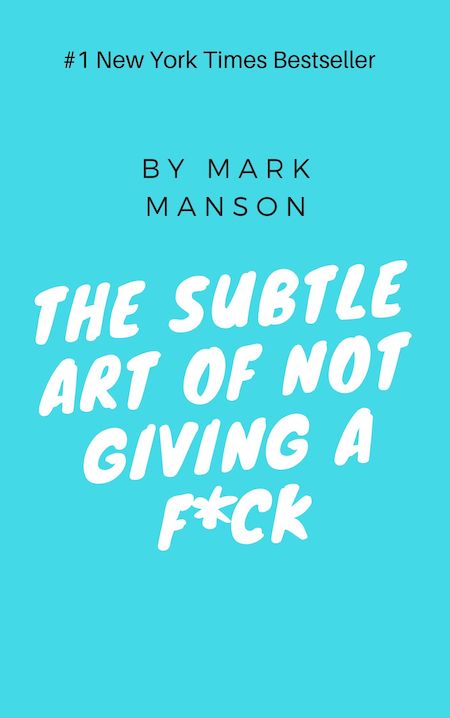
Prefer the print book? Buy on Amazon
As an Amazon Associate, Sumizeit earns from qualifying purchases.
The Subtle Art of Not Giving a F*ck Book Summary
This The Subtle Art of Not Giving a F*ck Book Summary covers the key ideas, lessons, and takeaways in about 20 minutes.
Short Description:
The Subtle Art of Not Giving a Fck* advocates focusing on what truly matters.
Helps with these goals
Preview the The Subtle Art of Not Giving a F*ck book summary
Below is a preview of Sumizeit’s comprehensive human-written summary of The Subtle Art of Not Giving a F*ck by Mark Manson. The full summary is 15-20 minutes long and covers the book’s key ideas in text, audio, visual, and video formats. Unlock the full 20 Minute Summary
Do you find yourself worrying about everything?
Do you play the “What if?” game with yourself, second guessing every decision, or playing out every negative scenario that could happen in your life?
If so, then maybe it’s time that you just stop giving a fuck. Seriously.
Author Mark Manson has some tips on how to have a happier, more productive life that is better for you and those around you. Here are some of the big points from his book, The Subtle Art of Not Giving a F*ck…
The big picture summary: You can’t focus on everything
The main points of this book are:
Because everything worthwhile is a struggle, you have to find something worth struggling for. When you find it, you should put all of your focus into that.
Stop running in circles around the things that don’t make you happy and set goals that reflect your true values. If it’s not worth struggling for, stop paying attention to it.
Get out of the victim mentality and learn from your failures so you can do better next time.
And live in the present, like Buddhism teaches, because grasping for the future is just as futile as living in the past.
Now let’s take a closer look at what these points really mean:
Everything worthwhile is a struggle.
Looking for an easy life is essentially a lost cause. The easier things are, the lower your income and quality of life become. And let’s be honest, being poor sure isn’t easy either!
You’re going to have to work for what you want.
You want the income and lifestyle of a CEO? Be prepared to work long hours.
You want to be an author? Be prepared to put in the time and listen to editors’ critiques.
You want to be like those famous YouTubers? Be prepared to work on filming, editing, and sharing videos every day. Those who put in the work are the ones who have success, and that goes for pretty much any life path you choose.
You don’t have time for everything.
You’re going to have struggles. So you might as well choose the struggles that really matter.
Know how to set the right goals.
Setting the right goals is about selecting good values to believe in. Take valuing pleasure, for instance. At first, it sounds like valuing pleasure would lead you to happiness. We’re typically happy when we experience something pleasurable, right?
The problem is that if you focus your goals around pleasure, you actually don’t end up happy. Because chasing pleasure can lead you to lose things you may actually value even more. For instance, delicious food is pleasurable. But if you eat too much of the wrong foods because they taste good, you lose your health and physical appearance.
Chasing pleasure usually leads to less happiness.
Sex is pleasurable. But if you engage in it recklessly, you put at risk both your health and your relationships.
This doesn’t mean you shouldn’t seek out pleasurable experiences.…
Want the complete 20-minute summary?
- Full structured summary
- Video Summary
- Podcast Summary
- Audio summary
- Infographic
- Key takeaways
- Exercises
- Quiz
- Highlights and notes
- Ask the book with AI
Who should read The Subtle Art of Not Giving a F*ck?
This book is for anyone overwhelmed by anxiety, perfectionism, or the constant pressure to meet others' expectations. If you find yourself worrying excessively, seeking validation from others, or struggling to prioritize what truly matters, Mark Manson's counterintuitive approach offers a refreshing alternative. It's particularly valuable for people stuck in victim mentality, chronic people-pleasers, and those seeking a more authentic path to happiness.
Why does The Subtle Art of Not Giving a F*ck matter?
In today's hyperconnected world where social comparison and endless options create unprecedented anxiety, The Subtle Art of Not Giving a F*ck provides essential permission to stop chasing everything and focus on what genuinely matters. Manson's philosophy directly challenges the toxic positivity and hustle culture that dominate modern life, offering a grounded approach to meaningful living. This book teaches readers how to reclaim agency over their own values and goals rather than being controlled by external circumstances or others' opinions.
What are the key themes in The Subtle Art of Not Giving a F*ck?
- Selective focus and the power of saying no
- Values-based decision-making over pleasure-seeking
- Personal responsibility and rejecting victim mentality
- Present-moment awareness and mortality acceptance
- Authenticity versus social validation
- The necessity of struggle in meaningful pursuits
How can you apply ideas from The Subtle Art of Not Giving a F*ck?
- Create a personal values list and audit your goals against it—eliminate anything that conflicts with your core values or isn't worth the struggle
- Practice saying no to requests and opportunities that don't align with your priorities, then notice the relief and reclaimed time
- When facing a decision, ask 'Am I doing this because I value it, or because I'm afraid of what others will think?' and make the conscious choice
- Replace victim language in your internal dialogue—shift from 'I have to' or 'They made me' to 'I chose to' statements
- Establish a daily mindfulness practice to ground yourself in the present instead of catastrophizing about the future or ruminating on the past
- Identify one area where you're chasing pleasure at the expense of deeper values, then realign that behavior with what actually matters to you
- When comparing yourself to others, pause and ask what their success has to do with your goals, then redirect attention back to your own path
What common mistakes do readers make with The Subtle Art of Not Giving a F*ck?
- Interpreting 'not giving a fuck' as permission to be reckless or neglect relationships—it actually means being more intentional about what deserves your care
- Thinking you can change others' opinions by working harder or being better—you can't control how others perceive you, only your own values
- Waiting for the perfect moment or complete confidence before pursuing difficult goals—struggle and discomfort are part of the process from the start
- Confusing 'accepting struggle' with 'suffering in silence'—the book advocates for working through difficulty with intention, not enduring unnecessary pain
- Using this philosophy to justify isolation or apathy—focusing on your values should enhance relationships, not replace them
Sumizeit Exercises Apply what you've learned
Turn ideas from The Subtle Art of Not Giving a F*ck into action with a short guided reflection: identify the biggest takeaway, connect it to your life, and commit to one step you can take in the next 24 hours.
What is the expert analysis of The Subtle Art of Not Giving a F*ck?
Overview
The Subtle Art of Not Giving a F*ck, authored by Mark Manson, stands as a provocative entry in contemporary self-help literature. Manson, a former finance graduate turned self-development consultant and blogger, leverages his unorthodox, candid style to challenge conventional positivity paradigms. Since its release, the book has resonated widely, securing a prominent position on The New York Times Best Seller List, and influencing a broad audience seeking pragmatic approaches to personal fulfillment amid modern life's complexities.
Core Thesis
Manson’s central argument pivots on the selective allocation of one’s limited emotional and cognitive resources—essentially, learning to “not give a f*ck” about trivial or externally imposed concerns. He posits that life’s inherent struggles are unavoidable and that true contentment arises from consciously choosing which struggles and values merit one’s attention and effort. This philosophy encourages embracing responsibility, rejecting victimhood, and cultivating authenticity by aligning one’s goals with deeply held personal values rather than societal expectations or superficial pleasures.
Strengths
- Radical Honesty and Accessibility: Manson’s blunt, irreverent tone dismantles the often saccharine veneer of traditional self-help, making complex psychological insights approachable and relatable.
- Focus on Values over Pleasures: The book incisively critiques hedonic pursuits, advocating for a values-driven life that balances immediate gratification with long-term well-being.
- Pragmatic Emphasis on Responsibility: By urging readers to abandon the victim mentality, Manson fosters empowerment and personal accountability, foundational concepts in psychological resilience.
- Integration of Philosophical and Psychological Concepts: The text draws implicitly on existentialist and Buddhist ideas, such as living in the present and accepting life’s inherent struggles, enriching its intellectual depth.
Critiques & Counterarguments
- Oversimplification of Complex Psychological States: The book’s dismissal of the victim mentality, while motivational, risks minimizing systemic and structural factors that contribute to individuals’ hardships, potentially alienating readers facing genuine external barriers.
- Limited Empirical Foundation: Manson’s arguments rely heavily on anecdotal evidence and personal observation rather than rigorous scientific studies, which may undermine the book’s credibility among academic audiences.
- Potential Neglect of Emotional Nuance: The call to selectively “not give a f*ck” might inadvertently encourage emotional suppression rather than healthy expression, conflicting with psychological research emphasizing the importance of processing emotions.
- Contrasting Schools of Thought: Positive psychology, for example, advocates for cultivating positive emotions and optimism as pathways to well-being, which can be seen as complementary or even contradictory to Manson’s more stoic, struggle-centric approach.
- Real-World Evidence on Social Connectedness: Research consistently underscores the importance of social bonds and empathy for mental health, suggesting that a wholesale disregard for others’ opinions may impair relational dynamics and social support systems.
Who Should Read This
This book is particularly suited for readers disillusioned with traditional self-help platitudes and those seeking a candid, no-nonsense framework for prioritizing their emotional investments. It appeals to individuals grappling with anxiety over societal pressures, perfectionism, or chronic dissatisfaction, and who are ready to embrace personal responsibility and existential realism. However, readers looking for comprehensive psychological guidance or those facing significant systemic challenges may need to complement Manson’s insights with more nuanced or evidence-based resources.
Frequently asked questions about the The Subtle Art of Not Giving a F*ck book summary
What is The Subtle Art of Not Giving a F*ck about?
The Subtle Art of Not Giving a F*ck by Mark Manson is a counterintuitive self-help book that teaches readers how to stop worrying about everything and instead focus selectively on what truly matters. Rather than promoting apathy, the book advocates for deliberate prioritization based on personal values, accepting that struggle is inherent in any worthwhile pursuit, and rejecting the need for external validation or control over circumstances beyond your power.
Who should read The Subtle Art of Not Giving a F*ck?
This book is ideal for anyone struggling with anxiety, perfectionism, people-pleasing, or chronic indecision. It's particularly valuable for those caught in victim mentality, individuals overwhelmed by comparison culture, and anyone seeking authenticity over social approval. Whether you're dealing with decision paralysis, excessive worry, or a sense that you're living by someone else's rules, this book offers practical reframing.
What are the main takeaways from The Subtle Art of Not Giving a F*ck?
The core takeaways include: (1) focus your limited energy on few, carefully chosen goals aligned with your true values, (2) recognize that all meaningful achievements require struggle and discomfort, (3) stop basing your happiness on others' opinions or achievements, (4) take full responsibility for your choices rather than blaming circumstances, and (5) live in the present moment rather than chasing legacies or dwelling on past mistakes.
How does Mark Manson define 'not giving a fuck'?
Manson doesn't mean indifference or apathy. Instead, 'not giving a fuck' means being selective and intentional about what deserves your emotional investment and worry. It's about stopping the anxious rumination over things you can't control and redirecting that energy toward values and goals that genuinely matter to you—then pursuing them with full commitment.
Can this book help with anxiety and overthinking?
Yes. The Subtle Art of Not Giving a F*ck directly addresses anxiety by teaching readers to distinguish between what's worth their mental energy and what isn't. By accepting that you can't control everything, rejecting victim thinking, and focusing on present-moment awareness, readers often experience significant reduction in the constant worry and 'what-if' spiraling that fuels anxiety.
What does the book say about failure and setbacks?
Manson teaches that failure is inevitable and valuable—it's information that helps you improve, not a reflection of your worth. The key is viewing setbacks as data points rather than personal identity, learning from them without shame, and understanding that struggle and occasional failure are actually signs you're pursuing something meaningful.
Does this book address social media and comparison culture?
While not explicitly focused on social media, The Subtle Art of Not Giving a F*ck thoroughly addresses the futility of measuring yourself against others' achievements and presentation. This principle applies directly to social media: Manson argues that basing your happiness on others' metrics—whether curated Instagram feeds, career accomplishments, or possessions—is a losing game that undermines authentic living.
About Sumizeit
Sumizeit is a profitable Scomy LLC company based in Miami, Florida. Our founders, Clemens Raemy and Weina Scott, are successful entrepreneurs with several exits. Sumizeit is a popular book summary app / micro learning app used by busy professionals and entrepreneurs with over 2,500 non-fiction book summaries and 10,000 podcast summaries in text, audio, visual, podcast, and video format. We also have stellar retention tools to make ideas stick - such as flashcards with spaced repetition, quizzes, streaks, highlighting and notes, daily challenges, riddles, mini-courses, meditation, and more. You won't only learn the idea, but also remember it. Over 90% of our users change their habits with Sumizeit.
Upgrade Now
Here's why readers love Sumizeit
Join thousands of learners getting smarter every day
"Great experience. Detailed summaries. Loved the gamification feature. Makes learning fun. Good customer service. I recommend Sumizeit to anyone. You'll learn a lot."
"I always felt busy but still wanting to keep up with the book discussion in my friend group. This was a great supplement to help me keep reading the books I find fun while keeping up with important books."
"I love this website. Instead of scrolling social media, I find myself learning a lot. I use it everyday. I recommend this app for anyone who is too busy and wants to get up to speed with their favorite books."
The Subtle Art of Not Giving a F*ck Book Summary PDF
Looking for a The Subtle Art of Not Giving a F*ck Book Summary PDF you can save and revisit offline? Our The Subtle Art of Not Giving a F*ck Book Summary PDF captures the book’s core ideas in a clean, printable format — the key frameworks, takeaways, and structure without the fluff. Download the The Subtle Art of Not Giving a F*ck Book Summary PDF when you want a reference you can annotate, share with your team, or review on the go. Get your The Subtle Art of Not Giving a F*ck Book Summary PDF from the download page below.
Download The Subtle Art of Not Giving a F*ck Book Summary PDFPeople also liked these summaries
Readers who explored The Subtle Art of Not Giving a F*ck often enjoyed these titles next.



Ready to read the whole thing?
- Full structured summary
- Video Summary
- Podcast Summary
- Audio summary
- Infographic
- Key takeaways
- Exercises
- Quiz
- Highlights and notes
- Ask the book with AI
Featured Book Titles
Popular Book Summaries at sumizeit, leading book summary app