


Prefer the print book? Buy on Amazon
As an Amazon Associate, Sumizeit earns from qualifying purchases.
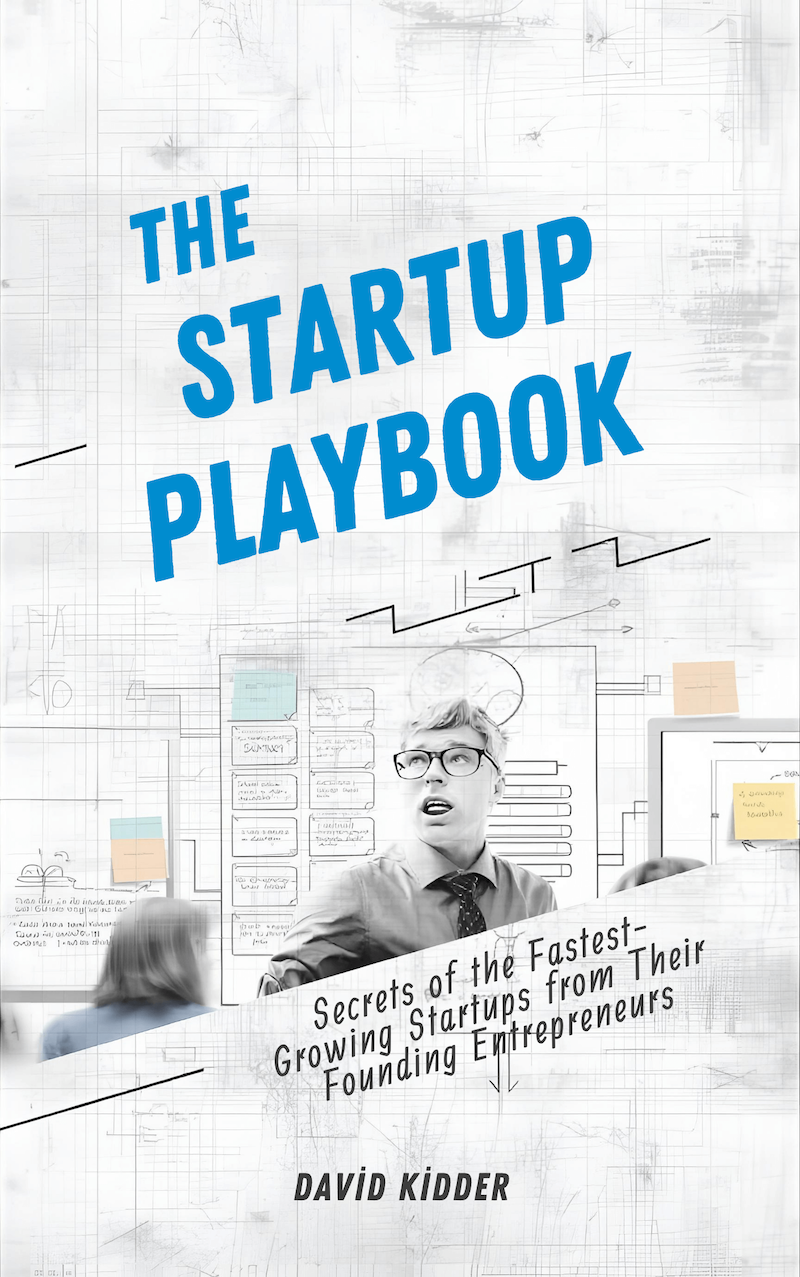
The Startup Playbook Book Summary
This The Startup Playbook Book Summary covers the key ideas, lessons, and takeaways in about 20 minutes.
Short Description:
The Startup Playbook guides founders to solve real problems with resilience.
Helps with these goals
Preview the The Startup Playbook book summary
Below is a preview of Sumizeit’s comprehensive human-written summary of The Startup Playbook by David S. Kidder. The full summary is 15-20 minutes long and covers the book’s key ideas in text, audio, visual, and video formats. Unlock the full 20 Minute Summary
David S. Kidder’s The Startup Playbook gathers wisdom from dozens of successful entrepreneurs—founders who have built transformative companies from the ground up. These leaders share what they wish they had known when starting out: how to think, how to build, how to lead, when to persevere, and when to let go. Rather than offering abstract theory, this book acts like a tactical field guide—showing, step by step, how a founder navigates the uncertainty of starting a business, validates an idea, hires talent, raises capital, grows with intention, and eventually turns a fragile concept into a thriving, scalable company. The central message is simple: entrepreneurship is not about luck. It is a craft that can be learned through patterns, discipline, and a relentless focus on solving real problems for real people. Kidder demonstrates that every great venture begins with a spark, but becomes successful only when that spark is paired with bold ambition, careful execution, and a willingness to evolve. The following summary unpacks the core lessons, mindsets, and strategies presented in The Startup Playbook, expanding them into a structured narrative that explains not just what founders should do, but why it matters in practice.
Entrepreneurship Begins With Solving a Real Problem
Kidder stresses that startups exist to address meaningful problems—not to chase trends, replicate existing products, or impress investors. The most enduring companies start with a question: What need is unmet? Who suffers from it? What would dramatically improve their life or workflow if solved? Entrepreneurs succeed when they build solutions that remove friction, save time, reduce cost, improve performance, or unlock opportunity for the customer. Kidder highlights figures like Elon Musk, who pursued planetary-scale challenges by tackling energy sustainability and space transportation, and Jacqueline Novogratz, who aimed to fight global poverty through impact-driven investment. Their ventures were not built on shallow ideas, but on deeply rooted missions. This illustrates an important pattern—passion is fuel, but purpose is the engine. A founder must choose a problem worth dedicating years of life to. Building a startup demands sacrifice, creativity, late nights, failure, uncertainty, and repetition—conditions only tolerable when the mission genuinely matters. The more painful the customer problem, the more valuable the solution. A mere “vitamin” business provides incremental improvement; a “painkiller” alleviates urgent distress. Customers adopt painkillers faster, pay more for them, and remain loyal longer. Kidder pushes founders to articulate precisely what pain they address and why they are the right person to solve it.
The Balance Between Vision, Execution, and Adaptability
An entrepreneur must simultaneously dream boldly and act pragmatically. Big visions inspire teams, attract early believers, and differentiate companies. But vision without execution is fantasy. Likewise, execution without vision leads to aimless busyness—activity without progress. Kidder teaches founders to break large dreams into milestones, seasons, and experiments. The process resembles climbing a mountain: keep eyes on the summit, but focus feet on the next step. A founder who fears being perceived as unrealistic is thinking too small.
Want the complete 20-minute summary?
- Full structured summary
- Video Summary
- Podcast Summary
- Audio summary
- Infographic
- Key takeaways
- Exercises
- Quiz
- Highlights and notes
- Ask the book with AI
Who should read The Startup Playbook?
The Startup Playbook is for aspiring and early-stage founders who want practical guidance on building a business from concept to scale. It's also valuable for entrepreneurs who have launched but are struggling with growth, hiring, fundraising, or pivoting. Anyone seeking mentorship from successful founders without the years of trial and error will find actionable wisdom in these pages.
Why does The Startup Playbook matter?
Entrepreneurship has become more accessible, but success rates remain low because founders often lack battle-tested frameworks and real-world guidance. The Startup Playbook by David S. Kidder distills decades of founder experience into patterns and principles that reduce costly mistakes and accelerate learning. In a landscape where capital is abundant but clarity is scarce, this book provides the strategic thinking and mindset shifts that separate thriving startups from failures.
What are the key themes in The Startup Playbook?
- Problem-first thinking: solving genuine customer pain, not chasing trends
- Vision balanced with execution: dreaming big while adapting to reality
- Customer validation over founder intuition: let markets decide what works
- Culture and team as competitive advantages: skills matter less than shared mission
- Iterative learning: treating failure as data, not defeat
- Intentional scaling: growth only when fundamentals are proven
- Leadership evolution: shifting from doing to building systems
- Sustainable business over hype: long-term value creation versus acquisition-driven exits
How can you apply ideas from The Startup Playbook?
- Interview 10-20 potential customers before building to validate that your problem is real and painful enough to pay for a solution
- Create a one-page mission statement that articulates the exact problem you solve, why you're qualified to solve it, and why it matters—revisit it quarterly as your understanding deepens
- Build an MVP (minimum viable product) within 4-6 weeks and get it into users' hands; resistance to early launches costs founders more than imperfect releases
- Establish a weekly feedback loop: run small experiments, track 3-5 key metrics (retention, engagement, revenue, referrals), and document learnings in a decision log
- Hire your first team members around complementary strengths, not just individual skill; conduct values-alignment interviews alongside technical assessments
- Define and document your core values, decision-making principles, and communication rituals in a culture document before you have 15+ people
- Implement unit economics tracking (customer acquisition cost, lifetime value, payback period) before pursuing aggressive growth
- Schedule monthly customer interviews or support shifts for leadership to hear unfiltered feedback and stay grounded in user reality
What common mistakes do readers make with The Startup Playbook?
- Building in isolation without exposing the idea to customers early, then discovering after months of work that the market doesn't want the solution
- Chasing a big funding round before proving product-market fit, which leads to burned capital and pressure to scale prematurely
- Hiring only for technical skills and resumes while ignoring cultural fit and mission alignment, resulting in talented but misaligned teams
- Scaling hiring, operations, and features before validating retention and unit economics, which amplifies weaknesses and destroys company culture
- Pivoting too frequently based on minor feedback, creating organizational chaos, or staying too rigid and ignoring clear market signals
- Treating vanity metrics (followers, downloads, registered users) as proof of progress instead of tracking engagement, retention, and revenue
Sumizeit Exercises Apply what you've learned
Turn ideas from The Startup Playbook into action with a short guided reflection: identify the biggest takeaway, connect it to your life, and commit to one step you can take in the next 24 hours.
What is the expert analysis of The Startup Playbook?
Overview
The Startup Playbook by David S. Kidder stands out as a pragmatic and richly informed guide to entrepreneurship, authored by a seasoned entrepreneur and investor with deep experience in scaling high-growth ventures. Kidder synthesizes lessons from a diverse roster of successful founders, presenting a tactical manual that transcends abstract theory to focus on actionable insights. The book’s significance lies in its holistic approach—addressing mindset, strategy, leadership, and culture—making it a valuable resource for those seeking to understand the nuanced craft of building startups that endure and scale.
Core Thesis
Kidder’s central argument is that entrepreneurship is a learnable discipline grounded in solving real, painful problems rather than chasing trends or superficial success metrics. Success emerges from a delicate balance of bold vision, rigorous execution, adaptability, and a relentless focus on customer needs. The startup journey is portrayed as a continuous process of experimentation, learning from failure, and evolving leadership and culture. Capital is framed not as an end but as fuel, while sustainable growth depends on disciplined scaling and alignment with purpose. Fundamentally, Kidder insists that startups are living organisms shaped by mission-driven founders who combine ambition with humility and resilience.
Strengths
- Practical Wisdom from Diverse Founders: The integration of firsthand accounts from a broad spectrum of entrepreneurs enriches the narrative, grounding abstract principles in real-world experience.
- Balanced Emphasis on Vision and Execution: Kidder adeptly highlights the necessity of coupling audacious goals with methodical, iterative progress, avoiding common pitfalls of either extreme.
- Focus on Culture and Psychological Safety: The book’s nuanced discussion of team dynamics and the importance of fostering an environment conducive to innovation is both timely and insightful.
- Clear Articulation of Customer-Centric Validation: Emphasizing MVPs, data-driven iteration, and authentic product-market fit provides a grounded framework for founders to test and refine their ideas.
- Holistic View of Leadership Evolution: The transition from founder-as-doer to founder-as-architect is well articulated, offering a roadmap for sustainable organizational growth.
Critiques & Counterarguments
- Potential Oversimplification of Entrepreneurial Realities: While the book champions adaptability and learning from failure, it may understate the structural and systemic barriers—such as access to capital, networks, and socio-economic factors—that constrain many founders.
- Limited Engagement with Competing Theories: Kidder’s thesis largely aligns with lean startup and customer development methodologies but does not deeply engage with alternative entrepreneurial frameworks that emphasize, for example, design thinking or effectuation theory.
- Risk of Idealizing Founder Passion and Grit: The emphasis on passion and perseverance may inadvertently downplay the importance of strategic disengagement or pivoting away from emotionally invested but unviable ideas, a nuance explored in behavioral economics and decision science.
- Examples May Reflect a Western-Centric Startup Ecosystem: The highlighted entrepreneurs and case studies predominantly reflect Silicon Valley and similar contexts, which might limit applicability to founders operating in different cultural or economic environments.
- Technology and Data as Amplifiers, Not Drivers: While Kidder cautions against conflating technology with strategy, some critics might argue that in certain sectors, technological innovation itself is the primary driver of competitive advantage, a perspective less emphasized here.
Who Should Read This
The Startup Playbook is ideally suited for aspiring and early-stage founders seeking a comprehensive, experience-based guide to navigating the complexities of building and scaling a startup. It will also benefit investors, mentors, and business educators who desire a structured yet nuanced understanding of entrepreneurial success factors beyond conventional wisdom. Readers looking for a balanced synthesis of visionary ambition and grounded execution, enriched by real-world founder stories, will find this book particularly valuable. However, those interested in more theoretical or globally diverse perspectives on entrepreneurship may need to supplement this reading with additional sources.
Frequently asked questions about the The Startup Playbook book summary
What is The Startup Playbook about?
The Startup Playbook by David S. Kidder is a practical guide distilled from interviews with dozens of successful entrepreneurs who share the patterns, mindsets, and strategies that build thriving companies. It covers how to identify real problems, validate ideas with customers, build aligned teams, raise capital strategically, scale intentionally, and evolve as a leader. The book treats entrepreneurship as a learnable craft grounded in discipline and focus on customer value, not as a matter of luck or innate genius.
Who should read The Startup Playbook?
This book is ideal for aspiring founders, early-stage entrepreneurs, and anyone building or scaling a startup. It's also valuable for business leaders and innovators within larger organizations who want to understand startup thinking. If you're considering leaving your job to start something, struggling to grow your young company, or seeking mentorship from founders who have built at scale, this playbook offers battle-tested frameworks and real-world wisdom.
What are the main takeaways from The Startup Playbook?
The core takeaways are: (1) start by solving a genuine, painful customer problem, not chasing trends; (2) balance bold vision with iterative execution and continuous learning from users; (3) culture and team alignment matter as much as individual skill; (4) treat failure as data and scale only after proving fundamentals; (5) measure what matters (retention, revenue, referrals) not vanity metrics; and (6) leadership must evolve from doing the work to building systems that enable others. Entrepreneurship is a discipline that can be learned through patterns and practice.
How does The Startup Playbook differ from other startup books?
Rather than abstract theory or a single founder's memoir, The Startup Playbook synthesizes wisdom from fifty-plus successful entrepreneurs across industries and stages. This diversity reveals universal patterns and principles that transcend any one startup story. The book balances inspiration with practical, actionable frameworks—it's designed as a field guide for real decisions, not just a mindset reset.
What is product-market fit and why does The Startup Playbook emphasize it?
Product-market fit occurs when your solution so deeply solves a customer problem that users return repeatedly, refer others organically, and pay willingly—all without heavy marketing. The Startup Playbook emphasizes it because premature scaling (hiring, spending, expanding) before achieving product-market fit is a common killer of startups. Kidder stresses validating fit through customer behavior, retention metrics, and revenue signals before pursuing aggressive growth.
Should I bootstrap my startup or raise venture capital?
The Startup Playbook frames this as a strategic choice, not a moral stance. Bootstrapping forces resourcefulness, creativity, and focus—constraints that build discipline. Raising capital accelerates growth but demands careful investor selection; smart money brings networks and guidance, not just checks. The key is aligning funding strategy with your mission and growth timeline, not defaulting to either extreme. Only raise capital when you've validated demand and are ready to scale intentionally.
How do I know when to pivot versus when to persevere?
The Startup Playbook teaches that pivoting is a controlled change in strategy grounded in clear customer feedback and data patterns. The art lies in distinguishing between minor setbacks requiring perseverance and genuine market signals demanding a shift. Document feedback, run experiments, analyze retention and engagement, and move decisively only when patterns are unmistakable—not after a single customer complaint or a few slow weeks.
What leadership skills matter most in a growing startup?
According to The Startup Playbook, early-stage founders must be operators and problem-solvers, but as the company scales, leaders must shift to empowering teams, distributing decision-making, and communicating vision with clarity. The most important skills are curiosity (continuous learning), humility (knowing what you don't know), storytelling (inspiring others around mission), and emotional intelligence (building psychological safety). Confidence and humility must coexist—never be impressed by what you don't understand.
About Sumizeit
Sumizeit is a profitable Scomy LLC company based in Miami, Florida. Our founders, Clemens Raemy and Weina Scott, are successful entrepreneurs with several exits. Sumizeit is a popular book summary app / micro learning app used by busy professionals and entrepreneurs with over 2,500 non-fiction book summaries and 10,000 podcast summaries in text, audio, visual, podcast, and video format. We also have stellar retention tools to make ideas stick - such as flashcards with spaced repetition, quizzes, streaks, highlighting and notes, daily challenges, riddles, mini-courses, meditation, and more. You won't only learn the idea, but also remember it. Over 90% of our users change their habits with Sumizeit.
Upgrade Now
Here's why readers love Sumizeit
Join thousands of learners getting smarter every day
"Great experience. Detailed summaries. Loved the gamification feature. Makes learning fun. Good customer service. I recommend Sumizeit to anyone. You'll learn a lot."
"I always felt busy but still wanting to keep up with the book discussion in my friend group. This was a great supplement to help me keep reading the books I find fun while keeping up with important books."
"I love this website. Instead of scrolling social media, I find myself learning a lot. I use it everyday. I recommend this app for anyone who is too busy and wants to get up to speed with their favorite books."
The Startup Playbook Book Summary PDF
Looking for a The Startup Playbook Book Summary PDF you can save and revisit offline? Our The Startup Playbook Book Summary PDF captures the book’s core ideas in a clean, printable format — the key frameworks, takeaways, and structure without the fluff. Download the The Startup Playbook Book Summary PDF when you want a reference you can annotate, share with your team, or review on the go. Get your The Startup Playbook Book Summary PDF from the download page below.
Download The Startup Playbook Book Summary PDFPeople also liked these summaries
Readers who explored The Startup Playbook often enjoyed these titles next.


Ready to read the whole thing?
- Full structured summary
- Video Summary
- Podcast Summary
- Audio summary
- Infographic
- Key takeaways
- Exercises
- Quiz
- Highlights and notes
- Ask the book with AI
Featured Book Titles
Popular Book Summaries at sumizeit, leading book summary app