


Prefer the print book? Buy on Amazon
As an Amazon Associate, Sumizeit earns from qualifying purchases.
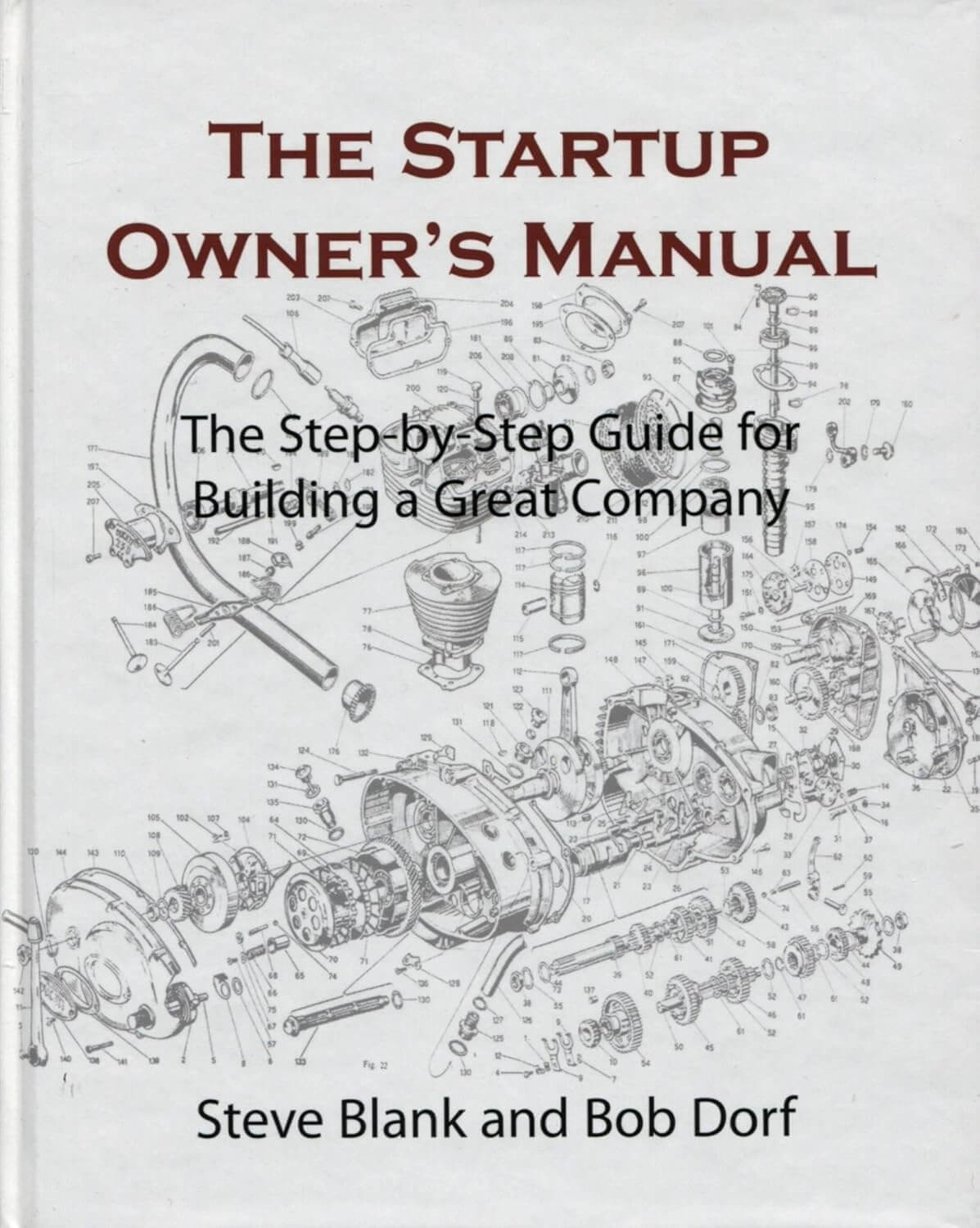
The Startup Owner’s Manual Book Summary
This The Startup Owner’s Manual Book Summary covers the key ideas, lessons, and takeaways in about 20 minutes.
Short Description:
The Startup Owner’s Manual guides startups through disciplined customer learning.
The book’s greatest value lies in turning uncertainty into a structured journey. Rather than avoiding risk, Blank teaches entrepreneurs to embrace it intelligently, measure progress through real-world traction, and pivot without hesitation when the market reveals new truths. The companies that survive are not those that cling to initial visions but those willing to adapt relentlessly—the ones that learn fastest, refine continuously, and scale only once product-market fit is undeniable.
Helps with these goals
Want a Free Weekly Read?
Get a free summary every week straight to your mailbox.
Preview the The Startup Owner’s Manual book summary
Below is a preview of Sumizeit’s comprehensive human-written summary of The Startup Owner’s Manual by Steve Blank. The full summary is 15-20 minutes long and covers the book’s key ideas in text, audio, visual, and video formats. Unlock the full 20 Minute Summary
Steve Blank’s The Startup Owner’s Manual rewrites the traditional narrative of how new ventures should be built. Rather than assuming that entrepreneurs can plan their way to success through polished business plans or perfectly engineered products, Blank insists that startups operate in a realm of unknowns. Because nothing is validated at the beginning—not the customer, not the problem, not the solution—startups must approach building a business as a search process, not an execution process. The book lays out a structured roadmap that guides founders through the chaotic early phases of company creation, equipping them with tools to test assumptions methodically, learn directly from real customers, and reshape their business model until it aligns with market reality.
Blank stresses that most startup failures are not due to poor product development but rather because founders never validated whether customers wanted the product in the first place. A startup exists, he argues, not to build and ship a product, but to discover a repeatable and scalable business model. Only once that model has been proven should the company shift into a traditional execution mindset. The philosophy running through the manual is that knowledge gained through real-world interaction is the fuel that strengthens a business and prevents costly mistakes.
The Customer Development Framework as a Structured Search Process
One of the core foundations of the book is the Customer Development methodology, which breaks the startup journey into four distinct phases: Customer Discovery, Customer Validation, Customer Creation, and Company Building. This framework rejects the traditional belief that entrepreneurs already know what customers need. Instead, it encourages continual testing of assumptions through conversations, experiments, and market engagement.
Customer Discovery is the phase in which founders work to understand customer problems deeply before building a product around them. The focus is on testing assumptions around who the customer is, what problem matters most to them, and how painful that problem is. Instead of sitting behind spreadsheets, founders must engage the people experiencing the problem firsthand. This means dozens—sometimes hundreds—of interviews, observations, and field research to learn how customers behave when solving the problem today.
The second step, Customer Validation, is where startups test whether real customers will actually buy what they claim to need. It is here that the first real experiments happen—presenting prototypes or simple versions of the offering to determine whether customers are willing to exchange money, time, or reputation in return. Many businesses fail at this phase because enthusiasm is mistaken for intent. Blank reminds founders that only a purchase or a measurable commitment is evidence of market demand.
Customer Creation, the third step, is about building market awareness and demand once product-market fit is proven. Activities here include designing marketing strategies, understanding buying patterns, and accelerating customer adoption beyond early enthusiasts.
The final step, Company Building, is the moment when the startup evolves into a full operating business. Here, organizational structure begins to formalize, departments such as sales and marketing scale, and the company transitions from discovery mode into growth mode.
Want the complete 20-minute summary?
- Full structured summary
- Video Summary
- Podcast Summary
- Audio summary
- Key takeaways
- Exercises
- Quiz
- Highlights and notes
- Ask the book with AI
Who should read The Startup Owner’s Manual?
The Startup Owner's Manual is essential for founders, entrepreneurs, and anyone launching a new venture who wants to avoid costly mistakes. It's equally valuable for business leaders, investors, and innovators who need a practical framework for navigating extreme uncertainty. Whether you're building a tech startup, launching a physical product, or entering an unfamiliar market, this book provides the roadmap to validate ideas before investing heavily in execution.
Why does The Startup Owner’s Manual matter?
Most startups fail not because of poor product development but because founders never validated whether customers actually wanted their solution. In today's fast-moving business environment, the ability to learn quickly and adapt based on real customer feedback is the difference between success and failure. The Startup Owner's Manual replaces guesswork with a disciplined, systematic approach to discovery that has become foundational to modern entrepreneurship and the Lean Startup movement.
What are the key themes in The Startup Owner’s Manual?
- Startups are a search process, not an execution process
- Assumptions must be validated through real-world customer interaction
- Business models matter more than products
- Speed of learning is the competitive advantage
- Pivoting based on evidence is a sign of intelligence, not failure
- Market type determines strategy
- Metrics should drive action, not inflate vanity
How can you apply ideas from The Startup Owner’s Manual?
- Schedule customer discovery interviews immediately—aim for dozens in your first month rather than building in isolation
- Create a one-page Business Model Canvas and update it weekly as you test assumptions and gather feedback
- Build a Minimum Viable Product that solves one core problem well rather than investing in a feature-rich product
- Track engagement, conversion, retention, and unit economics metrics that reveal actual customer behavior instead of vanity metrics
- Identify and prioritize earlyvangelists—customers with urgent pain who will use an unfinished product and provide honest feedback
- Test assumptions about market type (existing, resegmented, new, or clone) before finalizing positioning and go-to-market strategy
- Define clear decision rules for when to pivot versus persevere based on validated learning, not emotion or intuition
What common mistakes do readers make with The Startup Owner’s Manual?
- Spending months on a business plan filled with projections instead of testing assumptions directly with customers
- Confusing enthusiasm in conversations with actual purchase intent or market demand
- Building a feature-rich product based on internal ideas rather than iterating based on early customer feedback
- Scaling marketing and sales before achieving product-market fit, wasting budget on demand generation for a misaligned solution
- Tracking vanity metrics like downloads or social followers instead of actionable metrics that reveal business model health
Sumizeit Exercises Apply what you've learned
Turn ideas from The Startup Owner’s Manual into action with a short guided reflection: identify the biggest takeaway, connect it to your life, and commit to one step you can take in the next 24 hours.
What is the expert analysis of The Startup Owner’s Manual?
Overview
The Startup Owner’s Manual, authored by Steve Blank, stands as a seminal work in the entrepreneurial canon, fundamentally reshaping how startups are conceptualized and built. Blank, a seasoned Silicon Valley entrepreneur and educator, is widely credited with pioneering the Customer Development methodology, which underpins the Lean Startup movement. His manual is significant not merely as a practical guide but as a philosophical reorientation—shifting the focus from rigid planning to iterative learning in the face of uncertainty. This book is a touchstone for anyone seeking to understand the modern startup ecosystem through a rigorous, evidence-based lens.
Core Thesis
At its core, Blank argues that startups are not smaller versions of large companies executing fixed plans but are temporary organizations searching for a repeatable, scalable business model. The traditional reliance on comprehensive business plans is replaced by a structured, empirical process of Customer Development—a cycle of discovery, validation, creation, and company building. Success emerges from continuous, disciplined learning through direct interaction with customers, rapid prototyping of Minimum Viable Products (MVPs), and the willingness to pivot based on validated insights rather than emotional attachment to initial ideas.
Strengths
- Methodological Rigor: The book excels in providing a clear, actionable framework that demystifies the chaotic early stages of startups, breaking down the journey into manageable, empirically testable phases.
- Emphasis on Customer Insight: By prioritizing real-world customer interaction over theoretical assumptions, Blank elevates market validation as the linchpin of startup success.
- Pragmatic Tools: The introduction and integration of the Business Model Canvas and MVP concepts offer founders practical instruments to translate abstract ideas into testable hypotheses.
- Philosophical Shift: The manual challenges entrenched business dogma, advocating for adaptability and learning over rigid execution, which resonates deeply in today’s fast-evolving markets.
- Comprehensive Market Typology: Recognizing different market types and tailoring strategies accordingly adds nuance often absent in generic startup literature.
Critiques & Counterarguments
- Potential Oversimplification of Complex Realities: While the Customer Development model is elegant, real-world startups often face multifaceted challenges—regulatory, cultural, or technological—that a linear framework may insufficiently address.
- Evidence Base and Case Diversity: The manual leans heavily on Silicon Valley tech startups, which may limit applicability to other sectors or geographies where market dynamics and customer behaviors differ significantly.
- Risk of Overemphasizing Customer Feedback: Excessive reliance on early customer input can sometimes stifle visionary innovation, particularly for breakthrough technologies where customers may not yet comprehend latent needs (a critique aligned with Clayton Christensen’s theory of disruptive innovation).
- Competing Schools of Thought: Alternative entrepreneurial frameworks, such as effectuation theory, emphasize leveraging existing means and embracing contingencies rather than systematic search, suggesting that the startup journey can be more emergent and less structured than Blank proposes.
- Challenges in Metrics Interpretation: While actionable metrics are championed, the manual may understate the difficulty startups face in identifying truly meaningful data amidst noise, especially in nascent markets with limited benchmarks.
Who Should Read This
The Startup Owner’s Manual is essential reading for aspiring and current entrepreneurs who seek a disciplined, methodical approach to navigating the uncertainties of startup creation. It is particularly valuable for founders in technology-driven sectors who benefit from rapid iteration and customer engagement. Additionally, educators, investors, and innovation managers will find its frameworks instrumental in evaluating and supporting early-stage ventures. However, readers should approach the book as a foundational guide, complementing it with contextual understanding of their specific industry and market environment.
Frequently asked questions about the The Startup Owner’s Manual book summary
What is The Startup Owner's Manual about?
The Startup Owner's Manual by Steve Blank is a comprehensive guide that reframes how startups should be built. Rather than following a traditional business plan, the book introduces the Customer Development framework—a four-phase methodology (Customer Discovery, Validation, Creation, and Company Building) that guides founders to validate assumptions through real-world customer interaction before scaling. The core insight is that startups are a search process to find a repeatable business model, not an execution process.
Who should read The Startup Owner's Manual?
This book is essential for founders and entrepreneurs launching new ventures, as well as business leaders, investors, and innovators navigating uncertainty. Anyone responsible for bringing a product or service to market will benefit from the practical Customer Development framework and tools like the Business Model Canvas. It's equally valuable for those who want to understand why most startups fail and how to dramatically improve their odds of success.
What are the main takeaways from The Startup Owner's Manual?
The primary takeaway is that startup success depends on disciplined learning, not perfect execution. Key insights include: replace long business plans with a one-page Business Model Canvas, leave the office to test assumptions directly with customers, build a Minimum Viable Product for learning rather than perfection, distinguish between customer enthusiasm and actual purchase intent, identify and prioritize earlyvangelists for feedback, track actionable metrics tied to business model health, and pivot strategically when validated learning reveals misalignment. Speed of learning is the competitive advantage.
What is the Business Model Canvas and how do I use it?
The Business Model Canvas is a single-page visual tool that maps nine foundational elements of your business: customer segments, value propositions, distribution channels, customer relationships, revenue streams, key activities, key resources, key partners, and cost structure. Each element contains untested assumptions that must be validated through customer interaction. Update the canvas weekly as you learn which assumptions hold true and which need adjustment, using it as a living scorecard rather than a static document.
What is Customer Development and why does it matter?
Customer Development is a four-phase framework that replaces the traditional product development approach. The phases are Discovery (understanding customer problems), Validation (testing whether customers will buy), Creation (building market demand), and Company Building (scaling operations). Customer Development matters because it prevents founders from building solutions no one wants, which is the primary cause of startup failure. By validating assumptions systematically with real customers, startups avoid wasting months or years on misaligned products.
What is a Minimum Viable Product (MVP) and how do I build one?
An MVP is the simplest version of your product that solves the core problem well enough to test real customer behavior. It's not a prototype for internal approval but a real product customers can use. To build one, strip away all non-essential features, focus only on what solves the primary problem, and launch quickly to gather feedback. The MVP's purpose is learning—discovering which features customers actually value and what they ignore, allowing you to iterate based on evidence rather than assumptions.
How do I know when to pivot versus persevere?
Pivoting is a structured course correction—changing the product, market, or business model based on validated learning that reveals misalignment. Persevering means continuing with your current direction when data confirms alignment between the problem and solution. The decision should be based on measurable feedback from customers, not emotion or intuition. Define clear decision rules in advance so you can pivot decisively when evidence warrants it, rather than clinging to your original vision.
About Sumizeit
Sumizeit is a profitable Scomy LLC company based in Miami, Florida. Our founders, Clemens Raemy and Weina Scott, are successful entrepreneurs with several exits. Sumizeit is a popular book summary app / micro learning app used by busy professionals and entrepreneurs with over 2,500 non-fiction book summaries and 10,000 podcast summaries in text, audio, visual, podcast, and video format. We also have stellar retention tools to make ideas stick - such as flashcards with spaced repetition, quizzes, streaks, highlighting and notes, daily challenges, riddles, mini-courses, meditation, and more. You won't only learn the idea, but also remember it. Over 90% of our users change their habits with Sumizeit.
Upgrade Now
Here's why readers love Sumizeit
Join thousands of learners getting smarter every day
"Great experience. Detailed summaries. Loved the gamification feature. Makes learning fun. Good customer service. I recommend Sumizeit to anyone. You'll learn a lot."
"I always felt busy but still wanting to keep up with the book discussion in my friend group. This was a great supplement to help me keep reading the books I find fun while keeping up with important books."
"I love this website. Instead of scrolling social media, I find myself learning a lot. I use it everyday. I recommend this app for anyone who is too busy and wants to get up to speed with their favorite books."
The Startup Owner’s Manual Book Summary PDF
Looking for a The Startup Owner’s Manual Book Summary PDF you can save and revisit offline? Our The Startup Owner’s Manual Book Summary PDF captures the book’s core ideas in a clean, printable format — the key frameworks, takeaways, and structure without the fluff. Download the The Startup Owner’s Manual Book Summary PDF when you want a reference you can annotate, share with your team, or review on the go. Get your The Startup Owner’s Manual Book Summary PDF from the download page below.
Download The Startup Owner’s Manual Book Summary PDFPeople also liked these summaries
Readers who explored The Startup Owner’s Manual often enjoyed these titles next.

Ready to read the whole thing?
- Full structured summary
- Video Summary
- Podcast Summary
- Audio summary
- Key takeaways
- Exercises
- Quiz
- Highlights and notes
- Ask the book with AI
Featured Book Titles
Popular Book Summaries at sumizeit, leading book summary app