


Prefer the print book? Buy on Amazon
As an Amazon Associate, Sumizeit earns from qualifying purchases.
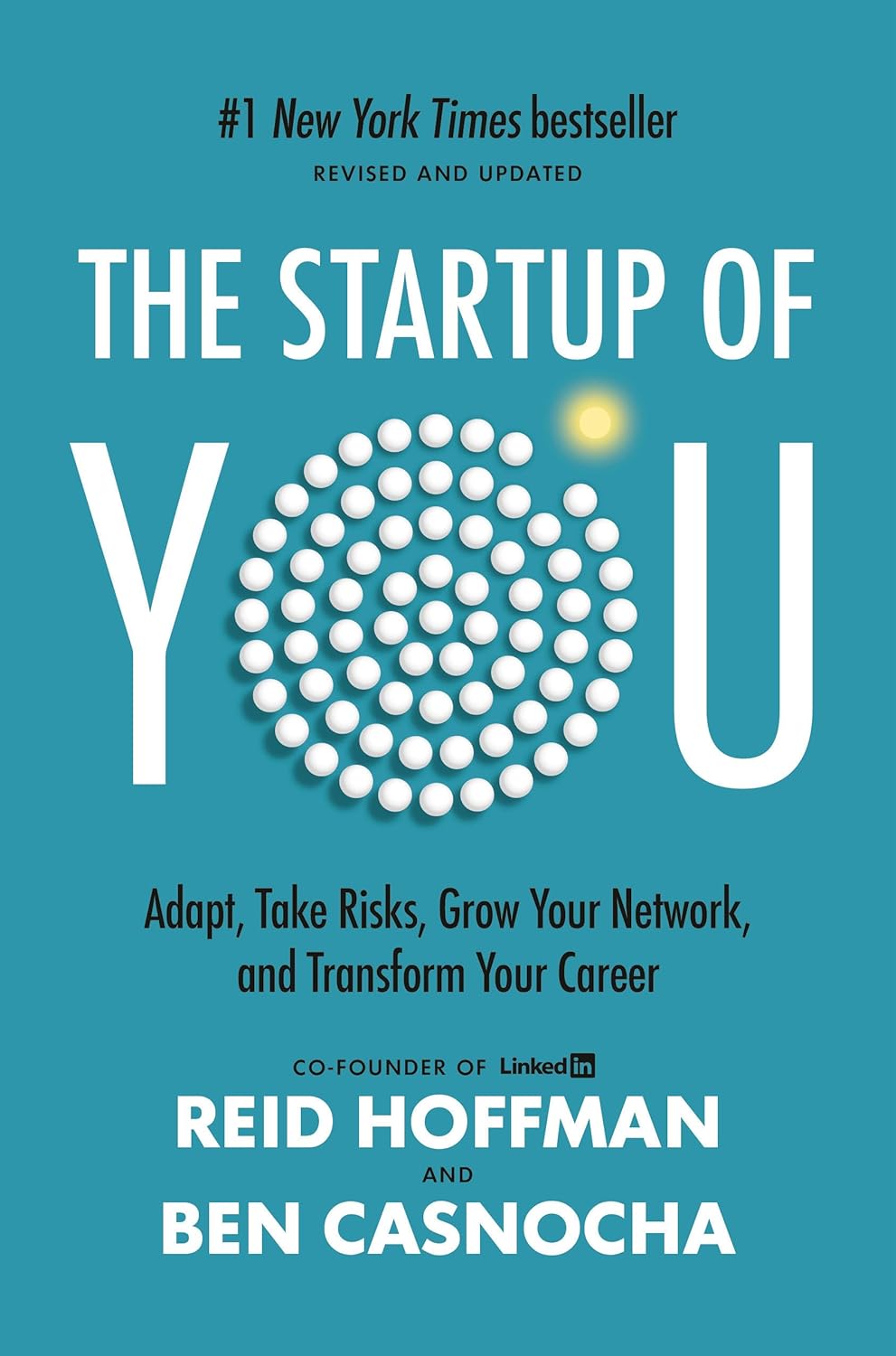
The Startup of You Book Summary
This The Startup of You Book Summary covers the key ideas, lessons, and takeaways in about 20 minutes.
Short Description:
The Startup of You treats careers as entrepreneurial ventures for growth.
Treat your career as a startup — iterate continuously, learn fast, nurture relationships, embrace uncertainty, and pursue growth with intention. The world favors those who evolve rather than endure.
Helps with these goals
Preview the The Startup of You book summary
Below is a preview of Sumizeit’s comprehensive human-written summary of The Startup of You by Reid Hoffman. The full summary is 15-20 minutes long and covers the book’s key ideas in text, audio, visual, and video formats. Unlock the full 20 Minute Summary
The structure of work has changed dramatically. Where previous generations could rely on long-term employment, steady promotions, and retirement packages, today’s professionals navigate a terrain of rapid technological change, global competition, and disappearing job security. The traditional corporate ladder — once predictable and linear — is now fragmented and uncertain.
Rather than assuming employers will train, guide, and protect us, the authors argue that modern workers must assume responsibility for their own growth. Reinvention isn’t optional — it is essential. Job roles evolve, entire industries automate, and career paths twist rather than follow a single predictable route. Because of this, every professional must think like an entrepreneur, not an employee.
A company today may reorganize, downsize, outsource, or collapse entirely. Even stable-looking industries are vulnerable to technological disruption. Meanwhile, global hiring means you are no longer competing with applicants in your city or country — you are competing with talent everywhere. To thrive in this environment, you must treat your career the way a startup treats its business: constantly developing, adjusting, learning, and positioning itself for opportunity.
Why You Are Now an Entrepreneur
Hoffman and Casnocha suggest that every person must operate as the founder of their own professional enterprise — “You Inc.” Even those who never start a company still own a business: their career. Just as startups must win customers, professionals must win opportunities. Just as startups innovate to survive, individuals must continuously develop insight, capability, and resilience.
Corporate loyalty is no longer a guaranteed exchange — employers do not owe security, and employees should never expect career-long certainty. Instead, both sides collaborate as long as the relationship is mutually beneficial. The professionals who excel are those who approach work proactively, not reactively. They identify opportunities, build relationships, invest in learning, and steer their own development deliberately rather than waiting for advancement to be handed to them.
The Startup Mindset
A startup mindset means viewing your career as a product under constant improvement. You do not seek the perfect plan — instead, you test assumptions, experiment with small projects, evaluate results, and iterate. You never assume your current path is permanent. Instead, you stay alert, curious, and open to change.
The startup mindset favors continuous skill-building over comfort. Instead of waiting until change becomes unavoidable, you evolve while conditions are calm. Like a startup shipping early prototypes, you make small improvements consistently — tiny skill upgrades, networking touchpoints, and new experiences accumulate into major long-term momentum. Over time, growth compounds.
A startup mindset makes you adaptable. You are quicker to pursue new industries, respond to market demands, and reinvent your value when opportunities appear. Instead of fearing uncertainty, you train yourself to move within it confidently.
Principle One: Develop Your Competitive Edge
In a world overflowing with qualified professionals, talent alone is not enough. Many people can code, design, analyze, or manage — but the rare few who rise are those who differentiate themselves. A competitive edge is the blend of your assets, motivations, and market relevance.
Want the complete 20-minute summary?
- Full structured summary
- Video Summary
- Podcast Summary
- Audio summary
- Key takeaways
- Exercises
- Quiz
- Highlights and notes
- Ask the book with AI
Who should read The Startup of You?
The Startup of You is essential for professionals navigating today's unpredictable job market, whether you're early in your career, considering a transition, or simply tired of waiting for advancement to happen to you. It's equally valuable for anyone who recognizes that traditional career paths no longer exist and wants to take proactive control of their professional trajectory.
Why does The Startup of You matter?
In an era of rapid technological change, industry disruption, and global competition, relying on employer loyalty or long-term job security is no longer viable. The Startup of You reframes how we think about careers—not as something bestowed by corporations, but as personal enterprises we must actively build and continuously reinvent. This mindset shift is critical for thriving in a world where adaptability and self-directed growth determine success far more than credentials or tenure.
What are the key themes in The Startup of You?
- Career as personal entrepreneurship
- Continuous skill development and adaptation
- Building competitive advantage through assets, motivation, and market fit
- Strategic networking and relationship leverage
- Calculated risk-taking and resilience planning
- Iterative learning over rigid career planning
How can you apply ideas from The Startup of You?
- Map your hard and soft assets to identify natural strengths others might overlook, then build on what comes easiest to you
- Run a small side project or volunteer opportunity to test a potential career pivot before making a major transition
- Document your three plans (current focus, adjacent pivot, and safety net) and update them quarterly as circumstances change
- Identify five people in your network and reach out with genuine value—an introduction, article, or congratulations—without asking for anything in return
- Create a simple portfolio or body of public work that demonstrates your skills and attracts opportunities from unexpected sources
- Schedule quarterly reviews of your core values and motivations to ensure your career still aligns with what matters to you
- Join a community or attend events outside your immediate professional circle to expand your exposure to diverse opportunities and ideas
What common mistakes do readers make with The Startup of You?
- Waiting for an employer or mentor to develop you rather than taking ownership of your own growth and learning
- Building a deep network only within your current industry or role instead of cultivating diverse relationships across different fields and perspectives
- Clinging to a single rigid career plan instead of maintaining flexibility and alternative paths as conditions change
- Neglecting soft skills and interpersonal strengths because they're harder to quantify, when they often determine who advances
Sumizeit Exercises Apply what you've learned
Turn ideas from The Startup of You into action with a short guided reflection: identify the biggest takeaway, connect it to your life, and commit to one step you can take in the next 24 hours.
What is the expert analysis of The Startup of You?
Overview
The Startup of You is a seminal work co-authored by Reid Hoffman, the co-founder of LinkedIn and a luminary in the tech entrepreneurship space, alongside Ben Casnocha, an accomplished entrepreneur and venture capitalist. This book stands out as a critical intervention in career literature, addressing the seismic shifts in the modern labor market. It reframes individual career management through the lens of entrepreneurial strategy, emphasizing adaptability, continuous learning, and proactive networking in a world where traditional employment paradigms have eroded.
Core Thesis
The central argument of The Startup of You is that in today’s volatile and hyper-competitive job market, individuals must treat their careers as startups—dynamic enterprises requiring constant innovation, iteration, and strategic positioning. Hoffman and Casnocha contend that the old social contract of lifelong employment and corporate loyalty is obsolete. Instead, professionals must develop a unique competitive edge by aligning their assets, motivations, and market demand, while maintaining flexible career plans and cultivating robust networks. This entrepreneurial mindset is not merely advantageous but essential for career resilience and growth.
Strengths
- Timely and Relevant Framework: The book captures the zeitgeist of the modern workforce’s uncertainty and offers a practical, actionable framework that resonates with professionals navigating rapid technological and economic change.
- Integration of Entrepreneurship and Career Development: By translating startup principles—such as iterative testing, pivoting, and minimum viable experiments—into career strategy, the authors provide a fresh perspective that challenges static career planning.
- Holistic Approach to Career Capital: The nuanced discussion on combining hard and soft assets, motivation, and market fit underscores the complexity of professional differentiation beyond mere skill accumulation.
- Emphasis on Networking as Leverage: The sophisticated treatment of networks as ecosystems of mutual value and opportunity, rather than transactional contacts, enriches the conventional wisdom on professional relationships.
- Practicality and Accessibility: The book’s principles are supported by concrete strategies—such as maintaining multiple career plans (A, B, and Z)—that readers can implement immediately to mitigate risk and enhance adaptability.
Critiques & Counterarguments
- Overemphasis on Individual Agency: While empowering, the book arguably underplays structural and systemic factors—such as socioeconomic disparities, organizational gatekeeping, and labor market inequalities—that constrain individual entrepreneurial agency in career development.
- Limited Empirical Evidence: The framework, though compelling, relies heavily on anecdotal and experiential insights from the tech and startup ecosystem, which may not generalize across all industries, especially more traditional or unionized sectors.
- Potential Oversimplification of Risk: The encouragement to embrace risk as a career fuel may overlook the nuanced realities faced by individuals with limited financial safety nets or caregiving responsibilities, for whom risk-taking is not equally feasible.
- Competing Schools of Thought: Alternative career theories emphasize stability, specialization, or organizational loyalty as viable strategies, supported by research showing that not all industries or roles reward constant reinvention or networking intensity.
- Changing Nature of Networks: The book’s networking advice, while sound, may underestimate the challenges of building meaningful relationships in increasingly digital and remote work environments, where serendipitous encounters are less frequent.
Who Should Read This
The Startup of You is ideally suited for ambitious professionals, particularly those early to mid-career, who are navigating uncertain job markets and seeking to proactively shape their career trajectories. Entrepreneurs, freelancers, and knowledge workers in dynamic industries will find its entrepreneurial mindset and practical tactics invaluable. Additionally, career coaches, HR professionals, and organizational leaders interested in fostering adaptability and self-directed growth within their teams will benefit from its insights. However, readers entrenched in highly regulated or stable employment contexts may find some recommendations less applicable.
Frequently asked questions about the The Startup of You book summary
What is The Startup of You about?
The Startup of You by Reid Hoffman and Ben Casnocha is a guide to managing your career like an entrepreneur manages a startup. Rather than relying on traditional employer loyalty or predetermined career paths, the book teaches professionals to treat themselves as the founder and CEO of their own enterprise, continuously building competitive advantage, adapting to change, and leveraging networks to accelerate growth.
Who should read The Startup of You?
Anyone navigating today's unpredictable job market will benefit from this book—whether you're early in your career, considering a major transition, or simply recognizing that traditional career progression no longer exists. It's especially valuable for professionals who want to take proactive control of their future rather than waiting for advancement to happen to them.
What are the main takeaways from The Startup of You?
The core message is that you must become an entrepreneur of your own career by developing a competitive edge (blending your assets, motivations, and market relevance), staying adaptable through multiple plans and calculated risks, and building meaningful networks that amplify opportunity. Success comes from treating your career as a continuous startup—iterating fast, learning constantly, and embracing reinvention as essential rather than optional.
How do I develop a competitive edge according to The Startup of You?
Your competitive edge emerges where three elements intersect: your unique assets (both hard skills like certifications and soft skills like creativity), your intrinsic motivations and values, and genuine market demand for what you offer. The key is not being average at many things but exceptional at a combination that makes you distinctly valuable to others.
What does 'Plan A, Plan B, Plan Z' mean in The Startup of You?
Plan A is your current primary focus and skills; Plan B is an adjacent pivot you develop in parallel without abandoning your main path; Plan Z is your safety net if everything collapses. This three-plan framework keeps you adaptable and reduces the fear that prevents bold career moves, because you know you have alternatives and can recover if needed.
Why does The Startup of You emphasize networking?
Networks amplify individual skill and create access to opportunities far broader than you could create alone. The book stresses building genuine relationships rooted in mutual respect and exchange rather than shallow contact collecting, because deep connections provide ongoing support, knowledge, and opportunity far more reliably than superficial networks.
How does The Startup of You suggest testing a career change?
The book recommends running 'minimum viable career experiments'—small, low-risk tests like taking a class, volunteering, consulting part-time, or creating a portfolio piece related to the new direction. This approach lets you validate whether a career path has real demand and personal fit before investing years or significant resources.
What role does risk play in The Startup of You?
The book frames intelligent risk-taking as career fuel rather than something to avoid. The key is evaluating whether downside is manageable and upside is significant; most modern professional risks aren't life-threatening, whereas stagnation is the true danger. Building comfort with calculated uncertainty makes you more adaptable and confident.
About Sumizeit
Sumizeit is a profitable Scomy LLC company based in Miami, Florida. Our founders, Clemens Raemy and Weina Scott, are successful entrepreneurs with several exits. Sumizeit is a popular book summary app / micro learning app used by busy professionals and entrepreneurs with over 2,500 non-fiction book summaries and 10,000 podcast summaries in text, audio, visual, podcast, and video format. We also have stellar retention tools to make ideas stick - such as flashcards with spaced repetition, quizzes, streaks, highlighting and notes, daily challenges, riddles, mini-courses, meditation, and more. You won't only learn the idea, but also remember it. Over 90% of our users change their habits with Sumizeit.
Upgrade Now
Here's why readers love Sumizeit
Join thousands of learners getting smarter every day
"Great experience. Detailed summaries. Loved the gamification feature. Makes learning fun. Good customer service. I recommend Sumizeit to anyone. You'll learn a lot."
"I always felt busy but still wanting to keep up with the book discussion in my friend group. This was a great supplement to help me keep reading the books I find fun while keeping up with important books."
"I love this website. Instead of scrolling social media, I find myself learning a lot. I use it everyday. I recommend this app for anyone who is too busy and wants to get up to speed with their favorite books."
The Startup of You Book Summary PDF
Looking for a The Startup of You Book Summary PDF you can save and revisit offline? Our The Startup of You Book Summary PDF captures the book’s core ideas in a clean, printable format — the key frameworks, takeaways, and structure without the fluff. Download the The Startup of You Book Summary PDF when you want a reference you can annotate, share with your team, or review on the go. Get your The Startup of You Book Summary PDF from the download page below.
Download The Startup of You Book Summary PDFPeople also liked these summaries
Readers who explored The Startup of You often enjoyed these titles next.





Ready to read the whole thing?
- Full structured summary
- Video Summary
- Podcast Summary
- Audio summary
- Key takeaways
- Exercises
- Quiz
- Highlights and notes
- Ask the book with AI
Featured Book Titles
Popular Book Summaries at sumizeit, leading book summary app