


As an Amazon Associate, Sumizeit earns from qualifying purchases.
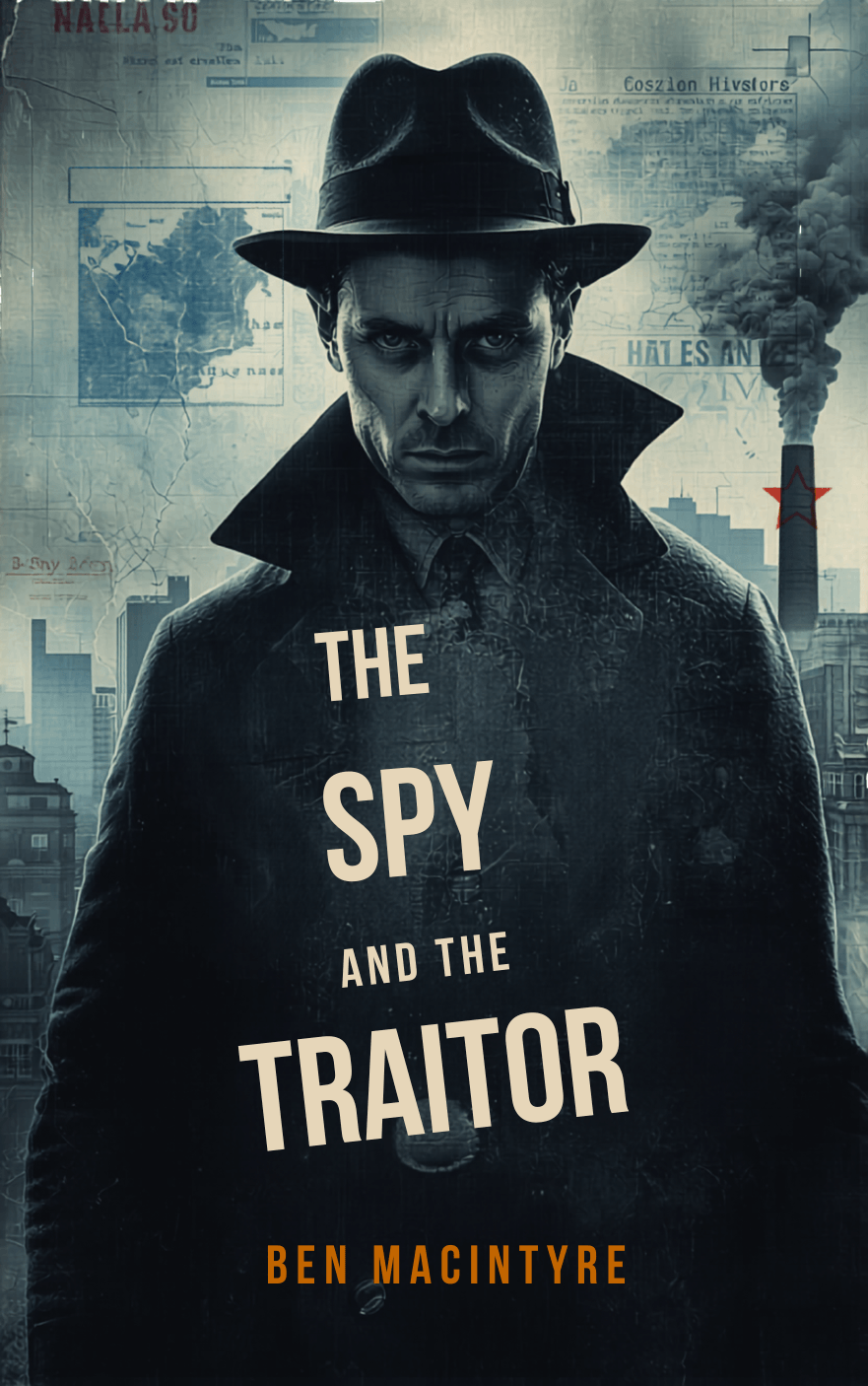
The Spy and the Traitor Book Summary
This The Spy and the Traitor Book Summary covers the key ideas, lessons, and takeaways in about 20 minutes.
At the same time, the book reminds us that such choices come at a cost. Gordievsky’s achievements were accompanied by personal sacrifice, emotional strain, and lasting consequences for his family. His story is not just about espionage—it is about the difficult balance between loyalty, morality, and the price of doing what one believes is right.
Helps with these goals
Want the complete 20-minute summary?
- Full structured summary
- Video Summary
- Podcast Summary
- Audio summary
- Key takeaways
- Exercises
- Quiz
- Highlights and notes
- Ask the book with AI
What is in the The Spy and the Traitor book summary?
Below is a preview of Sumizeit’s expert-written summary of The Spy and the Traitor by Ben Macintyre. The full summary covers the book’s key ideas in text, audio, and video.
The Spy and the Traitor tells the gripping true story of Oleg Gordievsky, a man raised inside the Soviet intelligence world who ultimately chose to undermine it from within. Written by Ben Macintyre, the book explores how a loyal insider gradually transformed into one of the most valuable spies for the West during the Cold War.
Gordievsky was born into a deeply ideological Soviet family. His father was a devoted officer in the KGB, fully committed to the Communist system and its strict expectations. From an early age, Oleg was surrounded by secrecy, discipline, and a belief that loyalty to the state outweighed personal truth. Yet beneath this environment, cracks slowly began to form. While outwardly obedient, he quietly questioned the system’s morality and honesty.
His childhood taught him a critical skill that would later define his life: the ability to separate what he showed others from what he truly believed. This emotional and intellectual division allowed him to survive—and eventually thrive—in the dangerous world of espionage. It also planted the seed for a double life that would later become one of the most daring intelligence operations of the 20th century.
The Slow Collapse of Belief
Gordievsky did not suddenly turn against the Soviet Union. Instead, his transformation unfolded gradually through a series of defining experiences. As a young KGB officer, he witnessed events that revealed the true nature of the regime he served.
The construction of the Berlin Wall shocked him. It was not simply a political decision—it was a physical symbol of fear and control. Seeing a government trap its own citizens behind barriers made him question everything he had been taught about freedom and equality.
Later, the Soviet invasion of Czechoslovakia deepened his disillusionment. What had been presented as a system built on justice instead revealed itself as one willing to crush reform movements through military force. The idea that socialism could evolve into something more humane was shattered.
These moments did not just create doubt—they created moral conflict. Gordievsky began to feel that remaining loyal to the system meant supporting oppression. This internal tension would eventually push him toward a radical decision: betraying the organization he had been trained to serve.
Discovering Another World
When Gordievsky was posted abroad, particularly in Copenhagen, he encountered a completely different way of life. Western societies, with their openness and intellectual freedom, stood in stark contrast to the rigid and controlled environment of the Soviet Union.
He immersed himself in Western culture—reading forbidden books, listening to unrestricted music, and engaging with ideas that were suppressed back home. This exposure did more than broaden his perspective; it confirmed his growing belief that the Soviet system was fundamentally flawed.
The contrast was overwhelming. In the West, people could speak freely, access information, and live without constant fear of surveillance. In the Soviet Union, even private thoughts could feel dangerous. This realization strengthened his desire to act, not just think differently.
The First Steps Toward Betrayal
Gordievsky’s shift from internal critic to active…
Want the complete 20-minute summary?
- Full structured summary
- Video Summary
- Podcast Summary
- Audio summary
- Key takeaways
- Exercises
- Quiz
- Highlights and notes
- Ask the book with AI
Who should read The Spy and the Traitor?
The Spy and the Traitor appeals to history enthusiasts, Cold War scholars, and anyone fascinated by espionage and intelligence operations. It's ideal for readers who enjoy character-driven narratives that explore moral dilemmas and the human cost of political conviction. Those interested in how individual actions can shape world events will find Gordievsky's story particularly compelling.
Why does The Spy and the Traitor matter?
Ben Macintyre's account reveals how one insider fundamentally altered the trajectory of Cold War tensions at a critical historical moment. The book exposes the gap between institutional image and reality—showing how even seemingly monolithic powers like the Soviet Union were vulnerable to internal doubt and defection. Understanding Gordievsky's contributions provides insight into the intelligence operations and behind-the-scenes diplomacy that shaped modern geopolitics.
What are the key themes in The Spy and the Traitor?
- The power of individual conscience against systemic control
- Appearance versus reality in institutions and governments
- The psychological and personal cost of double lives
- How fear drives national policy and international tensions
- Trust, betrayal, and vulnerability within intelligence agencies
- The role of ideological conviction in defection and espionage
What are the key lessons from the The Spy and the Traitor book summary?
Disillusionment Builds Gradually
Gordievsky's transformation from loyal KGB officer to Western spy wasn't sudden; it resulted from accumulating experiences like the Berlin Wall and the Czechoslovak invasion that progressively shattered his ideological faith.
Exposure to Alternative Systems Changes Perspective
Encountering Western freedoms and open intellectual culture while posted abroad crystallized Gordievsky's understanding that the Soviet system was fundamentally restrictive and flawed.
Ideology Motivates Better Than Coercion
Gordievsky's recruitment succeeded because MI6 appealed to his moral convictions rather than attempting financial incentives or threats, creating genuine commitment to the cause.
Perfection in Detail Enables Survival
Operating as a double agent required meticulous attention to every interaction and movement; small errors could trigger exposure, imprisonment, or execution.
Internal Dysfunction Creates Blind Spots
The KGB's culture of internal suspicion and bureaucratic inefficiency paradoxically protected Gordievsky, as colleagues were too focused on watching each other to notice his activities.
Fear Often Drives Aggression
Gordievsky's intelligence revealed that Soviet militarism stemmed partly from deep fears of Western nuclear attack, fundamentally changing how Western leaders understood Soviet motivation.
Intelligence Operations Influence Political Strategy
The information Gordievsky provided shaped decisions by leaders like Reagan and Thatcher, demonstrating how espionage directly influences diplomatic and military policy.
Betrayal Can Come from Unexpected Sources
Threats to Gordievsky emerged not only from KGB counterintelligence but from moles within Western agencies like CIA officer Aldrich Ames, showing that institutions are vulnerable from within.
Extraction Operations Require Flawless Execution
Operation Pimlico's success depended on precise planning, coded signals, and quick thinking—one mistake at the border could have ended Gordievsky's escape.
Sacrifice Accompanies Principled Action
Gordievsky's defection meant abandoning his family to face interrogation and isolation, illustrating that acting on conscience carries profound personal costs.
Living Dual Identities Creates Psychological Strain
The constant compartmentalization required of a double agent—maintaining false loyalty while harboring true beliefs—exerts enormous psychological and emotional toll.
Personal Relationships Suffer Under Secrecy
Gordievsky couldn't share his true thoughts with colleagues, friends, or family, creating distance that lasted beyond the espionage itself and affected his relationships permanently.
History Rarely Has Simple Narratives
While portrayed as heroic in the West, Gordievsky's actions can be viewed as treacherous from the Soviet perspective, reminding readers that historical judgment depends on perspective.
Systems Appear Stronger Than They Are
The Soviet Union's projection of monolithic power masked internal inefficiency, fear, and corruption, demonstrating how institutions can appear invincible while remaining structurally vulnerable.
Information Can Reduce International Tensions
By revealing Soviet fears and intentions, Gordievsky enabled more informed and cautious diplomatic approaches that moved toward dialogue rather than confrontation.
Surveillance and Counter-Surveillance Are Constant Games
Evading detection required sophisticated techniques—changing routes, using crowds, remaining hyperaware—demonstrating that espionage is an unending tactical dance.
One Person Can Influence Major Historical Outcomes
Gordievsky's courage and conviction provided intelligence that measurably contributed to reducing Cold War tensions and eventually supporting its conclusion.
Trust Is Both Essential and Dangerous
Building relationships was necessary for Gordievsky's recruitment and survival, yet trust could also be exploited by handlers or compromised by betrayers.
Moral Conviction Can Override Institutional Loyalty
Despite deep KGB training and family ties to the Soviet system, Gordievsky's belief that the regime was oppressive ultimately overcame his ingrained institutional commitment.
Want the complete 20-minute summary?
- Full structured summary
- Video Summary
- Podcast Summary
- Audio summary
- Key takeaways
- Exercises
- Quiz
- Highlights and notes
- Ask the book with AI
How can you apply ideas from The Spy and the Traitor?
- Examine how personal values align with institutional demands and recognize when ethical conflicts require difficult decisions
- Develop awareness of cognitive dissonance—the gap between what you're told to believe and what you observe—as an early warning sign of systemic problems
- Apply lessons about operational security and attention to detail from espionage to sensitive professional or organizational roles
- Use Gordievsky's recruitment experience to understand how trust is built through consistency, shared interests, and gradual relationship development
- Consider how fear-based motivations drive behavior in organizations and how understanding opponents' fears can enable better negotiation and diplomacy
- Recognize the hidden costs of compartmentalization and secrecy in personal relationships and organizational culture
- Implement rigorous vetting and counterintelligence practices to identify potential vulnerabilities within organizations
What common mistakes do readers make with The Spy and the Traitor?
- Assuming that powerful institutions are monolithic and efficiently run when they may actually be plagued by internal rivalries and inefficiency
- Underestimating how individual moral conviction can override years of institutional training and indoctrination
- Believing that espionage is primarily about money or coercion, when ideological motivation often proves more powerful
- Overestimating the security of secrets within organizations while underestimating how easily insiders can access and transmit sensitive information
- Viewing espionage stories as purely about heroism or villainy without acknowledging the moral complexity and perspectives that differ based on which side you're observing from
Sumizeit Exercises Apply what you've learned
Turn ideas from The Spy and the Traitor into action with a short guided reflection: identify the biggest takeaway, connect it to your life, and commit to one step you can take in the next 24 hours.
What is the expert analysis of The Spy and the Traitor?
Overview
The Spy and the Traitor by Ben Macintyre stands as a seminal work in the genre of espionage literature, deftly blending meticulous historical research with compelling narrative storytelling. Macintyre, a seasoned historian and journalist renowned for his expertise in intelligence history, chronicles the extraordinary life of Oleg Gordievsky, a high-ranking KGB officer who became one of the West’s most valuable double agents during the Cold War. The book’s significance lies not only in its detailed recounting of espionage operations but also in its exploration of the moral and psychological complexities faced by individuals caught between loyalty and conscience in a polarized world.
Core Thesis
At its heart, the book argues that individual agency, grounded in moral conviction and intellectual courage, can profoundly influence the course of geopolitical history. Gordievsky’s gradual disillusionment with the Soviet regime and his subsequent decision to betray it illustrate how personal ethics can challenge and undermine seemingly monolithic systems of power. Macintyre posits that espionage is not merely a cloak-and-dagger game but a human drama marked by sacrifice, ideological conflict, and the fragile nature of institutional authority.
Strengths
- Rich Characterization: Macintyre humanizes Gordievsky, portraying him as a complex figure whose internal conflicts and motivations transcend simplistic notions of heroism or treachery.
- Balanced Narrative: The book skillfully balances suspenseful storytelling with rigorous historical context, making intricate intelligence operations accessible without sacrificing nuance.
- Insight into Soviet Intelligence: By revealing the internal dysfunctions and paranoia within the KGB, the book challenges prevailing myths about the agency’s invincibility and offers a more textured understanding of Cold War espionage.
- Exploration of Moral Ambiguity: Macintyre does not shy away from the ethical dilemmas inherent in espionage, inviting readers to grapple with questions about loyalty, betrayal, and the costs of ideological commitment.
- Impact on Cold War Dynamics: The detailed account of Gordievsky’s intelligence contributions underscores the tangible influence a single individual can exert on international diplomacy and the trajectory of global conflict.
Critiques & Counterarguments
- Potential Oversimplification of Motivations: While the book emphasizes Gordievsky’s ideological motivations, it may underrepresent other factors such as personal ambition, fear, or coercion that often complicate decisions in espionage.
- Selective Perspective: The narrative largely adopts a Western viewpoint, which risks marginalizing the Soviet perspective and the broader geopolitical context that shaped Gordievsky’s actions.
- Romanticizing Espionage: The dramatic portrayal of Gordievsky’s exploits might inadvertently glamorize intelligence work, overshadowing the often banal, bureaucratic, and morally ambiguous realities of espionage.
- Competing Research on Intelligence Impact: Some scholars argue that while Gordievsky’s information was valuable, the end of the Cold War resulted from multifaceted factors including economic pressures, leadership changes, and systemic reform, suggesting his role, though important, was part of a larger mosaic.
- Ethical Debates on Espionage: Opposing schools of thought question the morality of espionage itself, positing that such activities perpetuate mistrust and conflict rather than fostering peace, thereby complicating the book’s implicit valorization of Gordievsky’s choices.
Who Should Read This
This book is essential reading for those interested in Cold War history, intelligence studies, and the psychology of loyalty and betrayal. Scholars and enthusiasts of political history will appreciate its depth and narrative clarity, while readers drawn to moral philosophy and human psychology will find Gordievsky’s internal struggles particularly compelling. Additionally, professionals in international relations and security studies can gain valuable insights into the nuanced interplay between individual agency and systemic forces in shaping world events.
Frequently asked questions about the The Spy and the Traitor book summary
What is The Spy and the Traitor about?
The Spy and the Traitor by Ben Macintyre is a true account of Oleg Gordievsky, a KGB officer who became a double agent for British intelligence during the Cold War. The book chronicles how Gordievsky's disillusionment with the Soviet system led him to secretly provide intelligence to MI6 while maintaining his cover as a loyal Soviet operative, ultimately contributing to reduced Cold War tensions before executing a dramatic escape.
Who should read The Spy and the Traitor?
This book is ideal for history buffs, Cold War enthusiasts, and anyone interested in espionage narratives that combine thrilling storytelling with serious historical scholarship. It appeals to readers who appreciate character-driven true stories exploring moral complexity and the human costs of conviction. Those fascinated by intelligence operations, geopolitics, or the unsung individuals who shaped world events will find it particularly engaging.
What are the main takeaways from The Spy and the Traitor?
The primary takeaway is that individual conviction and moral courage can significantly influence historical outcomes, even against powerful institutions. The book reveals how fear—rather than pure ambition—often drives national aggression, and how understanding an opponent's motivations enables better diplomacy. Finally, it emphasizes that such achievements come with profound personal costs, as Gordievsky's defection required abandoning family and living a psychologically exhausting double life.
How did Oleg Gordievsky become a spy for the West?
Gordievsky's transformation was gradual, shaped by events like the Berlin Wall construction and the Soviet invasion of Czechoslovakia that exposed the repressive nature of the regime he served. After being posted to Copenhagen and experiencing Western freedoms, he became open to cooperation. British intelligence identified him through a former acquaintance who had defected, and MI6 carefully recruited him by building trust and appealing to his ideological convictions rather than financial incentives.
What impact did Gordievsky's intelligence have on the Cold War?
Gordievsky's most significant contribution was revealing that Soviet aggression was driven partly by fear of a Western nuclear attack, fundamentally changing how Western leaders understood Soviet motivation. His intelligence exposed Soviet spies in Western countries, influenced diplomatic strategies by leaders like Reagan and Thatcher, and helped shift the approach from confrontation toward cautious dialogue. This information contributed to reducing tensions at a critical historical moment.
How did Gordievsky escape from the Soviet Union?
When Gordievsky realized he had been compromised due to CIA mole Aldrich Ames selling information to the KGB, MI6 launched Operation Pimlico, a dramatic extraction plan. Gordievsky used coded signals and secret meetings to evade surveillance, then was smuggled across the border to Finland hidden in a car. The operation succeeded despite close calls, including a tracking dog that nearly detected him.
What was the personal cost of Gordievsky's espionage?
Gordievsky had to abandon his wife and children when he defected, leaving them to face KGB interrogation, surveillance, and isolation. The psychological strain of living a double life—maintaining false loyalty while concealing his true beliefs—created lasting damage to his personal relationships. Years passed before he could reunite with his family, and the emotional toll of compartmentalization affected him permanently.
Did the KGB really fail to detect Gordievsky?
Yes, Gordievsky operated undetected for years despite being a double agent at senior levels of the KGB. The book reveals that the KGB's culture of internal suspicion and bureaucratic inefficiency inadvertently protected him—colleagues were too busy monitoring each other to notice his activities. His sophisticated tradecraft, including relying on memory rather than documents and using crowded public spaces to avoid surveillance, also contributed to his success.
About Sumizeit
Sumizeit is a profitable Scomy LLC company based in Miami, Florida. It has been helping readers learn from nonfiction books for 7 years with expert-written summaries in text, audio, podcast, and video.
Want the complete 20-minute summary?
- Full structured summary
- Video Summary
- Podcast Summary
- Audio summary
- Key takeaways
- Exercises
- Quiz
- Highlights and notes
- Ask the book with AI
Here's why readers love Sumizeit
Join thousands of learners getting smarter every day
"Great experience. Detailed summaries. Loved the gamification feature. Makes learning fun. Good customer service. I recommend Sumizeit to anyone. You'll learn a lot."
"I always felt busy but still wanting to keep up with the book discussion in my friend group. This was a great supplement to help me keep reading the books I find fun while keeping up with important books."
"I love this website. Instead of scrolling social media, I find myself learning a lot. I use it everyday. I recommend this app for anyone who is too busy and wants to get up to speed with their favorite books."
The Spy and the Traitor Book Summary PDF
Looking for a The Spy and the Traitor Book Summary PDF you can save and revisit offline? Our The Spy and the Traitor Book Summary PDF captures the book’s core ideas in a clean, printable format — the key frameworks, takeaways, and structure without the fluff. Download the The Spy and the Traitor Book Summary PDF when you want a reference you can annotate, share with your team, or review on the go. Get your The Spy and the Traitor Book Summary PDF from the download page below.
Download The Spy and the Traitor Book Summary PDFPeople also liked these summaries
Readers who explored The Spy and the Traitor often enjoyed these titles next.





Want the complete 20-minute summary?
- Full structured summary
- Video Summary
- Podcast Summary
- Audio summary
- Key takeaways
- Exercises
- Quiz
- Highlights and notes
- Ask the book with AI
Featured Book Titles
Popular Book Summaries at sumizeit, leading book summary app