


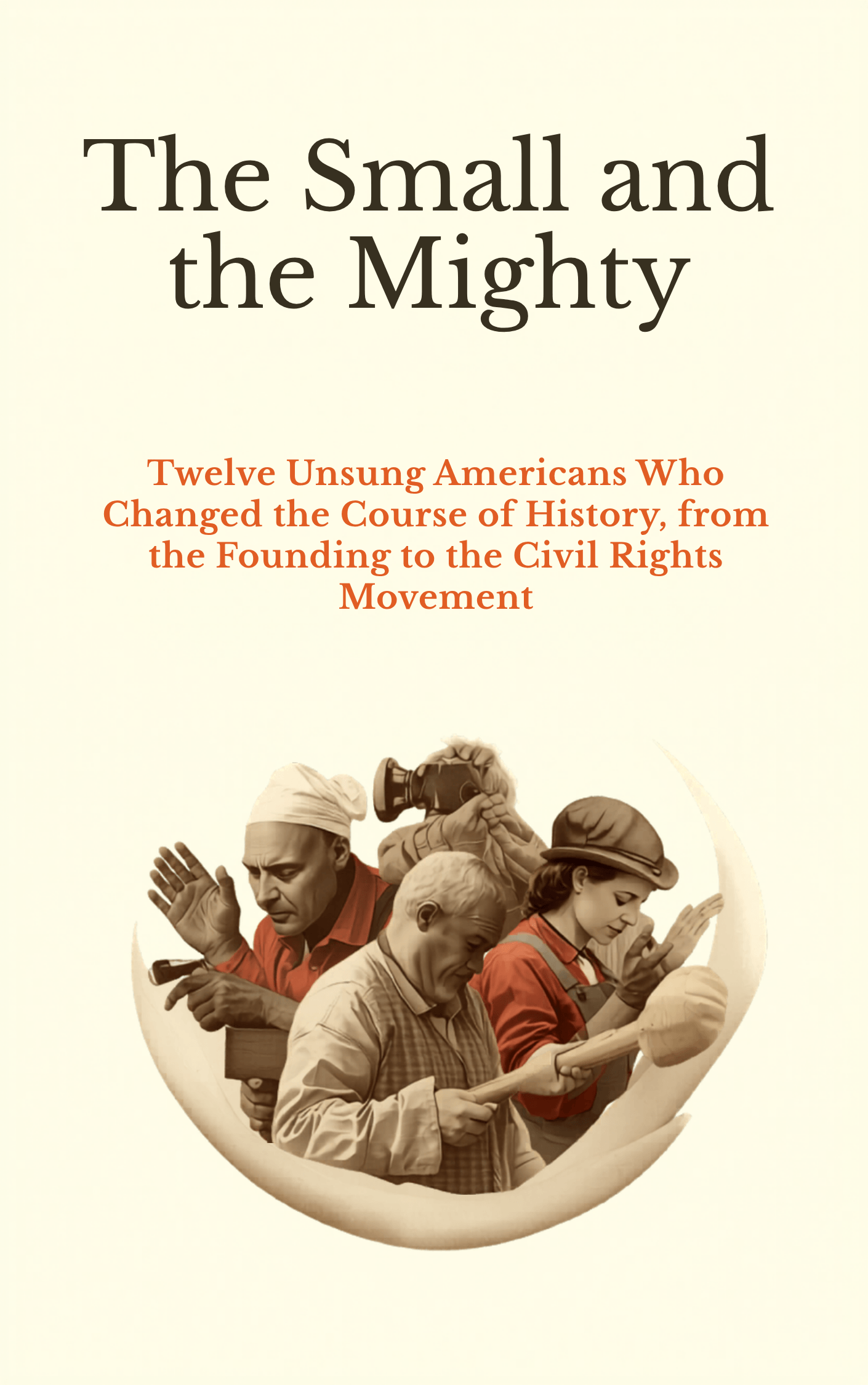
Prefer the print book? Buy on Amazon
As an Amazon Associate, Sumizeit earns from qualifying purchases.
The Small and the Mighty Book Summary
This The Small and the Mighty Book Summary covers the key ideas, lessons, and takeaways in about 20 minutes.
Short Description:
How ordinary people—not just famous men—built American history
Helps with these goals
Want a Free Weekly Read?
Get a free summary every week straight to your mailbox.
Preview the The Small and the Mighty book summary
Below is a preview of Sumizeit’s comprehensive human-written summary of The Small and the Mighty by Sharon McMahon. The full summary is 15-20 minutes long and covers the book’s key ideas in text, audio, visual, and video formats. Unlock the full 20 Minute Summary
In The Small and the Mighty, educator and popular history voice Sharon McMahon sets out to widen the lens through which Americans understand their own past. The conventional account of the nation's history, she argues, tends to orbit around a familiar cast of prominent white men—presidents, generals, founders—while leaving out the vast number of people whose quieter labor actually moved the country forward. McMahon's project is to recover those missing figures: the formerly enslaved entrepreneurs, the immigrant suffragists, the schoolteachers, the philanthropists, and the ordinary citizens whose names rarely appear in textbooks but whose courage and persistence reshaped American life.
Her central claim is that the people most responsible for bending the country toward its stated ideals of liberty, equality, and justice were seldom the powerful and famous. They were, more often, the small and the mighty—individuals who held little institutional power yet refused to accept the limits placed on them. Many of them were women, immigrants, and people of color who faced systemic discrimination at every turn, and who nonetheless built businesses, founded schools, organized protests, and held public office. McMahon treats their stories not as footnotes to the grand narrative but as the load-bearing structure of American progress itself.
Throughout the book, three forces recur as the engines of change: education, grassroots activism, and civic participation. McMahon shows how each of these tools allowed marginalized communities to challenge oppressive systems and claim a fuller place in public life. By assembling these individual portraits, she builds a cumulative argument that history is made less by a handful of titans than by a multitude of determined, often overlooked people working in concert and across generations.
Clara Brown and the Reach of Compassion
One of the book's most striking portraits is that of Clara Brown, a woman born into slavery around the turn of the nineteenth century. Brown endured the cruelties that defined enslaved life, including the wrenching separation of her family, sold off and scattered against her will. She lived during the era when the highest court in the land, in the Dred Scott decision, declared that people like her had no rights the nation was bound to respect. Yet McMahon presents Brown not as a victim defined by her suffering but as a person whose resolve and generosity outlasted everything done to her.
After gaining her freedom, Brown made her way west during the Colorado gold rush and built a successful laundry business serving the booming mining communities. With the money she earned, she became a pillar of her adopted region, providing food, shelter, and care to those in need—earning an affectionate reputation as a guardian figure of the mountains. She did not stop at her own prosperity. Brown actively encouraged other African American families to resettle in Colorado, convinced that the West held the promise of a freer and more hopeful life than the one they had known.
Brown's later years brought fresh hardship: natural disasters and dishonest people stripped away much of the fortune she had…
Want the complete 20-minute summary?
- Full structured summary
- Video Summary
- Podcast Summary
- Audio summary
- Key takeaways
- Exercises
- Quiz
- Highlights and notes
- Ask the book with AI
Who should read The Small and the Mighty?
The Small and the Mighty is for readers who want to understand American history beyond the familiar cast of famous figures. It speaks to educators, civic-minded citizens, and anyone curious about how ordinary people have shaped the nation's progress toward its ideals. If you feel that textbook history leaves out important stories, or if you want to see yourself reflected in America's past, this book will resonate deeply.
Why does The Small and the Mighty matter?
In an era of polarization and skepticism about institutions, Sharon McMahon's The Small and the Mighty reminds us that meaningful change has always come from determined communities working together, not from a handful of celebrated leaders. By recovering the stories of overlooked entrepreneurs, teachers, activists, and reformers, the book offers a more honest and hopeful vision of how progress actually happens. Understanding these hidden architects of change can inspire and guide how we participate in shaping the future.
What are the key themes in The Small and the Mighty?
- The power of ordinary people to reshape history through collective action
- Education as a tool of liberation and personal empowerment
- Grassroots activism and civic participation as engines of social change
- The courage required to challenge systemic injustice
- The tension between celebrating individual success and confronting structural barriers
- Philanthropy and leadership that empowers communities rather than dictating solutions
How can you apply ideas from The Small and the Mighty?
- Study your own community's overlooked history to identify local leaders and movements that shaped social progress in your region
- Build grassroots networks around issues you care about, following the model of Jo Ann Robinson's rapid-response organizing strategies
- Support education initiatives that teach critical thinking and civic participation, not just facts and figures
- Evaluate charitable organizations and philanthropic efforts by whether they empower communities to direct their own transformation
- Use your professional skills—whether communication, organizing, practical trades, or translation—to advance causes of justice and equity in your community
- Combine multiple reform efforts around a common vision rather than siloing different social causes
- Document and share stories of overlooked contributors in your own field or community to correct historical narratives
What common mistakes do readers make with The Small and the Mighty?
- Assuming that a single dramatic moment of defiance or success represents the whole story of social change, when in fact sustained organizing and invisible labor matter most
- Believing that individual achievement stories alone explain progress, while ignoring the structural barriers and luck that enable or prevent success
- Accepting the default narrative of history taught in schools without questioning whose stories are missing or distorted
- Viewing philanthropy or charity as solution-oriented rather than asking whether it empowers communities to direct their own transformation
Sumizeit Exercises Apply what you've learned
Turn ideas from The Small and the Mighty into action with a short guided reflection: identify the biggest takeaway, connect it to your life, and commit to one step you can take in the next 24 hours.
What is the expert analysis of The Small and the Mighty?
Overview
The Small and the Mighty by Sharon McMahon is a significant contribution to contemporary American historiography and civic education. McMahon, an educator and prominent voice in public history, challenges the traditional narrative that centers on prominent white men by illuminating the vital roles played by marginalized individuals—women, immigrants, people of color—whose grassroots efforts have shaped the nation’s progress. Known for her clear, fact-based approach to civic education, McMahon extends her mission from social media platforms into the realm of historical literature, offering a richly researched, nuanced retelling of American history that emphasizes inclusion and collective agency.
Core Thesis
McMahon’s central argument posits that the true architects of American progress have rarely been the celebrated elites but rather the “small and the mighty”—ordinary people who, despite systemic barriers, harnessed education, grassroots activism, and civic participation to advance liberty, equality, and justice. Through a series of biographical portraits, she contends that history is less the product of isolated heroic acts and more the cumulative outcome of persistent, often unrecognized labor by diverse individuals and communities working across generations.
Strengths
- Inclusive Historical Reframing: The book excels in broadening the historical lens, recovering overlooked figures whose contributions complicate and enrich the national narrative.
- Vivid Biographical Portraits: McMahon’s storytelling brings to life a diverse cast—from Clara Brown and Septima Clark to Jo Ann Robinson and Daniel Inouye—humanizing history and emphasizing resilience and agency.
- Interconnection of Themes: The integration of education, activism, and civic engagement as intertwined forces of change provides a coherent framework that links individual stories to broader social movements.
- Balanced Perspective: The author acknowledges complexities and tensions within these narratives, such as the limits of individual success stories and the structural inequalities that persist.
- Educational Utility: Given McMahon’s background, the book serves as a valuable resource for educators and readers seeking accessible yet sophisticated civic and historical literacy.
Critiques & Counterarguments
- Potential Oversimplification of Structural Dynamics: While emphasizing individual agency is empowering, the book occasionally risks underplaying the entrenched systemic forces—economic, political, and social—that constrain marginalized groups, which could lead to an overly optimistic view of grassroots impact.
- Selection Bias in Case Studies: The focus on exceptional individuals who overcame adversity might inadvertently reinforce a meritocratic narrative that neglects those whose efforts did not yield visible success, thus limiting the scope of historical representation.
- Limited Engagement with Conflicting Historical Interpretations: Although McMahon gestures toward tensions—such as the debate over Colorado as a refuge for Black Americans—the book could deepen its critical engagement with competing historiographical perspectives and the contested nature of memory and legacy.
- Competing Schools of Thought: Some historians argue for a more structuralist or Marxist analysis of American progress, emphasizing class struggle and institutional power over individual activism; this perspective challenges McMahon’s focus on personal agency as the primary driver of change.
- Contemporary Relevance and Application: While the book’s historical insights are compelling, critics might question how effectively these lessons translate into actionable strategies for today’s complex political and social challenges, where systemic inequities remain deeply entrenched.
Who Should Read This
The Small and the Mighty is ideal for readers interested in American history, social justice, and civic education who seek a more inclusive and nuanced understanding of the nation’s past. It will resonate with educators, students, activists, and general readers eager to move beyond traditional historical narratives and appreciate the collective, often quiet, efforts that have shaped American democracy. Additionally, those engaged in contemporary debates about representation, equity, and the role of grassroots movements will find McMahon’s work both inspiring and instructive.
Frequently asked questions about the The Small and the Mighty book summary
What is The Small and the Mighty about?
The Small and the Mighty by Sharon McMahon is a history book that recovers the overlooked stories of ordinary Americans—formerly enslaved entrepreneurs, immigrant suffragists, teachers, philanthropists, and activists—whose courage and persistence actually shaped the nation's progress toward its ideals of liberty, equality, and justice. Through vivid biographical portraits, McMahon argues that lasting change comes not from a handful of famous men but from determined people working together across generations using education, grassroots activism, and civic participation.
Who should read The Small and the Mighty?
The Small and the Mighty appeals to educators, civic-minded citizens, students of history, and anyone curious about how American progress actually happened. It's for readers who feel that conventional textbook history leaves out important stories, who want to understand the real architects of change, and who are looking for evidence that ordinary people can shape the future. If you're seeking a more honest and inclusive version of American history, this book will resonate deeply.
What are the main takeaways from The Small and the Mighty?
The main takeaways include: American progress has been driven by ordinary, overlooked people rather than famous leaders; education, grassroots activism, and civic participation are the most powerful tools for change; lasting transformation emerges from patient, cumulative work by many hands across generations, not single heroic acts; and recovering these hidden stories gives us a fuller picture of the nation while inviting readers to see themselves as part of the ongoing work of building a more just society.
How does Sharon McMahon approach telling overlooked historical stories?
McMahon uses vivid biographical portraits to bring forgotten figures to life, focusing not just on their achievements but on the practical strategies they used—Jo Ann Robinson's overnight leaflet distribution, Septima Clark's inclusive leadership model, Maria de Lopez's bilingual organizing. She also models honest reckoning by acknowledging tensions in these stories, such as how success narratives can obscure systemic barriers, asking readers to hold multiple truths simultaneously about both individual courage and structural injustice.
What role does education play in The Small and the Mighty?
Education emerges as one of the three main engines of change in the book, alongside activism and civic participation. McMahon profiles teachers like Septima Clark and Virginia Randolph who understood schooling as liberation—cultivating critical thinking, self-confidence, and the practical skills needed for economic independence and democratic participation. These educators transformed how marginalized communities could assert their rights and challenge oppressive systems.
What does The Small and the Mighty say about the Montgomery bus boycott?
McMahon argues that the Montgomery bus boycott is often flattened into a single image of Rosa Parks, when the real story involves months of organizing by figures like Jo Ann Robinson, the earlier defiance of Claudette Colvin, and the sustained work of carpools, churches, and community networks. She shows that the visible act of defiance rested on invisible organizational labor, and that legal victories like the Supreme Court ruling against bus segregation came through the combined effort of grassroots courage and attorneys like Fred Gray.
Are there examples of overlooked women in The Small and the Mighty?
Yes—the book features numerous women including Clara Brown, a formerly enslaved entrepreneur; Inez Milholland and Maria de Lopez, suffragists; Septima Clark and Virginia Randolph, transformative educators; Anna Jeanes, a philanthropist; Rebecca Mitchell, a frontier reformer; and Katharine Lee Bates, who wrote 'America the Beautiful.' McMahon shows how women of all backgrounds faced systemic discrimination yet built businesses, founded schools, organized protests, and reshaped American life.
What is the book's perspective on individual success stories versus systemic change?
McMahon holds both truths in tension: she celebrates individual courage and perseverance while cautioning that such stories can obscure persistent structural inequalities that make success far harder for some groups than others. She argues that honest historical reckoning requires acknowledging both the inspiring power of individual determination and the weight of systemic barriers, avoiding narratives that suggest hard work alone explains achievement while downplaying the role of luck, community networks, and broader economic conditions.
About Sumizeit
Sumizeit is a profitable Scomy LLC company based in Miami, Florida. Our founders, Clemens Raemy and Weina Scott, are successful entrepreneurs with several exits. Sumizeit is a popular book summary app / micro learning app used by busy professionals and entrepreneurs with over 2,500 non-fiction book summaries and 10,000 podcast summaries in text, audio, visual, podcast, and video format. We also have stellar retention tools to make ideas stick - such as flashcards with spaced repetition, quizzes, streaks, highlighting and notes, daily challenges, riddles, mini-courses, meditation, and more. You won't only learn the idea, but also remember it. Over 90% of our users change their habits with Sumizeit.
Upgrade Now
Here's why readers love Sumizeit
Join thousands of learners getting smarter every day
"Great experience. Detailed summaries. Loved the gamification feature. Makes learning fun. Good customer service. I recommend Sumizeit to anyone. You'll learn a lot."
"I always felt busy but still wanting to keep up with the book discussion in my friend group. This was a great supplement to help me keep reading the books I find fun while keeping up with important books."
"I love this website. Instead of scrolling social media, I find myself learning a lot. I use it everyday. I recommend this app for anyone who is too busy and wants to get up to speed with their favorite books."
The Small and the Mighty Book Summary PDF
Looking for a The Small and the Mighty Book Summary PDF you can save and revisit offline? Our The Small and the Mighty Book Summary PDF captures the book’s core ideas in a clean, printable format — the key frameworks, takeaways, and structure without the fluff. Download the The Small and the Mighty Book Summary PDF when you want a reference you can annotate, share with your team, or review on the go. Get your The Small and the Mighty Book Summary PDF from the download page below.
Download The Small and the Mighty Book Summary PDFPeople also liked these summaries
Readers who explored The Small and the Mighty often enjoyed these titles next.

Ready to read the whole thing?
- Full structured summary
- Video Summary
- Podcast Summary
- Audio summary
- Key takeaways
- Exercises
- Quiz
- Highlights and notes
- Ask the book with AI
Featured Book Titles
Popular Book Summaries at sumizeit, leading book summary app