


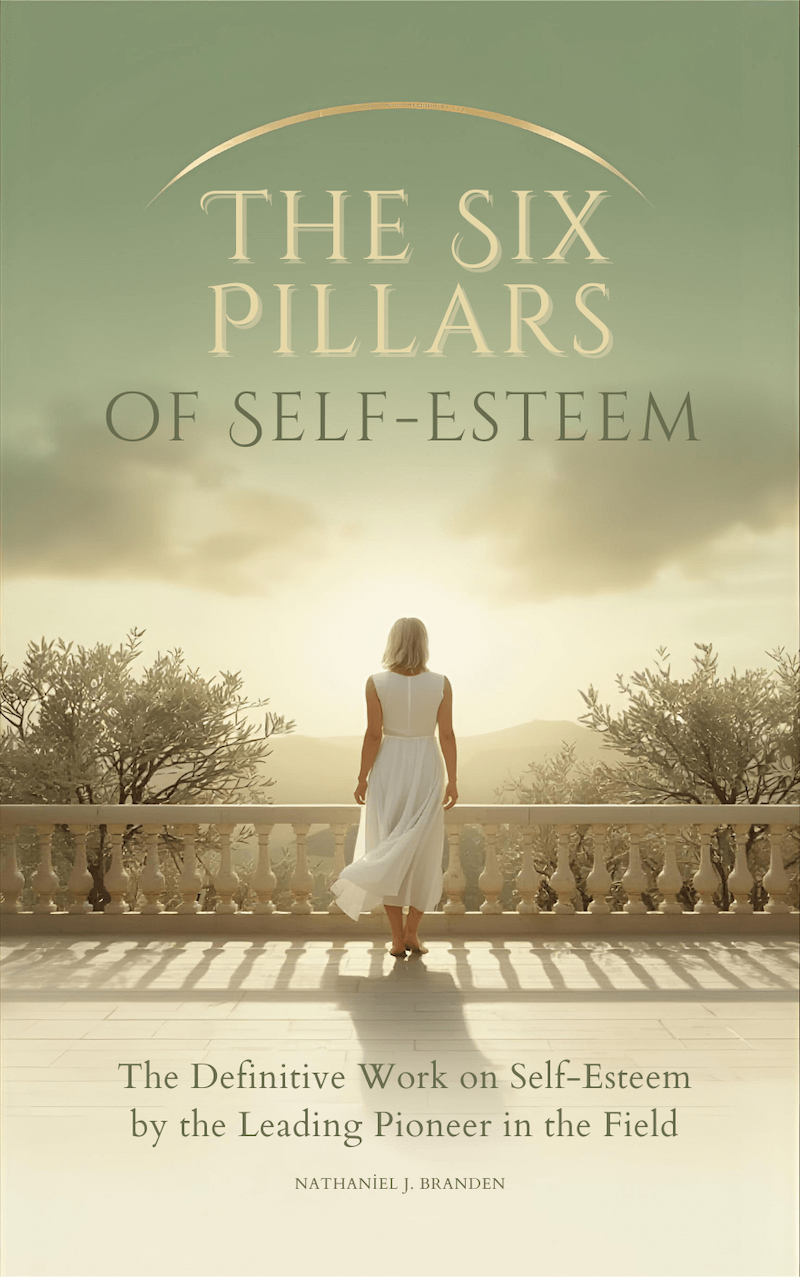
Prefer the print book? Buy on Amazon
As an Amazon Associate, Sumizeit earns from qualifying purchases.
The Six Pillars of Self-Esteem Book Summary
This The Six Pillars of Self-Esteem Book Summary covers the key ideas, lessons, and takeaways in about 20 minutes.
Short Description:
Self-esteem builds through awareness, responsibility, and consistent values.
Each time you practice these behaviors, you deposit strength into your inner account. Over time, the balance grows into a deep and steady confidence that endures embarrassment, failure, and uncertainty. You stop needing to impress others because you feel solid inside. You navigate life as someone who trusts their mind, respects their existence, and believes themselves worthy of joy and success.
Helps with these goals
Preview the The Six Pillars of Self-Esteem book summary
Below is a preview of Sumizeit’s comprehensive human-written summary of The Six Pillars of Self-Esteem by Nathaniel Branden. The full summary is 15-20 minutes long and covers the book’s key ideas in text, audio, visual, and video formats. Unlock the full 20 Minute Summary
Nathaniel Branden presents self-esteem as a lived experience woven from our everyday behavior, not as a vague sense of feeling “good about ourselves.” At its core, self-esteem combines two key convictions: that we are capable of dealing with life’s basic challenges and that we are worthy of happiness and respect. These two elements—competence and worth—work together to shape how we interpret our experiences, make decisions, and respond to success and failure.
Because self-esteem is tied to conduct, Branden critiques popular approaches that try to raise it through flattering language, participation trophies, or unconditional praise without substance. Lasting self-esteem can’t be injected from the outside; it develops when you repeatedly choose actions that embody honesty, responsibility, awareness, and respect for your own life. You don’t come to trust yourself because others say you’re wonderful—you trust yourself when you see, over and over, that you act in ways that deserve trust.
Self-esteem also functions as an internal regulator of effort and aspiration. People who believe they are competent and deserving are more willing to take on challenges, to risk failure, and to keep going when things get hard. When self-esteem is low, demands that require initiative feel threatening instead of energizing. New possibilities become sources of anxiety rather than invitations to grow.
Importantly, self-esteem is not a fixed trait. It fluctuates based on the pattern of your choices. A single misstep won’t destroy it, and a single triumph won’t secure it. What matters is whether your overall way of living tends to confirm or undermine the belief that you are capable and worthy. When you repeatedly ignore reality, betray your values, or evade responsibility, your feeling of self-trust diminishes. When you habitually confront problems, act with integrity, and choose growth over avoidance, that trust deepens.
Why Self-Esteem Matters in Everyday Life
Branden emphasizes that whether or not we think about it consciously, each of us holds an ongoing opinion of ourselves. That opinion influences how we show up in every domain: work, relationships, creativity, health, and even the way we experience pleasure and joy. You cannot opt out of having a relationship with yourself; you can only decide whether that relationship will be supportive or hostile.
Healthy self-esteem contributes to better decision-making. A person who respects themselves is more likely to choose actions that support long-term well-being instead of short-term relief. You can know the right thing to do yet choose otherwise; self-esteem is what tips you toward choices that align with your highest interests rather than your least empowered impulses.
Branden also describes self-esteem as the “immune system of consciousness.” When it is strong, you can withstand criticism, rejection, and setbacks without collapsing into despair or self-hatred. Hardship still hurts, but it does not destroy your sense of identity. When it is weak, even small disappointments can trigger spirals of shame, avoidance, and self-sabotage. Self-esteem doesn’t guarantee a good life, he argues, but a deeply fulfilling life is nearly impossible without it.
Modern life makes self-esteem more critical than ever.
Want the complete 20-minute summary?
- Full structured summary
- Video Summary
- Podcast Summary
- Audio summary
- Key takeaways
- Exercises
- Quiz
- Highlights and notes
- Ask the book with AI
Who should read The Six Pillars of Self-Esteem?
The Six Pillars of Self-Esteem is for anyone who struggles with self-doubt, wants to build genuine confidence, or seeks a practical framework for personal growth. Whether you're navigating major life decisions, recovering from setbacks, or simply looking to deepen your sense of self-worth, this book offers actionable guidance. It's especially valuable for professionals, parents, and leaders who want to understand how self-respect translates into better decision-making and resilience.
Why does The Six Pillars of Self-Esteem matter?
In an era of constant choice and uncertainty, genuine self-esteem is more critical than ever for navigating life independently and authentically. Unlike feel-good approaches that rely on empty praise, Nathaniel Branden's framework connects self-worth directly to how you actually live, making it relevant and durable in a world that demands thinking, adaptation, and personal responsibility. Without this foundation, people often seek false security in rigid ideologies, unhealthy relationships, or constant external validation. The Six Pillars of Self-Esteem shows why building real self-trust is essential for fulfillment, creativity, and the courage to pursue what matters most.
What are the key themes in The Six Pillars of Self-Esteem?
- Self-esteem as a lived experience rooted in behavior, not feelings
- The two core elements of self-esteem: competence and worthiness
- The paradox of needing self-esteem to practice the pillars while practicing them to build self-esteem
- Self-esteem as an internal regulator that determines how willing you are to take risks and face challenges
- The distinction between genuine self-esteem and pseudo self-esteem built on external validation
- How awareness, acceptance, responsibility, assertion, purpose, and integrity work together
- The role of environment and relationships in shaping early self-esteem
- Why avoiding reality erodes self-respect faster than facing difficult truths
How can you apply ideas from The Six Pillars of Self-Esteem?
- Use sentence-completion exercises to strengthen awareness by finishing stems like 'If I were to observe more carefully today...' or 'When I pay attention to how I really feel...' to uncover hidden patterns and desires.
- Practice selective attention by identifying what truly matters in any given situation—your safety, values, and goals—and consciously let trivial distractions fall into the background.
- Implement a regular values audit to distinguish between inherited beliefs and those you genuinely own, then adjust your behavior to align with your actual convictions.
- Set specific, measurable goals and track your consistent effort toward them (not just outcomes) to build proof that you follow through on what you commit to.
- When you act against your values or make a mistake, respond with honest self-examination focused on understanding what needs or fears drove the behavior, rather than harsh self-attack.
- Practice saying 'no' to small requests that violate your standards to build the habit of honoring your authentic preferences before facing larger assertiveness challenges.
- Create daily or weekly rituals that embody at least one pillar—whether it's a morning awareness practice, a responsibility check-in on projects, or a weekly integrity review—to accumulate behavioral evidence of your trustworthiness.
What common mistakes do readers make with The Six Pillars of Self-Esteem?
- Assuming self-esteem comes from positive self-talk or affirmations without backing them up with actual behavior—Branden emphasizes that words without consistent action feel hollow.
- Confusing self-esteem with arrogance or entitlement by believing you deserve success without putting in disciplined effort or taking responsibility for setbacks.
- Waiting for self-esteem to arrive before practicing the pillars, rather than recognizing that even imperfect attempts at these behaviors begin to shift your self-perception.
- Accepting blame for circumstances you genuinely didn't create while refusing to take responsibility for how you respond to them today, which leaves you stuck in victimhood.
Sumizeit Exercises Apply what you've learned
Turn ideas from The Six Pillars of Self-Esteem into action with a short guided reflection: identify the biggest takeaway, connect it to your life, and commit to one step you can take in the next 24 hours.
What is the expert analysis of The Six Pillars of Self-Esteem?
Overview
The Six Pillars of Self-Esteem, authored by Nathaniel Branden, stands as a seminal work in the psychology and self-improvement canon. Branden, a psychotherapist and prolific writer, is widely recognized as a foundational figure in the modern self-esteem movement. His work synthesizes decades of clinical experience and philosophical inquiry, notably influenced by his early collaboration with Ayn Rand, to present self-esteem not as a nebulous feeling but as a concrete, actionable construct. Published in 1994, this book offers a rigorous framework that has shaped both popular and academic understandings of self-esteem, emphasizing behavioral practice over mere positive affirmations.
Core Thesis
Branden’s central argument reframes self-esteem as a dynamic, lived experience rooted in two inseparable convictions: personal competence and inherent worthiness. He posits that self-esteem is cultivated through consistent, conscious behaviors rather than superficial praise or external validation. The book identifies six behavioral pillars—awareness, self-acceptance, responsibility, self-assertion, purposeful living, and integrity—that collectively form the foundation for genuine self-esteem. Importantly, Branden argues that self-esteem functions as an internal regulator, influencing motivation, resilience, and decision-making, and that it is neither fixed nor bestowed but actively built through choices aligned with reality and personal values.
Strengths
- Behavioral Focus: By grounding self-esteem in tangible actions rather than abstract feelings or hollow affirmations, Branden provides a practical roadmap that empowers readers to take ownership of their psychological growth.
- Integration of Philosophy and Psychology: The book uniquely blends philosophical clarity with psychological insight, especially in its emphasis on reason, personal responsibility, and integrity, lending intellectual rigor to the self-help genre.
- Comprehensive Framework: The six pillars cover a broad spectrum of human experience—from emotional awareness to purposeful action—offering a holistic approach that addresses both internal and external dimensions of self-esteem.
- Nuanced Understanding of Self-Esteem’s Fluctuation: Branden’s recognition that self-esteem is not static but fluctuates with life choices and circumstances adds psychological realism and avoids simplistic dichotomies.
- Attention to Environmental Influences: The acknowledgment of family, education, workplace, and therapy as shaping forces situates individual development within a social context, enhancing the book’s applicability.
Critiques & Counterarguments
- Potential Oversimplification of Complex Dynamics: While Branden’s behavioral pillars provide clarity, critics might argue that the model underestimates the complexity of psychological disorders or trauma that can impair self-esteem beyond conscious behavioral choices.
- Limited Engagement with Sociocultural Factors: Although environmental influences are acknowledged, the book largely centers on individual responsibility, potentially downplaying systemic issues such as socioeconomic inequality, discrimination, and cultural narratives that profoundly affect self-worth.
- Empirical Support and Contemporary Research: Since its publication in 1994, advances in neuroscience and social psychology have nuanced our understanding of self-esteem, including debates on its relationship to narcissism and mental health. Some contemporary research suggests that excessive focus on self-esteem can lead to entitlement or fragile self-concepts, a tension less explored in Branden’s work.
- Competing Theoretical Perspectives: Alternative approaches, such as self-compassion theory (Kristin Neff) or mindfulness-based models, emphasize acceptance and present-moment awareness without the moralistic undertones of responsibility and assertion, offering a more gentle pathway to self-regard that contrasts with Branden’s emphasis on discipline and integrity.
- Challenges in Early Application of Pillars: The paradox Branden notes—that some self-esteem is needed to practice the pillars—raises questions about accessibility for individuals with severely diminished self-worth or those in abusive environments, where initiating these behaviors may require external support or intervention.
Who Should Read This
The Six Pillars of Self-Esteem is essential reading for psychologists, therapists, educators, and serious students of personal development who seek a structured, intellectually grounded approach to self-esteem. It is particularly valuable for readers who appreciate a synthesis of philosophical rigor and psychological practice and who are willing to engage deeply with self-reflective behavioral change rather than quick-fix solutions. Additionally, individuals confronting motivational challenges, seeking greater resilience, or desiring a principled framework for self-growth will find Branden’s work both inspiring and practical. However, those looking for trauma-informed, culturally nuanced, or compassion-centered methodologies might consider supplementing this book with more recent or alternative perspectives.
Frequently asked questions about the The Six Pillars of Self-Esteem book summary
What is The Six Pillars of Self-Esteem about?
The Six Pillars of Self-Esteem by Nathaniel Branden presents a framework showing that genuine self-esteem is built through six concrete behavioral practices—living with awareness, self-acceptance, taking responsibility, self-assertion, living purposefully, and acting with integrity—rather than through positive self-talk or external validation. The book argues that self-esteem is a lived experience rooted in how you actually behave, and that practicing these pillars creates a deep, lasting sense of competence and worthiness.
Who should read The Six Pillars of Self-Esteem?
Anyone struggling with self-doubt, seeking genuine confidence, or wanting a practical framework for personal growth will benefit from this book. It's especially valuable for professionals facing complex decisions, parents shaping children's self-regard, leaders building trust-based cultures, and individuals recovering from setbacks or trying to navigate an uncertain world with greater self-trust. The book appeals to readers who want actionable strategies rather than motivational platitudes.
What are the main takeaways from The Six Pillars of Self-Esteem?
The core insight is that self-esteem is built through behavior, not beliefs or feelings alone. The six pillars—awareness, self-acceptance, responsibility, assertion, purpose, and integrity—are behavioral commitments that accumulate proof to yourself that you are capable and worthy. Living with these practices creates genuine resilience and confidence that withstands criticism and failure, while neglecting them undermines self-respect even when circumstances appear successful.
How do the six pillars of self-esteem work together?
The pillars form a reinforcing cycle: awareness reveals what is right and what you genuinely feel, self-acceptance lets you own that reality without denial, responsibility commits you to taking action, assertion expresses your truth, living purposefully organizes that effort over time, and integrity ensures alignment between values and behavior. Each pillar supports and strengthens the others, creating a complete framework for building self-trust through consistent action.
What's the difference between genuine self-esteem and pseudo self-esteem?
Genuine self-esteem stems from lived experience of competence and worthiness through aligned behavior; it is stable and resilient. Pseudo self-esteem is a facade built on compulsive achievement, status symbols, constant praise, or exaggerated confidence—designed to hide underlying insecurity. Pseudo self-esteem is fragile because it depends on external circumstances remaining favorable; when criticism or failure inevitably arrives, the facade cracks and often triggers rage or despair.
How does Branden address the paradox of needing self-esteem to practice the pillars?
Branden resolves this apparent catch-22 by showing that behavior both reflects and shapes inner belief. Even small, imperfect attempts at practicing the pillars begin to shift how you see yourself, creating a virtuous cycle where modest efforts to live consciously, accept yourself, or assert your truth gradually boost self-esteem, which then makes it easier to deepen these practices.
Why does Branden argue self-esteem is more important in modern life?
Unlike previous eras with rigidly defined roles, modern life demands constant choice about beliefs, career, relationships, finances, and daily structure. Knowledge-work jobs expect independent thinking and adaptation rather than obedience. Without self-trust, this freedom feels overwhelming and people gravitate toward rigid ideologies, authoritarian groups, or unhealthy relationships that relieve them of choice while eroding their dignity. Self-esteem is the psychological foundation for navigating autonomy.
About Sumizeit
Sumizeit is a profitable Scomy LLC company based in Miami, Florida. Our founders, Clemens Raemy and Weina Scott, are successful entrepreneurs with several exits. Sumizeit is a popular book summary app / micro learning app used by busy professionals and entrepreneurs with over 2,500 non-fiction book summaries and 10,000 podcast summaries in text, audio, visual, podcast, and video format. We also have stellar retention tools to make ideas stick - such as flashcards with spaced repetition, quizzes, streaks, highlighting and notes, daily challenges, riddles, mini-courses, meditation, and more. You won't only learn the idea, but also remember it. Over 90% of our users change their habits with Sumizeit.
Upgrade Now
Here's why readers love Sumizeit
Join thousands of learners getting smarter every day
"Great experience. Detailed summaries. Loved the gamification feature. Makes learning fun. Good customer service. I recommend Sumizeit to anyone. You'll learn a lot."
"I always felt busy but still wanting to keep up with the book discussion in my friend group. This was a great supplement to help me keep reading the books I find fun while keeping up with important books."
"I love this website. Instead of scrolling social media, I find myself learning a lot. I use it everyday. I recommend this app for anyone who is too busy and wants to get up to speed with their favorite books."
The Six Pillars of Self-Esteem Book Summary PDF
Looking for a The Six Pillars of Self-Esteem Book Summary PDF you can save and revisit offline? Our The Six Pillars of Self-Esteem Book Summary PDF captures the book’s core ideas in a clean, printable format — the key frameworks, takeaways, and structure without the fluff. Download the The Six Pillars of Self-Esteem Book Summary PDF when you want a reference you can annotate, share with your team, or review on the go. Get your The Six Pillars of Self-Esteem Book Summary PDF from the download page below.
Download The Six Pillars of Self-Esteem Book Summary PDFPeople also liked these summaries
Readers who explored The Six Pillars of Self-Esteem often enjoyed these titles next.



Ready to read the whole thing?
- Full structured summary
- Video Summary
- Podcast Summary
- Audio summary
- Key takeaways
- Exercises
- Quiz
- Highlights and notes
- Ask the book with AI
Featured Book Titles
Popular Book Summaries at sumizeit, leading book summary app