
Question 1 of 10


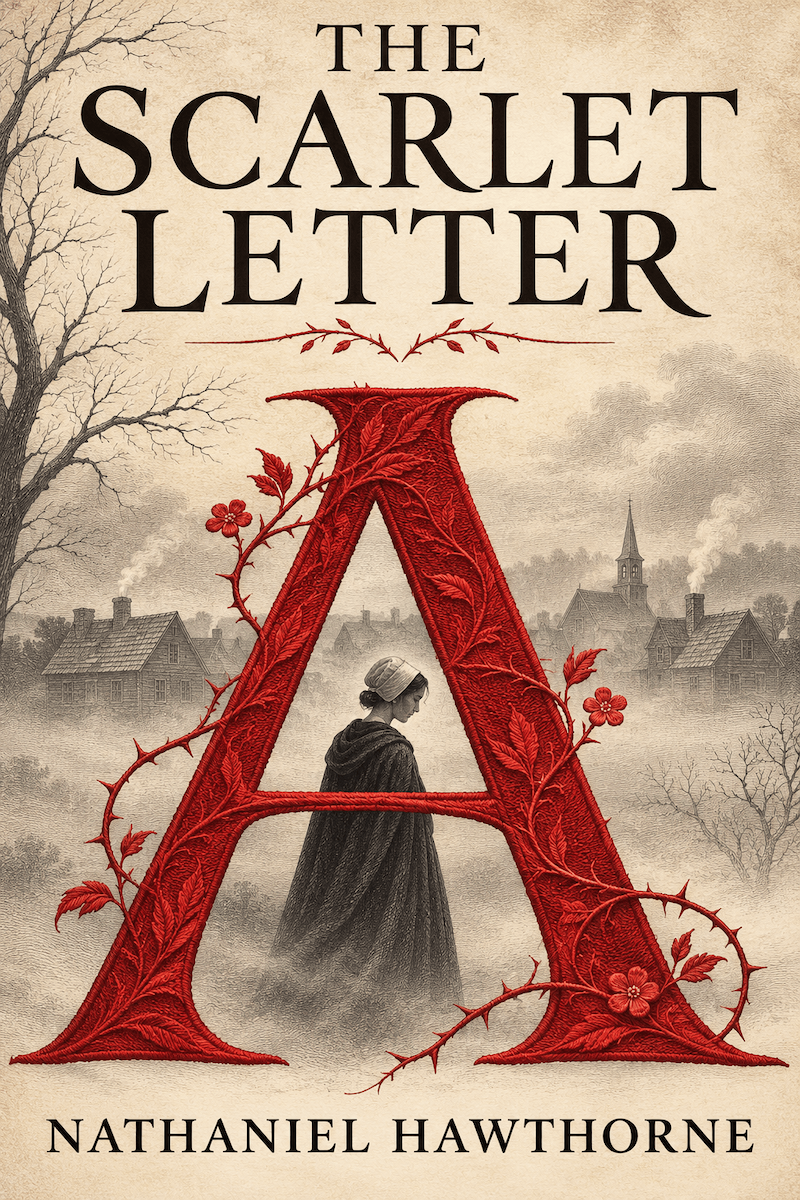
Prefer the print book? Buy on Amazon
As an Amazon Associate, Sumizeit earns from qualifying purchases.
Book Summary
The Scarlet Letter Book Summary
This The Scarlet Letter Book Summary covers the key ideas, lessons, and takeaways in about 20 minutes.
Short Description:
A Puritan town brands Hester Prynne with a red A while her lover hides his guilt.
The Scarlet Letter is about what hidden guilt does to a person compared with guilt that is carried in the open. Hester's sin is pinned to her chest for everyone to see, and it is brutal. But because she has nothing left to hide, she is free to become herself. She grows stronger and kinder, and she comes to think more freely than anyone around her. In the end she turns a badge of shame into something people respect. Dimmesdale commits the same sin and hides it. He is admired by the whole town, and the secret eats him alive from the inside. Chillingworth, who was the wronged party, turns out worst of all. He decides to live for revenge and it turns him into a fiend. Hawthorne's order of blame is clear. Passion is forgivable, hypocrisy destroys the one who practices it, and the coldest sin is to prey on another human heart on purpose. He is just as hard on the community that thinks it can fix a person by branding her. The lesson he states outright is to be true. I think the larger lesson is that the punishment the town chose did less to Hester than the secret did to Dimmesdale, and that what happened to each of the three depended on what they did with their guilt.
Helps with these goals
Preview the The Scarlet Letter book summary
Below is a preview of Sumizeit’s comprehensive human-written summary of The Scarlet Letter by Nathaniel Hawthorne. The full summary is 15-20 minutes long and covers the book’s key ideas in text, audio, visual, and video formats. Unlock the full 20 Minute Summary
The book does not start with Hester Prynne. It starts with a long, half comic sketch in which Hawthorne describes his own job as Surveyor of the Custom House in Salem, Massachusetts. It is a sleepy government office on a decaying wharf, staffed by old men who doze in their chairs and retell the same stories. One of them, the Inspector, seems to remember nothing in his long life except the dinners he ate. Hawthorne is fond of them and also bored out of his mind. He feels his imagination going dull.
He also talks about his roots. His family has been in Salem for two centuries. His earliest ancestor there was a stern Puritan who persecuted Quakers, and that man's son was a judge in the witch trials. Hawthorne imagines these grim forefathers looking at him, a writer of storybooks, with contempt. He feels their guilt hanging over the family, and he says he takes the shame of it on himself.
One rainy day, poking through old papers on the upper floor, he finds a small package left by a surveyor from a century earlier. Inside is a piece of fine red cloth, worn and faded, shaped like the capital letter A and stitched with gold thread. When he holds it against his chest he feels a burning heat, as if it were red hot iron. With it are a few sheets of paper outlining the life of a woman named Hester Prynne, who lived in Boston in the 1600s.
Then Hawthorne loses his job when a new political party takes office. He jokes that he has been beheaded. Being fired frees him to write, and the story he writes is the one he found in the attic. The whole frame is invented, of course. It still tells us what kind of book is coming. It is about Puritan guilt, and the man telling it feels he has inherited some of that guilt.
The prison door
The story opens in Boston in the 1640s, about twenty years after the town was founded. A crowd in dull colored clothes stands in front of a heavy wooden door studded with iron spikes. Hawthorne notes dryly that the founders of every new colony, whatever utopia they have in mind, quickly find they need two things, a cemetery and a prison.
Beside that ugly door grows a wild rose bush, covered in June blossoms. Hawthorne suggests it might offer a little beauty and pity to the prisoner going in or the condemned coming out. He picks one flower and offers it to the reader, as something sweet to carry through a dark tale.
Hester on the scaffold
The crowd is waiting to see a woman punished. The women are the harshest. One says the adulteress should have been branded on the forehead. Another says she should die, since both Scripture and the law allow it.
Want the complete 20-minute summary?
- Full structured summary
- Video Summary
- Podcast Summary
- Audio summary
- Key takeaways
- Exercises
- Quiz
- Highlights and notes
- Ask the book with AI
Who should read The Scarlet Letter?
The Scarlet Letter speaks to anyone interested in understanding how guilt, shame, and secrecy shape human lives and communities. It's essential reading for students of American literature, those exploring Puritan history and legacy, and anyone grappling with questions about hypocrisy, redemption, and the cost of hiding one's true self. Readers drawn to psychological depth and moral complexity will find Hawthorne's exploration of hidden versus public sin profoundly relevant.
Why does The Scarlet Letter matter?
Published in 1850, The Scarlet Letter remains a cornerstone of American literature that probes timeless themes about judgment, authenticity, and social control. Hawthorne's nuanced examination of how communities punish and shame individuals speaks directly to modern concerns about cancel culture, surveillance, and the gap between public reputation and private reality. The novel challenges simplistic notions of sin and punishment while exposing how secrecy and denial can be more destructive than honest confession.
What are the key themes in The Scarlet Letter?
- The destructiveness of hidden guilt versus open shame
- Hypocrisy and the gap between public image and private truth
- Revenge and its corrosive effect on the avenger
- Women's constrained roles in Puritan society
- The power of community judgment and social ostracism
- Redemption through confession and authenticity
How can you apply ideas from The Scarlet Letter?
- Examine your own life for areas where you're hiding parts of yourself and consider the emotional cost of that concealment versus the risk of revelation
- Notice when you're performing a role in society and reflect on how that role constrains your authentic choices and relationships
- Practice radical honesty in at least one trusted relationship and observe how vulnerability affects intimacy and understanding
- When you feel judged by others, consider whether their judgment reveals more about their own hidden guilts than about you
- If you're tempted toward revenge, trace the likely long-term effects on your own character rather than focusing solely on punishing the other person
- Reflect on how your community or social group punishes certain 'marked' individuals and ask whether that punishment reveals collective hypocrisy
- Consider how you might transform a personal shame or failure into a source of wisdom and authority, as Hester eventually does
What common mistakes do readers make with The Scarlet Letter?
- Viewing the novel primarily as a critique of Puritanism rather than recognizing its insights about human nature apply to any society focused on appearance and control
- Assuming Hester is simply a victim rather than recognizing her agency in choosing to stay, to work, and eventually to reclaim her letter's meaning
- Reading Dimmesdale's confession as redemption rather than recognizing his refusal to promise reunion with Hester suggests his faith in punishment remains unchanged
- Overlooking Chillingworth's transformation as a minor subplot rather than understanding it as Hawthorne's fullest exploration of how revenge destroys the avenger
- Treating Pearl as merely symbolic rather than seeing her as a fully realized character whose wild nature reflects her parents' repressed authenticity
Sumizeit Exercises Apply what you've learned
Turn ideas from The Scarlet Letter into action with a short guided reflection: identify the biggest takeaway, connect it to your life, and commit to one step you can take in the next 24 hours.
What is the expert analysis of The Scarlet Letter?
Overview
The Scarlet Letter, penned by Nathaniel Hawthorne in 1850, stands as a seminal work in American literature, notable for its profound exploration of sin, guilt, and societal judgment within the rigid Puritanical context of 17th-century New England. Hawthorne’s own ancestral ties to Salem’s Puritan past, including a judge in the witch trials, infuse the novel with a deeply personal and historical resonance. This novel not only established Hawthorne’s literary reputation but also remains a critical touchstone for understanding the moral complexities and psychological underpinnings of individual and communal identity in early America.
Core Thesis
At its core, The Scarlet Letter interrogates the corrosive effects of hidden guilt versus public shame. Hawthorne contrasts the lives of Hester Prynne, who bears her sin openly, and Reverend Dimmesdale, who conceals his, to illustrate how transparency can lead to personal growth and resilience, while secrecy fosters self-destruction. The novel further critiques the Puritanical impulse to punish and brand individuals, suggesting that such external judgments are less damaging than the internal torment wrought by hypocrisy and vengeance. Ultimately, Hawthorne advocates for authenticity and moral truthfulness as essential to human dignity and redemption.
Strengths
- Psychological Depth: Hawthorne’s nuanced portrayal of Hester, Dimmesdale, and Chillingworth offers a rich psychological study of guilt, repentance, and revenge, transcending simple moral binaries.
- Symbolism and Imagery: The scarlet letter itself, the wild rose bush, and the forest serve as powerful symbols that deepen the thematic complexity and invite multiple interpretations regarding sin, nature, and societal constraint.
- Historical and Cultural Insight: The novel provides a vivid depiction of Puritan society, exposing its rigid moral codes and the often brutal consequences of communal judgment, which remain relevant to discussions of social conformity and individual freedom.
- Literary Craftsmanship: Hawthorne’s prose balances a somber tone with moments of poetic beauty and irony, enhancing the narrative’s emotional impact and philosophical reflection.
Critiques & Counterarguments
- Romanticized Morality: Some critics argue that Hawthorne’s portrayal of Hester as a proto-feminist freethinker may overstate her agency within a deeply oppressive society, glossing over the structural limitations imposed on women in the 17th century.
- Limited Historical Scope: The novel’s focus on Puritan New England, while historically rich, can feel narrow, potentially neglecting broader colonial and indigenous perspectives that complicate the narrative’s moral universe.
- Psychological Ambiguities: Dimmesdale’s secret suffering and ultimate public confession, while dramatically effective, invite debate about the efficacy of confession and repentance—some psychological research suggests that public exposure of guilt does not uniformly lead to healing.
- Opposing Views on Punishment: Contemporary penal theory and restorative justice models might challenge Hawthorne’s implicit critique of public shaming, arguing that community accountability, when handled with care, can be rehabilitative rather than purely punitive.
- Chillingworth’s Characterization: The depiction of Chillingworth as almost diabolical in his vengefulness risks reducing complex human motivations to a simplistic embodiment of evil, potentially limiting a more nuanced understanding of revenge and forgiveness.
Who Should Read This
The Scarlet Letter is essential reading for scholars and enthusiasts of American literature, psychology, and moral philosophy. It appeals to those interested in the intersections of individual conscience and societal norms, the historical roots of American identity, and the enduring human struggles with shame, secrecy, and redemption. Additionally, readers invested in feminist literary critique and the evolution of social justice concepts will find Hawthorne’s work a fertile ground for reflection and debate.
Discussion questions for The Scarlet Letter Short questions you can actually use in a conversation
Frequently asked questions about the The Scarlet Letter book summary
What is The Scarlet Letter about?
The Scarlet Letter, published by Nathaniel Hawthorne in 1850, tells the story of Hester Prynne, a woman forced to wear a scarlet letter A as punishment for adultery in Puritan Boston. The novel explores how Hester's openly displayed shame allows her to eventually grow into moral authority, while Arthur Dimmesdale, the father of her child who keeps his sin secret, is slowly destroyed by guilt and the revenge of her estranged husband, Roger Chillingworth.
Who should read The Scarlet Letter?
The Scarlet Letter appeals to students of American literature, anyone interested in historical fiction set in Puritan New England, and readers seeking psychological depth and moral complexity. It's essential for understanding the American literary canon and speaks to modern readers concerned with hypocrisy, shame, authenticity, and how communities judge and punish individuals.
What are the main takeaways from The Scarlet Letter?
The primary takeaway is that hidden guilt destroys more thoroughly than public shame. Hawthorne shows how Hester's open sin allows her to build genuine growth and moral authority, while Dimmesdale's secret eats him alive from within. A second key lesson is that revenge and hypocrisy are ultimately self-destructive, particularly for Chillingworth and Dimmesdale respectively. The novel ultimately argues for authenticity: be true and show the world at least some honest sign of yourself.
How does Hawthorne treat the concept of sin and punishment?
Hawthorne rejects the idea that visible punishment removes guilt or achieves redemption. He portrays the scarlet letter as painful but ultimately clarifying, while he shows that the town's punishment system reveals the community's own hidden sins. He suggests that true atonement requires honesty rather than external shame, and that some sins—particularly calculated revenge—are colder and more destructive than passionate transgressions.
What is the significance of the forest in The Scarlet Letter?
The forest represents a space outside Puritan law and social control where characters can speak truths and make authentic choices. It's where Hester and Dimmesdale briefly abandon their masks and plan escape, and where Mistress Hibbins meets supernatural forces. The forest symbolizes the wild, authentic nature that cannot be fully tamed by human society and law, in contrast to the constrained marketplace.
What happens to Pearl at the end of The Scarlet Letter?
Pearl disappears after her father's death, but Hawthorne hints she marries well and lives happily across the sea, eventually sending letters with noble seals and gifts home to her mother. This suggests that Pearl, who refused to be bound by her parents' shame or Puritan constraints, escapes to a freer life where she can be fully human rather than merely symbolic.
How does Hester's understanding of the scarlet letter change throughout the novel?
Initially, Hester experiences the scarlet letter as pure shame and punishment forced upon her by the magistrates. Over time, she recontextualizes it through her own suffering and moral growth, eventually choosing to wear it voluntarily as a symbol of her hard-won wisdom. By the end, the townspeople read it as standing for Able rather than Adultery, and women in trouble come to her for counsel, transforming the mark from stigma into authority.
About Sumizeit
Sumizeit is a profitable Scomy LLC company based in Miami, Florida. Our founders, Clemens Raemy and Weina Scott, are successful entrepreneurs with several exits. Sumizeit is a popular book summary app / micro learning app used by busy professionals and entrepreneurs with over 2,500 non-fiction book summaries and 10,000 podcast summaries in text, audio, visual, podcast, and video format. We also have stellar retention tools to make ideas stick - such as flashcards with spaced repetition, quizzes, streaks, highlighting and notes, daily challenges, riddles, mini-courses, meditation, and more. You won't only learn the idea, but also remember it. Over 90% of our users change their habits with Sumizeit.
Upgrade Now
Here's why readers love Sumizeit
Join thousands of learners getting smarter every day
"Great experience. Detailed summaries. Loved the gamification feature. Makes learning fun. Good customer service. I recommend Sumizeit to anyone. You'll learn a lot."
"I always felt busy but still wanting to keep up with the book discussion in my friend group. This was a great supplement to help me keep reading the books I find fun while keeping up with important books."
"I love this website. Instead of scrolling social media, I find myself learning a lot. I use it everyday. I recommend this app for anyone who is too busy and wants to get up to speed with their favorite books."
The Scarlet Letter Book Summary PDF
Looking for a The Scarlet Letter Book Summary PDF you can save and revisit offline? Our The Scarlet Letter Book Summary PDF captures the book’s core ideas in a clean, printable format — the key frameworks, takeaways, and structure without the fluff. Download the The Scarlet Letter Book Summary PDF when you want a reference you can annotate, share with your team, or review on the go. Get your The Scarlet Letter Book Summary PDF from the download page below.
Download The Scarlet Letter Book Summary PDFPeople also liked these summaries
Readers who explored The Scarlet Letter often enjoyed these titles next.





Ready to read the whole thing?
- Full structured summary
- Video Summary
- Podcast Summary
- Audio summary
- Key takeaways
- Exercises
- Quiz
- Highlights and notes
- Ask the book with AI
Featured Book Titles
Popular Book Summaries at sumizeit, leading book summary app
Atomic Habits Book Summary Rich Dad Poor Dad Book Summary The Four Agreements Book Summary The 48 Laws of Power Book Summary When Breath Becomes Air Book Summary Think and Grow Rich Book Summary