


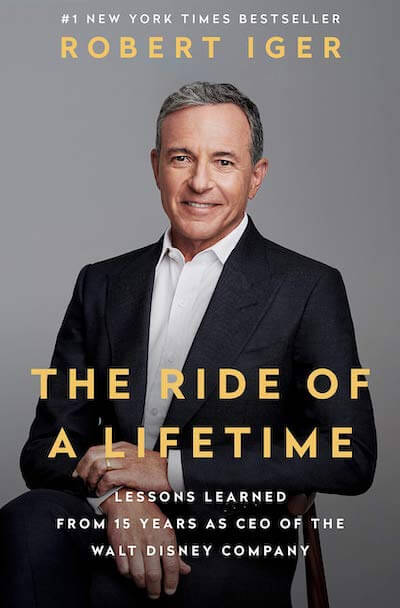
Prefer the print book? Buy on Amazon
As an Amazon Associate, Sumizeit earns from qualifying purchases.
The Ride of a Lifetime Book Summary
This The Ride of a Lifetime Book Summary covers the key ideas, lessons, and takeaways in about 20 minutes.
The Ride of a Lifetime shows how innovation and leadership drive success.
Helps with these goals
Want the complete 20-minute summary?
- Full structured summary
- Video Summary
- Podcast Summary
- Audio summary
- Infographic
- Key takeaways
- Exercises
- Quiz
- Highlights and notes
- Ask the book with AI
Want a Free Weekly Read?
Get a free summary every week straight to your mailbox.
Preview the The Ride of a Lifetime book summary
Below is a preview of Sumizeit’s comprehensive human-written summary of The Ride of a Lifetime by Robert Iger. The full summary is 15-20 minutes long and covers the book’s key ideas in text, audio, visual, and video formats. Unlock the full 20 Minute Summary
“If you don’t innovate, you die”. Roone Arledge
Powerful words with an intense message: without innovation, you have nothing. These are the words Robert Iger lives by, and in The Ride of a Lifetime, he chronicles how innovation was the key to his many successes. Through his story from his humble beginnings at ABC’s Small Production Services Department to being offered the job of CEO at Disney and rebuilding the company, he demonstrates how innovation, risk-taking, quality leadership, and a few other things can lead to massive success.
Curiosity is important, but fear can be too
Iger credits the development of his curiosity to his father. His dad, a gifted graduate from Wharton business school who was later diagnosed with manic depression, was a complex figure. Though he was prone to intense self-doubt and dark moods, he also had many interests, which he passed on to his son. The shelves of his childhood home were lined with books by Faulkner and Hemingway, and his father engaged him in many political discussions. His father once told him he didn’t care what he was doing with his spare time, as long as it was productive. Along with a sense of curiosity, he also was afraid of living with the sense of failure which haunted his father. This is where much of his drive came from his fear. He didn’t want to have the feelings his father did, and that drove much of his success.
You never know when you’ll get your lucky break
Iger landed a job working for ABC. His uncle Bob was hospitalized in the 1970’s. He shared his room with an executive from ABC. This low-level executive wanted to impress Bob, and successfully wowed him with grandiose tales of his work. Bob called him up later letting him know his 22-year-old nephew was looking for a job. The executive got him an interview at ABC Small Production Services department. The job was low level, but Iger worked hard. He was eventually hired to work for ABC Sports. This dramatic change meant expensive lunches, expensive clothes, and rubbing shoulders with famous people. Here he got another lesson about innovation from a pioneering sports journalist Roone Arledge, who told him, “The only way to survive in business is to stay one step ahead of the curve.”
Making the right decision at “inflection points” can make or break your career
In 1985, at 34 years old, Iger was made vice president of ABC Sports. That year, Capital Cities Communications bought ABC. They stripped lots of perks, but Iger wasn’t concerned about that, instead his concern was centered around an outsider being hired to head up the network. He was given the decision to leave his current job or to stay and eventually become the senior vice president of programming. He chose to stay. This decision influenced his future heavily, ending with him becoming the president of ABC’s entire entertainment division.
Want the complete 20-minute summary?
- Full structured summary
- Video Summary
- Podcast Summary
- Audio summary
- Infographic
- Key takeaways
- Exercises
- Quiz
- Highlights and notes
- Ask the book with AI
Who should read The Ride of a Lifetime?
The Ride of a Lifetime is for aspiring leaders, entrepreneurs, and business professionals who want to understand how to navigate corporate growth and seize strategic opportunities. It's especially valuable for anyone interested in media, entertainment, or large-scale acquisitions, as well as those seeking to develop the mindset and skills that drive transformational success.
Why does The Ride of a Lifetime matter?
In today's rapidly changing business landscape, Robert Iger's memoir offers timely lessons on innovation, strategic decision-making, and organizational transformation that remain relevant across industries. His experiences rebuilding Disney through bold acquisitions and cultural change provide a masterclass in how established companies can stay competitive and relevant in the digital age.
What are the key themes in The Ride of a Lifetime?
- Innovation as a survival mechanism in business
- Humility and continuous learning in leadership
- Strategic decision-making at critical career inflection points
- Building and nurturing corporate culture
- The power of creative problem-solving under pressure
- Taking calculated risks with conviction
Want the complete 20-minute summary?
- Full structured summary
- Video Summary
- Podcast Summary
- Audio summary
- Infographic
- Key takeaways
- Exercises
- Quiz
- Highlights and notes
- Ask the book with AI
How can you apply ideas from The Ride of a Lifetime?
- Apply Iger's curiosity-driven approach by reading widely, asking questions, and staying informed about industry trends and emerging technologies
- Evaluate critical career inflection points by assessing whether staying or moving will better position you for long-term growth and learning
- Use creative problem-solving frameworks when facing unexpected crises, looking for unconventional solutions that existing plans don't cover
- Develop strategic clarity in your proposals and pitches by articulating where you are, where you're going, and specifically how you'll get there
- Audit your organization's decision-making processes to identify where bureaucracy blocks innovation and streamline approval pathways
- Build strategic relationships and alliances that can vouching for you and open doors in high-stakes negotiations
- Establish a personal leadership practice of asking questions, showing up for meetings, and solving people's problems to build trust and model your desired culture
What common mistakes do readers make with The Ride of a Lifetime?
- Assuming innovation happens through grand gestures rather than continuous, incremental improvements and adaptation to new circumstances
- Failing to stay prepared for unexpected opportunities because you're too focused on your current role and not developing broader skills
- Making major career decisions based on short-term comfort (perks, salary) rather than long-term strategic positioning and learning potential
- Presenting ideas without sufficient research and preparation, which weakens credibility even if the core idea has merit
Sumizeit Exercises Apply what you've learned
Turn ideas from The Ride of a Lifetime into action with a short guided reflection: identify the biggest takeaway, connect it to your life, and commit to one step you can take in the next 24 hours.
What is the expert analysis of The Ride of a Lifetime?
Overview
The Ride of a Lifetime is a compelling memoir and leadership manifesto by Robert Iger, the transformative CEO of The Walt Disney Company. Iger’s tenure at Disney is marked by bold acquisitions, strategic innovation, and a revitalization of the company’s creative and cultural capital. His journey from a modest role at ABC to the helm of one of the world’s most influential entertainment conglomerates offers a rare insider’s perspective on corporate leadership, innovation, and risk-taking in the high-stakes media industry. The book stands out not merely as a business autobiography but as a nuanced exploration of how visionary leadership can reshape an entire industry.
Core Thesis
Iger’s central argument is that innovation, combined with courageous decision-making and empathetic leadership, is the essential driver of sustained success in business. He posits that remaining ahead of the curve—embracing creative problem-solving, taking calculated risks, and fostering a culture that values curiosity and humility—is critical to navigating the complex challenges of modern corporate life. The memoir underscores the importance of “inflection points,” moments requiring decisive action that can define a career or a company’s trajectory. Ultimately, Iger advocates for leadership grounded in conviction but tempered by openness and continuous learning.
Strengths
- Authentic Leadership Insight: Iger’s candid reflections on his personal motivations, including the influence of his father and his own fears, lend the narrative emotional depth and authenticity uncommon in corporate memoirs.
- Strategic Acumen: The detailed recounting of landmark decisions—such as acquiring Pixar, Marvel, and 21st Century Fox—illustrates the complexity and foresight involved in reshaping Disney’s portfolio and global reach.
- Integration of Innovation and Culture: The book effectively links innovation with corporate culture, demonstrating how bureaucratic inertia can stifle creativity and how leadership can revitalize an organization’s spirit.
- Engaging Storytelling: Iger’s narrative is enriched by vivid anecdotes, such as the “crazy idea” to buy Pixar and the risk of greenlighting unconventional programming, which humanize the abstract principles of business strategy.
- Balanced View of Leadership: By contrasting exemplary leaders with ineffective ones, Iger provides a nuanced understanding of what leadership entails beyond mere authority or vision.
Critiques & Counterarguments
- Selective Narrative and Hindsight Bias: As with many executive memoirs, the book tends to present a polished version of events, emphasizing successes while glossing over failures or the contributions of others. This can create an overly linear and deterministic portrayal of complex business outcomes.
- Overemphasis on Individual Agency: Iger’s focus on personal leadership and decision-making may understate systemic factors, such as market conditions, team dynamics, or the broader entertainment ecosystem, that also shaped Disney’s trajectory.
- Innovation as a Panacea: The book’s framing of innovation as the singular key to survival risks oversimplification. Competing research in organizational theory suggests that sustainable success often requires balancing innovation with operational excellence, risk management, and incremental improvement.
- Limited Critical Engagement with Corporate Power: While celebrating Disney’s expansion, the memoir does not substantially address the cultural and ethical implications of media consolidation, including concerns about market dominance, diversity, and creative autonomy.
- Contrasting Leadership Models: Alternative leadership philosophies, such as servant leadership or distributed leadership models, might challenge Iger’s emphasis on conviction and top-down decision-making, advocating instead for more collaborative and inclusive approaches.
Who Should Read This
The Ride of a Lifetime is essential reading for executives, entrepreneurs, and aspiring leaders who seek a masterclass in strategic vision and innovation within a complex, creative industry. It will particularly resonate with those interested in media, entertainment, and corporate turnarounds. Additionally, readers fascinated by the interplay of personal psychology and professional success will find Iger’s introspective style illuminating. However, those looking for a rigorous critique of corporate practices or a deep dive into organizational theory may need to supplement this memoir with more analytical texts.
Frequently asked questions about the The Ride of a Lifetime book summary
What is The Ride of a Lifetime about?
The Ride of a Lifetime by Robert Iger is a memoir chronicling his rise from a low-level job at ABC to becoming CEO of Disney. The book explores how innovation, strategic decision-making, risk-taking, and quality leadership enabled Iger to transform Disney through major acquisitions like Pixar and Marvel, while sharing lessons about navigating career inflection points and building a culture of creative problem-solving.
Who should read The Ride of a Lifetime?
The Ride of a Lifetime is ideal for aspiring leaders, entrepreneurs, business professionals, and anyone interested in media and entertainment. It's particularly valuable for those seeking to understand strategic corporate transformation, learn how to seize career opportunities, develop better leadership practices, or gain insight into how major business acquisitions are negotiated and integrated.
What are the main takeaways from The Ride of a Lifetime?
Key takeaways include the vital importance of continuous innovation for business survival, the power of strategic thinking at critical career moments, the value of humility and questions in leadership, and how bold decision-making combined with thorough research can transform struggling organizations. Iger also demonstrates that corporate culture directly impacts innovation, and that seemingly radical ideas often hold the solutions to impossible problems.
How did Robert Iger become CEO of Disney?
Iger rose through the ranks at ABC and Capital Cities/ABC before joining Disney as head of the media division. He was eventually promoted to COO, positioning himself as the heir apparent to CEO Michael Eisner. When shareholder revolt forced Eisner's departure, Iger won the board's approval to become CEO by presenting a clear strategic plan that outlined where Disney was, where it needed to go, and exactly how it would get there.
What was Iger's first major decision as Disney CEO?
Iger's first major priority was resolving the strained relationship between Disney and Pixar, which was critical to Disney's creative future. Rather than accepting Pixar's unfavorable profit-sharing offer, Iger proposed that Disney acquire Pixar outright. Steve Jobs initially paused at the idea, then said it wasn't such a crazy idea after all, and the deal closed in early 2006, fundamentally revitalizing Disney's film division.
What acquisitions did Robert Iger make while CEO of Disney?
Under Iger's leadership, Disney acquired Pixar (2006) for $7.4 billion, Marvel Entertainment (2009) for $4 billion, Lucasfilm (2012) for $4.06 billion, and 21st Century Fox (2019) for $71.3 billion. Each acquisition was strategically designed to expand Disney's intellectual property portfolio, creative capabilities, and global market presence.
How did Robert Iger's early life influence his leadership style?
Iger's father, a Wharton graduate prone to self-doubt and depression, instilled curiosity and intellectual engagement in young Robert while also modeling the struggle with failure that Iger feared repeating. This combination of intellectual curiosity and fear of failure became driving forces that pushed Iger to excel, take strategic risks, and continuously innovate throughout his career.
What does Iger say about corporate culture in The Ride of a Lifetime?
Iger demonstrates that corporate culture is not merely a nice-to-have but directly impacts innovation and employee morale. His five unproductive years at Disney under a bureaucratic approval system and poor leadership showed how toxic culture stifles creativity, while his later success proved that removing barriers and fostering trust and engagement dramatically accelerates organizational performance and attracts top talent.
About Sumizeit
Sumizeit is a profitable Scomy LLC company based in Miami, Florida. Our founders, Clemens Raemy and Weina Scott, are successful entrepreneurs with several exits. Sumizeit is a popular book summary app / micro learning app used by busy professionals and entrepreneurs with over 2,500 non-fiction book summaries and 10,000 podcast summaries in text, audio, visual, podcast, and video format. We also have stellar retention tools to make ideas stick - such as flashcards with spaced repetition, quizzes, streaks, highlighting and notes, daily challenges, riddles, mini-courses, meditation, and more. You won't only learn the idea, but also remember it. Over 90% of our users change their habits with Sumizeit.
Upgrade Now
Want the complete 20-minute summary?
- Full structured summary
- Video Summary
- Podcast Summary
- Audio summary
- Infographic
- Key takeaways
- Exercises
- Quiz
- Highlights and notes
- Ask the book with AI
Here's why readers love Sumizeit
Join thousands of learners getting smarter every day
"Great experience. Detailed summaries. Loved the gamification feature. Makes learning fun. Good customer service. I recommend Sumizeit to anyone. You'll learn a lot."
"I always felt busy but still wanting to keep up with the book discussion in my friend group. This was a great supplement to help me keep reading the books I find fun while keeping up with important books."
"I love this website. Instead of scrolling social media, I find myself learning a lot. I use it everyday. I recommend this app for anyone who is too busy and wants to get up to speed with their favorite books."
The Ride of a Lifetime Book Summary PDF
Looking for a The Ride of a Lifetime Book Summary PDF you can save and revisit offline? Our The Ride of a Lifetime Book Summary PDF captures the book’s core ideas in a clean, printable format — the key frameworks, takeaways, and structure without the fluff. Download the The Ride of a Lifetime Book Summary PDF when you want a reference you can annotate, share with your team, or review on the go. Get your The Ride of a Lifetime Book Summary PDF from the download page below.
Download The Ride of a Lifetime Book Summary PDFPeople also liked these summaries
Readers who explored The Ride of a Lifetime often enjoyed these titles next.




Want the complete 20-minute summary?
- Full structured summary
- Video Summary
- Podcast Summary
- Audio summary
- Infographic
- Key takeaways
- Exercises
- Quiz
- Highlights and notes
- Ask the book with AI
Featured Book Titles
Popular Book Summaries at sumizeit, leading book summary app