
Question 1 of 10


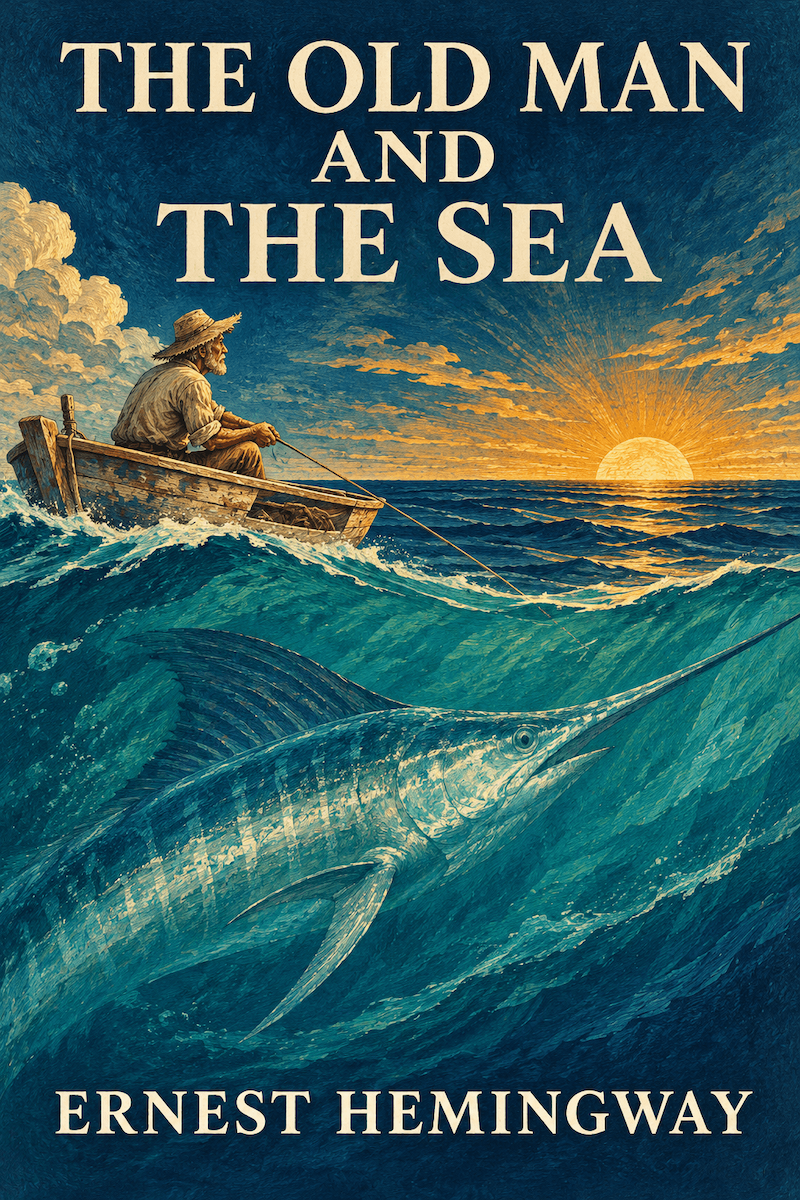
Prefer the print book? Buy on Amazon
As an Amazon Associate, Sumizeit earns from qualifying purchases.
Book Summary
The Old Man and the Sea Book Summary
This The Old Man and the Sea Book Summary covers the key ideas, lessons, and takeaways in about 20 minutes.
Short Description:
An old Cuban fisherman hooks the marlin of his life and fights to bring it home.
The Old Man and the Sea is about what winning means when the world takes the prize away. On paper Santiago loses everything. He comes home after three days with ruined hands and a skeleton he cannot sell. But he did the thing itself. He went farther out than anyone, hooked the greatest fish of his life, and stayed with it for two days and nights, and he killed it with skill and with respect. The sharks could take the meat. They could not undo any of that, and the fishermen measuring eighteen feet of bone in the shallows know it. That is the difference Hemingway draws between being destroyed and being defeated. Things outside your control can wreck the result, but whether you gave in is up to you. The book is honest about the cost too. Santiago admits he went out too far, and his pride is part of what cost him the fish. What I find most moving is the ending, because the reward he does get is the boy coming back, and with him the chance to pass on what he knows and go out again.
Helps with these goals
Preview the The Old Man and the Sea book summary
Below is a preview of Sumizeit’s comprehensive human-written summary of The Old Man and the Sea by Ernest Hemingway. The full summary is 15-20 minutes long and covers the book’s key ideas in text, audio, visual, and video formats. Unlock the full 20 Minute Summary
Santiago is an old Cuban fisherman who works alone in a small skiff in the Gulf Stream. When the book opens he has gone eighty four days without catching anything. For the first forty of those days a boy named Manolin fished with him. Then the boy's parents decided the old man was salao, which is the worst kind of unlucky, and ordered their son onto another boat. That boat landed three good fish in its first week.
The boy hates the arrangement. Every evening he still walks down to meet the empty skiff and helps carry the gear up the beach. There are the coiled lines, the gaff, the harpoon, and the mast with its sail wrapped around it. The sail is patched with flour sacks, and Hemingway says that furled up it looks like the flag of permanent defeat.
Santiago himself looks worn down to the frame. He is thin, with deep creases in the back of his neck and brown blotches on his cheeks from years of sun bouncing off the water. His hands carry old scars from hauling heavy fish on hand lines. Everything about him is old except his eyes. They are the color of the sea, and they are cheerful and unbeaten. That one detail tells you who he is before he says a word.
The old man and the boy
The first part of the book stays on land, and it is really about a friendship. Manolin buys Santiago a beer at the Terrace, the cafe where the fishermen gather. The younger men there laugh at the old man. The older ones look at him and feel sad, and they talk politely about currents and the weather instead.
Santiago taught the boy to fish, starting when Manolin was five. The boy remembers nearly being killed that first trip when the old man pulled a fish into the boat while it still had too much fight in it. He wants to come back and fish with him. Santiago tells him to stay with the lucky boat. The boy reminds him that they once went eighty seven days with nothing and then caught big fish every day for three weeks.
They walk up to Santiago's shack, which is one room built from palm with a dirt floor, a bed, a table, and a chair. On the wall hang two religious pictures that belonged to his wife. Her photograph used to hang there too, but he took it down because looking at it made him too lonely.
The two of them have a little ritual. The boy asks what there is for supper, and Santiago says a pot of yellow rice with fish. The boy asks to borrow the cast net. There is no rice and no fish, and the net was sold long ago. They both know it, and they go through the lines anyway. It is how they protect the old man's pride.
Want the complete 20-minute summary?
- Full structured summary
- Video Summary
- Podcast Summary
- Audio summary
- Key takeaways
- Exercises
- Quiz
- Highlights and notes
- Ask the book with AI
Who should read The Old Man and the Sea?
The Old Man and the Sea speaks to anyone seeking to understand the nature of human dignity, perseverance, and what it truly means to win. Whether you are drawn to literary classics, stories of struggle against impossible odds, or philosophical explorations of pride and purpose, this novella offers timeless wisdom. It resonates particularly with readers who value craftsmanship, solitude, and the quiet victories that go unrecognized by the world.
Why does The Old Man and the Sea matter?
Ernest Hemingway's masterpiece redefines what success and failure mean in a world that often judges us by external outcomes alone. Published in 1952, it won the Pulitzer Prize and helped secure Hemingway's Nobel Prize in Literature, yet its insights remain urgently relevant today. In an age obsessed with measurable results and social validation, this book insists that true victory lies in the effort itself, the choices we make, and how we conduct ourselves when no one is watching.
What are the key themes in The Old Man and the Sea?
- Perseverance against overwhelming odds
- The difference between being destroyed and being defeated
- Dignity, pride, and human worth beyond material success
- The bond between mentor and student
- Man's relationship with nature and the sea
- Solitude, loneliness, and the need for human connection
- Craftsmanship and excellence as moral acts
How can you apply ideas from The Old Man and the Sea?
- Define success for yourself based on effort and integrity rather than external outcomes, so you remain undefeated even when circumstances change
- Invest time in preparation and mastery of your craft, knowing that readiness allows you to seize opportunities when they arrive
- Acknowledge and respect the difficulty and worth in what you face, whether a competitor, a project, or a challenge, to deepen your commitment and performance
- Cultivate solitude deliberately to understand your true character and values without the influence of others' judgments or expectations
- Build mentoring relationships where you both teach and learn, recognizing that growth and meaning come through connection and knowledge-sharing
- Practice speaking aloud about your work and struggles to maintain presence, focus, and dialogue with what matters to you
- Reflect regularly on your mistakes and how your own choices contributed to outcomes, taking honest responsibility without self-deception
What common mistakes do readers make with The Old Man and the Sea?
- Equating external loss with personal failure, leading to shame and self-doubt when results disappoint despite worthy effort
- Waiting passively for opportunity rather than preparing meticulously so you are ready when fortune arrives
- Viewing competitors or obstacles as enemies to destroy rather than worthy opponents whose difficulty makes the struggle meaningful
- Isolating yourself from mentorship and companionship, believing you must face challenges entirely alone to prove your worth
Sumizeit Exercises Apply what you've learned
Turn ideas from The Old Man and the Sea into action with a short guided reflection: identify the biggest takeaway, connect it to your life, and commit to one step you can take in the next 24 hours.
What is the expert analysis of The Old Man and the Sea?
Overview
The Old Man and the Sea stands as one of Ernest Hemingway's most celebrated works, emblematic of his distinctive literary style and thematic preoccupations. Written by Hemingway, a towering figure of 20th-century American literature, this novella encapsulates his mastery of economy in prose and deep engagement with themes of endurance, dignity, and the human condition. Published in 1952, it not only revitalized Hemingway’s career but also secured him the Pulitzer Prize and contributed to his Nobel Prize in Literature recognition. The narrative’s significance lies in its universal exploration of struggle and resilience, rendered through the intimate portrayal of Santiago, an aging Cuban fisherman, whose epic battle with a marlin transcends mere fishing to become a profound meditation on life, defeat, and triumph.
Core Thesis
At its core, The Old Man and the Sea advances the thesis that true victory is not measured solely by external success but by the integrity and perseverance one maintains in the face of inevitable loss. Santiago’s ordeal with the marlin illustrates a fundamental human truth: while external forces may strip away tangible rewards, the spirit’s refusal to succumb constitutes a moral and existential triumph. Hemingway juxtaposes physical defeat—Santiago’s return with only the fish’s skeleton—with an inner victory rooted in courage, skill, and an unyielding bond with nature. The novella thus asserts a nuanced distinction between being destroyed and being defeated, emphasizing that dignity and pride reside in the struggle itself, regardless of outcome.
Strengths
- Economy of Style: Hemingway’s signature terse and unadorned prose powerfully conveys complex emotional and philosophical themes without superfluity, allowing readers to engage deeply with the narrative’s symbolic layers.
- Universal Themes: The novella’s exploration of perseverance, pride, and the human relationship with nature resonates across cultures and epochs, offering timeless insights into human resilience.
- Characterization: Santiago is rendered with profound empathy and psychological depth, embodying both vulnerability and heroic steadfastness, which invites readers to reflect on aging, loneliness, and mentorship.
- Symbolism and Allegory: The marlin, the sea, and the sharks function as rich symbols, enabling multiple interpretive readings—from existential struggle to spiritual sacrifice—without didacticism.
- Emotional Impact: The narrative’s poignant ending, with the boy’s return and the passing of knowledge, offers a hopeful counterbalance to loss, underscoring themes of legacy and renewal.
Critiques & Counterarguments
- Oversimplification of Defeat: Some critics argue that Hemingway’s binary distinction between being destroyed and defeated simplifies the complex realities of failure and human frailty, potentially romanticizing suffering and stoicism.
- Limited Female Presence: The narrative’s near-exclusive focus on male characters and a traditionally masculine struggle has been critiqued for its marginalization of women and a narrow conception of heroism.
- Competing Philosophical Views: Existentialist thinkers like Albert Camus might contest Santiago’s acceptance of fate, advocating instead for rebellion against absurdity without resignation. Similarly, Eastern philosophies emphasizing harmony rather than struggle offer alternative interpretations of human-nature relations.
- Realism vs. Symbolism: While the novella’s symbolic richness is a strength, some readers may find the allegorical elements detract from the realism of the fishing experience, potentially distancing the narrative from authentic human conditions.
- Historical and Cultural Context: The depiction of Cuban fishermen and the Gulf Stream environment, while evocative, may lack nuanced socio-political context, glossing over broader economic and colonial realities affecting the characters’ lives.
Who Should Read This
The Old Man and the Sea is essential reading for those interested in literary explorations of human endurance and the philosophy of struggle. It appeals to readers who appreciate minimalist prose imbued with symbolic depth and are drawn to narratives that interrogate the nature of success and failure beyond material gain. Scholars and enthusiasts of 20th-century literature, existential philosophy, and classic American fiction will find this novella a rich text for analysis. Additionally, readers seeking inspiration in the face of personal adversity or those fascinated by the interplay between man and nature will find Santiago’s story profoundly moving and thought-provoking.
Discussion questions for The Old Man and the Sea Short questions you can actually use in a conversation
Frequently asked questions about the The Old Man and the Sea book summary
What is The Old Man and the Sea about?
The Old Man and the Sea by Ernest Hemingway tells the story of Santiago, an aging Cuban fisherman who sets out alone into the Gulf Stream and hooks the greatest marlin of his life. After a grueling three-day battle, he kills the fish but loses it to sharks on the journey home, returning with only the skeleton. The novella is ultimately about what victory and defeat mean when external circumstances strip away material rewards, and how dignity and character survive loss.
Who should read The Old Man and the Sea?
Anyone seeking to understand perseverance, dignity, and the true nature of human worth should read this classic. It appeals to readers interested in literary fiction, philosophical explorations of struggle and meaning, and stories of craftspeople or athletes who pursue excellence. It resonates with those who value solitude, mentorship, and understanding that victory is often invisible to the world.
What are the main takeaways from The Old Man and the Sea?
The central insight is that being destroyed by external circumstances is not the same as being defeated—defeat is a choice you make, while destruction is what the world does to you. Santiago demonstrates that true victory lies in the effort itself, in how you conduct yourself under pressure, and in remaining unbroken by what others cannot control. Finally, the book shows that the greatest reward is often not material success but human connection and the chance to pass on what you know to those you care about.
Why is The Old Man and the Sea still relevant today?
In an era obsessed with measurable success and social validation, Hemingway's novella insists that your worth is not determined by outcomes but by your effort, choices, and integrity. The book speaks to anyone facing overwhelming odds, loss, or the gap between effort and recognition, offering a philosophy of quiet dignity that applies to modern work, relationships, and personal challenge as much as it did in 1952.
What does Santiago's relationship with the boy teach us?
Their bond shows that mentorship and human companionship are more valuable than any material prize. Santiago's greatest suffering during his ordeal is loneliness, and his deepest joy at the end is not the fish but the boy's return and their promise to fish together again. The relationship reveals that meaning, purpose, and legacy come through teaching and connection rather than individual achievement.
Is The Old Man and the Sea a happy or sad ending?
The ending is both. Materially, Santiago has nothing to show for his effort but wounded hands and an empty skiff; tourists mistake the marlin skeleton for a shark's spine and understand nothing of what occurred. Yet spiritually, he has triumphed: he did the thing itself, he stayed with the fish, and he has regained the companionship of the boy. The book teaches that this invisible victory, known only to those who understand the sea and the fisherman's craft, is worth more than any prize the world recognizes.
What role does pride play in The Old Man and the Sea?
Pride is both Santiago's greatest strength and his critical weakness. His pride drives his excellence, keeps him going through suffering, and allows him to maintain dignity when circumstances strip everything else away. Yet his pride also compels him to go farther out than necessary, partly to prove something, which ultimately costs him the fish. Hemingway presents pride as an inescapable part of human nature that must be acknowledged, not hidden, to achieve both greatness and self-knowledge.
About Sumizeit
Sumizeit is a profitable Scomy LLC company based in Miami, Florida. Our founders, Clemens Raemy and Weina Scott, are successful entrepreneurs with several exits. Sumizeit is a popular book summary app / micro learning app used by busy professionals and entrepreneurs with over 2,500 non-fiction book summaries and 10,000 podcast summaries in text, audio, visual, podcast, and video format. We also have stellar retention tools to make ideas stick - such as flashcards with spaced repetition, quizzes, streaks, highlighting and notes, daily challenges, riddles, mini-courses, meditation, and more. You won't only learn the idea, but also remember it. Over 90% of our users change their habits with Sumizeit.
Upgrade Now
Here's why readers love Sumizeit
Join thousands of learners getting smarter every day
"Great experience. Detailed summaries. Loved the gamification feature. Makes learning fun. Good customer service. I recommend Sumizeit to anyone. You'll learn a lot."
"I always felt busy but still wanting to keep up with the book discussion in my friend group. This was a great supplement to help me keep reading the books I find fun while keeping up with important books."
"I love this website. Instead of scrolling social media, I find myself learning a lot. I use it everyday. I recommend this app for anyone who is too busy and wants to get up to speed with their favorite books."
The Old Man and the Sea Book Summary PDF
Looking for a The Old Man and the Sea Book Summary PDF you can save and revisit offline? Our The Old Man and the Sea Book Summary PDF captures the book’s core ideas in a clean, printable format — the key frameworks, takeaways, and structure without the fluff. Download the The Old Man and the Sea Book Summary PDF when you want a reference you can annotate, share with your team, or review on the go. Get your The Old Man and the Sea Book Summary PDF from the download page below.
Download The Old Man and the Sea Book Summary PDFPeople also liked these summaries
Readers who explored The Old Man and the Sea often enjoyed these titles next.




Ready to read the whole thing?
- Full structured summary
- Video Summary
- Podcast Summary
- Audio summary
- Key takeaways
- Exercises
- Quiz
- Highlights and notes
- Ask the book with AI
Featured Book Titles
Popular Book Summaries at sumizeit, leading book summary app
Atomic Habits Book Summary Rich Dad Poor Dad Book Summary The Four Agreements Book Summary The 48 Laws of Power Book Summary When Breath Becomes Air Book Summary Think and Grow Rich Book Summary