
Question 1 of 10


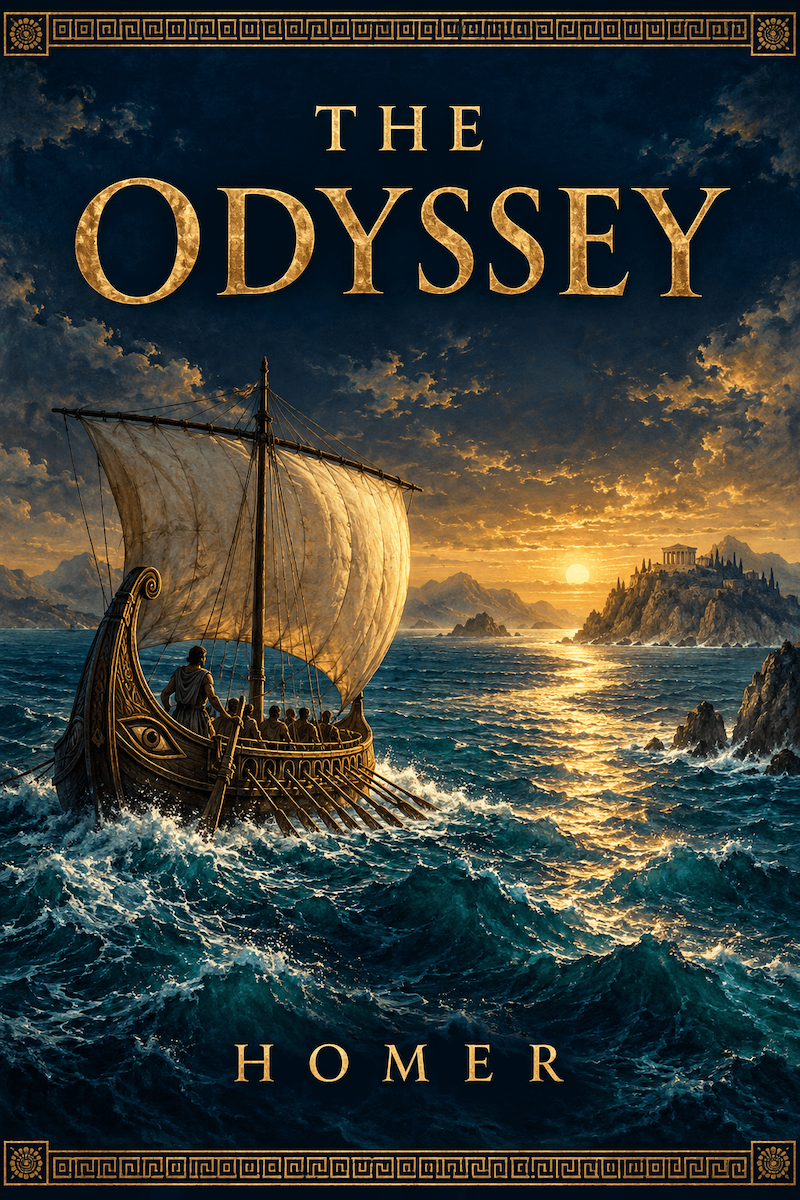
Prefer the print book? Buy on Amazon
As an Amazon Associate, Sumizeit earns from qualifying purchases.
Book Summary
The Odyssey Book Summary
This The Odyssey Book Summary covers the key ideas, lessons, and takeaways in about 20 minutes.
Short Description:
Homer’s epic about Odysseus finding his way home
The Odyssey is about the long road home, and what it takes to finish it. Odysseus is strong, but his real gift is patience and cleverness. He survives monsters, storms, and temptation by thinking before he acts, and he comes home only when he is ready to be himself again. The poem also shows that home is more than a place. It's a family, a marriage, and a set of loyalties that take work to keep. Penelope, Telemachus, and even a dog show that waiting and faith are a kind of courage too.
Helps with these goals
Preview the The Odyssey book summary
Below is a preview of Sumizeit’s comprehensive human-written summary of The Odyssey by Homer. The full summary is 15-20 minutes long and covers the book’s key ideas in text, audio, visual, and video formats. Unlock the full 20 Minute Summary
The Odyssey picks up after the Trojan War is over. Odysseus, the clever king of Ithaca, spent ten years fighting at Troy. Then he spent another ten trying to get home. When the poem opens, he is still gone, and he is stuck on a faraway island, held there by a goddess who won't let him leave.
Back in Ithaca, things are falling apart. Odysseus's wife, Penelope, and his young son, Telemachus, are living in a house full of rude strangers who want her hand and his throne. The poem moves between these two worlds, the lonely hero far away and the family at home waiting, and it slowly brings them together.
The gods take notice
The story starts on Mount Olympus. The gods are talking, and most of them feel sorry for Odysseus. The big exception is Poseidon, the sea god, who is angry at him and has made his trip home a nightmare. Poseidon is away at a feast, so Athena, who is Odysseus's strongest protector, sees her chance. She asks Zeus to let him go. Zeus agrees.
Athena then drops down to Ithaca, disguised as a family friend. She finds Telemachus sulking in his own house. A crowd of young nobles, the suitors, have moved in and are eating the family's food, drinking the family's wine, and pressuring Penelope to choose one of them. Telemachus can't make them leave. Athena tells him to go look for news of his father.
Telemachus goes looking
Telemachus calls a public meeting in Ithaca and demands that the suitors go home. They laugh at him. Penelope, as it turns out, has been stalling them for years. She told them she would pick a husband as soon as she finished weaving a burial cloth for her father in law, and then every night she secretly undid the day's work. The trick worked for three years, until a servant gave her away.
Telemachus sneaks out of the city by night, with Athena disguised as his guide. He sails to Pylos, where old King Nestor tells him stories about the war but has no news about Odysseus. He moves on to Sparta, where Menelaus and Helen welcome him. Menelaus once learned from a sea god that Odysseus is alive, and he tells Telemachus that his father is trapped on an island by a nymph named Calypso. Meanwhile, the suitors realize Telemachus is gone, and they plan an ambush to kill him on his way back.
Calypso lets him go
Now, for the first time, we meet Odysseus. He is sitting on a beach on Calypso's island, looking out at the sea and crying. He has been there seven years. Calypso loves him and has offered him a life without death, but he wants only to go home to his wife.
Zeus sends the messenger god Hermes to tell Calypso to let him leave. She is unhappy about it, but she obeys. Odysseus builds a raft and sets out.
Want the complete 20-minute summary?
- Full structured summary
- Video Summary
- Podcast Summary
- Audio summary
- Key takeaways
- Exercises
- Quiz
- Highlights and notes
- Ask the book with AI
Who should read The Odyssey?
The Odyssey is for anyone seeking to understand the foundations of Western literature and the timeless themes of heroism, perseverance, and homecoming. Whether you're a student of classics, a lover of epic adventure stories, or someone interested in exploring how ancient wisdom speaks to modern life, Homer's masterpiece offers rich material for reflection on courage, loyalty, and the true meaning of home.
Why does The Odyssey matter?
The Odyssey remains profoundly relevant because it explores universal human experiences: the struggle to return to what matters most, the tests that shape us, and the difference between physical survival and genuine homecoming. In a world of constant distraction and displacement, Homer's meditation on patience, cunning, and the bonds that hold families together speaks directly to contemporary concerns about belonging and identity. The poem has influenced countless works of literature, film, and art, making it essential for understanding how stories continue to shape culture.
What are the key themes in The Odyssey?
- The long journey home and what it requires
- Cleverness and wisdom as forms of strength
- Loyalty and faithfulness through hardship
- The tension between fate and human agency
- Temptation and the cost of giving in
- The nature of heroism beyond physical power
- Family bonds and what makes a home
How can you apply ideas from The Odyssey?
- Use intelligence and strategy before relying on brute force when facing obstacles or conflicts in your own life.
- Practice restraint when you achieve small victories—avoid the impulse to boast or reveal information that could undermine your position.
- Cultivate loyalty in your relationships by showing up consistently over time, not just during moments of crisis or celebration.
- Recognize and resist temptations that promise comfort but would derail your long-term goals and commitments.
- Understand that reconnecting with loved ones requires intentional communication and proof of identity, not just physical presence.
- Accept that meaningful goals often require sacrifice and loss, and plan accordingly rather than expecting painless progress.
- View challenges as opportunities to develop wisdom and adaptability rather than problems to be overcome through force alone.
What common mistakes do readers make with The Odyssey?
- Assuming that physical strength or resources alone are sufficient to overcome obstacles; underestimating the power of cleverness and psychology.
- Seeking immediate recognition or credit for accomplishments, which can trigger resentment or retaliation from others.
- Treating home or family as fixed destinations rather than relationships that require ongoing effort, communication, and renewal.
- Believing that a single strategy will work for all challenges, rather than adapting your approach to different circumstances and opponents.
Sumizeit Exercises Apply what you've learned
Turn ideas from The Odyssey into action with a short guided reflection: identify the biggest takeaway, connect it to your life, and commit to one step you can take in the next 24 hours.
What is the expert analysis of The Odyssey?
Overview
The Odyssey is an epic poem attributed to Homer, an ancient Greek poet whose life remains shrouded in mystery but whose works have profoundly influenced Western literature and culture. Composed around the eighth century BCE, this foundational text chronicles the arduous journey of Odysseus as he strives to return home after the Trojan War. Its significance lies not only in its narrative scope and poetic artistry but also in its exploration of themes such as perseverance, identity, and the nature of home. As a cornerstone of the Western literary canon, it has shaped storytelling traditions, moral philosophy, and conceptions of heroism for millennia.
Core Thesis
At its heart, The Odyssey presents the idea that the journey toward home is as transformative as the destination itself. Odysseus’s trials reveal that true heroism encompasses patience, cleverness, and resilience rather than mere physical strength. The poem argues that home transcends geography; it is a complex nexus of family, loyalty, and personal identity that must be actively preserved. Through Odysseus’s experiences and the steadfastness of characters like Penelope and Telemachus, the narrative posits that faith, endurance, and cunning are essential virtues in the face of adversity and uncertainty.
Strengths
- Timeless Narrative Structure: The interwoven tales of Odysseus’s wanderings and the situation in Ithaca create a compelling dual narrative that maintains suspense and emotional engagement.
- Complex Characterization: Odysseus is portrayed with psychological depth, embodying both heroic qualities and human vulnerabilities, which invites nuanced interpretation.
- Rich Symbolism and Themes: The poem explores universal themes such as the tension between fate and free will, the nature of hospitality, and the struggle for identity, which continue to resonate across cultures and epochs.
- Oral Tradition and Poetic Craft: The work’s origin in oral performance is evident in its rhythmic and mnemonic devices, enhancing its lyrical power and memorability.
- Philosophical and Ethical Inquiry: Through encounters with gods, monsters, and the dead, the poem probes questions of morality, justice, and the human condition.
Critiques & Counterarguments
- Mythological Framework Limits Historical Realism: The heavy reliance on divine intervention and fantastical elements may challenge modern readers seeking historical or psychological verisimilitude.
- Gender Roles and Representation: The poem reflects patriarchal values of its time, often portraying female characters in constrained roles, which can be critiqued from contemporary feminist perspectives.
- Ambiguity of Moral Judgments: Odysseus’s ruthless actions, especially in the slaughter of the suitors and disloyal servants, raise ethical questions that complicate his heroic status.
- Competing Interpretations of Heroism: Alternative schools of thought, such as those emphasizing communal values over individual cunning, might argue that Odysseus’s self-centeredness undermines the ideal of the noble hero.
- Oral Tradition and Authorship Issues: The uncertainty surrounding Homer’s authorship and the poem’s transmission through oral tradition invite debate about textual authenticity and the influence of successive editors or performers.
Who Should Read This
The Odyssey is essential reading for scholars and enthusiasts of classical literature, mythology, and ancient history, as well as those interested in the philosophical exploration of human nature and the concept of home. Its layered narrative and thematic complexity make it suitable for readers who appreciate epic storytelling that combines adventure with profound ethical and existential questions. Students of literature, philosophy, psychology, and cultural studies will find in it a rich source of insight and inspiration, while general readers seeking a foundational text that has shaped Western thought will discover a timeless journey of endurance and identity.
Discussion questions for The Odyssey Short questions you can actually use in a conversation
Frequently asked questions about the The Odyssey book summary
What is The Odyssey about?
The Odyssey is Homer's epic poem about Odysseus, a Greek king who spends ten years trying to return home to Ithaca after the Trojan War. The narrative follows both his journey across the Mediterranean, where he encounters monsters and divine obstacles, and the struggles of his family waiting for him, particularly his wife Penelope and son Telemachus. The poem explores themes of perseverance, loyalty, cleverness, and the true meaning of homecoming.
Who should read The Odyssey?
The Odyssey is for anyone interested in understanding the roots of Western literature, epic storytelling, and timeless themes of heroism and human resilience. Whether you're a student, a lover of adventure narratives, or someone exploring how ancient wisdom applies to modern life, Homer's masterpiece offers rich insights into courage, loyalty, and the bonds that hold families and communities together.
What are the main takeaways from The Odyssey?
The Odyssey teaches that true heroism lies in cleverness and patience, not just physical strength, and that homecoming is as much about restoring relationships and identity as it is about physical arrival. The poem emphasizes that loyalty, perseverance, and the ability to resist temptation are forms of courage, and that meaningful goals often require sacrifice. It also illustrates that home is fundamentally about the people and connections we care for, not simply a place.
How long is The Odyssey and how is it structured?
The Odyssey consists of 24 books and tells its story in two main narrative threads: one following Odysseus's journey from Calypso's island back to Ithaca, and another following his son Telemachus's coming-of-age as he seeks news of his father. The poem moves back and forth between these storylines, eventually bringing them together when Odysseus arrives home in disguise to reclaim his household.
Why is Odysseus trapped on Calypso's island?
Odysseus is held captive on Calypso's island for seven years because the sea god Poseidon is angry at him for blinding Polyphemus, a Cyclops and Poseidon's son. Calypso, a goddess who falls in love with Odysseus, keeps him prisoner and even offers him immortality if he will stay with her. Only when Zeus sends the messenger god Hermes to command her to release him does she finally allow Odysseus to leave and build a raft to continue his journey home.
What role does Penelope play in The Odyssey?
Penelope, Odysseus's wife, is a central figure who demonstrates extraordinary loyalty and cleverness during the twenty years her husband is away. Faced with pressure from suitors who assume Odysseus is dead and want her to remarry, Penelope delays them for years by claiming she will choose a husband only after finishing a burial cloth, then secretly unraveling her work each night. When Odysseus finally returns in disguise, she cleverly tests his identity before accepting him, showing that her faithfulness is matched by her wisdom.
How does The Odyssey end?
The Odyssey ends with Odysseus revealing his identity and slaughtering the suitors who had been consuming his wealth and pressuring his wife. After brutal battles that establish his authority, Odysseus is reunited with Penelope, who verifies his identity through details only her true husband would know. The poem concludes with Athena and Zeus ending a vengeful conflict with the suitors' families, restoring peace to Ithaca and allowing Odysseus to resume his role as king, husband, and father.
What is the significance of Odysseus's encounter with the Cyclops Polyphemus?
The Cyclops episode demonstrates both Odysseus's cleverness and the dangerous consequences of pride. Using his wits, Odysseus gets Polyphemus drunk, blinds him by driving a stake into his eye, and escapes by clinging to the undersides of sheep. However, Odysseus then fatally boasts by shouting his real name as the ship sails away, allowing Polyphemus to curse him to Poseidon and setting off a chain of divine punishment that extends Odysseus's journey by years.
About Sumizeit
Sumizeit is a profitable Scomy LLC company based in Miami, Florida. Our founders, Clemens Raemy and Weina Scott, are successful entrepreneurs with several exits. Sumizeit is a popular book summary app / micro learning app used by busy professionals and entrepreneurs with over 2,500 non-fiction book summaries and 10,000 podcast summaries in text, audio, visual, podcast, and video format. We also have stellar retention tools to make ideas stick - such as flashcards with spaced repetition, quizzes, streaks, highlighting and notes, daily challenges, riddles, mini-courses, meditation, and more. You won't only learn the idea, but also remember it. Over 90% of our users change their habits with Sumizeit.
Upgrade Now
Here's why readers love Sumizeit
Join thousands of learners getting smarter every day
"Great experience. Detailed summaries. Loved the gamification feature. Makes learning fun. Good customer service. I recommend Sumizeit to anyone. You'll learn a lot."
"I always felt busy but still wanting to keep up with the book discussion in my friend group. This was a great supplement to help me keep reading the books I find fun while keeping up with important books."
"I love this website. Instead of scrolling social media, I find myself learning a lot. I use it everyday. I recommend this app for anyone who is too busy and wants to get up to speed with their favorite books."
The Odyssey Book Summary PDF
Looking for a The Odyssey Book Summary PDF you can save and revisit offline? Our The Odyssey Book Summary PDF captures the book’s core ideas in a clean, printable format — the key frameworks, takeaways, and structure without the fluff. Download the The Odyssey Book Summary PDF when you want a reference you can annotate, share with your team, or review on the go. Get your The Odyssey Book Summary PDF from the download page below.
Download The Odyssey Book Summary PDFPeople also liked these summaries
Readers who explored The Odyssey often enjoyed these titles next.




Ready to read the whole thing?
- Full structured summary
- Video Summary
- Podcast Summary
- Audio summary
- Key takeaways
- Exercises
- Quiz
- Highlights and notes
- Ask the book with AI
Featured Book Titles
Popular Book Summaries at sumizeit, leading book summary app
Atomic Habits Book Summary Rich Dad Poor Dad Book Summary The Four Agreements Book Summary The 48 Laws of Power Book Summary When Breath Becomes Air Book Summary Think and Grow Rich Book Summary