


As an Amazon Associate, Sumizeit earns from qualifying purchases.
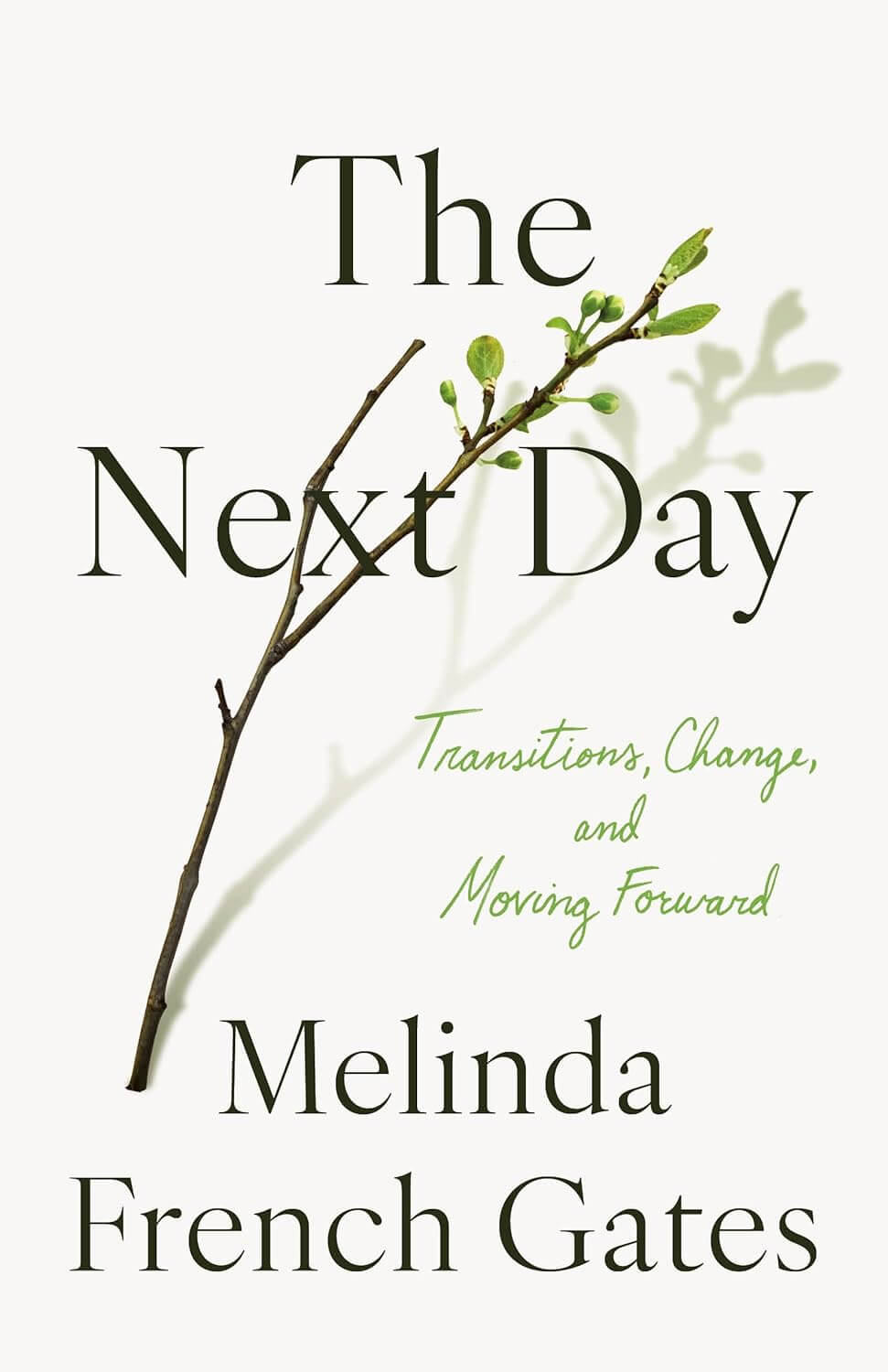
The Next Day Book Summary
This The Next Day Book Summary covers the key ideas, lessons, and takeaways in about 20 minutes.
French Gates reminds us that the day after an ending is not empty—it is full of possibility. What we choose in that space determines not just our next chapter, but the integrity of the life we are building.
Helps with these goals
Want the complete 20-minute summary?
- Full structured summary
- Video Summary
- Podcast Summary
- Audio summary
- Key takeaways
- Exercises
- Quiz
- Highlights and notes
- Ask the book with AI
What is in the The Next Day book summary?
Below is a preview of Sumizeit’s expert-written summary of The Next Day by Melinda French Gates. The full summary covers the book’s key ideas in text, audio, and video.
In The Next Day, Melinda French Gates offers a deeply reflective exploration of what happens after life breaks open—after the moment when a chapter closes and the future feels uncertain. Rather than focusing on the dramatic event itself, the book centers on what follows: the quiet, confusing, often lonely period when you wake up and must decide how to live differently. French Gates argues that this space—the day after the ending—is where real transformation occurs. It is where identity is reshaped, values are clarified, and a more authentic life can begin.
The book blends personal narrative, moral reflection, psychology, and practical guidance. French Gates writes from the vantage point of profound transitions: stepping away from a powerful corporate career, becoming a mother and later a grandmother, co-leading one of the world’s most influential philanthropic institutions, confronting grief and mortality, ending a decades-long marriage under public scrutiny, and ultimately choosing independence—both personally and professionally. While her circumstances are extraordinary, the emotional terrain she describes is universal. Everyone, she insists, will face moments when the life they planned no longer fits, and the challenge becomes learning how to move forward without betraying oneself.
French Gates’s central premise is that transitions are not interruptions to life—they are life. They expose truths that routine conceals. When familiar roles dissolve, when certainty vanishes, we are forced to confront who we really are and what genuinely matters. The question is not how to avoid change, but how to walk through it with honesty, courage, and compassion.
A Life Shaped by Faith, Learning, and Inner Authority
French Gates roots her philosophy of transition in her early formation. Raised in a Catholic household that emphasized service, discipline, and education, she learned from an early age to respect both external guidance and internal discernment. Her upbringing instilled a sense of moral responsibility alongside an expectation of intellectual rigor. These influences shaped her lifelong habit of reflection—an ability to question authority while still honoring tradition.
Her early education in all-girls Catholic schools reinforced the idea that thinking deeply and living ethically were inseparable pursuits. Teachers encouraged contemplation as much as achievement, urging students to examine not only what they believed but why. This foundation would later become essential when French Gates found herself questioning long-held assumptions about marriage, faith, power, and womanhood.
At the same time, her family environment fostered independence. Exposure to engineering through her father’s work and early access to computers helped her develop confidence in problem-solving and systems thinking. This dual grounding—spiritual reflection and analytical rigor—became a defining feature of her approach to change. She does not advocate impulsive decisions or blind faith in intuition; instead, she promotes a thoughtful engagement with both logic and inner wisdom.
Career, Ambition, and the Cost of Adaptation
French Gates’s early professional life was marked by ambition and intellectual excitement. Joining Microsoft in its formative years, she navigated a male-dominated industry while contributing to products that shaped the digital age.
Want the complete 20-minute summary?
- Full structured summary
- Video Summary
- Podcast Summary
- Audio summary
- Key takeaways
- Exercises
- Quiz
- Highlights and notes
- Ask the book with AI
Who should read The Next Day?
The Next Day is for anyone navigating major life transitions—whether through career shifts, relationship changes, grief, or identity redefinition. It speaks especially to those who feel caught between who they were and who they're becoming, and to readers seeking permission to prioritize authenticity over external expectations.
Why does The Next Day matter?
In an era of constant disruption, most people focus on managing the crisis itself rather than the deeper work that follows. Melinda French Gates argues that real transformation happens in the quiet, confusing period after an ending—the space where we can rebuild more honestly. Her insights help readers move through life's major upheavals with both courage and clarity, rather than simply surviving them.
What are the key themes in The Next Day?
- Transitions as life-altering opportunities for growth and authentic self-discovery
- The power of listening to your inner voice and honoring its signals
- Grief as a natural, necessary, and ultimately instructive part of change
- The importance of community and support during periods of uncertainty
- Simplification and letting go as pathways to clarity and agency
- Self-compassion as an act of resilience, not weakness
What are the key lessons from the The Next Day book summary?
Events and Transitions Are Different
Events happen quickly, but transitions unfold slowly. The real transformation begins after the initial disruption, when you must navigate the disorienting in-between space where identity feels unstable.
Accumulated Small Compromises Become Big Problems
Transitions often begin as subtle misalignments—small concessions that seem manageable until they accumulate into a profound disconnection from yourself. Recognizing these early signals prevents years of regret.
Grief Is Evidence of Love
Rather than something to 'get over,' grief is a natural response to deep connection. Avoiding it only prolongs suffering; honoring it allows you to integrate loss and move forward with clarity.
Physical Symptoms Signal Inner Truth
Your body often communicates what your rational mind avoids—recurring dreams, physical distress, and emotional reactions reveal misalignment before your conscious mind catches up.
Every Transition Contains Loss, Even Joyful Ones
Growth demands letting go of imagined futures and idealized versions of yourself. Acknowledging this loss—not just the gain—allows for honest grieving and genuine new beginnings.
Inner Authority Must Be Cultivated
Listening to your inner voice requires intentional practice—stillness, attention to patterns, and discernment. This skill becomes your compass when external certainties collapse.
Perfectionism Is an Enemy of Presence
The pressure to perform flawlessly—in work, parenting, or appearance—disconnects you from authentic living. Embracing imperfection actually deepens your effectiveness and relationships.
Courage Doesn't Eliminate Fear
Moving through major transitions requires acting despite fear, not waiting for it to disappear. Courage is intentional choice made in the presence of uncertainty.
Simplification Reclaims Agency
Deliberately reducing excess—possessions, commitments, roles—creates space for clarity and meaning. Simplicity is not deprivation; it's a strategy for aligning life with values.
Support Networks Are Non-Negotiable
Transitions cannot be navigated alone. Different relationships serve different needs—some offer empathy, others practical wisdom. Connection is resilience made visible.
Values Must Be Re-Examined During Transitions
Major life changes often require questioning inherited beliefs and long-held assumptions. Growth involves separating core values from outdated structures that no longer serve you.
The Middle Phase Is Where Transformation Happens
The uncertainty between ending and new beginning feels disorienting, but it's precisely where insight emerges. Respecting this liminal space—rather than rushing through it—unlocks genuine change.
Discernment Requires Both Logic and Intuition
Effective decision-making during transitions balances analytical rigor with inner wisdom. Neither pure reason nor pure intuition is sufficient; both must inform your path.
Self-Compassion Preserves Energy for Growth
Harsh self-judgment during difficult transitions only compounds suffering. Treating yourself with kindness maintains the emotional bandwidth necessary for real transformation.
Integrity Demands Ongoing Alignment
When your actions no longer reflect your values, change becomes inevitable. Maintaining integrity requires continuous discernment and willingness to act on what you discover.
Letting Go Includes Grieving Lost Futures
Transitions require releasing not just current circumstances but the futures you'd imagined. Acknowledging this grief—of roads not taken—is essential for claiming your actual path.
Independence Can Follow Interdependence
Claiming full ownership of your future doesn't require isolation. True independence is built on clarity about which relationships and commitments genuinely serve your values.
External Judgment Becomes Noise When You're Clear
When you've aligned your choices with your core values, public scrutiny becomes manageable. Clarity about who you are makes other people's opinions less destabilizing.
Power Without Alignment Creates Internal Conflict
Access to influence, resources, or status means little if your daily choices contradict your deepest convictions. This misalignment eventually demands reckoning.
The Next Day Is Full of Possibility, Not Empty
After an ending, the space before you begins to fill with possibility. What you choose in that moment—how you listen, grieve, and rebuild—determines the integrity of your next chapter.
Want the complete 20-minute summary?
- Full structured summary
- Video Summary
- Podcast Summary
- Audio summary
- Key takeaways
- Exercises
- Quiz
- Highlights and notes
- Ask the book with AI
How can you apply ideas from The Next Day?
- Journal about moments when your body or emotions signal discomfort—track patterns to identify misalignments between your life and values before they become crises
- Create a personal support network that includes different types of relationships: empathetic listeners, practical advisors, and those who share similar transitions
- Practice sitting with uncertainty for short periods daily—meditation, reflection, or stillness—to build tolerance for the ambiguity that accompanies change
- Audit your commitments, possessions, and roles quarterly and deliberately release those that no longer align with your current values
- Develop a personal ritual for grieving—whether through movement, writing, or conversation—to process losses that accompany transitions rather than suppressing them
- Distinguish between fear-based decisions and values-based decisions by asking: 'Am I choosing this to avoid pain, or to move toward something authentic?'
- Schedule regular check-ins with a therapist, mentor, or trusted friend during major transitions to maintain perspective and prevent isolation
What common mistakes do readers make with The Next Day?
- Rushing through the disorienting middle phase of transition, trying to reach stability too quickly instead of learning from the uncertainty
- Ignoring subtle signals of misalignment (body sensations, recurring dreams, emotional patterns) until they become impossible to overlook
- Expecting to navigate major life changes without external support, treating transition as a private struggle rather than an opportunity for connection
- Judging yourself harshly for doubt, mistakes, or imperfection during transitions, which depletes the emotional energy needed for genuine growth
Sumizeit Exercises Apply what you've learned
Turn ideas from The Next Day into action with a short guided reflection: identify the biggest takeaway, connect it to your life, and commit to one step you can take in the next 24 hours.
What is the expert analysis of The Next Day?
Overview
The Next Day by Melinda French Gates stands as a significant contribution to contemporary literature on personal transformation and resilience. Authored by a prominent philanthropist and advocate for gender equality, the book transcends a mere memoir to offer a nuanced meditation on the liminal spaces that follow life’s upheavals. French Gates draws on her multifaceted experiences—from corporate leadership at Microsoft to navigating public divorce and redefining purpose in philanthropy—to articulate a universal narrative about the complexities of change. Her voice is both authoritative and intimate, making the work resonate beyond celebrity memoir into the realm of practical philosophy and psychological insight.
Core Thesis
At its core, The Next Day advances the thesis that transitions are not mere interruptions or detours but constitute the very fabric of life itself. French Gates argues that the true work of transformation unfolds in the aftermath of disruption—during the uncertain, often uncomfortable period when old identities dissolve and new ones have yet to form. This “day after” is a crucible for self-discovery, requiring honesty, courage, and compassion. By embracing grief, listening to an inner voice grounded in both reflection and discernment, and seeking community support, individuals can reconstruct their lives with greater authenticity and integrity.
Strengths
- Integrative Approach: French Gates skillfully weaves personal narrative with moral philosophy, psychological theory, and practical guidance, creating a holistic framework for understanding transitions.
- Emotional Honesty: The candid exploration of grief, loss, and vulnerability lends the book a rare depth, avoiding platitudes and instead validating the messy realities of change.
- Nuanced View of Identity: The emphasis on transitions as processes rather than events highlights the complexity of identity formation and the necessity of tolerating ambiguity.
- Ethical Reflection: The author’s grappling with power dynamics, especially in philanthropy and gender equity, adds a compelling ethical dimension that enriches the personal narrative.
- Accessible Wisdom: French Gates’s blend of analytical rigor and spiritual reflection makes the book approachable for readers across disciplines and life stages.
Critiques & Counterarguments
- Contextual Limitations: While the author’s extraordinary socio-economic position provides unique insights, it may limit the applicability of her prescriptions for those facing systemic barriers or economic precarity. The book occasionally assumes a level of agency and resource availability that is not universal.
- Psychological Oversimplification: The framing of transitions into three neat phases—ending, uncertainty, new beginning—risks oversimplifying the nonlinear, often cyclical nature of psychological change documented in contemporary trauma and resilience research.
- Evidence Base: The book leans heavily on personal experience and reflective insight, with limited engagement with empirical studies or alternative psychological models, such as those emphasizing social determinants of mental health or cultural variability in grieving processes.
- Competing Theories: Schools of thought like radical acceptance (from dialectical behavior therapy) or post-traumatic growth research might challenge the book’s emphasis on discernment and inner voice by proposing more radical surrender or external validation mechanisms.
- Philosophical Tensions: The reliance on an “inner voice” as a guide can be critiqued from existentialist or postmodern perspectives that question the coherence or primacy of a stable self, suggesting instead that identity is fragmented and socially constructed.
Who Should Read This
The Next Day is ideally suited for readers navigating significant life transitions—whether personal, professional, or existential—who seek a thoughtful companion in the process of reinvention. It will particularly resonate with those interested in the intersection of psychology, ethics, and spirituality, as well as readers drawn to memoirs that offer more than anecdote by engaging deeply with the meaning of change. Professionals in counseling, leadership development, and philanthropy may also find the book’s insights valuable for understanding the human dimensions of transformation. Ultimately, it is a compelling read for anyone committed to living with greater authenticity and moral clarity amid life’s inevitable uncertainties.
Frequently asked questions about the The Next Day book summary
What is The Next Day about?
The Next Day by Melinda French Gates explores what happens after life-altering events—the quiet, confusing period when you must decide how to live differently. Rather than focusing on the crisis itself, French Gates examines the day after the ending, when real transformation occurs. Through personal narratives spanning her career, motherhood, divorce, and independent philanthropic work, she argues that transitions are not interruptions to life; they are life itself, and they reveal truths about who we truly are.
Who should read The Next Day?
The Next Day is for anyone navigating major life transitions—whether through career changes, relationship shifts, grief, loss of identity, or other upheavals. It's especially valuable for people caught between who they were and who they're becoming, and for those seeking permission to prioritize authenticity over external expectations. While French Gates's circumstances are extraordinary, the emotional terrain she describes is universal and applicable to anyone facing uncertainty about their path forward.
What are the main takeaways from The Next Day?
The main takeaways from The Next Day include: transitions are processes, not events, and real transformation happens in the disorienting in-between space; listening to your inner voice through physical signals, dreams, and emotional reactions is essential to authentic living; grief is not weakness but evidence of love and connection; simplification and letting go create clarity and agency; and support networks are non-negotiable during upheaval. French Gates emphasizes that courage means acting despite fear, and that self-compassion is a survival skill, not an indulgence.
How does Melinda French Gates approach grief and loss?
French Gates reframes grief as evidence of deep connection rather than something to 'get over.' She argues that avoiding grief only prolongs suffering, while honoring it allows for integration and clarity. Her approach involves recognizing shared humanity, moderating self-judgment, and treating the grieving process as instruction rather than interruption. She emphasizes that every transition—even joyful ones—contains loss, and acknowledging this loss is essential for genuine new beginnings.
What role does listening to your inner voice play in The Next Day?
Listening to your inner voice is central to The Next Day's framework for navigating transitions. French Gates defines this inner voice not as constant certainty but as persistent signals—sometimes quiet, sometimes disruptive—that point toward truth. She teaches that physical symptoms, recurring dreams, and emotional reactions often communicate what rational analysis avoids. However, she also cautions against blind trust, advocating instead for discernment that balances inner wisdom with logic.
Does The Next Day discuss French Gates's divorce?
Yes, French Gates examines her divorce not as scandal or blame but as an internal reckoning that led to a necessary decision. She describes how dreams, anxiety, and physical distress signaled a truth she had long resisted: the life she was living no longer reflected who she was becoming. Rather than focusing on events or details, she explores the emotional and psychological process of recognizing misalignment and summoning the courage to choose differently despite fear and public scrutiny.
How does The Next Day balance personal narrative with practical advice?
The Next Day blends personal narrative, moral reflection, psychology, and practical guidance. French Gates uses her own transitions—from corporate career to motherhood to divorce to independent philanthropic work—as windows into universal human experiences. She derives actionable lessons from each phase without oversimplifying complex emotions. The book models how to examine both external circumstances and internal responses, offering readers frameworks they can apply to their own transitions.
About Sumizeit
Sumizeit is a profitable Scomy LLC company based in Miami, Florida. It has been helping readers learn from nonfiction books for 7 years with expert-written summaries in text, audio, podcast, and video.
Want the complete 20-minute summary?
- Full structured summary
- Video Summary
- Podcast Summary
- Audio summary
- Key takeaways
- Exercises
- Quiz
- Highlights and notes
- Ask the book with AI
Here's why readers love Sumizeit
Join thousands of learners getting smarter every day
"Great experience. Detailed summaries. Loved the gamification feature. Makes learning fun. Good customer service. I recommend Sumizeit to anyone. You'll learn a lot."
"I always felt busy but still wanting to keep up with the book discussion in my friend group. This was a great supplement to help me keep reading the books I find fun while keeping up with important books."
"I love this website. Instead of scrolling social media, I find myself learning a lot. I use it everyday. I recommend this app for anyone who is too busy and wants to get up to speed with their favorite books."
The Next Day Book Summary PDF
Looking for a The Next Day Book Summary PDF you can save and revisit offline? Our The Next Day Book Summary PDF captures the book’s core ideas in a clean, printable format — the key frameworks, takeaways, and structure without the fluff. Download the The Next Day Book Summary PDF when you want a reference you can annotate, share with your team, or review on the go. Get your The Next Day Book Summary PDF from the download page below.
Download The Next Day Book Summary PDFPeople also liked these summaries
Readers who explored The Next Day often enjoyed these titles next.




Want the complete 20-minute summary?
- Full structured summary
- Video Summary
- Podcast Summary
- Audio summary
- Key takeaways
- Exercises
- Quiz
- Highlights and notes
- Ask the book with AI
Featured Book Titles
Popular Book Summaries at sumizeit, leading book summary app