


Prefer the print book? Buy on Amazon
As an Amazon Associate, Sumizeit earns from qualifying purchases.
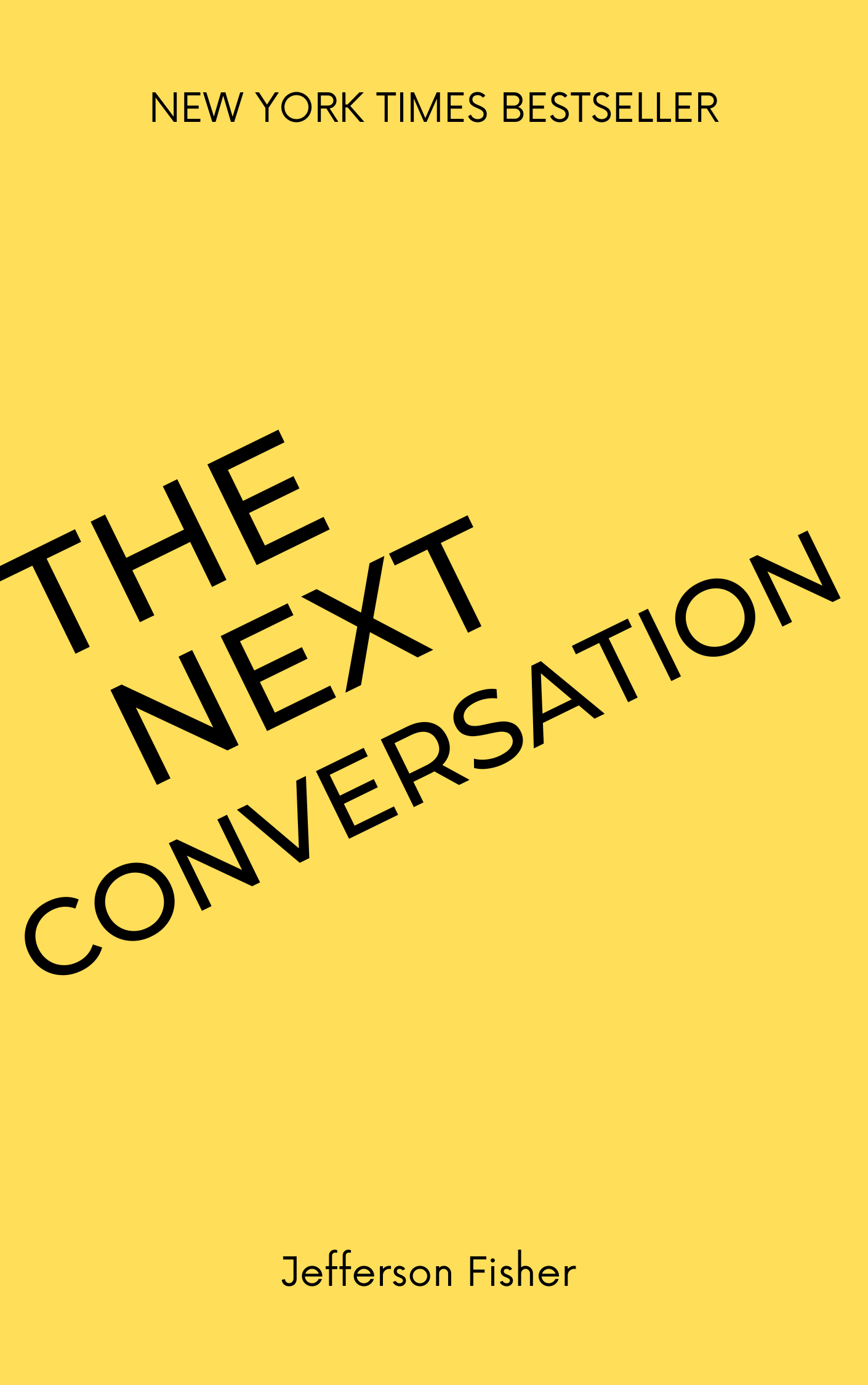
The Next Conversation Book Summary
This The Next Conversation Book Summary covers the key ideas, lessons, and takeaways in about 20 minutes.
The Next Conversation teaches mindful communication transforms relationships.
Helps with these goals
Want the complete 20-minute summary?
- Full structured summary
- Video Summary
- Podcast Summary
- Audio summary
- Key takeaways
- Exercises
- Quiz
- Highlights and notes
- Ask the book with AI
Want a Free Weekly Read?
Get a free summary every week straight to your mailbox.
Preview the The Next Conversation book summary
Below is a preview of Sumizeit’s comprehensive human-written summary of The Next Conversation by Jefferson Fisher . The full summary is 15-20 minutes long and covers the book’s key ideas in text, audio, visual, and video formats. Unlock the full 20 Minute Summary
Fisher opens with the idea that everyday communication—tiny comments, sighs, tone changes, pauses, rushed replies—creates emotional ripple effects that continue long after the moment ends. For instance, if a manager gives rushed feedback in a tense tone, the employee may carry that tension home, snapping at their partner, who then becomes short with the kids. Conversely, a small moment of calm kindness—like a parent patiently listening to a child’s rambling story—can leave the child feeling valued and confident for the rest of the day. Fisher argues that because these ripples stack and shape our interactions, investing in healthier conversations becomes one of the most impactful things a person can do for their relationships.
Seeing Arguments as Emotional X-Rays Instead of Fights
Fisher encourages readers to think of arguments not as verbal wrestling matches but as emotional X-rays that reveal what people fear, value, and long for. For example, when a spouse yells, “You never help around the house!” the deeper X-ray might show exhaustion, a fear of carrying everything alone, or a longing to feel supported. When a friend coldly says, “Whatever, do what you want,” the X-ray might reveal fear of abandonment or feeling unimportant. He offers the example of a father shouting at his son for low grades. On the surface, it looks like discipline. But underneath, the father may fear that the child’s opportunities will shrink and feel powerless to protect his future. When you see the emotional X-ray rather than the surface behavior, you respond with understanding instead of combativeness.
The Three Pillars That Anchor Meaningful, Respectful Communication
Fisher’s communication system rests on connection, preparation, and assertiveness. Connection means more than active listening—it means reflecting back emotional meaning. For example, if a coworker says, “I’m exhausted from doing everything myself,” instead of “Well, you should’ve asked for help,” a connection-focused response is: “It sounds like you’ve been carrying too much for too long.” Preparation means deciding your tone, your objective, and your emotional guardrails before entering the conversation. A parent planning to talk to their teen about curfew might set a goal like, “Stay calm, listen fully, and avoid lecturing.” Assertiveness means eliminating vague language, taking ownership of your boundaries, and speaking clearly without aggression. If a sibling repeatedly borrows your belongings without asking, assertiveness sounds like, “I’m not okay with my things being taken without permission. If you need something, ask first.”
Hidden Obstacles That Quietly Undermine Your Ability to Connect
Fisher explains that microscopic habits often sabotage communication without our realizing it. Poor self-awareness might show up as a frustrated expression while your partner is talking, causing them to shut down instantly—even if you’re not upset with them at all. Closed-mindedness can look like rejecting your colleague’s suggestion before hearing the logic behind it—“That won’t work”—making them feel dismissed and undervalued. Low self-assurance might appear as soft phrases like, “Sorry, this is probably dumb…” even when your idea is valuable.
Want the complete 20-minute summary?
- Full structured summary
- Video Summary
- Podcast Summary
- Audio summary
- Key takeaways
- Exercises
- Quiz
- Highlights and notes
- Ask the book with AI
Who should read The Next Conversation?
The Next Conversation is for anyone who struggles with difficult discussions—whether at work, in relationships, or with family. If you find yourself avoiding conflict, repeating the same arguments, or feeling unheard, this book offers practical tools to transform how you communicate. Managers, parents, partners, and anyone seeking to build deeper, healthier connections will benefit from Jefferson Fisher's evidence-based approach to meaningful dialogue.
Why does The Next Conversation matter?
Communication shapes every relationship and outcome in your life, yet most people never learn how to do it well. In today's emotionally charged world, where misunderstandings spiral quickly and digital communication creates constant friction, Fisher's framework addresses a critical gap—showing you how emotional awareness and intentional language can de-escalate conflict and build trust. The book matters because small moments of connection or disconnection ripple outward, affecting not just your immediate relationships but the emotional climate around you.
What are the key themes in The Next Conversation?
- Communication ripple effects and emotional accountability
- Arguments as emotional X-rays revealing deeper fears and needs
- Connection, preparation, and assertiveness as communication pillars
- Emotional regulation and staying grounded under pressure
- Boundaries as self-respect, not selfishness
- Clarity and assertiveness build confidence
- Digital communication's role in creating misunderstandings
- Follow-up conversations as essential to resolution
Want the complete 20-minute summary?
- Full structured summary
- Video Summary
- Podcast Summary
- Audio summary
- Key takeaways
- Exercises
- Quiz
- Highlights and notes
- Ask the book with AI
How can you apply ideas from The Next Conversation?
- Schedule difficult conversations in advance instead of ambushing someone, giving both parties time to prepare emotionally and mentally
- Use the reflective listening formula ('It sounds like...' or 'Let me make sure I understand...') before responding to someone's concern, showing you prioritize understanding over being right
- Frame conversations with a clear goal and one topic focus to prevent spiraling into old grievances and unrelated issues
- Replace hedging language ('just,' 'maybe,' 'kind of,' 'sorry') with direct, confident statements to build self-assurance and earn respect
- Set specific, enforceable boundaries using clear language and consistent follow-through to protect your peace and energy without isolation
- Use the three-part refusal ('No + Thank you + Warm close') to decline requests guilt-free and maintain relationships while protecting your time
- Practice tactical breathing and body awareness during heated moments to interrupt defensiveness and stay grounded before responding
- Switch from text or email to voice calls for any conversation carrying emotional weight to restore tone, context, and human connection
What common mistakes do readers make with The Next Conversation?
- Assuming clear communication means saying the right words, when it actually requires emotional awareness, timing, and genuine intent to understand first
- Using digital communication for sensitive topics and then being surprised when neutral words are misinterpreted as cold, angry, or dismissive
- Trying to resolve difficult conversations while emotions are high, rather than recognizing the ignition phase and waiting for the cooling phase to return with clarity
- Accepting fake apologies ('sorry if you were upset') or soothing guilt-trip manipulations instead of holding people accountable to genuine acknowledgment
- Setting so many boundaries that you become rigid and isolated, defeating the purpose of boundaries which is to protect what matters while staying connected
Sumizeit Exercises Apply what you've learned
Turn ideas from The Next Conversation into action with a short guided reflection: identify the biggest takeaway, connect it to your life, and commit to one step you can take in the next 24 hours.
What is the expert analysis of The Next Conversation?
Overview
The Next Conversation is authored by Jefferson Fisher, a trial lawyer turned communication educator whose expertise in conflict de-escalation and courtroom dynamics informs his practical approach to everyday interactions. This book stands out in the crowded field of communication literature by bridging legal precision with emotional intelligence, offering readers actionable tools to transform difficult conversations into opportunities for connection and growth. Fisher’s background lends credibility and a unique perspective, making this work significant for those seeking to navigate complex relational dynamics with clarity and composure.
Core Thesis
Fisher’s central insight is that communication is less about winning arguments or perfect phrasing and more about cultivating grounded presence, emotional awareness, and intentional follow-up. He posits that every conversation creates emotional ripple effects that shape relationships long after words are spoken. By reframing arguments as “emotional X-rays” revealing underlying fears and desires, and by anchoring dialogue in connection, preparation, and assertiveness, individuals can foster healthier, more respectful exchanges. The book emphasizes the power of framing, boundaries, and repeated conversations to build trust and understanding over time.
Strengths
- Practical Framework: Fisher distills complex psychological and communication concepts into clear, actionable steps that readers can implement immediately, such as framing conversations and setting boundaries.
- Emotional Depth: The metaphor of arguments as emotional X-rays encourages empathy and shifts the focus from surface conflict to underlying emotional needs, enriching interpersonal understanding.
- Integration of Self-Regulation Techniques: The inclusion of breath anchoring, body awareness, and mantras provides readers with concrete tools to manage their emotional states during high-stakes conversations.
- Real-World Examples: Drawing from legal, familial, and workplace contexts, Fisher’s examples ground his advice in relatable scenarios, enhancing accessibility and relevance.
- Focus on Process Over Perfection: By normalizing follow-up conversations and emphasizing ongoing dialogue, the book challenges the unrealistic expectation of one-time resolution.
Critiques & Counterarguments
- Potential Oversimplification: While Fisher’s frameworks are accessible, some readers may find the reduction of complex emotional dynamics into discrete steps somewhat reductive, potentially overlooking cultural, systemic, or personality-based communication barriers.
- Limited Engagement with Power Dynamics: The book lightly touches on boundaries and assertiveness but does not deeply explore how entrenched power imbalances—such as in workplace hierarchies or abusive relationships—can complicate the application of these techniques.
- Competing Research on Conflict Styles: Alternative models, such as Thomas-Kilmann’s conflict styles or Gottman’s research on relationship repair, emphasize different strategies like compromise or emotional bids that may not fully align with Fisher’s assertiveness-first approach.
- Digital Communication Nuances: Fisher critiques texting for its lack of emotional cues, but emerging research suggests digital communication can also foster intimacy and reflection if used mindfully, a nuance somewhat underdeveloped here.
- Emotional Regulation Limitations: The suggested self-regulation techniques, though valuable, may not suffice for individuals with trauma histories or neurodivergent processing styles, who might require more specialized interventions.
Who Should Read This
The Next Conversation is ideally suited for professionals, leaders, educators, and anyone invested in improving their interpersonal effectiveness, particularly in emotionally charged or conflict-prone settings. Its blend of legal precision and emotional insight appeals to readers who appreciate structured, evidence-informed guidance without sacrificing empathy. Additionally, individuals seeking to enhance personal relationships through mindful communication and those looking for practical tools to manage difficult conversations will find this book invaluable. However, readers dealing with severe relational dysfunction or systemic oppression may need to supplement Fisher’s approach with more specialized resources.
Frequently asked questions about the The Next Conversation book summary
What is The Next Conversation about?
The Next Conversation by Jefferson Fisher is a guide to transforming how you communicate in relationships, work, and conflict. It teaches you to see arguments as emotional X-rays revealing deeper needs, master three pillars of communication (connection, preparation, assertiveness), and use practical techniques like framing, boundary-setting, and emotional regulation to have more meaningful, respectful conversations. The core idea is that small moments of communication ripple through your relationships—and learning to navigate them skillfully changes everything.
Who should read The Next Conversation?
Anyone who struggles with difficult conversations, avoids conflict, or repeats the same arguments should read this book. It's particularly valuable for managers, parents, partners, and professionals seeking to improve relationships and de-escalate tension. If you find yourself being misunderstood, struggling to set boundaries, or unsure how to approach sensitive topics, Fisher's framework provides clear, actionable tools.
What are the main takeaways from The Next Conversation?
The main takeaways are: communication succeeds through grounded presence and emotional awareness, not perfect phrasing; arguments reveal deeper fears and needs when you look beneath surface words; connection comes before correction; boundaries protect peace without isolating you; clarity builds confidence; and resolution is a process requiring follow-up conversations, not a single moment. The real power lies in the next conversation you choose to create intentionally.
How do I handle difficult conversations without things getting heated?
Fisher recommends preparing emotionally before the conversation—decide your tone, goal, and emotional guardrails. During the talk, use tactical breathing and body awareness to stay grounded. Frame the conversation clearly with one topic focus to prevent spiraling. Lead with connection by reflecting back emotional meaning before stating your view. If emotions spike, recognize the 'ignition phase' and pause rather than pushing for resolution immediately.
What's the difference between assertiveness and aggression in The Next Conversation?
Assertiveness is clear, direct communication that respects both yourself and the other person. It removes hedging language, sets firm expectations, and speaks steadily. Aggression uses harsh tone, blame, or insults. The book teaches that assertiveness actually builds confidence and earns trust, while aggression shuts conversations down. For example, 'I won't be available after 6 p.m.' is assertive; 'You never respect my time' is aggressive.
Why does The Next Conversation emphasize follow-up conversations?
Fisher stresses that difficult conversations rarely resolve cleanly in one discussion. The first attempt often uncovers raw emotions; follow-up conversations bring clarity and understanding with fresh minds. Returning to a topic after reflection shows maturity, prevents misunderstandings, and deepens trust. This approach acknowledges that resolution is a process—not a single perfect moment.
How does digital communication cause problems according to The Next Conversation?
Texts and emails strip away tone, facial expressions, and emotional cues, causing neutral words to be interpreted as cold, angry, or dismissive. A simple 'fine' may seem harsh when it was meant neutrally. Fisher recommends switching to voice calls or face-to-face conversation for anything carrying emotional weight, which restores context and prevents unnecessary tension and misunderstandings.
About Sumizeit
Sumizeit is a profitable Scomy LLC company based in Miami, Florida. Our founders, Clemens Raemy and Weina Scott, are successful entrepreneurs with several exits. Sumizeit is a popular book summary app / micro learning app used by busy professionals and entrepreneurs with over 2,500 non-fiction book summaries and 10,000 podcast summaries in text, audio, visual, podcast, and video format. We also have stellar retention tools to make ideas stick - such as flashcards with spaced repetition, quizzes, streaks, highlighting and notes, daily challenges, riddles, mini-courses, meditation, and more. You won't only learn the idea, but also remember it. Over 90% of our users change their habits with Sumizeit.
Upgrade Now
Want the complete 20-minute summary?
- Full structured summary
- Video Summary
- Podcast Summary
- Audio summary
- Key takeaways
- Exercises
- Quiz
- Highlights and notes
- Ask the book with AI
Here's why readers love Sumizeit
Join thousands of learners getting smarter every day
"Great experience. Detailed summaries. Loved the gamification feature. Makes learning fun. Good customer service. I recommend Sumizeit to anyone. You'll learn a lot."
"I always felt busy but still wanting to keep up with the book discussion in my friend group. This was a great supplement to help me keep reading the books I find fun while keeping up with important books."
"I love this website. Instead of scrolling social media, I find myself learning a lot. I use it everyday. I recommend this app for anyone who is too busy and wants to get up to speed with their favorite books."
The Next Conversation Book Summary PDF
Looking for a The Next Conversation Book Summary PDF you can save and revisit offline? Our The Next Conversation Book Summary PDF captures the book’s core ideas in a clean, printable format — the key frameworks, takeaways, and structure without the fluff. Download the The Next Conversation Book Summary PDF when you want a reference you can annotate, share with your team, or review on the go. Get your The Next Conversation Book Summary PDF from the download page below.
Download The Next Conversation Book Summary PDFPeople also liked these summaries
Readers who explored The Next Conversation often enjoyed these titles next.





Want the complete 20-minute summary?
- Full structured summary
- Video Summary
- Podcast Summary
- Audio summary
- Key takeaways
- Exercises
- Quiz
- Highlights and notes
- Ask the book with AI
Featured Book Titles
Popular Book Summaries at sumizeit, leading book summary app