


Prefer the print book? Buy on Amazon
As an Amazon Associate, Sumizeit earns from qualifying purchases.
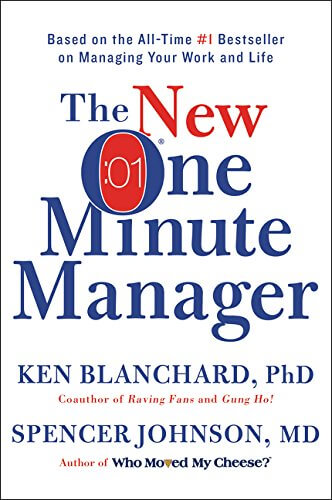
The New One Minute Manager Book Summary
This The New One Minute Manager Book Summary covers the key ideas, lessons, and takeaways in about 20 minutes.
Short Description:
The One Minute Manager style boosts employee confidence and saves managerial time.
Helps with these goals
Want a Free Weekly Read?
Get a free summary every week straight to your mailbox.
Preview the The New One Minute Manager book summary
Below is a preview of Sumizeit’s comprehensive human-written summary of The New One Minute Manager by Ken Blanchard. The full summary is 15-20 minutes long and covers the book’s key ideas in text, audio, visual, and video formats. Unlock the full 20 Minute Summary
The One Minute Manager is a short but influential business book that teaches three fundamental management techniques designed to help leaders improve productivity, employee morale, accountability, and results without unnecessary complexity or micromanagement. Written as a parable, the story follows a young man searching for effective management methods. He meets various managers along the way, many of whom either prioritize results at the expense of people, or focus so much on people that results suffer. Eventually, he discovers the One Minute Manager—an individual who has mastered producing strong results through people-centric leadership. The One Minute Manager introduces three core strategies: One Minute Goals, One Minute Praisings, and One Minute Reprimands. These tools streamline communication and empower employees to take responsibility for their performance. Instead of drowning in long meetings and micromanagement, the One Minute Manager believes that clarity, quick feedback, and encouragement drive success.
The Philosophy Behind One Minute Management
Blanchard and Johnson propose that effective management is rooted in simplicity, clarity, and respect. They argue that people produce better work when they feel valued and have a clear understanding of expectations. Many organizations suffer from ambiguity—employees are unsure what the goals are, how success is measured, or whether they are performing well. Likewise, many managers avoid direct communication out of fear of conflict, leading to confusion, wasted effort, and frustration. One Minute Management flips this dynamic. It is based on the belief that people want to do well and that most performance issues arise from unclear expectations, lack of acknowledgment, or delayed feedback. Rather than waiting for annual reviews or allowing small issues to become major problems, the One Minute Manager provides immediate, concise, and constructive interaction that keeps employees aligned and motivated.
The Structure of the Story
The book is structured as a narrative conversation between the curious young seeker and the One Minute Manager, with interspersed interviews from employees who describe how the One Minute methods have changed their work life. Each employee teaches one of the three primary principles and shares real examples illustrating how they function in practice. This storytelling approach is intentionally simple and short, making the concepts easy to absorb, retain, and apply. The managers the young man encounters before meeting the One Minute Manager represent common management archetypes: tough managers who pressure employees and treat them as machines, and lenient managers who prioritize feelings but fail to set standards. The One Minute Manager blends both elements—delivering high expectations with humanity and respect.
The Three Secrets of The One Minute Manager
The book's core message revolves around three key practices:
One Minute Goals
One Minute Praisings
One Minute Reprimands
Each technique takes about a minute to perform and creates a culture of purposeful action, fast learning, and mutual respect.
One Minute Goals
One Minute Goals involve setting clear and concise expectations between a manager and an employee at the beginning of a project or role.
Want the complete 20-minute summary?
- Full structured summary
- Video Summary
- Podcast Summary
- Audio summary
- Key takeaways
- Exercises
- Quiz
- Highlights and notes
- Ask the book with AI
Who should read The New One Minute Manager?
The New One Minute Manager is for managers, team leaders, and supervisors who want to improve employee performance and engagement without resorting to micromanagement or lengthy bureaucratic processes. It's equally valuable for new managers seeking practical frameworks and experienced leaders looking to refine their approach to feedback and goal-setting.
Why does The New One Minute Manager matter?
In today's fast-paced business environment, organizations struggle with unclear communication, low employee morale, and high turnover—problems that The New One Minute Manager directly addresses through simple, proven techniques. The book demonstrates that effective leadership doesn't require complexity or control; instead, it relies on clarity, timely feedback, and respect for people as capable individuals.
What are the key themes in The New One Minute Manager?
- Clarity in goal-setting eliminates workplace confusion and drives performance
- Positive reinforcement through immediate praise accelerates learning and motivation
- Balancing high standards with human respect creates sustainable results
- Managers who invest time upfront in clear communication save time later
- People are naturally motivated when they feel valued and understand expectations
- Feedback must target behavior, not character, to maintain dignity and engagement
How can you apply ideas from The New One Minute Manager?
- Write down one-minute goals for each direct report within the next week, including what success looks like and how it will be measured
- Implement daily or weekly goal-review check-ins where employees self-evaluate their progress and managers offer brief guidance or adjustments
- Practice catching your team doing something right at least once per day and deliver specific praise within minutes of observing the positive behavior
- When performance issues arise, address them immediately and directly with a two-part reprimand that expresses disappointment followed by reassurance of capability
- Create visible goal dashboards or documents that employees and managers review together regularly rather than storing goals in annual reviews
- Train your team to self-correct by asking them to identify their own progress gaps before you point them out
- Celebrate progress and effort explicitly, especially with new employees, rather than waiting for perfect results before acknowledging contributions
What common mistakes do readers make with The New One Minute Manager?
- Setting vague goals like 'do your best' and then wondering why employees don't meet expectations—clear, written goals are essential
- Only providing feedback during formal reviews, missing opportunities for real-time course correction and motivation building
- Giving generic praise that doesn't specify what the employee did well, which fails to reinforce desired behavior or build genuine confidence
- Avoiding difficult conversations or delaying reprimands until resentment builds, when quick, respectful correction would resolve issues cleanly
Sumizeit Exercises Apply what you've learned
Turn ideas from The New One Minute Manager into action with a short guided reflection: identify the biggest takeaway, connect it to your life, and commit to one step you can take in the next 24 hours.
What is the expert analysis of The New One Minute Manager?
Overview
The New One Minute Manager, co-authored by Ken Blanchard and Spencer Johnson, stands as a seminal work in the realm of business leadership and management. Building upon the success of the original One Minute Manager, this updated edition reaffirms the enduring relevance of concise, human-centered management techniques in a contemporary context. Ken Blanchard, a prolific thought leader in organizational leadership, teams with Spencer Johnson, a master of business parables, to deliver a narrative that is both accessible and profound. Their collaboration synthesizes decades of experience into a practical guide that continues to influence managers seeking to balance efficiency with empathy.
Core Thesis
The central insight of The New One Minute Manager is that effective leadership hinges on simplicity, clarity, and respect. The authors argue that the most productive workplaces are those where managers set clear expectations, provide immediate and specific feedback—both positive and corrective—and foster a culture of mutual trust and accountability. Through the three core techniques—One Minute Goals, One Minute Praisings, and One Minute Reprimands—the book posits that managers can dramatically improve employee engagement and performance without resorting to micromanagement or complex bureaucratic processes. Fundamentally, the book asserts that people are intrinsically motivated to succeed when they understand what success looks like, feel valued, and receive timely communication.
Strengths
- Clarity and Brevity: The book excels in distilling complex management principles into three straightforward practices that can be easily understood and implemented.
- Human-Centered Approach: By emphasizing respect and positive reinforcement alongside accountability, it challenges traditional command-and-control paradigms.
- Practical Narrative Format: The parable structure engages readers through storytelling, making abstract concepts tangible and memorable.
- Balanced Leadership Model: It thoughtfully addresses the tension between achieving results and maintaining healthy workplace relationships, advocating for a synthesis rather than a trade-off.
- Timeless Relevance: Despite its brevity, the book’s principles resonate across industries and organizational sizes, as evidenced by numerous real-world case studies.
Critiques & Counterarguments
- Oversimplification of Complex Dynamics: While brevity is a virtue, the book’s reduction of management to three one-minute techniques risks glossing over the nuanced challenges of leadership, such as navigating power dynamics, organizational politics, and cultural differences.
- Limited Empirical Evidence: The book relies heavily on anecdotal examples and parables rather than rigorous, peer-reviewed research, which may limit its applicability in highly complex or specialized environments.
- Potential Misuse of Reprimands: Although the One Minute Reprimand aims to separate behavior from identity, in practice, quick reprimands can be perceived as superficial or punitive if not delivered with genuine emotional intelligence.
- Competing Leadership Theories: Transformational and servant leadership models emphasize deeper emotional engagement and long-term vision, which may conflict with the book’s focus on immediate feedback and short interactions.
- Changing Work Environments: In increasingly remote and hybrid workplaces, the immediacy of One Minute interactions may be harder to achieve, challenging the model’s practicality without adaptation.
Who Should Read This
The New One Minute Manager is ideally suited for emerging leaders, mid-level managers, and business professionals seeking a concise, actionable framework to improve team communication and performance. It is particularly valuable for those new to management who desire a straightforward, humanistic approach without getting bogged down in jargon or theory. Additionally, organizations aiming to foster a culture of accountability and recognition will find the book’s principles a useful starting point. However, seasoned executives and scholars may view it as an introductory text that should be supplemented with more comprehensive leadership studies.
Frequently asked questions about the The New One Minute Manager book summary
What is The New One Minute Manager about?
The New One Minute Manager by Ken Blanchard (originally co-authored with Spencer Johnson) is a business parable that teaches three practical management techniques—One Minute Goals, One Minute Praisings, and One Minute Reprimands—designed to help leaders improve productivity and employee engagement through clear communication, timely feedback, and respect. The book demonstrates that effective management doesn't require complexity or control, but rather simplicity, clarity, and human dignity.
Who should read The New One Minute Manager?
The New One Minute Manager is essential for managers, team leaders, supervisors, and anyone in a leadership role who wants to improve employee performance and workplace culture. It's particularly valuable for new managers seeking practical frameworks and experienced leaders looking to refine their approach to feedback and goal-setting without resorting to micromanagement.
What are the main takeaways from The New One Minute Manager?
The main takeaways are that clear goals eliminate confusion and empower self-correction, immediate and specific praise reinforces positive behavior and builds motivation, and quick, respectful feedback prevents small problems from escalating. The book teaches that effective leadership balances high expectations with genuine respect for people, resulting in better results, higher engagement, and lower turnover.
How do One Minute Goals work?
One Minute Goals involve setting clear, concise, written expectations between a manager and employee that describe what needs to be done, how success will be measured, and the deadline. Employees review their goals daily or weekly to self-evaluate progress, enabling early course correction and reducing reliance on manager supervision.
What is the purpose of One Minute Praisings?
One Minute Praisings reinforce positive behavior by delivering specific, immediate recognition when employees do something right. The praise highlights exactly what the employee did well, explains why it mattered, and encourages continued effort—building confidence and intrinsic motivation far more effectively than delayed or generic feedback.
How should managers handle One Minute Reprimands?
One Minute Reprimands address performance problems when an employee understands expectations but fails to meet them. The reprimand has two phases: the first expresses disappointment and explains the impact, and the second reassures the employee that they are valued and capable, separating behavior from identity. This approach corrects problems quickly while preserving dignity and trust.
Can One Minute Management work in different industries?
Yes, The New One Minute Manager provides real-world examples from manufacturing, healthcare, education, and other sectors that implemented these practices with measurable improvements in productivity, employee satisfaction, turnover reduction, customer satisfaction, and revenue. The principles are universal because they're based on how people naturally respond to clarity, recognition, and respect.
About Sumizeit
Sumizeit is a profitable Scomy LLC company based in Miami, Florida. Our founders, Clemens Raemy and Weina Scott, are successful entrepreneurs with several exits. Sumizeit is a popular book summary app / micro learning app used by busy professionals and entrepreneurs with over 2,500 non-fiction book summaries and 10,000 podcast summaries in text, audio, visual, podcast, and video format. We also have stellar retention tools to make ideas stick - such as flashcards with spaced repetition, quizzes, streaks, highlighting and notes, daily challenges, riddles, mini-courses, meditation, and more. You won't only learn the idea, but also remember it. Over 90% of our users change their habits with Sumizeit.
Upgrade Now
Here's why readers love Sumizeit
Join thousands of learners getting smarter every day
"Great experience. Detailed summaries. Loved the gamification feature. Makes learning fun. Good customer service. I recommend Sumizeit to anyone. You'll learn a lot."
"I always felt busy but still wanting to keep up with the book discussion in my friend group. This was a great supplement to help me keep reading the books I find fun while keeping up with important books."
"I love this website. Instead of scrolling social media, I find myself learning a lot. I use it everyday. I recommend this app for anyone who is too busy and wants to get up to speed with their favorite books."
The New One Minute Manager Book Summary PDF
Looking for a The New One Minute Manager Book Summary PDF you can save and revisit offline? Our The New One Minute Manager Book Summary PDF captures the book’s core ideas in a clean, printable format — the key frameworks, takeaways, and structure without the fluff. Download the The New One Minute Manager Book Summary PDF when you want a reference you can annotate, share with your team, or review on the go. Get your The New One Minute Manager Book Summary PDF from the download page below.
Download The New One Minute Manager Book Summary PDFPeople also liked these summaries
Readers who explored The New One Minute Manager often enjoyed these titles next.


Ready to read the whole thing?
- Full structured summary
- Video Summary
- Podcast Summary
- Audio summary
- Key takeaways
- Exercises
- Quiz
- Highlights and notes
- Ask the book with AI
Featured Book Titles
Popular Book Summaries at sumizeit, leading book summary app