


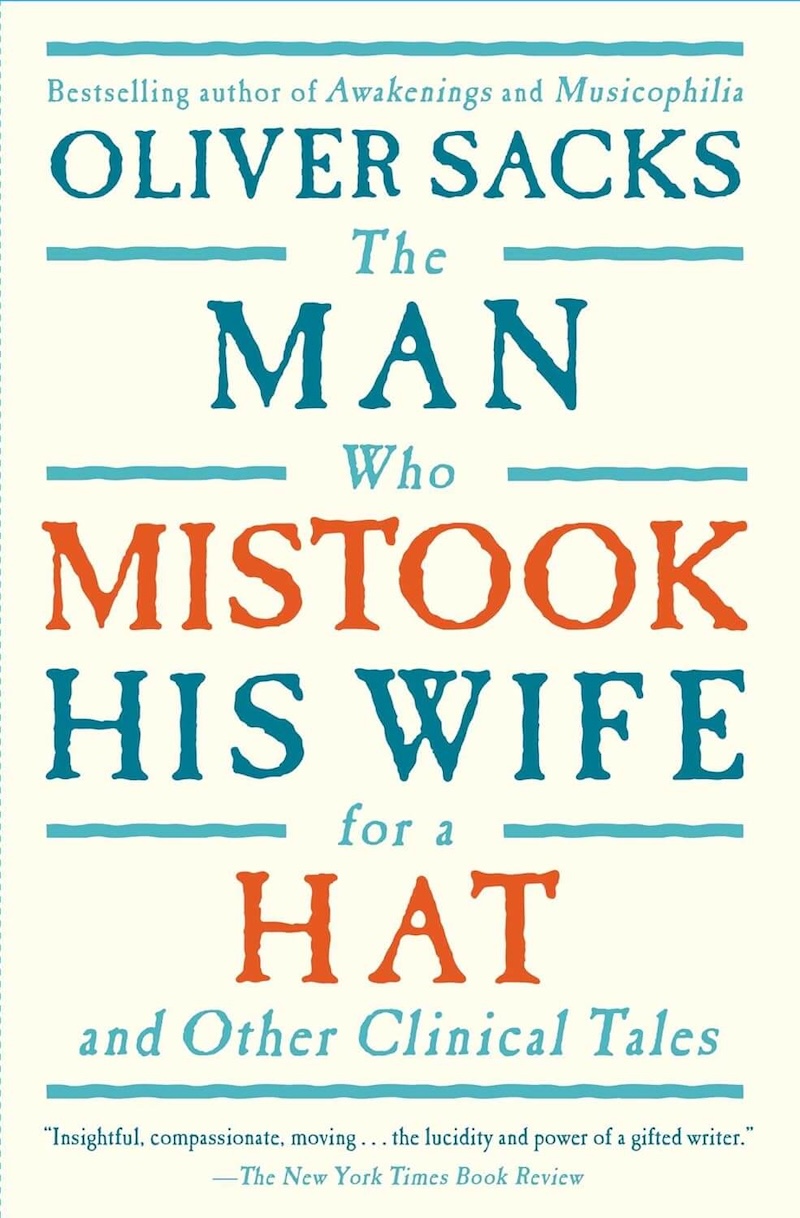
Prefer the print book? Buy on Amazon
As an Amazon Associate, Sumizeit earns from qualifying purchases.
The Man Who Mistook His Wife For A Hat: And Other Clinical Tales Book Summary
This The Man Who Mistook His Wife For A Hat: And Other Clinical Tales Book Summary covers the key ideas, lessons, and takeaways in about 20 minutes.
Short Description:
The Man Who Mistook His Wife for a Hat reveals neurological diversity’s truths.
Sacks urges medicine to broaden beyond symptom management to embrace patients as individuals with emotional, artistic, and spiritual dimensions. He demonstrates that dignity does not depend on cognitive normalcy; even the most impaired individuals possess rich inner lives deserving respect and support. Studying neurological diversity expands our understanding not only of illness but of what it means to think, feel, remember, and be.
Ultimately, Sacks reveals that every brain—damaged or intact—constructs a unique world. In witnessing others’ neurological realities, we rediscover our own.
Helps with these goals
Want a Free Weekly Read?
Get a free summary every week straight to your mailbox.
Preview the The Man Who Mistook His Wife For A Hat: And Other Clinical Tales book summary
Below is a preview of Sumizeit’s comprehensive human-written summary of The Man Who Mistook His Wife For A Hat: And Other Clinical Tales by Oliver Sacks. The full summary is 15-20 minutes long and covers the book’s key ideas in text, audio, visual, and video formats. Unlock the full 20 Minute Summary
Oliver Sacks’ landmark collection, The Man Who Mistook His Wife for a Hat, is both a scientific inquiry and a deeply humane exploration of what happens when the brain fails to function in ordinary ways. Rather than presenting his cases merely as clinical puzzles, Sacks portrays each patient as a full human being whose struggles illuminate not only neurological dysfunction but also strength, creativity, adaptation, and identity. Across a wide range of disorders—from visual agnosia to Tourette’s syndrome, from amnesia to hallucinations—Sacks illustrates how the brain shapes the stories we tell about ourselves and how disruptions to neurological systems fracture or reform those narratives.
The book challenges conventional medical frameworks that focus exclusively on deficits and impairment. Instead, Sacks reveals that neurological disorders often expose capacities, perceptions, and forms of intelligence rarely visible in “normal” minds. His work demonstrates that the brain is not a static machine but a dynamic system that continually reshapes experience, creating meaning through memory, sensation, language, and imagination. These stories underscore the fragile yet resilient nature of the self and the profound role of perception and narrative in human identity.
The Case That Defines the Book: A Man Lost in Perception
The book’s title story introduces Dr. P., a talented musician and respected teacher who slowly begins experiencing bizarre perceptual distortions. Though intelligent and articulate, he is increasingly unable to recognize faces or everyday objects. When presented with a rose, he identifies it only as a “convoluted red form with a linear green adjacency,” unable to comprehend the object as a whole rather than a collection of disconnected attributes. When preparing to leave Sacks’s office, he reaches for his wife’s head, believing it to be his hat, demonstrating the striking breakdown between visual input and recognition.
Dr. P. suffers from visual agnosia—an inability to integrate sensory information into meaningful perception. Yet his mind compensates in unusual ways: his musical and abstract reasoning abilities are exceptional, enabling him to navigate the world through rhythm and structural analysis rather than ordinary visual recognition. Music becomes the organizing principle of his life; through song, he can function fluidly despite increasingly fragmented perception. Dr. P. illustrates one of Sacks’ central observations: neurological impairment can coexist with extraordinary mental strengths, showing that the loss of one cognitive channel can heighten another.
When Language Breaks but Meaning Survives: The World of Aphasia
Sacks recounts a striking scene at an aphasiac ward where patients suffering from severe damage to language-processing centers watch a televised presidential speech delivered by Ronald Reagan. Unable to decode words, they rely entirely on tone, rhythm, and gesture—the nonverbal language beneath speech. Their reaction is uncontrollable laughter, as they intuitively detect falseness and performative insincerity in the speech. What many neurologically typical viewers might perceive as confident leadership is, to them, a performance stripped of meaning.
This scene reveals the multiplicity of communication channels: even when spoken language collapses, emotional and sensory interpretation remains sharp, sometimes more accurate than verbal understanding alone.
Want the complete 20-minute summary?
- Full structured summary
- Video Summary
- Podcast Summary
- Audio summary
- Key takeaways
- Exercises
- Quiz
- Highlights and notes
- Ask the book with AI
Who should read The Man Who Mistook His Wife For A Hat: And Other Clinical Tales?
This book is essential for anyone interested in neurology, psychology, or the nature of human consciousness. It appeals equally to healthcare professionals seeking a more compassionate approach to patients, educators exploring cognitive diversity, and general readers curious about how the brain shapes identity and meaning.
Why does The Man Who Mistook His Wife For A Hat: And Other Clinical Tales matter?
In an era when neurology often reduces patients to diagnoses and deficits, Oliver Sacks reminds us that neurological disorders reveal profound truths about perception, memory, and what it means to be human. His work challenges medical frameworks that ignore the emotional and spiritual dimensions of illness, demonstrating that studying brain disorders illuminates the mysteries of consciousness itself.
What are the key themes in The Man Who Mistook His Wife For A Hat: And Other Clinical Tales?
- The brain constructs reality rather than passively receiving it
- Neurological disorders can coexist with extraordinary strengths and creativity
- Identity and selfhood depend on narrative continuity and meaning-making
- Perception and communication operate through multiple channels beyond language
- Human dignity transcends cognitive normalcy
- Neurological diversity reveals overlooked forms of intelligence and understanding
How can you apply ideas from The Man Who Mistook His Wife For A Hat: And Other Clinical Tales?
- Reframe patient conversations to focus on preserved capabilities and adaptive strengths rather than only deficits and losses
- Develop individualized treatment plans that honor a patient's identity and integrate their condition rather than pursuing symptom elimination at any cost
- Train healthcare providers to recognize and value multiple forms of intelligence and communication beyond verbal and abstract reasoning
- Create therapeutic and educational environments that nurture unusual abilities and forms of expression in cognitively disabled individuals
- Assess patients holistically, considering emotional, artistic, and spiritual dimensions alongside neurological and cognitive measures
- Collaborate with patients on treatment decisions that balance symptom management with preservation of qualities and strengths tied to their condition
- Advocate for institutional systems that recognize and support neurological diversity rather than enforcing normative standards of cognition
What common mistakes do readers make with The Man Who Mistook His Wife For A Hat: And Other Clinical Tales?
- Assuming that neurological deficits simply subtract capability without generating unexpected compensatory strengths or alternative forms of understanding
- Reducing patients to diagnoses and failing to recognize their full humanity, emotional depth, and potential for creativity and meaning-making
- Relying solely on verbal communication or abstract reasoning to assess intelligence, thereby missing rich forms of perception and expression available through other channels
- Pursuing aggressive treatment aimed at eliminating all symptoms without considering how a patient's condition, identity, and capabilities are intertwined
Sumizeit Exercises Apply what you've learned
Turn ideas from The Man Who Mistook His Wife For A Hat: And Other Clinical Tales into action with a short guided reflection: identify the biggest takeaway, connect it to your life, and commit to one step you can take in the next 24 hours.
What is the expert analysis of The Man Who Mistook His Wife For A Hat: And Other Clinical Tales?
Overview
The Man Who Mistook His Wife for a Hat stands as a seminal work by Oliver Sacks, a neurologist renowned for his ability to weave clinical observation with profound humanistic insight. Published in 1985, this collection of case studies transcends traditional medical literature by portraying neurological disorders not merely as deficits but as windows into the complexities of perception, identity, and cognition. Sacks’ narrative approach humanizes patients, revealing the intricate interplay between brain function and the lived experience of selfhood. His work has profoundly influenced fields beyond neurology, including psychology, philosophy, and narrative medicine, making this book a cornerstone for understanding the brain’s role in shaping human reality.
Core Thesis
Sacks posits that neurological disorders are not solely pathological failures but transformative conditions that expose the dynamic and constructive nature of the brain. Rather than viewing impairments as simple losses, he argues they often reveal alternative cognitive pathways, latent capacities, and novel modes of perception. The brain is depicted as an active creator of experience, continuously integrating memory, sensation, and imagination to forge identity. Through detailed case studies, Sacks illustrates that disruptions in neurological function can simultaneously diminish certain faculties while amplifying others, thereby reshaping the narrative of self and challenging reductive medical models.
Strengths
- Humanization of Neurological Patients: Sacks elevates his subjects from clinical curiosities to fully realized individuals, emphasizing their creativity, resilience, and dignity.
- Interdisciplinary Insight: The book bridges neurology with psychology, philosophy, and the arts, offering a rich, multifaceted understanding of cognition and identity.
- Compelling Narrative Style: Sacks’ lucid prose and storytelling prowess make complex neurological phenomena accessible and emotionally resonant.
- Innovative Conceptual Framework: By highlighting compensatory strengths alongside deficits, the work challenges conventional deficit-focused paradigms in medicine.
- Ethical and Philosophical Depth: The cases provoke reflection on the nature of consciousness, the construction of reality, and the essence of human dignity.
Critiques & Counterarguments
- Potential Romanticization of Disability: While Sacks’ empathetic portrayal is laudable, some critics argue that emphasizing compensatory strengths risks minimizing the profound suffering and limitations experienced by patients.
- Limited Empirical Rigor: The book relies heavily on anecdotal case studies without systematic data or controlled experimentation, which may limit generalizability and invite selection bias.
- Oversimplification of Complex Disorders: Certain neurological conditions are presented in ways that may understate their heterogeneity and the variability of patient experiences.
- Competing Research on Neuroplasticity: While Sacks foregrounds brain adaptability, more recent neuroscientific research nuances the extent and mechanisms of neuroplasticity, sometimes contradicting his interpretations of compensatory capacities.
- Philosophical Debates on Selfhood: Opposing schools of thought, such as eliminative materialism, challenge the notion of a coherent, narrative self that Sacks promotes, arguing instead for more fragmented or emergent models of identity.
Who Should Read This
This book is essential reading for neurologists, psychologists, philosophers, and clinicians interested in the intersection of brain science and human experience. It also appeals to scholars and lay readers fascinated by the mysteries of consciousness, identity, and the resilience of the human spirit. Those engaged in narrative medicine or caregiving will find Sacks’ compassionate approach invaluable for fostering empathy and understanding. Finally, readers drawn to literary nonfiction that illuminates the profound complexity of mind and self will appreciate the book’s eloquence and depth.
Frequently asked questions about the The Man Who Mistook His Wife For A Hat: And Other Clinical Tales book summary
What is The Man Who Mistook His Wife For A Hat: And Other Clinical Tales about?
The Man Who Mistook His Wife for a Hat by Oliver Sacks is a collection of clinical case studies exploring neurological disorders and their effects on perception, memory, identity, and human experience. Rather than treating disorders as mere malfunctions, Sacks portrays each patient as a full person, revealing how neurological conditions reshape consciousness and often generate unexpected strengths alongside deficits. The book challenges conventional medical frameworks by demonstrating that studying brain disorders illuminates fundamental truths about what it means to think, feel, remember, and be human.
Who should read The Man Who Mistook His Wife For A Hat: And Other Clinical Tales?
This book is essential for healthcare professionals seeking a more compassionate, patient-centered approach to neurology and medicine, as well as educators, psychologists, and anyone interested in consciousness and human cognition. General readers curious about the nature of memory, perception, and identity will also find it compelling. Oliver Sacks writes with clarity and humanity, making complex neurological concepts accessible and profoundly moving to audiences without medical training.
What are the main takeaways from The Man Who Mistook His Wife For A Hat: And Other Clinical Tales?
Key takeaways include the recognition that perception is an active brain construction rather than passive reception; that neurological disorders can coexist with extraordinary strengths and creativity; and that identity depends fundamentally on narrative continuity and meaning-making. Sacks demonstrates that communication operates through multiple channels beyond language, that human intelligence is far more diverse than standardized measures recognize, and that medical practice must embrace patients as whole people deserving dignity regardless of cognitive normalcy. Ultimately, the book reveals that studying neurological diversity expands our understanding of consciousness itself.
What makes Dr. P.'s case significant in understanding visual perception?
Dr. P.'s case of visual agnosia illustrates how the brain integrates sensory information into meaningful perception. Though he can see individual visual elements clearly, he cannot synthesize them into coherent objects or recognize faces, reducing a rose to a 'convoluted red form with linear green adjacency.' His case is striking because it shows that vision involves far more than sensory reception—it requires active integration and interpretation. Paradoxically, his musical and abstract reasoning abilities remain exceptional, demonstrating that loss in one cognitive domain can coexist with remarkable strengths in others.
How does Oliver Sacks approach the concept of neurological disability differently from conventional medicine?
Rather than viewing neurological disorders as pure deficits to be eliminated, Sacks examines how patients adapt, compensate, and sometimes develop unexpected strengths in response to their conditions. He emphasizes that patients are not merely diagnostic categories but full human beings with emotional, artistic, and spiritual dimensions. His approach recognizes that illness often becomes woven into identity and capability, and that aggressive treatment targeting symptom elimination may inadvertently destroy qualities and strengths patients have built around their condition. This perspective has influenced narrative medicine and more compassionate, patient-centered approaches to neurology.
What does the case of Witty Ticcy Ray reveal about the relationship between disorder and identity?
Witty Ticcy Ray's case of Tourette's syndrome demonstrates that neurological conditions can become inseparable from identity and talent. His involuntary motor and vocal tics fuel his spontaneity and make him an exceptional jazz drummer and athlete, yet when suppressed by medication, his personality flattens into emotional blankness. Rather than pursue complete symptom elimination, Sacks and Ray negotiate controlled dosing that preserves his vital qualities during personal time. The case reveals that identity is not independent of neurological condition and that compassionate treatment sometimes requires accepting rather than eradicating the disorder.
How does The Man Who Mistook His Wife for a Hat address the relationship between memory and selfhood?
Through cases like Mr. Thompson, who suffers from Korsakoff's syndrome and lives in permanent present tense, Sacks shows that selfhood depends on narrative construction as much as on memory itself. Thompson improvises identity moment by moment, inventing stories to maintain psychological continuity despite his inability to form new memories. This reveals that the self is not anchored solely in accurate recollection but in the fundamental human drive to create meaning and coherence through storytelling. Even when memory collapses, the impulse to narrate persists as a survival mechanism for maintaining identity.
About Sumizeit
Sumizeit is a profitable Scomy LLC company based in Miami, Florida. Our founders, Clemens Raemy and Weina Scott, are successful entrepreneurs with several exits. Sumizeit is a popular book summary app / micro learning app used by busy professionals and entrepreneurs with over 2,500 non-fiction book summaries and 10,000 podcast summaries in text, audio, visual, podcast, and video format. We also have stellar retention tools to make ideas stick - such as flashcards with spaced repetition, quizzes, streaks, highlighting and notes, daily challenges, riddles, mini-courses, meditation, and more. You won't only learn the idea, but also remember it. Over 90% of our users change their habits with Sumizeit.
Upgrade Now
Here's why readers love Sumizeit
Join thousands of learners getting smarter every day
"Great experience. Detailed summaries. Loved the gamification feature. Makes learning fun. Good customer service. I recommend Sumizeit to anyone. You'll learn a lot."
"I always felt busy but still wanting to keep up with the book discussion in my friend group. This was a great supplement to help me keep reading the books I find fun while keeping up with important books."
"I love this website. Instead of scrolling social media, I find myself learning a lot. I use it everyday. I recommend this app for anyone who is too busy and wants to get up to speed with their favorite books."
The Man Who Mistook His Wife For A Hat: And Other Clinical Tales Book Summary PDF
Looking for a The Man Who Mistook His Wife For A Hat: And Other Clinical Tales Book Summary PDF you can save and revisit offline? Our The Man Who Mistook His Wife For A Hat: And Other Clinical Tales Book Summary PDF captures the book’s core ideas in a clean, printable format — the key frameworks, takeaways, and structure without the fluff. Download the The Man Who Mistook His Wife For A Hat: And Other Clinical Tales Book Summary PDF when you want a reference you can annotate, share with your team, or review on the go. Get your The Man Who Mistook His Wife For A Hat: And Other Clinical Tales Book Summary PDF from the download page below.
Download The Man Who Mistook His Wife For A Hat: And Other Clinical Tales Book Summary PDFPeople also liked these summaries
Readers who explored The Man Who Mistook His Wife For A Hat: And Other Clinical Tales often enjoyed these titles next.




Ready to read the whole thing?
- Full structured summary
- Video Summary
- Podcast Summary
- Audio summary
- Key takeaways
- Exercises
- Quiz
- Highlights and notes
- Ask the book with AI
Featured Book Titles
Popular Book Summaries at sumizeit, leading book summary app