


As an Amazon Associate, Sumizeit earns from qualifying purchases.
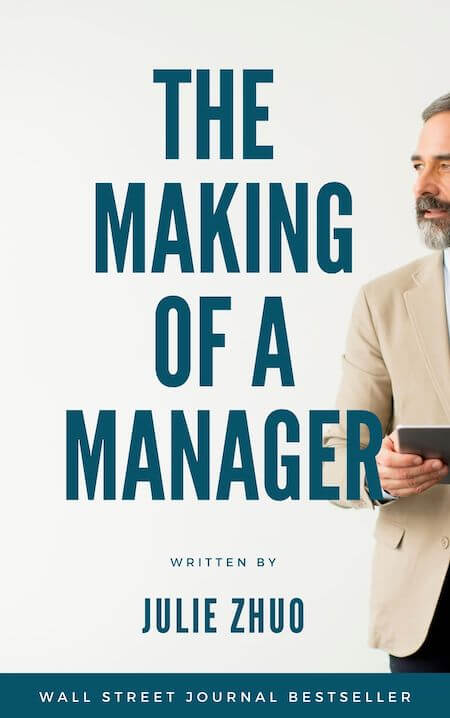
The Making of a Manager Book Summary
This The Making of a Manager Book Summary covers the key ideas, lessons, and takeaways in about 20 minutes.
Helps with these goals
Want the complete 20-minute summary?
- Full structured summary
- Video Summary
- Podcast Summary
- Key takeaways
- Exercises
- Quiz
- Highlights and notes
- Ask the book with AI
What is in the The Making of a Manager book summary?
Below is a preview of Sumizeit’s expert-written summary of The Making of a Manager by Julie Zhuo. The full summary covers the book’s key ideas in text, audio, and video.
Julie Zhuo, former VP of design at Facebook, teaches you how to be successful as a new manager.
At the age of 25, Zhuo was appointed as VP of the Facebook design team. That was her first managerial role. At first, she thought a manager should focus on having meetings with team members, giving them feedback, and promoting or firing them. Managers should make sure team members are working well together, achieve career goals, and develop a process to improve efficiency. However, a decade of experience later, Zhou realized it was most important for managers to help teams get great results.
The author realized that there are several routes to management. The author took the apprentice path, where her boss allowed her to manage part of his team. She received much coaching from her boss; however, it was hard to establish a good rapport with the team beneath her because they saw her more like a peer.
The Pioneer route of management entails starting new teams with the responsibility of handling the team’s growth. These managers get to build the team from the ground up; however, support is lacking from the organization because they only can best understand the team.
The new boss's path to management is when a manager is brought from a different team or organization to manage a workgroup that’s already running. He is allowed to make more mistakes in the beginning because he is seen as a newbie.
Giving your team member feedback is hard. The author encourages activity-specific feedback given to team members as soon as possible when they finish a project. These serve as great coaching sessions for every task completed. Let them know what they did well and the improvements they should make.
360 feedback sessions are when managers give feedback to a particular team member after consulting the wider team. Receiving feedback from your peers gives you a better perspective of how you can do better.
Meetings can be boring and a waste of time. To make meetings more productive, the author ensures that each meeting has a successful outcome or decision. All team members articulate their points of view clearly. The manager facilitates this process. All options and views must be presented and respected.
Hiring people is an important part of a manager’s job. All too often, the author sees managers hiring people simply to fill a vacancy. They fail to think deeply about how the skills, traits, and experience of the candidate will fit in with their team. Before hiring, the author encourages new managers to plan ahead.
At the start of the calendar year, ask yourself these questions.
What skills is my team lacking that we need?
What are their experiences and strengths?
What are the team’s priorities for the year? What is the expected rate of attrition? What is our budget?
How many recruits do we need?
What kind of experience does each recruit need to have?
What traits, personalities, and experience will increase the diversity of your team?
Want the complete 20-minute summary?
- Full structured summary
- Video Summary
- Podcast Summary
- Key takeaways
- Exercises
- Quiz
- Highlights and notes
- Ask the book with AI
Who should read The Making of a Manager?
The Making of a Manager is for anyone stepping into their first management role or struggling to navigate the transition from individual contributor to leader. Whether you're newly promoted, hired from outside, or building a team from scratch, this book provides practical guidance for establishing credibility, giving effective feedback, and building high-performing teams.
Why does The Making of a Manager matter?
Most organizations provide little formal training for new managers, leaving them to learn through trial and error. Julie Zhuo's real-world experience as Facebook's VP of Design offers proven strategies for the challenges that derail first-time managers—from uncomfortable feedback conversations to hiring mistakes that compound over time. In today's competitive talent market, learning to manage well directly impacts retention, team performance, and your own career trajectory.
What are the key themes in The Making of a Manager?
- The evolution from individual contributor to effective leader
- Building trust and credibility with your team
- Feedback as a continuous coaching tool, not a performance review
- Strategic hiring aligned with team needs and culture fit
- Running meetings that drive decisions and outcomes
- Managing as your team scales and grows
- Leadership paths differ based on circumstances
- Creating psychological safety and openness to disagreement
What are the key lessons from the The Making of a Manager book summary?
Great managers are made, not born
Management is a learnable skill developed through experience, reflection, and coaching rather than an innate talent. Even those with successful individual contributor careers need deliberate practice to become effective leaders.
Your core job is helping teams get great results
Effective management isn't about meetings, processes, or administrative tasks—it's about enabling your team to accomplish meaningful work. Everything else serves this fundamental purpose.
Choose feedback timing strategically
Activity-specific feedback delivered soon after completion is more impactful than delayed annual reviews. Coaching immediately after a project capitalizes on fresh context and demonstrates you're invested in growth.
360 feedback gives you a complete picture
Seeking input from peers and broader team members provides perspective on blind spots and areas for improvement you can't see alone. Balanced feedback sources create accountability and reveal impact.
Meetings need a clear purpose and outcome
Productive meetings have defined decision points or outcomes, clear articulation of viewpoints, and active facilitation by the manager. Without purpose, meetings waste collective time and energy.
Hiring is too important to do reactively
Planning hiring needs at the start of the year—considering skills gaps, team priorities, budget, and desired diversity—prevents desperation hiring that damages team dynamics. Thoughtful hiring decisions compound benefits over time.
Understand your path into management
Three common routes exist: the apprentice path (learning from your boss while managing part of their team), the pioneer path (building new teams from scratch), and the new boss path (joining an existing team from outside). Each path presents different challenges and advantages.
The apprentice path builds foundation but creates distance
Learning from a trusted mentor while managing your former peers is valuable, but those peers may resist your authority. Navigation requires building new credibility despite existing relationships.
Pioneer managers build teams but lack organizational support
Starting new teams from the ground up offers control and autonomy but leaves you to solve problems independently. You must become resourceful and advocate clearly for what your team needs.
New managers get grace periods to learn
External hires into management roles often receive more forgiveness for early mistakes because they're seen as new to the context. Use this window to learn the organization's dynamics and establish your leadership.
Feedback requires balancing praise and growth
Effective coaching acknowledges what someone did well while clearly identifying specific improvements needed. One-sided feedback—all praise or all criticism—limits growth and erodes trust.
Growth forces you to manage indirectly
As your team scales, you cannot maintain the same personal connection with every team member. You'll likely need to hire managers to manage managers, requiring you to lead through others.
Psychological safety enables better team performance
When team members know disagreement is welcome and their different viewpoints are genuinely valued, they contribute more fully and make better decisions. Leaders must actively demonstrate openness to opposing views.
Skill and culture fit both matter in hiring
Candidates who have the right background and experience but clash with team values or dynamics create ongoing friction. Evaluation requires assessing how traits, personality, and experience align with team needs beyond just job skills.
Diversity strengthens team capability
Intentionally building diverse teams—in background, experience, and perspective—makes teams more creative and resilient. This requires explicit planning rather than hoping it happens naturally.
Approachability is a deliberate choice you must communicate
As organizational distance increases between you and individual team members, you must actively work to remain approachable. Simply assuming people know you're open to input is insufficient; you must create explicit channels and repeatedly demonstrate it.
Want the complete 20-minute summary?
- Full structured summary
- Video Summary
- Podcast Summary
- Key takeaways
- Exercises
- Quiz
- Highlights and notes
- Ask the book with AI
How can you apply ideas from The Making of a Manager?
- Schedule quarterly one-on-ones with each team member to give activity-specific feedback tied to recent projects, not abstract annual reviews
- At the start of each calendar year, map your team's skill gaps, budget constraints, expected attrition, and diversity priorities to inform hiring throughout the year
- Establish a meeting standard that every meeting has a specific decision or outcome defined in advance, with a facilitator who ensures all viewpoints are heard
- When joining an existing team as a new manager, recognize the grace period you've been given and use early months to learn dynamics before making major changes
- Create explicit channels for disagreement and dissent—surveys, open office hours, or anonymous feedback mechanisms—and reward people who voice honest feedback
- When your team grows beyond your direct reporting span, draft a manager profile identifying the skills, traits, and experience needed in your first manager-of-managers hire
- Conduct 360 feedback sessions that gather peer perspectives on your leadership, then share findings with your team to demonstrate commitment to personal growth
What common mistakes do readers make with The Making of a Manager?
- Hiring to fill vacancies quickly rather than planning aligned with strategic team needs, resulting in poor cultural fit and turnover
- Waiting for formal review periods to give feedback instead of coaching immediately after projects while context is fresh
- Running meetings without clear outcomes or decision points, wasting collective time without advancing team goals
- Assuming your team knows you welcome disagreement instead of actively and repeatedly inviting diverse viewpoints and rewarding those who share honest feedback
Sumizeit Exercises Apply what you've learned
Turn ideas from The Making of a Manager into action with a short guided reflection: identify the biggest takeaway, connect it to your life, and commit to one step you can take in the next 24 hours.
What is the expert analysis of The Making of a Manager?
Overview
The Making of a Manager by Julie Zhuo offers an insightful and practical guide for new managers navigating the complex transition from individual contributor to effective leader. Zhuo, a Chinese-American computer scientist and former Vice President of Product and Design at Facebook, draws on her unique experience of becoming a manager at the young age of 25 to distill lessons that are both accessible and profound. Her tenure at one of the world’s most influential tech companies lends the book a rare blend of Silicon Valley rigor and human-centered leadership philosophy, making it a significant contribution to contemporary management literature.
Core Thesis
Zhuo’s central argument is that great managers are not born but made through intentional practice, reflection, and learning. She emphasizes that management is fundamentally about helping teams achieve outstanding results by fostering collaboration, providing timely and specific feedback, and thoughtfully building and nurturing teams. Rather than focusing solely on traditional managerial tasks like meetings and performance reviews, Zhuo advocates for a results-oriented approach that balances people management with strategic team development. Her framework acknowledges multiple pathways into management—apprentice, pioneer, and new boss—each with unique challenges and opportunities.
Strengths
- Practical Wisdom Rooted in Experience: Zhuo’s firsthand account of her rapid ascent to management at Facebook provides authentic, relatable insights that resonate with new managers facing similar challenges.
- Clear, Actionable Advice: The book excels in breaking down complex managerial responsibilities into manageable practices, such as giving activity-specific feedback, conducting 360-degree reviews, and running effective meetings with clear outcomes.
- Recognition of Diverse Management Paths: By categorizing routes into management roles, Zhuo offers a nuanced understanding that management is not monolithic, helping readers identify with their own journey and adapt strategies accordingly.
- Emphasis on Team Dynamics and Culture: The book thoughtfully addresses the importance of hiring with intention, fostering psychological safety, and encouraging dissenting opinions, which are critical for sustainable team success.
- Accessible and Engaging Style: Zhuo’s writing is approachable without sacrificing depth, making complex leadership concepts digestible for readers from varied backgrounds.
Critiques & Counterarguments
- Limited Scope of Examples: While Zhuo’s Silicon Valley experience is invaluable, the book’s examples and context are heavily tech-centric, which may reduce applicability for managers in traditional industries or non-tech environments.
- Potential Oversimplification of Feedback Dynamics: The advocacy for immediate, activity-specific feedback may underestimate the complexity of interpersonal dynamics and cultural differences that affect how feedback is received and processed.
- Underexplored Structural Challenges: Zhuo’s focus on individual managerial skills somewhat sidelines broader organizational and systemic factors—such as power dynamics, diversity and inclusion beyond hiring, and corporate politics—that significantly impact managerial effectiveness.
- Competing Leadership Models: Alternative schools of thought, such as transformational leadership or servant leadership, emphasize different priorities like inspiring vision or selfless service, which are less foregrounded in Zhuo’s pragmatic, results-driven framework.
- Real-World Evidence on Managerial Development: Research in organizational psychology suggests that managerial competence develops over longer periods with structured training and mentorship, which may contrast with Zhuo’s more experiential and self-directed learning emphasis.
Who Should Read This
The Making of a Manager is ideally suited for first-time managers, especially those in fast-paced, innovation-driven sectors such as technology and startups. It is a valuable resource for young leaders seeking practical guidance on building effective teams and developing core managerial skills. Additionally, experienced managers looking to revisit foundational principles or mentor new managers will find Zhuo’s insights beneficial. However, readers from more traditional or hierarchical industries may need to adapt the lessons to fit their organizational cultures and complexities.
Frequently asked questions about the The Making of a Manager book summary
What is The Making of a Manager about?
The Making of a Manager by Julie Zhuo is a practical guide for first-time managers based on her experience rising to VP of Design at Facebook at age 25. The book covers essential management fundamentals including giving effective feedback, running productive meetings, strategic hiring, building team credibility, and adapting your leadership as your team grows. Rather than theory, Zhuo shares real challenges she faced and actionable solutions for navigating the transition from individual contributor to effective leader.
Who should read The Making of a Manager?
Anyone stepping into a management role for the first time should read this book, including newly promoted employees, external hires into management positions, and those building teams from scratch. Even experienced individual contributors preparing for their first management opportunity will benefit from the practical frameworks. The book is equally valuable for seasoned managers who want to strengthen their fundamentals or compare their approaches to Zhuo's philosophy.
What are the main takeaways from The Making of a Manager?
The primary takeaway is that great managers are made through deliberate practice and learning, not born with innate talent. Key lessons include focusing on helping your team achieve results as your core responsibility, delivering activity-specific feedback soon after projects rather than waiting for annual reviews, hiring strategically aligned with team needs rather than reactively filling vacancies, running meetings with clear decision-making purposes, and building psychological safety so team members feel comfortable voicing disagreement. The book emphasizes that management approaches must adapt as teams scale and direct relationships become less personal.
How does Julie Zhuo approach giving feedback to team members?
Zhuo advocates for activity-specific feedback delivered as soon as possible after a project concludes, treating feedback sessions as coaching opportunities rather than performance evaluations. This approach keeps context fresh and allows managers to highlight both what was done well and specific improvements needed. She also recommends 360 feedback sessions where managers consult broader team input before providing feedback to an individual, offering a more complete perspective on impact and blind spots.
What hiring mistakes do first-time managers make?
The most common mistake is hiring reactively to fill a vacancy rather than planning strategically around team needs, priorities, and culture fit. Zhuo recommends starting each calendar year by assessing skill gaps, budget, expected attrition, diversity needs, and role requirements—then matching candidates against these criteria. Managers often overlook how a candidate's traits, personality, and background will mesh with existing team dynamics, leading to hires that create friction despite strong individual capabilities.
What are the three paths to becoming a manager?
Zhuo identifies three common paths: the apprentice path, where you manage part of your boss's team while learning from them (strong mentorship but peer distance challenges); the pioneer path, where you build new teams from the ground up (autonomy but limited organizational support); and the new boss path, where you're hired from outside to manage an existing team (grace period to learn but must establish credibility). Each path presents distinct advantages and obstacles to navigate.
How should managers run more productive meetings?
Effective meetings have three critical elements: a clear outcome or decision to be made, active facilitation by the manager ensuring all viewpoints are articulated, and genuine respect for different perspectives. Without a defined purpose, meetings waste collective time. The manager's role is to facilitate discussion, ensure all relevant options and views are presented, and guide toward a decision—not to dominate the conversation or shut down dissent.
About Sumizeit
Sumizeit is a profitable Scomy LLC company based in Miami, Florida. It has been helping readers learn from nonfiction books for 7 years with expert-written summaries in text, audio, podcast, and video.
Want the complete 20-minute summary?
- Full structured summary
- Video Summary
- Podcast Summary
- Key takeaways
- Exercises
- Quiz
- Highlights and notes
- Ask the book with AI
Here's why readers love Sumizeit
Join thousands of learners getting smarter every day
"Great experience. Detailed summaries. Loved the gamification feature. Makes learning fun. Good customer service. I recommend Sumizeit to anyone. You'll learn a lot."
"I always felt busy but still wanting to keep up with the book discussion in my friend group. This was a great supplement to help me keep reading the books I find fun while keeping up with important books."
"I love this website. Instead of scrolling social media, I find myself learning a lot. I use it everyday. I recommend this app for anyone who is too busy and wants to get up to speed with their favorite books."
The Making of a Manager Book Summary PDF
Looking for a The Making of a Manager Book Summary PDF you can save and revisit offline? Our The Making of a Manager Book Summary PDF captures the book’s core ideas in a clean, printable format — the key frameworks, takeaways, and structure without the fluff. Download the The Making of a Manager Book Summary PDF when you want a reference you can annotate, share with your team, or review on the go. Get your The Making of a Manager Book Summary PDF from the download page below.
Download The Making of a Manager Book Summary PDFPeople also liked these summaries
Readers who explored The Making of a Manager often enjoyed these titles next.



Want the complete 20-minute summary?
- Full structured summary
- Video Summary
- Podcast Summary
- Key takeaways
- Exercises
- Quiz
- Highlights and notes
- Ask the book with AI
Featured Book Titles
Popular Book Summaries at sumizeit, leading book summary app
