Question 1 of 5
According to the summary, what does David J. Schwartz say primarily determines success?
The summary states success is the result of mindset—people who think bigger, expect more, and act with belief in their potential.


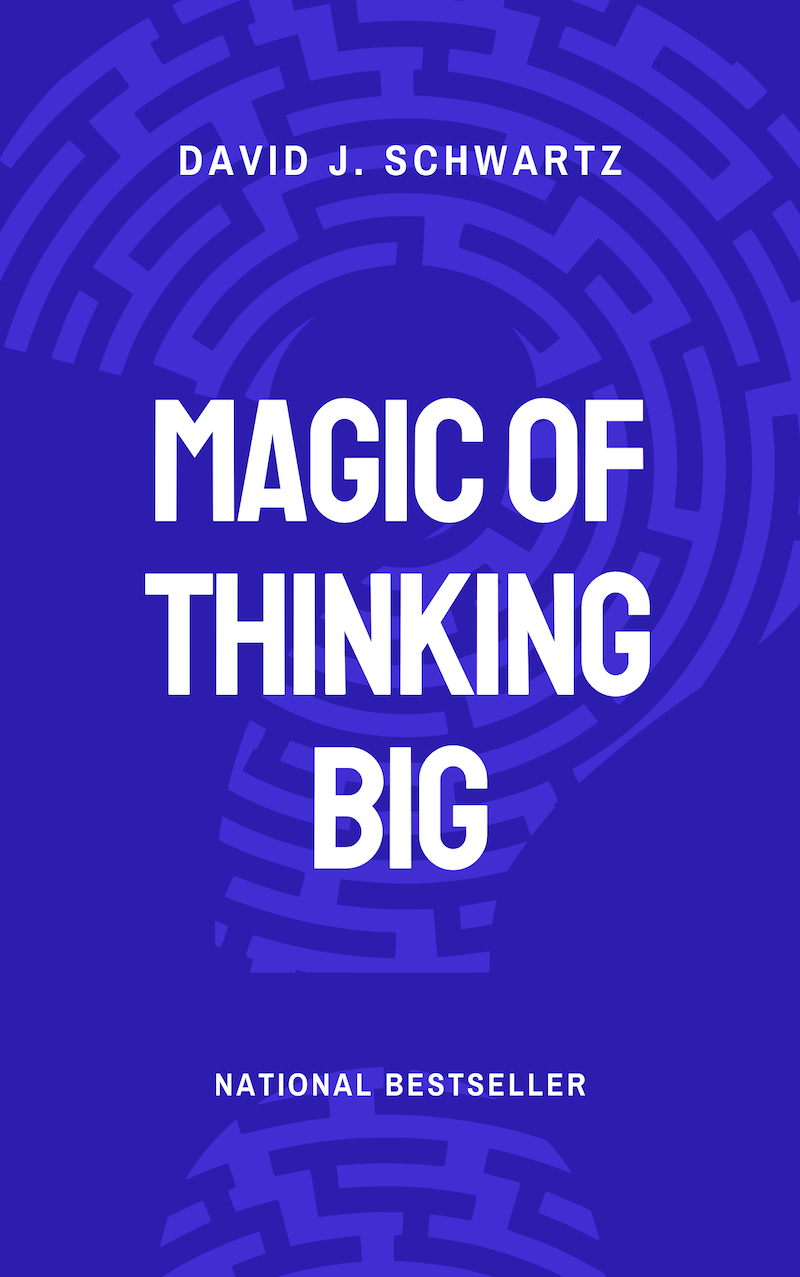
Prefer the print book? Buy on Amazon
As an Amazon Associate, Sumizeit earns from qualifying purchases.
This The Magic of Thinking Big Book Summary covers the key ideas, lessons, and takeaways in about 20 minutes.
Want a Free Weekly Read?
Get a free summary every week straight to your mailbox.
Below is a preview of Sumizeit’s comprehensive human-written summary of The Magic of Thinking Big by David J. Schwartz . The full summary is 15-20 minutes long and covers the book’s key ideas in text, audio, visual, and video formats. Unlock the full 20 Minute Summary
David J. Schwartz’s The Magic of Thinking Big teaches that success isn’t a matter of luck, genius, or privilege—it’s the result of mindset. The people who achieve greatness are not necessarily more intelligent or better educated than others; rather, they think bigger, expect more of themselves, and act with unwavering belief in their potential.
Schwartz explains that every achievement begins in the mind. When you believe you can succeed, your brain begins to generate ideas and energy to make success happen. Conversely, when you doubt yourself, your mind becomes paralyzed by fear and hesitation. He likens belief to a “power switch” that determines the strength of your thoughts and actions. For instance, a young engineer who believes he can lead a project will naturally begin planning, networking, and proposing solutions. But if he convinces himself he’s unqualified, he’ll miss opportunities to prove himself.
He recounts how successful people—from top salesmen to business owners—share one mental trait: they visualize success and act as though it’s inevitable. Henry Ford’s famous saying, “Whether you think you can or you think you can’t—you’re right,” perfectly summarizes this philosophy. Schwartz even points to ordinary people who achieved remarkable things simply by raising their expectations: a small-town teacher who believed she could revolutionize her school’s reading program and eventually earned national recognition, or a mechanic who believed he could run his own shop and did so by taking small, consistent steps.
Thinking big is not daydreaming—it’s strategic optimism. It means expanding your definition of what’s possible and rejecting limitations that others impose on you.
Schwartz identifies “excusitis”—the disease of making excuses—as one of the biggest obstacles to success. People use excuses to rationalize failure instead of taking control of their future. He breaks down the most common forms: health excuses, intelligence excuses, age excuses, and luck excuses.
He shares stories of people who overcame each. For example, one businessman blamed his declining health for his lack of success. Schwartz challenged him to exercise lightly, rest properly, and focus on what he could do. Within months, his energy and confidence returned—and so did his business results. The problem had never been his health, but his mindset.
The intelligence excuse is equally destructive. Schwartz argues that overestimating others’ intelligence and underestimating your own leads to paralysis. He recalls a conversation with a company executive who had built a multimillion-dollar business after flunking out of school. When asked how he did it, the man replied, “I hire smart people, but I think bigger than they do.” Intelligence, Schwartz insists, is less important than persistence and enthusiasm.
For the age excuse, he reminds readers that success is not bound by youth. He gives examples of people who began new careers at fifty or sixty—like Colonel Sanders founding KFC in his sixties, or Grandma Moses beginning her painting career in her seventies. Instead of saying, “I’m too old,” such people ask, “Why not now?”
As for luck, Schwartz dismantles the myth…
The Magic of Thinking Big is essential for anyone feeling stuck in their career, relationships, or personal growth who believes their circumstances are fixed. Whether you're an entrepreneur, professional, student, or someone simply tired of settling for less, this book speaks to those ready to elevate their thinking and take control of their future regardless of age, education level, or background.
In a world where self-doubt, fear, and negative self-talk sabotage millions of people daily, David J. Schwartz's timeless philosophy cuts through the noise with a radical truth: success is primarily a mindset challenge, not a circumstance problem. This book matters because it dismantles the excuses and limiting beliefs that keep people small, offering a practical framework for transforming how you think about yourself and your potential—which directly transforms your results.
Turn ideas from The Magic of Thinking Big into action with a short guided reflection: identify the biggest takeaway, connect it to your life, and commit to one step you can take in the next 24 hours.
The Magic of Thinking Big by David J. Schwartz stands as a seminal work in the self-improvement and motivational genre. First published in 1959, it has endured as a cornerstone text that transcends its era through timeless principles about mindset and success. Schwartz, a marketing professor and leadership trainer, crafted a philosophy centered on the transformative power of belief and expansive thinking. His work remains significant for anyone interested in the psychological underpinnings of achievement and the practical application of optimism and confidence in personal and professional realms.
At its heart, Schwartz’s central argument is that success is not predicated on innate intelligence, luck, or external circumstances but rather on the capacity to think big and cultivate a mindset of unwavering belief in one’s potential. He posits that the mind is the origin point of all achievement, and that by expanding one’s expectations, rejecting excuses, and acting decisively, individuals can unlock extraordinary outcomes. This thesis reframes success as a deliberate mental and behavioral choice rather than a matter of fate or talent.
The Magic of Thinking Big is ideally suited for readers embarking on personal development journeys, entrepreneurs seeking motivational frameworks, and professionals aiming to cultivate leadership qualities. It appeals to those who appreciate a blend of practical advice and inspirational storytelling, especially individuals willing to challenge self-imposed limitations and embrace proactive change. However, discerning readers should approach the book with a critical eye toward its more optimistic assertions, supplementing it with perspectives that address structural and psychological complexities beyond mindset alone.
Try a few questions from the The Magic of Thinking Big quiz. Unlock the full summary for the full quiz and answers that will help the ideas stick.
Question 1 of 5
The summary states success is the result of mindset—people who think bigger, expect more, and act with belief in their potential.
Question 2 of 5
The summary explicitly likens belief to a 'power switch' that determines the strength of your thoughts and actions.
Question 3 of 5
Schwartz identifies 'excusitis' as the disease of making excuses and a major obstacle to success.
Question 4 of 5
The summary lists health, intelligence, age, and luck excuses; 'environmental excuses' is not listed among the common forms.
Question 5 of 5
The summary explains confidence is built through action and integrity; dishonest behavior undermines lasting self-belief.
The Magic of Thinking Big by David J. Schwartz is about how mindset, not circumstances, determines success. The book teaches that belief, confidence, integrity, and decisive action are the real drivers of achievement, and that anyone can transform their life by eliminating excuses, conquering fear, and adopting a success-oriented way of thinking regardless of their background or current situation.
This book is ideal for anyone feeling stuck, underperforming, or limited by self-doubt—including entrepreneurs, professionals, students, and people in career transitions. It's especially valuable for those who tend to make excuses based on age, intelligence, health, or luck, and who are ready to take responsibility for creating the life they want.
The core takeaways are: belief is the foundation of achievement; excuses are the primary barrier to success; confidence is built through ethical action, not inherited; fear dissolves through action; your environment shapes your results; and leadership is a mindset choice available to everyone. Schwartz emphasizes that success is predictable when you eliminate limiting beliefs, take consistent action, and maintain integrity.
Thinking big is not daydreaming or wishful thinking—it's strategic optimism grounded in action. It means expanding your definition of what's possible, refusing to accept limitations others impose on you, and committing to achievement through deliberate thought patterns, visualization, and persistent action despite fear or imperfect conditions.
Schwartz teaches that failure is not the opposite of success but a stepping stone toward it. Every defeat contains a lesson if you look for it. Rather than accepting failure as permanent, he advises treating setbacks as feedback, extracting the lesson, accepting responsibility, and taking action again immediately—turning what looks like a setback into a setup for a comeback.
Schwartz explains that genuine confidence comes from two sources: acting confidently through deliberate physical behaviors like strong posture and eye contact, and maintaining absolute integrity in your actions. Confidence built on ethical behavior is unshakeable, while confidence based on dishonesty creates guilt and fear that eventually sabotage your success.
Excusitis is the habit of using health, intelligence, age, or bad luck as reasons for failure. Schwartz argues these are excuses that rationalize mediocrity rather than real obstacles. You overcome it by accepting responsibility for your results, focusing on what you can control, and taking action despite these perceived limitations—proving to yourself they're far less limiting than you believed.
Sumizeit is a profitable Scomy LLC company based in Miami, Florida. It has been helping readers learn from nonfiction books for 7 years with expert-written summaries in text, audio, podcast, and video.
Join thousands of learners getting smarter every day
"Great experience. Detailed summaries. Loved the gamification feature. Makes learning fun. Good customer service. I recommend Sumizeit to anyone. You'll learn a lot."
"I always felt busy but still wanting to keep up with the book discussion in my friend group. This was a great supplement to help me keep reading the books I find fun while keeping up with important books."
"I love this website. Instead of scrolling social media, I find myself learning a lot. I use it everyday. I recommend this app for anyone who is too busy and wants to get up to speed with their favorite books."
Looking for a The Magic of Thinking Big Book Summary PDF you can save and revisit offline? Our The Magic of Thinking Big Book Summary PDF captures the book’s core ideas in a clean, printable format — the key frameworks, takeaways, and structure without the fluff. Download the The Magic of Thinking Big Book Summary PDF when you want a reference you can annotate, share with your team, or review on the go. Get your The Magic of Thinking Big Book Summary PDF from the download page below.
Download The Magic of Thinking Big Book Summary PDFReaders who explored The Magic of Thinking Big often enjoyed these titles next.
Popular Book Summaries at sumizeit, leading book summary app