


As an Amazon Associate, Sumizeit earns from qualifying purchases.
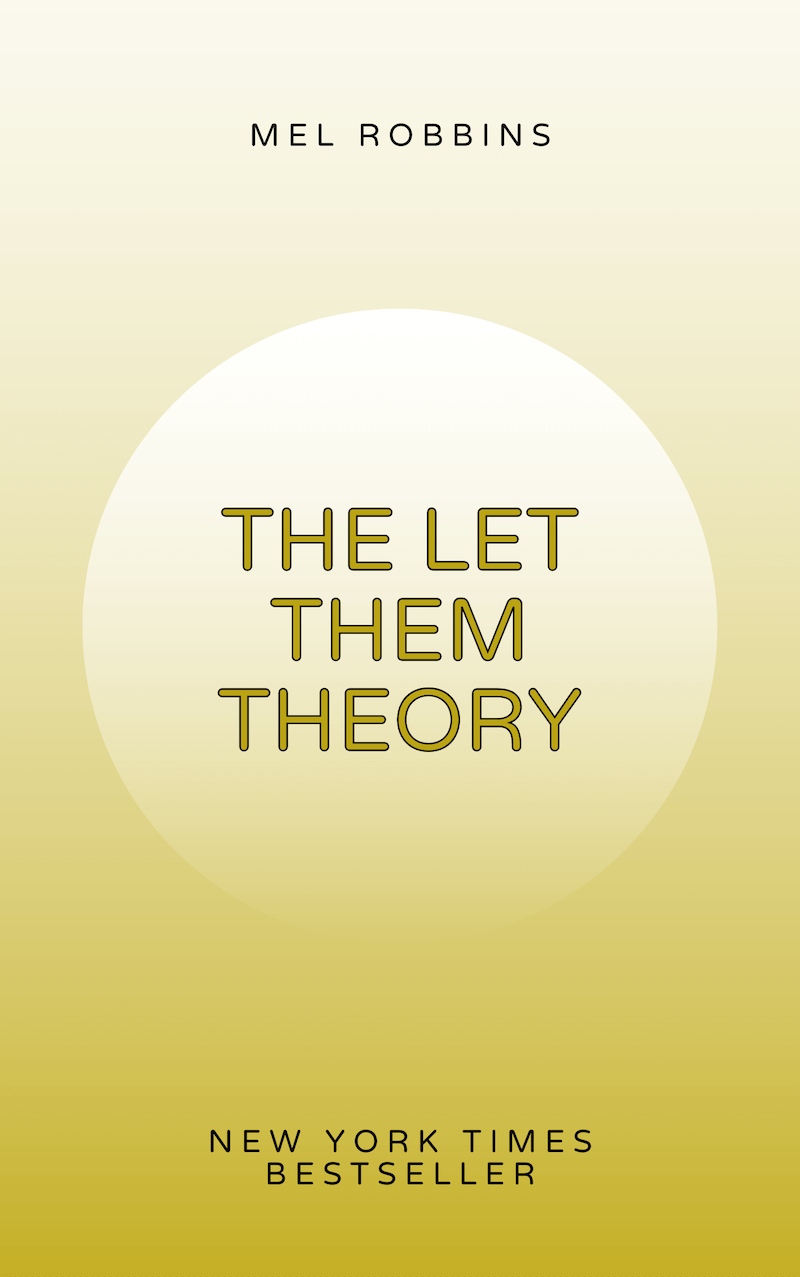
The Let Them Theory Book Summary
This The Let Them Theory Book Summary covers the key ideas, lessons, and takeaways in about 20 minutes.
The phrase “Let Them” allows you to let go of the pressure of managing other people’s emotions and expectations. This release allows you to live your life without seeking the approval of others. It is not your business how they react or feel about your life. Trying to fix or control what other people think or do leaves you feeling drained and stuck.
To regain control of your life, you have to implement the second step of the method, which is “Let Me.” Let Me shifts your focus inward. By saying, “Let me walk away,” or “Let me set a boundary,” you are channeling something very powerful. You are reclaiming your personal power while also choosing peace.
This two-step method can help to transform your mindset when it comes to your relationship with others as well as yourself. When you stop trying to change things you can’t control, you gain clarity, confidence, and contentment.
Want the complete 20-minute summary?
- Full structured summary
- Video Summary
- Podcast Summary
- Audio summary
- Key takeaways
- Exercises
- Quiz
- Highlights and notes
- Ask the book with AI
What is in the The Let Them Theory book summary?
Below is a preview of Sumizeit’s expert-written summary of The Let Them Theory by Mel Robbins. The full summary covers the book’s key ideas in text, audio, and video.
Key Insights
In “The Let Them Theory” by Mel Robbins, you will learn how you’ve been trying your best to control things that aren’t yours to manage. This could be trying to keep the peace with someone by walking on eggshells around them, or trying to come up with the perfect words to make someone like you. Sounds draining, right?
Usually, after all the fuss, you’re left feeling let down, and that’s because you cannot control how others react to your words and behavior.
Mel Robbins offers a refreshing approach that will strengthen and uplift your relationships, called the Let Them Theory. With her insight, you will be able to bring your energy back to you and stop worrying how you’re coming off to other people, because truly, it’s not your concern!
Let Them Choose Their Path
Has there ever been a time when you found out that you weren’t invited to a dinner out with a group of friends? You probably started trying to recount your last text message in the group text, or the last phone call, or social interaction with the person who made the dinner plans. Chances are, you started spiraling, wondering what you did to warrant not being invited.
Your first instinct is to blame yourself by convincing yourself that you did something to that person to make them angry and therefore not invite you to attend the dinner outing. The truth is, that instinct isn’t just present in social situations and friendships. In fact, that urge to explain yourself and fix whatever you did to smooth things over is a response that you have to anything remotely uncomfortable. The foundation of the response is your need for control.
Your need for control makes other people’s personal choices, reactions, and opinions feel like emergencies that you need to attend to. But, really, it’s not your responsibility.
Robbins’ The Let Theory helps you to extinguish that cycle from your life. When you bow down and say “Let them,” you’re able to save your energy for yourself rather than wasting your energy on the things you can’t control. For example, say “Let them go on a trip without me,” or “Let them ignore my text message.” This practice doesn’t repress your emotions, but rather takes back your energy.
This theory has been seen in other parts of our culture. In Stoicism, we are taught that power lies in what you do, rather than what others do. In Buddhism, we are warned against resisting reality. The detachment theory also shows how detaching yourself from a situation can reduce your stress level and provide clarity. Robbins’ The Let Them Theory allows you to bring the ideals of these beliefs together and practice them in real time, without extensive philosophical or religious studies.
You have to remember that just because you’re detaching, it doesn’t mean you have to disappear. You don’t want to completely withdraw yourself every time you say “Let them.” Instead, you want to follow it up with…
Want the complete 20-minute summary?
- Full structured summary
- Video Summary
- Podcast Summary
- Audio summary
- Key takeaways
- Exercises
- Quiz
- Highlights and notes
- Ask the book with AI
Who should read The Let Them Theory?
The Let Them Theory by Mel Robbins is ideal for anyone who struggles with people-pleasing, anxiety about others' opinions, or the constant urge to control situations beyond their reach. If you find yourself walking on eggshells, overanalyzing conversations, or exhausting yourself trying to manage other people's emotions and reactions, this book offers a practical framework for reclaiming your peace.
Why does The Let Them Theory matter?
In today's hyper-connected world, we're more exposed to others' judgments and expectations than ever before. Chronic stress from trying to control uncontrollable external factors rewires your brain and depletes your energy, leaving you reactive rather than intentional. The Let Them Theory provides science-backed strategies to break this cycle and redirect your limited energy toward what actually matters: your own choices, values, and wellbeing.
What are the key themes in The Let Them Theory?
- Releasing control over others' thoughts, reactions, and choices
- Redirecting personal energy toward what you can control
- Breaking free from people-pleasing and seeking approval
- Setting healthy boundaries in relationships
- Transforming jealousy and comparison into motivation
- Distinguishing between love and enabling
- Building authentic relationships based on shared values
What are the key lessons from the The Let Them Theory book summary?
You Cannot Control How Others React
No matter how carefully you choose your words or how hard you try to manage someone's perception of you, their reaction ultimately belongs to them. Accepting this truth frees you from the exhausting work of managing others' emotions.
Letting Go Means Redirecting, Not Disappearing
The Let Them Theory isn't about withdrawing from life or relationships. Instead, it's about releasing what you can't control while actively choosing how you respond with the "Let Me" component.
Chronic Stress Hijacks Your Brain
Stress triggers your amygdala and puts you in fight-or-flight mode, disconnecting your prefrontal cortex from decision-making. By using "Let Me" statements like pausing to breathe, you reactivate your ability to think clearly.
Fear of Judgment Keeps You Small
Building your life around others' approval prevents you from living authentically and pursuing what matters to you. People will judge regardless, so the question becomes: will you let that stop you from being yourself?
Judgment and Love Can Coexist
Even people who love you deeply may sometimes judge you or disagree with your choices. Criticism doesn't cancel connection; understanding this allows you to live boldly without fearing relationship loss.
Adult Friendships Require Intentional Effort
Unlike school friendships that happen automatically, adult connections fade naturally due to distance, timing, and changing priorities—not because you did something wrong. Holding on to drifting friendships drains energy better spent elsewhere.
Pushing Someone to Change Backfires
The harder you pressure someone to improve, the harder they resist. Real change only happens when the person feels internally motivated and ready, not when forced by someone else's expectations.
You Cannot Save Someone Who Doesn't Want Saving
Constantly rescuing someone actually enables them and prevents them from developing their own capacity for change. True support means believing in their ability to help themselves.
Emotional Reactions Peak and Pass Quickly
When you resist the urge to act on reactive emotions—like sending an angry message—the feeling typically subsides within 90 seconds. Riding out emotions without acting on them breaks negative cycles.
Jealousy Can Be a Tool for Self-Discovery
Rather than viewing envy as self-torture, examine it to uncover hidden dreams and goals. What makes you jealous often reveals what you truly want to pursue in your own life.
Comparison Disconnects You From Your Own Potential
The more you focus on others' achievements and advantages, the less energy you have to build your own dream life. Redirecting that focus inward is where real progress begins.
Boundaries Aren't Punishment—They're Clarity
Clear boundaries like "you can stay here only if you stay sober" place responsibility where it belongs and may actually motivate positive change better than enabling ever could.
Use the 5 Whys Method to Understand Your Triggers
By asking "why" five times about why someone's behavior bothers you, you uncover the underlying fear or issue—often revealing more about your own patterns than theirs.
The ABC Loop Influences Without Pressure
Apologizing for trying to control, asking open questions, backing off, and leading by example creates space for change in others without the resistance that comes from force.
Love Is Not the Same as Saving
Acting as if someone cannot handle their own life teaches them to believe the same thing. Real love means believing in their capability and supporting without fixing.
Modern Dating Requires Clarity About What You Want
Being direct about your intentions and non-negotiable needs filters out incompatible partners early, protecting your time and self-respect.
Compatibility Is About Aligned Goals, Not Just Chemistry
Two people can feel attraction but be fundamentally incompatible if their life goals, values, or visions for the future diverge. True partnership requires shared direction.
You Are Your Own Complete Love
When you stop viewing yourself as incomplete and waiting for someone to complete you, you can attract genuine partnership from a place of wholeness rather than neediness.
Detachment Reduces Stress and Provides Clarity
By releasing resistance to what you cannot control, you lower chronic stress levels and gain mental clarity to see situations more objectively and respond more wisely.
Your Energy Is a Finite Resource to Protect
Every moment spent managing others' emotions, seeking approval, or trying to control outcomes is energy stolen from your own growth and happiness. Reclaiming it is an act of self-respect.
Want the complete 20-minute summary?
- Full structured summary
- Video Summary
- Podcast Summary
- Audio summary
- Key takeaways
- Exercises
- Quiz
- Highlights and notes
- Ask the book with AI
How can you apply ideas from The Let Them Theory?
- When excluded from a social event, say "Let them make their plans" and redirect energy toward friendships that reciprocate instead of spiraling about what you did wrong
- Practice saying "Let them judge" before sharing your authentic self online, pursuing a promotion, or trying something creative, then follow with "Let me be proud of this"
- Use "Let me take a breath" or "Let me pause" when triggered by traffic, a rude comment, or small stressors to activate your vagus nerve and regain mental clarity
- Identify a relationship where you're trying to force change; apologize for controlling behavior, ask open questions, back off, and model the change you want to see
- When comparing yourself to others on social media, acknowledge the jealousy, ask what it reveals about your hidden dreams, then commit to pursuing your own version of that goal
- Set a clear boundary with someone you've been rescuing (e.g., "you can stay here if you stay sober"), then let the consequences be their teacher
- In dating, replace "Will they approve of me?" with "Do we share core goals and values?" and walk away from relationships that don't align with your non-negotiables
What common mistakes do readers make with The Let Them Theory?
- Believing that letting go means complete withdrawal or not caring about the relationship—healthy detachment still allows you to show up authentically and with boundaries
- Trying to apply the theory without the "Let Me" component, which results in passive resignation instead of active personal empowerment and intentional choice
- Continuing to pour energy into friendships and relationships that are naturally drifting, confusing natural life changes with personal rejection or failure
- Using the Let Them Theory as permission to be unkind or dismissive, when the real practice is releasing others' emotions while maintaining your own integrity and compassion
Sumizeit Exercises Apply what you've learned
Turn ideas from The Let Them Theory into action with a short guided reflection: identify the biggest takeaway, connect it to your life, and commit to one step you can take in the next 24 hours.
What is the expert analysis of The Let Them Theory?
Overview
The Let Them Theory by Mel Robbins emerges as a compelling contribution to contemporary self-help literature, authored by a renowned motivational speaker and best-selling writer. Robbins, known for her pragmatic approach to personal growth through works like The 5 Second Rule, distills complex psychological and philosophical concepts into accessible, actionable advice. This book is significant for its synthesis of Stoic detachment, Buddhist acceptance, and modern neuroscience into a coherent framework aimed at reclaiming personal energy and fostering healthier relationships.
Core Thesis
At the heart of Robbins’ argument is the assertion that much of human distress stems from futile attempts to control others’ behaviors, emotions, and judgments. The “Let Them Theory” advocates a dual-step process: first, “Let Them,” which involves consciously releasing the desire to manage external reactions; and second, “Let Me,” which empowers individuals to reclaim agency over their own responses and boundaries. This paradigm shift from external control to internal sovereignty promises greater emotional resilience, authenticity, and clarity in interpersonal dynamics.
Strengths
- Integrative Approach: Robbins skillfully weaves together ancient philosophies such as Stoicism and Buddhism with contemporary psychological insights, making timeless wisdom accessible without requiring deep philosophical study.
- Practical Framework: The “Let Them, Let Me” two-step method offers a tangible, memorable tool that readers can readily apply across various social contexts, from friendships and romantic relationships to workplace interactions.
- Emphasis on Personal Boundaries: By encouraging readers to focus on what they can control—their own actions and attitudes—Robbins promotes healthier emotional boundaries that prevent burnout and resentment.
- Neuroscientific Support: The inclusion of research on stress responses and brain function, such as the role of the amygdala and prefrontal cortex, lends scientific credibility to the emotional regulation strategies proposed.
- Relatable Examples: The book’s use of everyday scenarios—social exclusion, judgment fears, adult friendships—enhances its resonance and applicability for a broad audience.
Critiques & Counterarguments
- Potential Oversimplification: While the “Let Them, Let Me” framework is elegant, it may understate the complexity of certain relational dynamics, such as abusive relationships or deep-seated psychological disorders, where detachment alone is insufficient and professional intervention is necessary.
- Limited Engagement with Structural Factors: The book focuses heavily on individual agency without addressing systemic or cultural influences that shape interpersonal behavior and emotional labor, potentially placing undue responsibility on individuals to manage others’ reactions.
- Evidence Base and Empirical Validation: Although the theory draws on neuroscience and psychology, the book lacks rigorous empirical studies directly testing the efficacy of the “Let Them Theory” as a behavioral intervention.
- Contrasting Psychological Schools: Approaches such as attachment theory emphasize the importance of relational interdependence and emotional attunement, suggesting that some level of mutual regulation is essential for healthy relationships, which may conflict with a strict detachment stance.
- Risk of Emotional Suppression: The encouragement to “let them be” could be misinterpreted as endorsing emotional disengagement or avoidance, which might exacerbate issues in relationships requiring active communication and conflict resolution.
Who Should Read This
The Let Them Theory is ideally suited for readers seeking practical strategies to reduce emotional exhaustion and improve relational boundaries without delving into dense theoretical texts. Professionals in high-stress environments, individuals prone to people-pleasing or anxiety about social approval, and those interested in integrating mindfulness and cognitive behavioral techniques will find Robbins’ approach particularly valuable. Additionally, readers appreciative of motivational literature grounded in both ancient wisdom and modern science will benefit from this accessible guide to reclaiming personal power and fostering authentic connections.
Frequently asked questions about the The Let Them Theory book summary
What is The Let Them Theory about?
The Let Them Theory by Mel Robbins is a framework for reclaiming personal power by releasing control over things you cannot change—specifically, how others think, feel, react, and behave. The core method has two parts: "Let Them" (accept what's outside your control) and "Let Me" (take intentional action on what's within your control). This simple two-step practice reduces stress, builds authenticity, and transforms relationships by redirecting your limited energy toward your own values and choices.
Who should read The Let Them Theory?
This book is ideal for people-pleasers, chronic worriers, and anyone exhausted by trying to manage others' opinions and emotions. It's especially valuable for those struggling with anxiety about judgment, perfectionism, boundary-setting, toxic relationships, or the constant urge to fix or save others. Whether you're dealing with friendship drift, dating challenges, family conflict, or simply seeking more peace and authenticity in your life, this book offers practical, science-backed strategies.
What are the main takeaways from The Let Them Theory?
The main takeaway is that releasing control over others' reactions and focusing instead on your own choices is the path to peace, clarity, and authentic living. Key insights include: (1) You cannot manage others' emotions or opinions no matter how hard you try; (2) Chronic stress from attempting to control the uncontrollable rewires your brain and depletes your energy; (3) The two-part method—Let Them and Let Me—works across all relationships and situations; (4) Real change in others happens through boundary-setting and modeling, not pressure; and (5) Your energy is finite and precious—protect it by releasing what isn't yours to control.
How does The Let Them Theory apply to dating and relationships?
The theory teaches that love cannot be chased—it must be chosen mutually. In dating, this means being clear about what you need, letting go of partners who don't align with your goals, and not trying to fix someone's commitment issues or emotional unavailability. For existing relationships, use the ABC Loop (Apologize, Ask, Back off, Celebrate) to stop controlling your partner, then decide if fundamental incompatibilities are deal-breakers. The core principle: you cannot make someone love you or want to build with you, so release that control and only invest in relationships where effort is mutual.
Can The Let Them Theory help with anxiety and stress?
Yes. The book explains that chronic stress from trying to control others hijacks your nervous system, putting you in a reactive fight-or-flight state. By using "Let Me" statements—such as "Let me pause" or "Let me breathe"—you activate your vagus nerve and reconnect with your prefrontal cortex for clear thinking. This simple practice, combined with releasing what you cannot control, reduces daily stress and breaks the cycle of reactivity. The science-backed approach means you're not just managing emotions; you're rewiring how your brain responds to stress.
How does Mel Robbins explain letting go without abandoning relationships?
Robbins emphasizes that letting go does not mean disappearing from a relationship. "Let Them" is paired with "Let Me," which means you can still choose to show up, set boundaries, ask questions, and support people—but from a place of your own power, not from trying to control their choices. For example, with a struggling friend, you might say "Let them resist my advice" and "Let me sit with them without trying to fix them." This allows you to maintain connection while protecting your energy and respecting their autonomy.
What is the difference between enabling and supporting according to The Let Them Theory?
Enabling means constantly rescuing someone and preventing natural consequences, which actually teaches them they cannot handle their own life. Supporting means believing in someone's capability, setting clear boundaries, offering practical help (like a grocery delivery), and letting them experience the consequences of their choices. For instance, if you're supporting a friend's sobriety, you might say "you can stay here if you stay sober" and mean it—allowing the boundary to be their motivation rather than your endless rescue efforts.
About Sumizeit
Sumizeit is a profitable Scomy LLC company based in Miami, Florida. It has been helping readers learn from nonfiction books for 7 years with expert-written summaries in text, audio, podcast, and video.
Want the complete 20-minute summary?
- Full structured summary
- Video Summary
- Podcast Summary
- Audio summary
- Key takeaways
- Exercises
- Quiz
- Highlights and notes
- Ask the book with AI
Here's why readers love Sumizeit
Join thousands of learners getting smarter every day
"Great experience. Detailed summaries. Loved the gamification feature. Makes learning fun. Good customer service. I recommend Sumizeit to anyone. You'll learn a lot."
"I always felt busy but still wanting to keep up with the book discussion in my friend group. This was a great supplement to help me keep reading the books I find fun while keeping up with important books."
"I love this website. Instead of scrolling social media, I find myself learning a lot. I use it everyday. I recommend this app for anyone who is too busy and wants to get up to speed with their favorite books."
The Let Them Theory Book Summary PDF
Looking for a The Let Them Theory Book Summary PDF you can save and revisit offline? Our The Let Them Theory Book Summary PDF captures the book’s core ideas in a clean, printable format — the key frameworks, takeaways, and structure without the fluff. Download the The Let Them Theory Book Summary PDF when you want a reference you can annotate, share with your team, or review on the go. Get your The Let Them Theory Book Summary PDF from the download page below.
Download The Let Them Theory Book Summary PDFPeople also liked these summaries
Readers who explored The Let Them Theory often enjoyed these titles next.


Want the complete 20-minute summary?
- Full structured summary
- Video Summary
- Podcast Summary
- Audio summary
- Key takeaways
- Exercises
- Quiz
- Highlights and notes
- Ask the book with AI
Featured Book Titles
Popular Book Summaries at sumizeit, leading book summary app