


Prefer the print book? Buy on Amazon
As an Amazon Associate, Sumizeit earns from qualifying purchases.
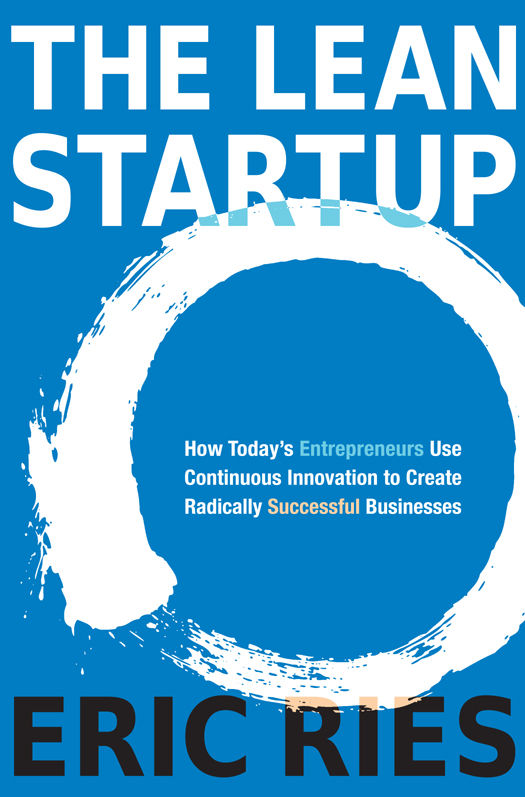
The Lean Startup Book Summary
This The Lean Startup Book Summary covers the key ideas, lessons, and takeaways in about 20 minutes.
Short Description:
Define jobs, recruit, and interview thoroughly to hire best
Helps with these goals
Want a Free Weekly Read?
Get a free summary every week straight to your mailbox.
Preview the The Lean Startup book summary
Below is a preview of Sumizeit’s comprehensive human-written summary of The Lean Startup by Eric Ries. The full summary is 15-20 minutes long and covers the book’s key ideas in text, audio, visual, and video formats. Unlock the full 20 Minute Summary
The Lean Startup redefines what it means to build and scale a new venture in an age where uncertainty dominates both markets and technology. Eric Ries argues that traditional assumptions about entrepreneurship—that success requires a perfect business plan, a polished launch, and flawless execution—are no longer effective. In reality, most startups fail not because their founders lacked effort or intelligence, but because they spent years building something customers didn’t want. The Lean Startup model replaces long planning cycles with rapid learning cycles and replaces intuition with measurable evidence.
Ries clarifies that a startup is not defined by its size. It can be two founders in a garage, a team inside a multinational corporation experimenting with a new idea, or even a nonprofit. What defines a startup is uncertainty: a team creating a new product or service under unknown market conditions. In such environments, strategies based on prediction fall apart. Instead, success depends on discovering the right thing to build—not just building efficiently.
The goal of a startup is not to deliver a completed product as quickly as possible, but to learn how to build a sustainable business. Every decision must contribute to this learning. This means innovation must be treated as a process built on experimentation, quick iteration, and customer insight rather than lengthy planning.
Lean Thinking: Eliminating Waste to Maximize Value
Ries borrows heavily from Toyota’s lean manufacturing philosophy, which emphasized eliminating waste in physical production. Toyota studied how materials moved through factories and discovered that keeping inventory low and allowing problems to surface early dramatically improved performance. Ries adapts these principles for innovation rather than manufacturing. In a startup, waste isn’t piles of unsold parts—waste is any activity that does not contribute to learning what the customers value.
For example, many startups invest heavily in design, engineering, branding, and market research for features that are never used. A team might spend six months polishing a complex onboarding flow only to discover that users abandon the product before reaching it. Lean thinking asks instead: What is the smallest step we can take right now to learn whether customers care about this problem?
Consider the example of Zappos, which later became a billion-dollar online shoe retailer. Instead of building warehouses and a sophisticated e-commerce platform, founder Nick Swinmurn tested his hypothesis by taking photos of shoes at local stores and posting them online. When someone purchased, he manually bought the shoes and shipped them. It wasn’t automated and it wasn’t scalable—but it revealed that people would indeed buy shoes online, validating the core insight before investing millions.
This approach avoids years of wasted development and allows teams to adjust quickly when reality conflicts with expectations.
Validated Learning: Proving Progress With Evidence
The Lean Startup asserts that startups exist to learn—not to build things, meet deadlines, or hit surface-level metrics. Validated learning means using real customer behavior to confirm or reject hypotheses about the business. It replaces guesswork with data.
For instance, imagine a founder believes that customers will pay for…
Want the complete 20-minute summary?
- Full structured summary
- Video Summary
- Podcast Summary
- Audio summary
- Infographic
- Key takeaways
- Exercises
- Quiz
- Highlights and notes
- Ask the book with AI
Who should read The Lean Startup?
The Lean Startup is essential reading for entrepreneurs launching new ventures, product managers building innovative solutions, and leaders within established organizations seeking to foster a culture of experimentation. It's equally valuable for anyone responsible for bringing new ideas to market, regardless of company size or industry, who wants to replace guesswork with data-driven decision-making.
Why does The Lean Startup matter?
In today's fast-moving markets, the traditional approach of spending months or years perfecting a product behind closed doors often leads to failure and wasted resources. The Lean Startup by Eric Ries offers a proven methodology for learning what customers actually want through rapid experimentation rather than elaborate planning, helping teams succeed in environments of extreme uncertainty. This framework has become foundational for modern product development, venture capital strategy, and corporate innovation worldwide.
What are the key themes in The Lean Startup?
- Experimentation and rapid iteration over lengthy planning cycles
- Validated learning through real customer behavior, not assumptions
- Minimizing waste by focusing only on what creates learning
- Embracing pivots as strategic decisions, not failures
- Metrics that reveal truth, not vanity metrics that mislead
- Scaling only after confirming product-market fit
How can you apply ideas from The Lean Startup?
- Create and release an MVP within weeks, not months, to test your core business hypothesis with real users
- Establish a Build-Measure-Learn feedback loop and track how many days it takes to complete each cycle, with the goal of accelerating it
- Replace vanity metrics dashboards with actionable metrics that show cause-and-effect relationships between changes and customer behavior
- Implement cohort analysis to track whether successive groups of users show improvement or whether growth is hollow
- Run small experiments that test one assumption at a time before committing to larger investments or feature rollouts
- Set clear pivot-or-persevere decision points tied to specific metrics, so teams know in advance when to change direction
- Deploy updates frequently in small batches rather than large releases, catching problems early and enabling rapid feedback loops
- Adopt innovation accounting within your organization to measure progress based on learning rather than traditional project milestones
What common mistakes do readers make with The Lean Startup?
- Spending months perfecting a product in isolation before testing with customers, only to discover they don't want it
- Celebrating vanity metrics like total downloads or registered users while ignoring retention, engagement, and actual revenue
- Resisting pivots because of emotional attachment to the original idea, wasting time and capital on a failing strategy
- Confusing activity with progress by measuring features built or launches completed instead of validated learning and business impact
Sumizeit Exercises Apply what you've learned
Turn ideas from The Lean Startup into action with a short guided reflection: identify the biggest takeaway, connect it to your life, and commit to one step you can take in the next 24 hours.
What is the expert analysis of The Lean Startup?
Overview
The Lean Startup, authored by Eric Ries, stands as a seminal work in the contemporary discourse on entrepreneurship and innovation management. Ries, an entrepreneur and innovation strategist, synthesizes his practical experiences with startups and corporate innovation to articulate a methodology that challenges traditional business planning paradigms. The book’s significance lies in its reshaping of how new ventures approach product development and market engagement amidst uncertainty, offering a framework that has influenced startups, established corporations, and venture capitalists alike.
Core Thesis
At its core, The Lean Startup posits that the fundamental challenge for any new venture is not flawless execution of a predetermined plan but the rapid discovery of what customers truly want. Ries argues that startups operate under conditions of extreme uncertainty, where traditional predictive strategies fail. Instead, success depends on a disciplined process of validated learning through iterative experimentation, employing minimum viable products (MVPs) and actionable metrics to inform continuous adaptation. The methodology transforms entrepreneurship into a scientific process aimed at minimizing waste and accelerating learning to reduce the risk of failure.
Strengths
- Pragmatic Framework: Ries provides a clear, actionable methodology that demystifies the innovation process, making it accessible to entrepreneurs and intrapreneurs alike.
- Integration of Lean Manufacturing Principles: By adapting Toyota’s lean manufacturing concepts to the realm of innovation, the book offers a novel perspective on eliminating waste—not in materials but in time and effort spent on unvalidated ideas.
- Emphasis on Empirical Validation: The focus on validated learning and evidence-based decision-making counters the often speculative nature of startup ventures, fostering a culture of data-driven iteration.
- Illustrative Case Studies: Real-world examples such as Zappos, Dropbox, Airbnb, and Twitter ground the theory in practical success stories, enhancing the book’s credibility and relatability.
- Applicability Beyond Startups: The extension of lean principles to established organizations addresses a critical gap in innovation literature, offering tools to overcome bureaucratic inertia and risk aversion.
Critiques & Counterarguments
- Oversimplification of Complex Realities: While the Build-Measure-Learn loop is elegant, some critics argue it underestimates the complexity of market dynamics and the role of visionary leadership that may not always be immediately validated by customer feedback.
- Limited Scope of MVPs: The MVP concept, though powerful, can be misapplied, leading to premature releases that harm brand reputation or fail to capture the nuanced value propositions of certain products, especially in highly regulated or safety-critical industries.
- Potential Neglect of Long-Term Vision: The intense focus on iterative learning and pivoting might discourage entrepreneurs from pursuing bold, long-term innovations that require sustained investment before yielding measurable customer validation.
- Competing Schools of Thought: Approaches like Design Thinking emphasize empathy and deep user understanding prior to experimentation, suggesting that Lean Startup’s rapid iteration may sometimes sideline qualitative insights in favor of quantitative metrics.
- Empirical Evidence Variability: Some empirical studies have shown mixed results regarding the efficacy of Lean Startup practices across different industries and cultural contexts, indicating that the methodology may not be universally applicable.
Who Should Read This
The Lean Startup is essential reading for entrepreneurs at any stage who seek a disciplined, evidence-based approach to building new ventures. It is equally valuable for innovation leaders within established corporations aiming to foster agility and experimentation amidst organizational complexity. Product managers, venture capitalists, and business educators will find Ries’s insights instrumental in reframing how innovation is managed and measured. However, readers should approach the book with an appreciation for its context and be prepared to adapt its principles thoughtfully rather than adopting them dogmatically.
Frequently asked questions about the The Lean Startup book summary
What is The Lean Startup about?
The Lean Startup by Eric Ries is a framework for building and scaling new ventures through rapid experimentation, validated learning, and continuous iteration. Instead of spending months planning and building products behind closed doors, teams test core assumptions with customers early, measure real behavior, and adjust their strategy based on evidence rather than guesswork.
Who should read The Lean Startup?
Entrepreneurs launching new ventures, product managers building innovative solutions, and leaders in established organizations seeking to improve innovation practices should all read this book. Anyone responsible for bringing new ideas to market will benefit from Ries's framework for reducing uncertainty and avoiding wasted time and resources.
What are the main takeaways from The Lean Startup?
The core takeaways include: replace lengthy planning with rapid Build-Measure-Learn feedback loops, create MVPs to test assumptions with minimal investment, use actionable metrics to reveal real progress instead of vanity metrics, recognize when to pivot based on validated learning, and scale only after confirming what customers actually value. Success belongs to teams that learn quickly and iterate boldly.
What is a Minimum Viable Product (MVP)?
An MVP is the smallest experiment that allows you to test a critical business assumption with real users. It can take many forms—a landing page, a video demo, a manual service, or a crowdfunding campaign—depending on what you need to learn. The goal is to maximize learning with minimal effort, not to build a fully featured product.
What is the Build-Measure-Learn feedback loop?
This is the core engine of Lean Startup methodology. Teams translate ideas into MVPs, release them to real users to gather measurable data, study the results, and adjust direction based on what they learn. The faster you complete this cycle, the faster you uncover what actually works and reduce business uncertainty.
What's the difference between actionable and vanity metrics?
Vanity metrics look impressive but don't indicate real progress—examples include total downloads, page views, or registered accounts. Actionable metrics reveal cause-and-effect relationships and show real business health, such as retention rates, conversion percentages, and customer lifetime value. Actionable metrics drive better decisions.
When should a startup pivot?
A pivot is a deliberate strategic shift based on validated learning that your original plan was flawed. Rather than clinging to a failing idea until resources run out, teams should pivot when evidence shows they need to change their customer segment, business model, technology, or product focus. Early pivots often lead to breakthrough success.
Can The Lean Startup principles apply to large companies?
Yes. Established organizations face innovation challenges from risk aversion and rigid planning. When large companies create innovation teams or labs and evaluate them on learning rather than immediate profit, they can adopt Lean Startup principles to accelerate development cycles and increase customer satisfaction, as Intuit demonstrated.
About Sumizeit
Sumizeit is a profitable Scomy LLC company based in Miami, Florida. Our founders, Clemens Raemy and Weina Scott, are successful entrepreneurs with several exits. Sumizeit is a popular book summary app / micro learning app used by busy professionals and entrepreneurs with over 2,500 non-fiction book summaries and 10,000 podcast summaries in text, audio, visual, podcast, and video format. We also have stellar retention tools to make ideas stick - such as flashcards with spaced repetition, quizzes, streaks, highlighting and notes, daily challenges, riddles, mini-courses, meditation, and more. You won't only learn the idea, but also remember it. Over 90% of our users change their habits with Sumizeit.
Upgrade Now
Here's why readers love Sumizeit
Join thousands of learners getting smarter every day
"Great experience. Detailed summaries. Loved the gamification feature. Makes learning fun. Good customer service. I recommend Sumizeit to anyone. You'll learn a lot."
"I always felt busy but still wanting to keep up with the book discussion in my friend group. This was a great supplement to help me keep reading the books I find fun while keeping up with important books."
"I love this website. Instead of scrolling social media, I find myself learning a lot. I use it everyday. I recommend this app for anyone who is too busy and wants to get up to speed with their favorite books."
The Lean Startup Book Summary PDF
Looking for a The Lean Startup Book Summary PDF you can save and revisit offline? Our The Lean Startup Book Summary PDF captures the book’s core ideas in a clean, printable format — the key frameworks, takeaways, and structure without the fluff. Download the The Lean Startup Book Summary PDF when you want a reference you can annotate, share with your team, or review on the go. Get your The Lean Startup Book Summary PDF from the download page below.
Download The Lean Startup Book Summary PDFPeople also liked these summaries
Readers who explored The Lean Startup often enjoyed these titles next.


Ready to read the whole thing?
- Full structured summary
- Video Summary
- Podcast Summary
- Audio summary
- Infographic
- Key takeaways
- Exercises
- Quiz
- Highlights and notes
- Ask the book with AI
Featured Book Titles
Popular Book Summaries at sumizeit, leading book summary app