
Question 1 of 10


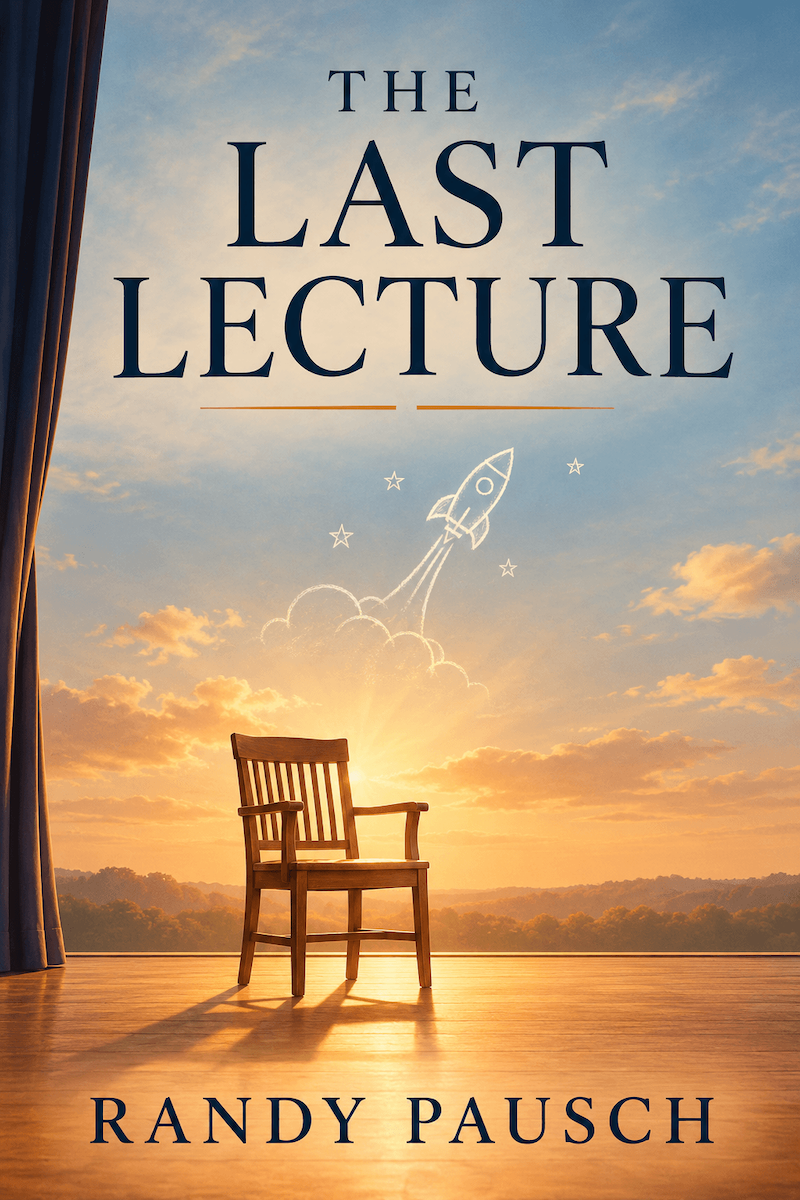
Prefer the print book? Buy on Amazon
As an Amazon Associate, Sumizeit earns from qualifying purchases.
Book Summary
The Last Lecture Book Summary
This The Last Lecture Book Summary covers the key ideas, lessons, and takeaways in about 20 minutes.
Short Description:
A dying professor shares how to chase childhood dreams and live with joy
Pausch reached every one of his childhood dreams, and his point is that he rarely got there by aiming straight at them. He got there through the habits his parents and coaches drilled into him. He worked harder than anyone expected, welcomed blunt feedback, treated obstacles as tests of how much he cared, put people ahead of possessions, thanked those who helped him, and went looking for fun even with months to live. Live that way, he says, and the dreams tend to show up without being chased. And since nobody knows how much time they have, the moment to start is whichever one you are in.
Helps with these goals
Preview the The Last Lecture book summary
Below is a preview of Sumizeit’s comprehensive human-written summary of The Last Lecture by Randy Pausch. The full summary is 15-20 minutes long and covers the book’s key ideas in text, audio, visual, and video formats. Unlock the full 20 Minute Summary
In September 2007, a computer science professor stood in front of a packed auditorium at Carnegie Mellon University and put his CT scans on the screen. They showed ten tumors in his liver. Doctors had given him three to six months of good health. Then Randy Pausch dropped to the floor and did pushups, because he wanted the room to see how strange it was to look that strong while cancer was killing him. With that out of the way, he spent the rest of the hour talking about how to live.
The university had a tradition of asking professors to give a talk as if it were their last chance to say what mattered to them. For Pausch it was no thought experiment. He was 46, with a wife named Jai and three children aged 5, 2, and 1. He called his talk "Really Achieving Your Childhood Dreams." Millions of people watched it online, and he turned it into this book with Wall Street Journal reporter Jeffrey Zaslow in the eleven months he had left.
The crowd in the room was never the real audience. Pausch compared the lecture to sealing himself in a bottle that would wash up on a beach years later, where his kids could find it.
Cancer as an engineering problem
The trouble started in the summer of 2006 with pain in his upper abdomen, then jaundice. He guessed hepatitis. The scans showed a tumor on his pancreas, the deadliest cancer there is. Half of the people who get it die within six months. Only four in a hundred are alive after five years.
Pausch handled it the way a scientist would. He asked questions, demanded data, and signed up for every treatment that had a chance of working, however awful it felt. Surgeons took out his gallbladder along with parts of his pancreas, stomach, and small intestine in an operation called a Whipple. Chemotherapy and radiation followed. He lost 44 pounds. In January his scans looked clean.
In August 2007 the cancer was back and had spread to his liver. He and Jai found out by reading his chart on the computer in the exam room while they waited for the doctor. When Pausch asked how long he had, the doctor told him he probably had three to six months of good health. Pausch noticed the phrasing. It reminded him of how Disney workers answer when you ask what time the park closes. They tell you the park is open until eight.
The day before that appointment, he had told Jai that whatever the tests said, it felt great to be alive and with her right then. That became his plan. He treated his illness like any engineering problem. You state the problem plainly, then you do the best you can with what you have. A videotaped lecture cannot replace twenty years of fathering, he admitted, but engineering was never about perfect answers.
Want the complete 20-minute summary?
- Full structured summary
- Video Summary
- Podcast Summary
- Audio summary
- Key takeaways
- Exercises
- Quiz
- Highlights and notes
- Ask the book with AI
Who should read The Last Lecture?
The Last Lecture speaks to anyone facing mortality, major life transitions, or the desire to live more intentionally. It resonates deeply with parents who want to leave a meaningful legacy, professionals seeking to balance ambition with values, and readers looking for practical wisdom about how to truly achieve their dreams. Whether you're at a crossroads in life or simply want to reconsider what matters most, this book offers timeless guidance wrapped in one man's extraordinary final message.
Why does The Last Lecture matter?
In a world obsessed with chasing success, The Last Lecture reframes what it actually takes to achieve your dreams—and it's not what you think. Randy Pausch's insights about perseverance, integrity, relationships, and gratitude feel even more urgent today as people increasingly question whether they're spending their finite time on what truly matters. The book's core lesson—that dreams come to you through how you live rather than through direct pursuit—challenges the conventional wisdom of ambition-driven culture and offers a more sustainable, human-centered approach to meaning and fulfillment.
What are the key themes in The Last Lecture?
- Dreams are achieved through habits and character, not direct pursuit
- Adversity and obstacles reveal how badly you want something
- Relationships and people matter infinitely more than possessions
- Gratitude, humility, and earnest effort compound like interest over time
- Legacy is built through how you treat others and what you model daily
- Living well today is the best preparation for an uncertain future
How can you apply ideas from The Last Lecture?
- Create a legacy project for your family—video messages, photo albums, written reflections—that captures your values and love even if you can't be there to express them directly
- Implement peer feedback systems in your workplace or classroom where people receive honest input on their performance, creativity, and teamwork without sugarcoating
- Practice writing three thank you notes per week to people who have helped or inspired you; track how this deepens your relationships and gratitude
- Identify one obstacle you're currently facing and reframe it as a brick wall that tests how badly you want what's behind it; use this to recommit or reconsider your priorities
- Audit your calendar and to-do list to eliminate activities that don't align with your values; ask yourself if each task is worth the time or if you'd rather have the 15 minutes
- Have a conversation with your children, mentees, or loved ones about pursuing their own dreams rather than your dreams for them; listen without steering them toward your preferences
- Build a team culture where people introduce themselves properly, finish each other's sentences, share credit freely, and praise one another regularly
- Start a practice of delivering real, complete apologies when you mess up: state what you did, acknowledge the harm, and ask how to make it right
What common mistakes do readers make with The Last Lecture?
- Assuming dreams are achieved by aiming straight at them rather than by developing the character, habits, and relationships that naturally lead there
- Surrounding yourself only with people who agree with you, missing out on the growth that comes from critics and honest feedback about your blind spots
- Spending time and energy on things that don't matter while neglecting what does—polishing the underside of a banister instead of focusing on people and meaning
- Thinking you must be relentlessly positive about a difficult situation, then feeling guilty when realistic emotions arise; this prevents the balanced optimism that actually sustains you
- Underestimating the power of small, consistent actions; assuming grand gestures matter more than daily choices about how you treat others and use your time
Sumizeit Exercises Apply what you've learned
Turn ideas from The Last Lecture into action with a short guided reflection: identify the biggest takeaway, connect it to your life, and commit to one step you can take in the next 24 hours.
What is the expert analysis of The Last Lecture?
Overview
The Last Lecture is a poignant and inspirational work authored by Randy Pausch, a computer science professor at Carnegie Mellon University. The book originated from a lecture Pausch delivered after being diagnosed with terminal pancreatic cancer, transforming a personal farewell into a universal meditation on life, dreams, and legacy. Co-written with Wall Street Journal reporter Jeffrey Zaslow, it captures Pausch’s unique blend of scientific rigor, heartfelt storytelling, and practical wisdom. The book’s significance lies not only in its emotional gravity but also in its ability to distill profound life lessons from the perspective of a man confronting mortality with courage and clarity.
Core Thesis
Pausch’s central argument is that the pursuit of childhood dreams is less about the direct attainment of specific goals and more about cultivating the character and habits that enable a fulfilling life. He posits that success and happiness arise from perseverance, humility, gratitude, and prioritizing relationships over material possessions. By treating obstacles as “brick walls” that test one’s resolve and embracing earnestness and hard work, individuals can live meaningfully regardless of their circumstances. Ultimately, Pausch advocates for living authentically in the present, as time is the most precious resource.
Strengths
- Authenticity and Emotional Resonance: Pausch’s narrative is deeply personal yet universally accessible, blending humor, vulnerability, and optimism in a way that engages readers emotionally and intellectually.
- Practical Wisdom: The book offers concrete life lessons and actionable advice, such as time management strategies and interpersonal communication techniques, grounded in Pausch’s lived experience as an educator, father, and patient.
- Integration of Personal and Professional Life: Pausch seamlessly connects his academic work, particularly in virtual reality and teaching, with broader life philosophies, illustrating how professional passions can inform and enrich personal values.
- Legacy-Oriented Perspective: The framing of the lecture as a message to his children adds a layer of intentionality and timelessness, emphasizing the importance of legacy and the transmission of values across generations.
- Balance of Optimism and Realism: Pausch acknowledges the harsh realities of terminal illness without succumbing to despair, promoting a nuanced approach to positivity that validates difficult emotions while encouraging hope and joy.
Critiques & Counterarguments
- Potential Oversimplification of Adversity: While the “brick wall” metaphor is inspiring, it may understate the complexity and systemic nature of obstacles faced by many, particularly those shaped by socioeconomic or structural inequalities beyond individual control.
- Limited Scope of Evidence: The book relies heavily on Pausch’s personal anecdotes and experiences, which, though compelling, may not generalize across diverse cultural or professional contexts, limiting its applicability as a universal manual for success.
- Optimism Bias: Pausch’s emphasis on optimism and perseverance might inadvertently marginalize perspectives that recognize the validity of grief, anger, or resignation as natural responses to life’s challenges, as explored in some psychological research on coping.
- Contrasting Philosophical Views: Schools of thought such as existentialism or stoicism might critique Pausch’s approach for its implicit focus on external achievement and legacy, advocating instead for acceptance of life’s inherent absurdity or impermanence without the need for goal-oriented striving.
- Real-World Evidence on Work-Life Balance: Pausch’s celebration of hard work and relentless effort may clash with contemporary research highlighting the risks of burnout and the importance of rest, suggesting a more nuanced approach to effort and self-care is necessary.
Who Should Read This
The Last Lecture is ideally suited for readers seeking inspiration and practical guidance in the face of life’s uncertainties, including those grappling with illness, loss, or major transitions. It appeals to educators, parents, professionals, and anyone interested in the intersection of personal development and legacy-building. The book’s accessible narrative and profound insights make it valuable for a sophisticated audience eager to explore how scientific thinking, emotional intelligence, and philosophical reflection can converge in a meaningful life philosophy.
Discussion questions for The Last Lecture Short questions you can actually use in a conversation
Frequently asked questions about the The Last Lecture book summary
What is The Last Lecture about?
The Last Lecture is Randy Pausch's reflection on living well, written as a final message to his children after he was diagnosed with terminal pancreatic cancer. Rather than focusing on his illness, Pausch recounts how he achieved his childhood dreams—winning carnival prizes, writing for the World Book Encyclopedia, experiencing zero gravity, and designing attractions for Disney—and distills the life lessons that made those dreams possible. The core insight is that dreams come to you through how you live, not through direct pursuit; they're achieved via perseverance, integrity, gratitude, and putting people before things.
Who should read The Last Lecture?
The Last Lecture speaks to parents wanting to leave a meaningful legacy, professionals seeking to align ambition with values, and anyone facing life transitions or mortality. It resonates with readers questioning whether they're spending their finite time on what truly matters, and with those who want practical wisdom about character development and achievement. Whether you're navigating grief, reconsidering your priorities, or simply looking for guidance on how to live more intentionally, this book offers timeless insights wrapped in one man's extraordinary final message.
What are the main takeaways from The Last Lecture?
The main takeaways are that dreams are achieved through developing strong character and habits rather than by chasing them directly; that obstacles test how badly you want something; that people matter infinitely more than possessions; and that gratitude, honesty, hard work, and earnest effort compound like interest over time. Pausch also emphasizes that you don't know how much time you have, so the moment to start living well is whichever one you're in right now. His final message is that if you live the right way—with integrity, humility, and genuine care for others—the dreams tend to show up without being chased.
How did Randy Pausch achieve his childhood dreams?
Pausch achieved most of his childhood dreams—winning carnival prizes, writing for the World Book Encyclopedia, experiencing zero gravity, and designing rides for Disney—not through direct pursuit but through the habits and character his parents and coaches instilled in him. He worked harder than expected, welcomed critical feedback, treated obstacles as tests of his commitment, put people ahead of possessions, and maintained curiosity and gratitude. His dreams came as natural extensions of living well, rather than as destinations he aimed at. The exception was becoming an NFL player, a dream he didn't achieve, but he credited that failure with teaching him more than many successes.
What was Randy Pausch's approach to handling his cancer diagnosis?
Pausch approached his cancer diagnosis like an engineering problem: state the problem plainly and do the best you can with what you have. Rather than giving up or sinking into despair, he continued seeking joy and adventures, taking his son swimming with dolphins and scuba diving with old friends on what everyone knew would be his last trip. He remained optimistic about finding good moments each day while being realistic about his prognosis. This balanced approach—combining honest acknowledgment of his situation with genuine enjoyment of remaining time—became a model for how he thought people should face difficulty.
What was the significance of the Last Lecture at Carnegie Mellon?
Carnegie Mellon had a tradition of asking professors to give a talk as if it were their last chance to share what mattered most. For Pausch, this was not a thought experiment but literal reality—he had three to six months of good health remaining. Rather than giving a talk about cancer or dying, he spoke about living well and how he had achieved his childhood dreams through character and persistence. He framed the lecture as a message in a bottle for his children to find years later, turning his imminent death into an opportunity to leave them something lasting. The lecture was eventually watched by millions online and became the foundation for this book.
What role did Pausch's parents play in shaping his values?
Pausch's parents were foundational to everything he valued. His mother kept his ego in check through honest feedback and modeled critical thinking. His father told moral stories, showed courage and service through his work and military service, and demonstrated humility by never mentioning his Bronze Star for valor earned at the Battle of the Bulge. Together they fed his imagination, let him paint his bedroom however he wanted, answered his questions by directing him to look things up, and taught him that people matter more than things. Pausch credited them entirely for the fact that he was able to achieve his dreams—not because they handed him anything, but because they shaped who he became.
How did Randy Pausch balance ambition with family and relationships?
Pausch made conscious choices to prioritize people and relationships even while pursuing ambitious goals. He chose to marry Jai despite her initial resistance, worked to overcome his arrogant tendencies when she and colleagues pointed them out, and regularly reminded himself that possessions don't matter compared to people—exemplified by pouring soda on his car seat to teach his niece and nephew this lesson. When cancer struck, he made time for his wife and children despite having limited months left, created memories through experiences rather than material things, and recorded messages and videos for his children to find later. His approach showed that ambition and deep relationships aren't opposites if you actively choose to honor both.
About Sumizeit
Sumizeit is a profitable Scomy LLC company based in Miami, Florida. Our founders, Clemens Raemy and Weina Scott, are successful entrepreneurs with several exits. Sumizeit is a popular book summary app / micro learning app used by busy professionals and entrepreneurs with over 2,500 non-fiction book summaries and 10,000 podcast summaries in text, audio, visual, podcast, and video format. We also have stellar retention tools to make ideas stick - such as flashcards with spaced repetition, quizzes, streaks, highlighting and notes, daily challenges, riddles, mini-courses, meditation, and more. You won't only learn the idea, but also remember it. Over 90% of our users change their habits with Sumizeit.
Upgrade Now
Here's why readers love Sumizeit
Join thousands of learners getting smarter every day
"Great experience. Detailed summaries. Loved the gamification feature. Makes learning fun. Good customer service. I recommend Sumizeit to anyone. You'll learn a lot."
"I always felt busy but still wanting to keep up with the book discussion in my friend group. This was a great supplement to help me keep reading the books I find fun while keeping up with important books."
"I love this website. Instead of scrolling social media, I find myself learning a lot. I use it everyday. I recommend this app for anyone who is too busy and wants to get up to speed with their favorite books."
The Last Lecture Book Summary PDF
Looking for a The Last Lecture Book Summary PDF you can save and revisit offline? Our The Last Lecture Book Summary PDF captures the book’s core ideas in a clean, printable format — the key frameworks, takeaways, and structure without the fluff. Download the The Last Lecture Book Summary PDF when you want a reference you can annotate, share with your team, or review on the go. Get your The Last Lecture Book Summary PDF from the download page below.
Download The Last Lecture Book Summary PDFPeople also liked these summaries
Readers who explored The Last Lecture often enjoyed these titles next.


Ready to read the whole thing?
- Full structured summary
- Video Summary
- Podcast Summary
- Audio summary
- Key takeaways
- Exercises
- Quiz
- Highlights and notes
- Ask the book with AI
Featured Book Titles
Popular Book Summaries at sumizeit, leading book summary app
Atomic Habits Book Summary Rich Dad Poor Dad Book Summary The Four Agreements Book Summary The 48 Laws of Power Book Summary When Breath Becomes Air Book Summary Think and Grow Rich Book Summary