


Prefer the print book? Buy on Amazon
As an Amazon Associate, Sumizeit earns from qualifying purchases.
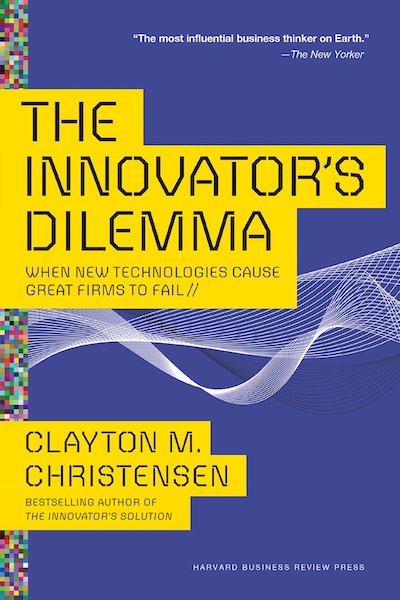
The Innovator's Dilemma Book Summary
This The Innovator's Dilemma Book Summary covers the key ideas, lessons, and takeaways in about 20 minutes.
Short Description:
The Innovator’s Dilemma warns companies to embrace disruptive innovation early.
Helps with these goals
Preview the The Innovator's Dilemma book summary
Below is a preview of Sumizeit’s comprehensive human-written summary of The Innovator's Dilemma by Clayton M. Christensen. The full summary is 15-20 minutes long and covers the book’s key ideas in text, audio, visual, and video formats. Unlock the full 20 Minute Summary
When faced with new and innovative technology, some firms are unable to maintain their position within their industry.
In The Innovator’s Dilemma: When New Technologies Cause Great Firms to Fail, Clayton Christensen explains the reason why some of the most successful firms lost their position in the market once new challengers stepped up to the plate.
When it comes to innovation, there are some companies that are unable to confront the challenges placed before them in an effective manner. In order for managers to handle competitive innovations, they need more than just suggestions for what to do, they must have an actual framework to manage any impact these new innovations will have on their company.
Typically there are two types of innovations a company must contend with. One is a helpful innovation that helps a business succeed and move forward. The second is a disruptive innovation that can end up transforming an entire industry.
Usually, disruptive innovation is something that initially seems to appeal to only a small audience. However, over time, these innovations gain the audience of the market by offering an alternative that is easier or cheaper (and sometimes both) than the original product it is in competition with.
The Innovator’s Dilemma is a chance to look at the different innovations that can have an impact on a business and how to handle these innovations as they change the way business is done
It is important to be able to recognize a helpful innovation over one that would be considered a disruptive innovation. When dealing with new innovations, a company must look beyond suggestions to a plan of action to actually deal with the impact that these innovations can have on the business.
Even with the importance of market research being well-established, it is nearly impossible to get what you need when it comes to new technology.
New technology is easy to improve at first but gets harder over time
As new technology is created, new improvements and ideas seem to come easy. However, over time, it can be hard to keep improving technology, even with further research.
It is all about that initial breakthrough, which actually leads to the viability of that product on the market. Once a product hits the market, customer feedback can help to make improvements and small tweaks that make the new technology better.
These small changes usually come at a small cost to the company. In some cases, these small changes can lead to continued improvements that give consumers new versions of the technology on a regular schedule.
However, at some point, technology will hit a plateau. At this plateau, it can cost more to make changes that are effective and worthwhile. Plus, it can also be harder to find things to change to improve this technology.
In some cases, once a company gets to a point where it is no longer viable to keep tweaking their technology, it can open a space for a rival company to step in and offer…
Want the complete 20-minute summary?
- Full structured summary
- Video Summary
- Podcast Summary
- Audio summary
- Key takeaways
- Exercises
- Quiz
- Highlights and notes
- Ask the book with AI
Who should read The Innovator's Dilemma?
The Innovator's Dilemma is essential for business leaders, entrepreneurs, and managers who want to understand why market-leading companies fail when disruptive technologies emerge. If you're responsible for strategic decisions, competitive positioning, or innovation strategy, this book provides the framework you need to recognize and respond to market threats before they undermine your business.
Why does The Innovator's Dilemma matter?
In today's rapidly changing business environment, understanding the difference between sustaining and disruptive innovation is critical to survival. Clayton M. Christensen's groundbreaking work explains why established companies struggle to adapt to technological change and provides a roadmap for recognizing threats early enough to respond effectively. This knowledge is increasingly relevant as digital transformation disrupts every industry from retail to finance to manufacturing.
What are the key themes in The Innovator's Dilemma?
- Sustaining vs. disruptive innovation
- Why successful companies fail to adapt
- The role of customer feedback in innovation strategy
- Market dynamics and competitive disruption
- Organizational structure and innovation capacity
- Pricing strategies in emerging markets
- The importance of recognizing market threats early
How can you apply ideas from The Innovator's Dilemma?
- Establish a separate innovation unit with its own P&L, leadership structure, and decision-making processes to pursue disruptive opportunities without organizational resistance
- Create early warning systems to monitor emerging technologies and new market entrants, especially in overlooked customer segments or low-end markets
- Challenge your market research assumptions by recognizing that traditional customer surveys and focus groups cannot validate truly disruptive innovations
- Develop a portfolio approach to innovation that balances sustaining innovations that strengthen your current business with exploratory projects pursuing disruptive opportunities
- Evaluate acquisition targets not just for immediate revenue or cost synergies, but for their potential to position your company against disruptive threats
- Train managers to recognize the S-curve pattern in technology improvement and prepare strategic responses when your core technologies reach plateaus
- Establish different brands or business units to serve emerging low-cost or low-end markets without cannibalizing your premium offerings or damaging brand perception
- Monitor employee departures and retention of technical talent, as defectors are likely sources of future competitive disruption
What common mistakes do readers make with The Innovator's Dilemma?
- Relying too heavily on customer feedback to validate innovations, especially when those innovations create entirely new market categories that customers cannot yet envision
- Dismissing disruptive competitors because their early products lack the quality or features of established solutions, ignoring the trajectory of improvement and market expansion
- Staying committed to profit-maximization in core markets while competitors gain footholds in low-margin segments that eventually grow to threaten the entire business
- Assuming that strong financial performance, technical expertise, and market leadership will protect you from disruption, when these strengths can actually create organizational blindspots and slow adaptation
- Attempting to serve disruptive markets under the same brand, organizational structure, and cost model as your core business, leading to internal conflicts and customer confusion about quality expectations
Sumizeit Exercises Apply what you've learned
Turn ideas from The Innovator's Dilemma into action with a short guided reflection: identify the biggest takeaway, connect it to your life, and commit to one step you can take in the next 24 hours.
What is the expert analysis of The Innovator's Dilemma?
Overview
The Innovator's Dilemma by Clayton M. Christensen stands as a seminal work in the realms of business strategy and innovation management. Christensen, a distinguished Harvard Business School professor and acclaimed thought leader, introduced the groundbreaking concept of "disruptive innovation," which has since reshaped how scholars and practitioners understand technological change and competitive dynamics. This book is significant for its rigorous analysis of why leading firms often fail despite their resources and market dominance, offering a framework that transcends anecdotal business advice to provide strategic insight into managing innovation.
Core Thesis
Christensen’s central argument is that established companies frequently falter not because they lack resources or capabilities, but because they are constrained by their existing business models and customer demands. He distinguishes between sustaining innovations, which improve existing products for current customers, and disruptive innovations, which initially target niche or emerging markets with simpler, cheaper, or more convenient alternatives. Over time, these disruptive technologies improve and capture mainstream markets, often displacing incumbents. Importantly, the author contends that listening solely to current customers and focusing on short-term profitability blinds firms to the potential of disruptive innovations, ultimately dooming them to failure.
Strengths
- Conceptual Clarity: Christensen’s distinction between sustaining and disruptive innovations provides a clear, actionable lens through which to analyze technological change.
- Practical Framework: The book offers managers a structured approach to recognizing and responding to disruptive threats, moving beyond vague exhortations to innovate.
- Empirical Foundation: The argument is supported by compelling case studies from diverse industries, lending credibility and illustrating the theory’s broad applicability.
- Influential Impact: The work has profoundly influenced both academic research and corporate strategy, inspiring a generation of innovation-focused scholarship and practice.
- Insight into Organizational Dynamics: Christensen adeptly highlights how internal processes and incentives in large firms inhibit disruptive innovation, a nuanced view often overlooked in business literature.
Critiques & Counterarguments
- Oversimplification of Market Dynamics: Critics argue that the binary classification of innovations into sustaining and disruptive can be reductive, failing to capture the complexity and hybrid nature of many innovations.
- Empirical Ambiguities: Some subsequent studies have found cases where incumbents successfully adopted disruptive technologies, challenging the inevitability of failure posited by Christensen.
- Underestimation of Managerial Agency: The book may underplay the capacity of managers to strategically pivot and allocate resources to disruptive ventures within their firms.
- Changing Technological and Market Contexts: Since its publication, rapid digital transformation and platform-based business models have introduced new innovation dynamics that sometimes diverge from Christensen’s original framework.
- Alternative Theories: Competing schools of thought, such as open innovation and ambidextrous organizations, emphasize different mechanisms for managing innovation that complement or challenge the innovator’s dilemma narrative.
Who Should Read This
The Innovator's Dilemma is essential reading for senior executives, innovation managers, entrepreneurs, and scholars interested in the strategic challenges posed by technological change. It is particularly valuable for those seeking to understand why market leaders can fail despite apparent advantages and how to cultivate organizational structures that foster both sustaining and disruptive innovation. Additionally, its insights are crucial for investors and policymakers aiming to anticipate shifts in competitive landscapes and support emerging industries.
Frequently asked questions about the The Innovator's Dilemma book summary
What is The Innovator's Dilemma about?
The Innovator's Dilemma by Clayton M. Christensen explains why successful, well-managed companies lose their market leadership when new disruptive technologies emerge. The book presents a framework distinguishing between sustaining innovations that strengthen existing businesses and disruptive innovations that can reshape entire industries, showing how rational business decision-making can paradoxically blind companies to existential threats.
Who should read The Innovator's Dilemma?
Business leaders, executives, entrepreneurs, product managers, and strategists responsible for competitive positioning or innovation decisions should read this book. It's essential for anyone trying to understand technology disruption, competitive threats, or why established companies struggle to adapt to market change.
What are the main takeaways from The Innovator's Dilemma?
The key takeaways are: not all innovation threatens incumbents (sustaining innovations strengthen them), disruptive technologies often start in small markets established companies ignore, customer feedback cannot validate new market categories, organizational structure and profit incentives make large companies slow to respond to threats, and early warning systems combined with separate business units are essential for managing disruption risk. Understanding these dynamics helps leaders recognize threats and respond strategically before competitors gain irreversible advantages.
What is disruptive innovation?
Disruptive innovation is a technology or business model that initially appeals to a small, overlooked market segment but eventually expands to capture mainstream customers from established competitors. Unlike sustaining innovations that improve existing products, disruptive innovations often start with inferior quality or performance but offer new features or lower prices that gradually make them more attractive than incumbent solutions.
Why do successful companies fail when disruption happens?
Successful companies fail during disruption because their organizational structures, profit models, and decision-making processes are optimized for protecting existing businesses rather than pursuing uncertain new opportunities. Large companies rationally avoid small, low-margin markets where disruptors gain footholds, and their scale creates bureaucratic slowness that gives smaller competitors first-mover advantages in emerging segments.
How can established companies survive disruptive threats?
Established companies can respond to disruptive threats by creating separate business units with independent P&Ls and decision-making authority, establishing early warning systems to monitor emerging competitors and technologies, making strategic acquisitions of disruptive startups, and accepting that serving new markets may require different brands, cost structures, and organizational cultures than their core business.
Does customer feedback help identify disruptive innovations?
No, customer feedback is actually unreliable for identifying disruptive innovations because customers cannot provide meaningful feedback on products that don't yet exist. Traditional market research fails with truly disruptive technologies because they often create new markets rather than compete in existing ones, so potential customers don't know what they want until the innovation already exists.
About Sumizeit
Sumizeit is a profitable Scomy LLC company based in Miami, Florida. Our founders, Clemens Raemy and Weina Scott, are successful entrepreneurs with several exits. Sumizeit is a popular book summary app / micro learning app used by busy professionals and entrepreneurs with over 2,500 non-fiction book summaries and 10,000 podcast summaries in text, audio, visual, podcast, and video format. We also have stellar retention tools to make ideas stick - such as flashcards with spaced repetition, quizzes, streaks, highlighting and notes, daily challenges, riddles, mini-courses, meditation, and more. You won't only learn the idea, but also remember it. Over 90% of our users change their habits with Sumizeit.
Upgrade Now
Here's why readers love Sumizeit
Join thousands of learners getting smarter every day
"Great experience. Detailed summaries. Loved the gamification feature. Makes learning fun. Good customer service. I recommend Sumizeit to anyone. You'll learn a lot."
"I always felt busy but still wanting to keep up with the book discussion in my friend group. This was a great supplement to help me keep reading the books I find fun while keeping up with important books."
"I love this website. Instead of scrolling social media, I find myself learning a lot. I use it everyday. I recommend this app for anyone who is too busy and wants to get up to speed with their favorite books."
The Innovator's Dilemma Book Summary PDF
Looking for a The Innovator's Dilemma Book Summary PDF you can save and revisit offline? Our The Innovator's Dilemma Book Summary PDF captures the book’s core ideas in a clean, printable format — the key frameworks, takeaways, and structure without the fluff. Download the The Innovator's Dilemma Book Summary PDF when you want a reference you can annotate, share with your team, or review on the go. Get your The Innovator's Dilemma Book Summary PDF from the download page below.
Download The Innovator's Dilemma Book Summary PDFPeople also liked these summaries
Readers who explored The Innovator's Dilemma often enjoyed these titles next.


Ready to read the whole thing?
- Full structured summary
- Video Summary
- Podcast Summary
- Audio summary
- Key takeaways
- Exercises
- Quiz
- Highlights and notes
- Ask the book with AI
Featured Book Titles
Popular Book Summaries at sumizeit, leading book summary app