


As an Amazon Associate, Sumizeit earns from qualifying purchases.
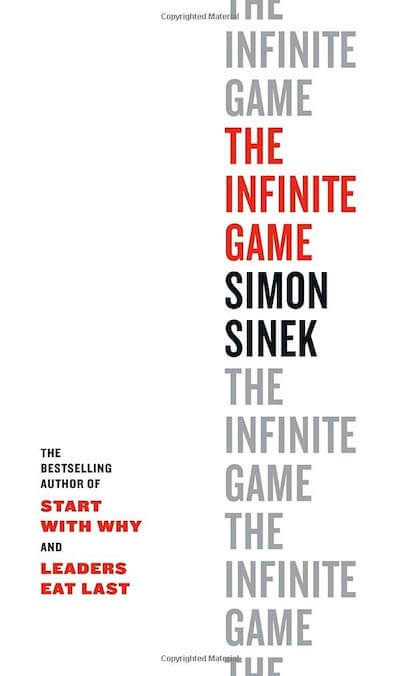
The Infinite Game Book Summary
This The Infinite Game Book Summary covers the key ideas, lessons, and takeaways in about 20 minutes.
Helps with these goals
Want the complete 20-minute summary?
- Full structured summary
- Video Summary
- Podcast Summary
- Audio summary
- Key takeaways
- Exercises
- Quiz
- Highlights and notes
- Ask the book with AI
What is in the The Infinite Game book summary?
Below is a preview of Sumizeit’s expert-written summary of The Infinite Game by Simon Sinek. The full summary covers the book’s key ideas in text, audio, and video.
When you look at how well a company is doing, you tend to look at stock prices.
That’s because the media is swarming with men in ties telling people when they should buy and when they should sell.
But, that whole buy and sell charade really just concerns the people who are trying to make money. It doesn’t really benefit the company itself.
According to Simon Sinek in his book, “The Infinite Game” the CEO of a company must not get too caught up in stocks. They shouldn’t be focused on the stockholders, they should be focused on the company’s best interests.
“If your actions inspire others to dream more, learn more, do more and become more, you are a leader.”- Simon Sinek
They need to keep their eyes on the prize, create innovative products and ideas, and work to make their company the best it can be, rather than trying to appease the crowd of stockholders.
In his book, Sinek gives great insight into how companies can get back to long-term thinking and how they can stay afloat in a market that is so up and down.
An Infinite Mindset
There is a difference between a finite game and an infinite game.
A finite game is like a game of baseball. When the two teams begin the game, they know the rules and know what they have to do in order to win. They have to score more points than the other team.
But, business is an infinite game. And CEOs must understand that. It’s an infinite game because in business there are no rules. Innovative companies are trying new strategies and tactics every single day.
The goal of the business game is to stay in the game as long as possible. So, really the game could go on forever if your company knows how to play.
“Finite players play to beat the people around them. Infinite players play to be better than themselves.”- Simon Sinek
Profit and revenue are not the only tell-tale signs that a business is “winning.” High profits don’t mean anything if a company cannot beat unexpected obstacles.
This is why CEOs should raise a business to adapt to ever-changing external circumstances. These adaptive businesses are made to last, rather than to just “win” the money-making game.
Tunnel vision can occur when a CEO is focused on short-term goals, such as an increase in profits in the next quarter. But, really what these CEOs should be focusing on is creating innovative new products that will appeal to the masses and last.
They should be putting their creative energy toward the product they are putting out for the consumer, rather than focusing on the money. If they focus on their product, the money will come.
In the early 2000s, Microsoft made the mistake of trying to compete with Apple. They copied what Apple was doing instead of creating new products. Apple still got an innovative reputation and Microsoft slowly began to die.
The Five Keys
There…
Want the complete 20-minute summary?
- Full structured summary
- Video Summary
- Podcast Summary
- Audio summary
- Key takeaways
- Exercises
- Quiz
- Highlights and notes
- Ask the book with AI
Who should read The Infinite Game?
The Infinite Game is for business leaders, CEOs, and entrepreneurs who want to build companies that last beyond quarterly earnings reports. If you're frustrated by short-term thinking in corporate environments or seeking to align profit with purpose, this book offers a framework for sustainable success.
Why does The Infinite Game matter?
As markets become increasingly volatile and employee retention grows harder, The Infinite Game provides a counterweight to decades of shareholder-focused capitalism. Simon Sinek argues that companies obsessed with stock prices and quarterly wins are playing the wrong game—and this shift in thinking is critical for leaders navigating today's economic uncertainty and workplace disengagement.
What are the key themes in The Infinite Game?
- The difference between finite and infinite game mindsets in business
- Purpose-driven leadership through a Just Cause
- Long-term thinking versus short-term earnings pressure
- Building trust and psychological safety within organizations
- Learning from worthy rivals instead of just competing
- Courage as a requirement for visionary leadership
- Customer and employee welfare over shareholder returns
- Adaptability and existential flexibility in changing markets
What are the key lessons from the The Infinite Game book summary?
Business is an Infinite Game
Unlike finite games with clear end points and winners, business has no finish line—the goal is to stay in the game as long as possible. Companies that understand this play to adapt and survive, not just to beat competitors this quarter.
Don't Confuse Stock Price with Business Health
Wall Street metrics and short-term profitability mask the real health of a company. True business success is measured by innovation, customer loyalty, employee engagement, and the ability to weather unforeseen challenges.
A Just Cause Must Inspire, Not Appease
A company's purpose cannot be generic mission statements like 'be the best.' It must be dynamic, idealistic, and compelling enough to unite employees around a shared vision that transcends profit.
Put Customers and Company First, Shareholders Second
Adam Smith's original vision of capitalism placed customers at the center; the mid-20th-century shift to shareholder primacy created short-term thinking. Returning to customer-first thinking builds sustainable competitive advantage.
Leadership Means Caring for Those in Your Charge
Effective leaders focus on employee morale, development, and well-being as much as financial metrics. Respect and appreciation drive retention, motivation, and ultimately better business outcomes.
Build a Culture Where Bad News Is Welcome
Organizations that punish employees for delivering difficult truths breed dishonesty and miss critical warning signs. Leaders must actively encourage candid feedback and create psychological safety.
Study Your Worthy Rivals, Don't Just Copy Them
Engaging with competitors who challenge you raises your performance and sharpens your thinking. The goal is to learn what makes them successful so you can innovate better, not to replicate their moves.
Existential Flexibility Means Knowing When to Change Course
Infinite players are willing to self-prescribe changes in strategy when circumstances demand it. This adaptability, not rigid adherence to past strategies, keeps companies relevant and alive.
Courage Is Required to Lead Authentically
Acting in alignment with your Just Cause often requires difficult decisions that hurt short-term profits. Leaders must have the courage to choose ethics and purpose over immediate financial gain.
CEO Skills Are Different from CFO Skills
Promoting internal candidates solely based on financial or technical expertise overlooks what CEOs actually need: vision, purpose-setting, and the ability to articulate and live out the Just Cause.
Employee Benefits Reflect Company Values
When companies treat all employees equally—whether retail or corporate—it signals that every role matters. This consistency builds loyalty and reduces turnover across the organization.
Purpose Drives Profit, Not the Reverse
Companies that chase profit at the expense of purpose often undermine the very conditions needed for long-term success. When leaders focus on the why and the customer, revenue follows naturally.
Trust Is the Foundation of Sustainable Culture
When employees see dishonest behavior going unchecked, they lose faith in leadership and often mirror those behaviors. Trust must be actively built through consistent, values-aligned decisions.
Financial Metrics Don't Capture the Full Picture
Profit and revenue can hide deeper problems like low morale, toxic culture, and employee burnout. Leaders must develop ways to measure and track less tangible but vital signals of organizational health.
The Wage Gap Signals Broken Priorities
When CEO compensation skyrockets while worker wages stagnate, it reveals an organization obsessed with shareholder returns over shared success. This imbalance breeds resentment and instability.
Worthy Rivals Bring Out Your Best Performance
Just as a skilled chess opponent elevates your game, competing against thoughtful rivals keeps your company sharp, innovative, and focused on continuous improvement.
A Strong Just Cause Withstands Difficult Decisions
A vague purpose crumbles under pressure, but a clear, inspiring Just Cause provides the moral foundation for tough choices that align with long-term vision over short-term gain.
Leadership Is Continuous Learning, Not Knowing
The best leaders see themselves as students first, always learning from rivals, employees, and changing market conditions. Intellectual humility accelerates adaptation and innovation.
Ethical Stands Often Pay Off in the Long Run
Decisions that cost money in the short term—like CVS stopping cigarette sales—can double revenue by attracting values-aligned customers and building brand trust and loyalty.
People Buy Your Why, Not Just Your What
Customers and employees connect with the purpose and values behind what you do. A compelling why creates deeper loyalty than product features alone ever could.
Want the complete 20-minute summary?
- Full structured summary
- Video Summary
- Podcast Summary
- Audio summary
- Key takeaways
- Exercises
- Quiz
- Highlights and notes
- Ask the book with AI
How can you apply ideas from The Infinite Game?
- Reframe your company mission statement to lead with customer impact and purpose, then layer in internal operational goals
- Establish regular forums where employees can share bad news and failed experiments without fear of punishment
- Audit your leadership pipeline to ensure CEO candidates have vision and purpose-setting skills, not just functional expertise
- Conduct a 'worthy rival' study by having senior managers use competitor products and report insights for innovation
- Review your compensation structure to ensure it reflects shared values across all employee levels, not just executives
- Define a Just Cause that your leadership team can articulate consistently and that inspires action beyond quarterly targets
- Measure and monitor employee morale and psychological safety alongside financial metrics in your regular business reviews
What common mistakes do readers make with The Infinite Game?
- Treating stock price and shareholder returns as the primary measure of business success rather than customer satisfaction, innovation, and adaptability
- Creating generic mission statements focused on internal metrics like 'global market leader' without connecting to customer benefit or inspirational purpose
- Hiring or promoting CEOs based on financial acumen alone, missing the visionary and cultural leadership skills the role actually requires
- Copying competitor strategies instead of learning from rivals to strengthen your own unique approach and innovation
Sumizeit Exercises Apply what you've learned
Turn ideas from The Infinite Game into action with a short guided reflection: identify the biggest takeaway, connect it to your life, and commit to one step you can take in the next 24 hours.
What is the expert analysis of The Infinite Game?
Overview
The Infinite Game by Simon Sinek is a compelling exploration of leadership and business strategy that challenges conventional metrics of success. Sinek, a renowned motivational speaker and organizational consultant, is well-known for his work on leadership and purpose-driven organizations, including his bestselling book Start with Why. This book advances his thought leadership by reframing business as an “infinite game,” a concept that urges leaders to prioritize enduring vision and adaptability over short-term wins. Its significance lies in its timely critique of shareholder capitalism and the increasing myopia of corporate leadership, offering a philosophical yet practical blueprint for sustainable success.
Core Thesis
Sinek’s central argument is that business should be understood as an infinite game rather than a finite one. Unlike finite games, which have fixed rules and clear endpoints, infinite games have no defined end, and the objective is to perpetuate the game itself. In this context, companies should focus on long-term resilience, innovation, and purpose-driven leadership rather than quarterly profits or stock prices. The author posits that by adopting an “infinite mindset,” leaders can cultivate organizations that thrive amid uncertainty by advancing a just cause, building trusting teams, learning from worthy rivals, embracing existential flexibility, and demonstrating courageous leadership.
Strengths
- Innovative Conceptual Framework: Sinek’s distinction between finite and infinite games provides a fresh lens through which to view business strategy and leadership, moving beyond traditional profit-centric models.
- Integration of Philosophy and Business: The book successfully marries philosophical ideas—particularly from game theory and moral leadership—with practical business advice, making complex ideas accessible and actionable.
- Emphasis on Purpose and Ethics: By foregrounding the “Just Cause” and ethical considerations, Sinek challenges the prevailing shareholder-first paradigm and advocates for a more human-centered approach.
- Use of Illustrative Case Studies: Examples such as Microsoft’s stagnation versus Apple’s innovation, Ford’s cultural transformation under Alan Mulally, and CVS’s courageous health-driven decision enrich the narrative and ground abstract ideas in real-world outcomes.
- Focus on Leadership and Culture: The book highlights the importance of trust, employee morale, and leadership courage, underscoring the social and psychological dimensions of organizational success.
Critiques & Counterarguments
- Oversimplification of Complex Business Realities: The binary framing of finite versus infinite games, while conceptually elegant, risks oversimplifying the multifaceted and often contradictory pressures CEOs face, such as regulatory demands, market competition, and investor expectations.
- Limited Empirical Evidence: The book relies heavily on anecdotal examples and case studies without robust empirical data or rigorous comparative analysis, which may weaken the generalizability of its prescriptions.
- Potential Underestimation of Shareholder Value: While critiquing shareholder primacy, Sinek arguably underplays the role that shareholders and capital markets play in fostering innovation and accountability, a view contested by proponents of shareholder theory and market efficiency.
- Contrasting Schools of Thought: The stakeholder capitalism model advocated by Sinek contrasts with Milton Friedman’s shareholder theory and the more recent ESG (Environmental, Social, Governance) frameworks, which attempt to reconcile profit with broader social responsibilities but still emphasize measurable outcomes.
- Challenges in Implementation: The ideals of infinite mindset leadership require cultural and structural shifts that may be difficult to enact in entrenched organizations or industries with short-term performance pressures, raising questions about practical scalability.
Who Should Read This
The Infinite Game is essential reading for senior executives, entrepreneurs, organizational leaders, and business strategists who seek to transcend conventional profit-driven paradigms and cultivate enduring, purpose-led enterprises. It also appeals to scholars and practitioners interested in leadership theory, corporate ethics, and organizational psychology. Moreover, those frustrated by short-termism and the volatility of modern markets will find Sinek’s vision both inspiring and a call to action. However, readers should approach the book as a philosophical framework rather than a prescriptive manual, supplementing it with empirical research and contextual business analysis.
Frequently asked questions about the The Infinite Game book summary
What is The Infinite Game about?
The Infinite Game by Simon Sinek explores why business should be approached as an infinite game with no finish line, rather than a finite competition. Sinek argues that companies focused on short-term profits and shareholder returns are playing the wrong game, and instead offers five keys—a Just Cause, strong teams, learning from worthy rivals, existential flexibility, and courageous leadership—to build companies designed to last indefinitely.
Who should read The Infinite Game?
The Infinite Game is essential for CEOs, business leaders, and entrepreneurs who want to build sustainable, purpose-driven organizations. It's also valuable for anyone frustrated with short-term thinking in corporate environments, employees seeking to understand better leadership, and investors interested in the long-term health of companies beyond quarterly earnings.
What are the main takeaways from The Infinite Game?
The core takeaways are: (1) business is an infinite game where survival matters more than winning; (2) companies must adopt a clear, inspiring Just Cause beyond profit; (3) leaders should prioritize customers and employees over shareholders; (4) building trust and psychological safety drives better outcomes; and (5) courage and long-term thinking create sustainable competitive advantage. When organizations embrace these principles, they achieve lasting success.
What are the five keys to the infinite mindset?
The five keys are: (1) Advance a Just Cause—a dynamic, inspirational purpose beyond making money; (2) Build Teams—create psychologically safe environments where people feel valued; (3) Study Your Worthy Rivals—learn from competitors to strengthen your own approach; (4) Prepare for Existential Flexibility—be willing to change course when circumstances demand it; and (5) Demonstrate the Courage to Lead—make difficult ethical decisions aligned with your purpose, even if they hurt short-term profits.
How does The Infinite Game challenge traditional business thinking?
Sinek argues that the 20th-century shift toward shareholder primacy, driven by economist Milton Friedman, corrupted capitalism from its original vision. He shows how companies obsessed with stock prices, quarterly earnings, and CEO compensation relative to worker wages have created instability and short-term thinking. The Infinite Game calls for a return to customer-first, purpose-driven leadership that builds companies meant to last.
What role does trust play in The Infinite Game?
Trust is foundational to long-term business success in The Infinite Game. When employees see dishonest behavior or feel punished for delivering bad news, they lose faith in leadership and mirror unethical conduct. Leaders must actively build trust by creating psychological safety, encouraging candid feedback, and making consistent, values-aligned decisions that show they care for people, not just profit.
Can giving up short-term profit actually lead to long-term success?
Yes, according to Sinek's examples in The Infinite Game. CVS's decision to stop selling cigarettes cost them money immediately but doubled their sales long-term by attracting health-conscious customers and reinforcing their Just Cause. Similarly, Apple's equal treatment of retail and corporate employees increased retention and loyalty. These cases show that ethical decisions rooted in purpose often generate greater revenue and competitive strength than short-term financial optimization.
About Sumizeit
Sumizeit is a profitable Scomy LLC company based in Miami, Florida. It has been helping readers learn from nonfiction books for 7 years with expert-written summaries in text, audio, podcast, and video.
Want the complete 20-minute summary?
- Full structured summary
- Video Summary
- Podcast Summary
- Audio summary
- Key takeaways
- Exercises
- Quiz
- Highlights and notes
- Ask the book with AI
Here's why readers love Sumizeit
Join thousands of learners getting smarter every day
"Great experience. Detailed summaries. Loved the gamification feature. Makes learning fun. Good customer service. I recommend Sumizeit to anyone. You'll learn a lot."
"I always felt busy but still wanting to keep up with the book discussion in my friend group. This was a great supplement to help me keep reading the books I find fun while keeping up with important books."
"I love this website. Instead of scrolling social media, I find myself learning a lot. I use it everyday. I recommend this app for anyone who is too busy and wants to get up to speed with their favorite books."
The Infinite Game Book Summary PDF
Looking for a The Infinite Game Book Summary PDF you can save and revisit offline? Our The Infinite Game Book Summary PDF captures the book’s core ideas in a clean, printable format — the key frameworks, takeaways, and structure without the fluff. Download the The Infinite Game Book Summary PDF when you want a reference you can annotate, share with your team, or review on the go. Get your The Infinite Game Book Summary PDF from the download page below.
Download The Infinite Game Book Summary PDFPeople also liked these summaries
Readers who explored The Infinite Game often enjoyed these titles next.


Want the complete 20-minute summary?
- Full structured summary
- Video Summary
- Podcast Summary
- Audio summary
- Key takeaways
- Exercises
- Quiz
- Highlights and notes
- Ask the book with AI
Featured Book Titles
Popular Book Summaries at sumizeit, leading book summary app