


As an Amazon Associate, Sumizeit earns from qualifying purchases.
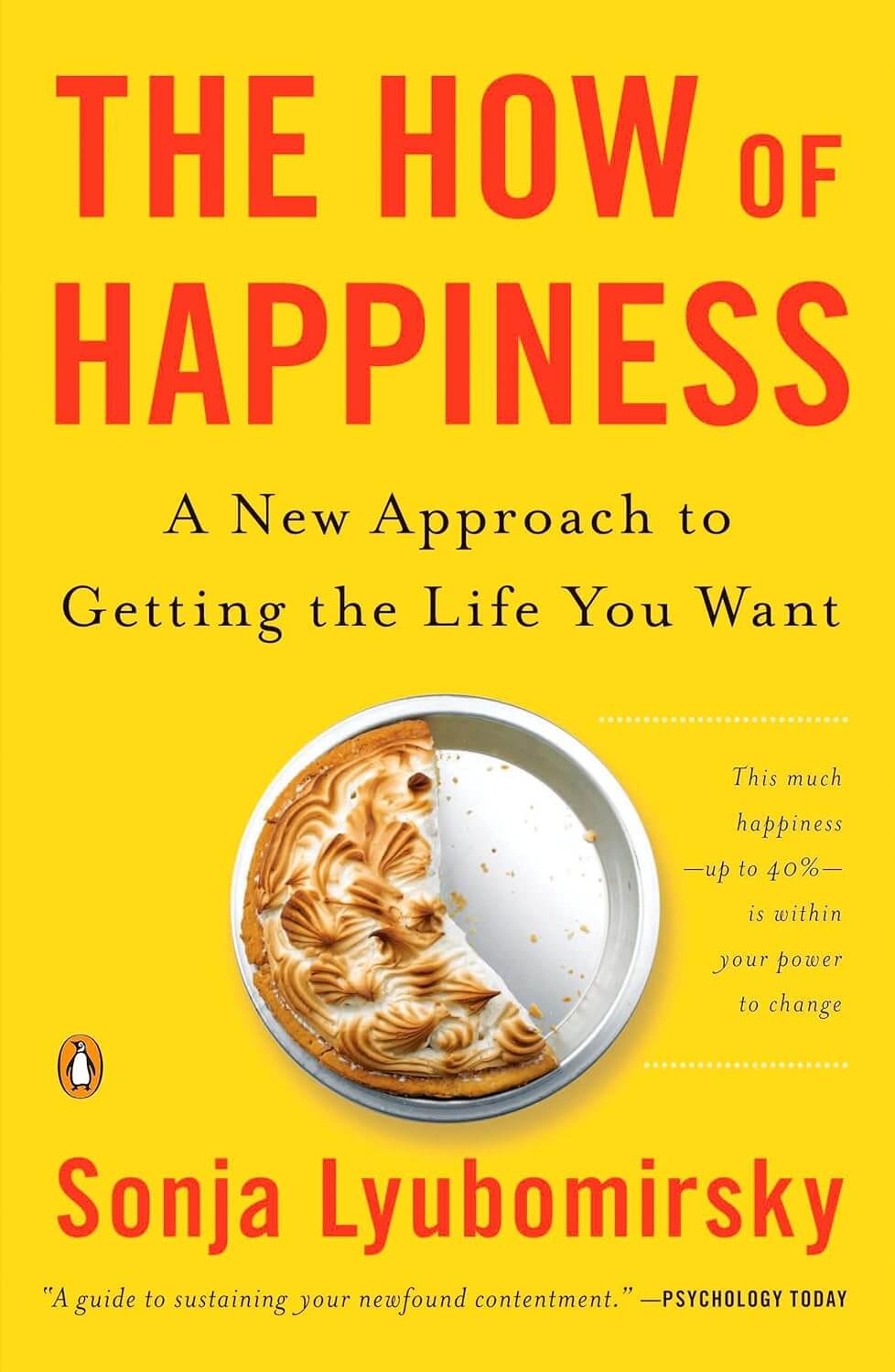
The How of Happiness Book Summary
This The How of Happiness Book Summary covers the key ideas, lessons, and takeaways in about 20 minutes.
The book’s core framework is simple but demanding: accept that you have a temperament baseline you can’t fully control, stop betting your well-being on life upgrades that you’ll soon normalize, and commit to intentional activities that generate positive emotion and meaning again and again. Then take the extra step most people skip—personalize those activities so they match your values and lifestyle, practice them regularly, vary them to prevent boredom, and track what truly changes your day-to-day experience.
In short: happiness becomes more stable when you treat it less like a feeling you chase and more like a set of skills you practice—skills grounded in health, connection, gratitude, kindness, engagement, and meaningful goals.
Helps with these goals
Want the complete 20-minute summary?
- Full structured summary
- Video Summary
- Podcast Summary
- Audio summary
- Key takeaways
- Exercises
- Quiz
- Highlights and notes
- Ask the book with AI
What is in the The How of Happiness book summary?
Below is a preview of Sumizeit’s expert-written summary of The How of Happiness by Sonja Lyubomirsky. The full summary covers the book’s key ideas in text, audio, and video.
Most people don’t need convincing that happiness is good for them. They’ve already heard that a brighter mood can improve health, make relationships easier, and raise energy and creativity. The real problem is practical: even motivated people who try to feel better often don’t stay better. They have a burst of inspiration, adopt a few habits, and then—weeks later—they’re back to their usual emotional setting.
In The How of Happiness, psychologist Sonja Lyubomirsky tackles that exact gap between wanting happiness and sustaining it. Her central message is that long-term happiness is not simply something that happens to you. It’s something you can influence through intentional practices—especially when you choose strategies that suit your personality and keep them fresh enough to remain meaningful.
The book’s structure mirrors its promise. First, it explains what largely determines your typical happiness level and why chasing “perfect circumstances” rarely works for long. Next, it lays out research-backed strategies for boosting happiness through everyday thoughts and behaviors. Finally, it argues that “one-size-fits-all” advice fails, and it shows you how to tailor happiness practices so they actually stick.
The Three Forces That Shape Your Happiness Over Time
Lyubomirsky begins by clarifying a point that’s both sobering and empowering: there are limits to how much you can control your happiness—but within those limits, you have substantial influence.
She proposes three main drivers of your long-term happiness:
1) Biology and temperament set a baseline.
You tend to have a default emotional range—your “typical” level of happiness that you return to after good or bad events. Some people naturally hover higher; others struggle more easily with pessimism or anxiety. The book uses twin research to illustrate how strongly this baseline can be shaped by heredity. Identical twins, even when raised apart, often show more similar happiness levels than fraternal twins do, suggesting that temperament carries a genetic component.
The key nuance, though, is that “baseline” doesn’t mean “destiny.” A predisposition isn’t a prison. Genetics can tilt the playing field, but they don’t decide every outcome. The author emphasizes that environment and habits can buffer or amplify what you’re born with.
2) Life circumstances matter less than people expect.
This is the part that challenges common assumptions. Most people say they’ll be happy when something changes: when they earn more money, move to a better city, find a partner, get in shape, buy the dream home, finally quit that job, or reach the next achievement. Lyubomirsky argues that circumstances often influence happiness surprisingly little in the long run, not because they don’t matter at all, but because humans adapt.
3) Your daily thoughts and behaviors are the most changeable lever.
The most hopeful claim in the book is that consistent mental and behavioral choices can significantly lift happiness over time. Even if you can’t rewrite your genetic code and even if external circumstances “wear off” emotionally, your ongoing patterns—how you interpret events, how you relate to people, how you manage attention, what you practice repeatedly—can create durable improvements.
This model…
Want the complete 20-minute summary?
- Full structured summary
- Video Summary
- Podcast Summary
- Audio summary
- Key takeaways
- Exercises
- Quiz
- Highlights and notes
- Ask the book with AI
Who should read The How of Happiness?
The How of Happiness is for anyone who wants to move beyond temporary mood boosts and build lasting well-being. Whether you're struggling with a setback, feeling stuck despite external success, or simply looking to strengthen your emotional resilience, this book offers research-backed strategies tailored to different personalities. It's especially valuable for people who've tried self-help advice that didn't stick or who want to understand why circumstances alone don't guarantee happiness.
Why does The How of Happiness matter?
In a culture obsessed with acquiring the 'next big thing' to finally be happy, Sonja Lyubomirsky's research reveals a counterintuitive truth: possessions, status, and life upgrades deliver far less lasting satisfaction than we expect. This book cuts through the myths about happiness and shows why intentional daily practices—not perfect circumstances—are the real drivers of long-term well-being. Understanding this distinction is crucial in a world that constantly promises happiness through external fixes.
What are the key themes in The How of Happiness?
- Hedonic adaptation and why circumstances lose their emotional impact over time
- The role of genetics and temperament in setting a baseline for happiness
- Intentional practices as the most reliable lever for sustained emotional improvement
- Personalization: why one-size-fits-all happiness advice fails
- The distinction between pleasure and meaning in building fulfillment
- Relationships and connection as anchors against hedonic adaptation
- The importance of consistency and routine over intensity
- How attention and focus shape emotional experience
What are the key lessons from the The How of Happiness book summary?
Genetics set a baseline, not a ceiling
While temperament has a hereditary component that influences your typical happiness level, this baseline is not your destiny. Environment, habits, and intentional practices can meaningfully shift your emotional set point over time.
Circumstances disappoint because adaptation is inevitable
The emotional boost from external improvements—money, promotions, new relationships—fades faster than expected because your brain normalizes the new situation. This is why betting your happiness primarily on life upgrades is unreliable.
Rising expectations steal satisfaction
As your circumstances improve, your baseline expectations adjust upward. What once felt luxurious becomes the new normal, creating a happiness treadmill where gains never feel sufficient.
Comparison turns gains into insufficiency
Even objective improvements in your situation can feel disappointing once you notice someone else has more or better. Social comparison undermines the satisfaction you might otherwise feel from progress.
Intentional practices counteract adaptation
By actively appreciating relationships, good fortune, and progress through deliberate habits, you renew the emotional meaning of what's already in your life and slow the fade of novelty.
Effort requirements vary with personality
People with naturally higher baseline happiness may need fewer practices to stay buoyant, while those with lower baselines may require more structure and support. This variation isn't unfairness; it's simply recognizing individual differences.
Physical health is a foundation for emotional well-being
Sleep, exercise, and nutrition directly influence your mood stability and resilience. A stronger body provides a steadier platform for happiness practices and makes it easier to access optimism.
Rumination and comparison are thought patterns you can interrupt
Unhappiness often comes not from what happens but from what your mind does with it afterward. Tools like scheduled worry time, journaling, and meditation help stop unhelpful thinking patterns from running unchallenged.
Gratitude shifts attention from deficit to appreciation
Deliberately focusing on what's going well trains your attention away from what's missing and slows the mind's tendency to treat good things as ordinary. This rewires baseline noticing patterns over time.
Kindness works best when it feels intentional
Prosocial acts boost happiness more when they're planned and meaningful rather than scattered and obligatory. Concentrated generosity has more emotional impact than mindless favors.
Relationships require maintenance, not autopilot
Strong bonds don't sustain themselves; they need regular attention, quality time, and repair work. Many people assume good relationships should run on their own, but consistent investment is what keeps them stable.
Forgiveness frees you from the grip of past harm
Holding resentment keeps old pain active and repeatedly triggers negative emotions. Forgiving—whether or not reconciliation occurs—reduces the emotional control the past exerts on your present.
Goal pursuit matters when it aligns with authentic values
Goals are energizing when they fit your real interests rather than others' expectations. Achievement feels hollow if pursued mainly for external validation, but deeply rewarding when intrinsically meaningful.
Engagement and immersion provide distinct fulfillment
The satisfaction of being so absorbed in an activity that self-consciousness fades creates a different kind of happiness than pleasure or achievement. Cultivating these 'alive' moments requires focused attention and presence.
Transcendent connection addresses the emptiness external success can't fill
Spiritual or meaningful practices—whether religious, meditative, or community-based—provide fulfillment that isn't dependent on novelty or comparison. They offer grounding beyond material measures.
Personalization is the secret to practices that stick
Happiness strategies work long-term only when they fit your personality, values, and lifestyle. The same activity that lifts one person leaves another cold; fit matters more than the strategy itself.
Consistency compounds more than intensity
Small practices sustained regularly create bigger changes than ambitious plans pursued sporadically. The compound effect of repeated behavior reshapes your emotional baseline over time.
Variety prevents happiness practices from becoming stale
Even good habits lose their emotional impact if they become mechanical and predictable. Rotating approaches, changing formats, or adjusting strategies keeps practices meaningful and prevents adaptation.
Self-tracking helps you identify what actually works
Monitoring your well-being with honest reflection—not obsessive scoring—reveals which practices reliably improve your week and which ones feel forced, helping you learn what to keep or adjust.
Happiness is a skill you practice, not a feeling you chase
Treating well-being as a set of learnable habits grounded in health, connection, purpose, and engagement shifts your approach from passive hoping to active cultivation, making lasting improvement possible.
Want the complete 20-minute summary?
- Full structured summary
- Video Summary
- Podcast Summary
- Audio summary
- Key takeaways
- Exercises
- Quiz
- Highlights and notes
- Ask the book with AI
How can you apply ideas from The How of Happiness?
- Create a personalized happiness strategy by identifying which practices feel natural to you—try different activities and track which ones you'd genuinely want to continue
- Build a morning or evening routine with one small intentional practice (gratitude reflection, kind act, health habit) and commit to it consistently before adding more
- Schedule specific moments of generosity or connection rather than trying to be kind reactively; plan acts that feel meaningful to you and genuinely helpful to others
- Set up a simple tracking system to monitor which habits most reliably improve your week, then use that data to refine what you focus on
- Interrupt rumination by designating a specific 'worry time' window daily, limiting negative spirals to a bounded period so they don't colonize your whole day
- Rotate your happiness practices periodically to prevent them from becoming stale and mechanical—vary the format or timing while keeping the core activity
- Invest in one close relationship this month through scheduled quality time, expressed appreciation, or genuine curiosity about what matters to them
What common mistakes do readers make with The How of Happiness?
- Relying primarily on external changes to create lasting happiness—expecting a raise, new relationship, or move to solve unhappiness long-term when adaptation will inevitably fade the boost
- Adopting happiness practices that don't fit your personality or values, then abandoning them when they feel forced or inauthentic rather than trying different approaches
- Attempting too many new habits at once and burning out, rather than building one small consistent practice and letting it compound before adding more
- Treating happiness strategies as temporary fixes rather than ongoing skills, assuming a burst of effort will create permanent change without sustained practice
- Comparing your results with others' happiness or assuming one practice should work universally, missing the personalization that's essential for lasting improvement
Sumizeit Exercises Apply what you've learned
Turn ideas from The How of Happiness into action with a short guided reflection: identify the biggest takeaway, connect it to your life, and commit to one step you can take in the next 24 hours.
What is the expert analysis of The How of Happiness?
Overview
The How of Happiness is a seminal work by psychologist Sonja Lyubomirsky, a respected academic in the field of positive psychology. The book stands out for its rigorous synthesis of empirical research and its pragmatic approach to the elusive pursuit of sustained happiness. Lyubomirsky’s expertise lends credibility to her exploration of happiness not as a fleeting emotion but as a skill cultivated through intentional practice. This work bridges academic insights and everyday applicability, making it significant for both scholars and lay readers interested in well-being.
Core Thesis
Lyubomirsky’s central argument is that while genetic predisposition and life circumstances set a baseline for happiness, the most potent and changeable determinant lies in deliberate mental and behavioral activities. She contends that long-term happiness is not passively received but actively constructed through personalized, sustained practices that counteract hedonic adaptation. The book advocates a balanced view that rejects both fatalism and simplistic “fix-it” solutions, emphasizing the importance of tailoring happiness strategies to individual personality and context for lasting impact.
Strengths
- Empirical grounding: The book draws on robust psychological research, including twin studies and longitudinal data, to substantiate its claims about the relative influence of genetics, circumstances, and intentional activity.
- Nuanced understanding of adaptation: Lyubomirsky’s detailed explanation of hedonic adaptation illuminates why external changes often fail to sustain happiness, a concept that challenges common cultural assumptions.
- Actionable framework: The categorization of happiness practices into domains—mental and physical health, relationships, and purpose—provides a comprehensive and accessible roadmap for readers.
- Emphasis on personalization: Recognizing individual differences in temperament and preferences, the book’s insistence on experimentation and customization avoids one-size-fits-all pitfalls.
- Integration of meaning and engagement: By including purpose and spirituality alongside pleasure, the work aligns with contemporary philosophical perspectives on eudaimonic well-being.
Critiques & Counterarguments
- Potential oversimplification of genetics and environment: While the book acknowledges genetic baselines, some critics argue that the interaction between genes, environment, and neuroplasticity is more complex and less deterministic than presented.
- Limited cultural scope: The research and examples primarily reflect Western, educated populations, which may limit the applicability of strategies across diverse cultural contexts where conceptions of happiness differ.
- Adaptation and novelty: The focus on hedonic adaptation may understate the role of transformative life experiences or structural changes (e.g., social mobility, systemic inequality) that can produce lasting shifts in well-being.
- Competing theories: Schools of thought such as existential psychology or Buddhist philosophy might critique the emphasis on “fixing” happiness through deliberate practice, advocating instead for acceptance of suffering or detachment from desire.
- Real-world adherence challenges: Although the book stresses personalization and routine, critics note that sustaining behavioral change is notoriously difficult, and the book may underplay socio-economic and psychological barriers that impede consistent practice.
Who Should Read This
The How of Happiness is ideal for readers who seek a scientifically informed, practical guide to improving well-being without succumbing to overly simplistic or commercialized happiness advice. It appeals to psychologists, self-improvement enthusiasts, and thoughtful individuals interested in the interplay between mind, behavior, and emotion. Those open to introspection and willing to engage in sustained self-experimentation will find Lyubomirsky’s work particularly valuable. Additionally, professionals in mental health and coaching may use it as a resource to inform evidence-based interventions.
Frequently asked questions about the The How of Happiness book summary
What is The How of Happiness about?
The How of Happiness by Sonja Lyubomirsky explains why external circumstances like money and success deliver less lasting satisfaction than expected, and shows how intentional daily practices—habits around gratitude, kindness, relationships, and purpose—create more stable, long-term well-being. The book translates happiness research into personalized strategies you can actually sustain.
Who should read The How of Happiness?
Anyone seeking lasting emotional well-being beyond temporary mood boosts should read this book. It's especially valuable for people who've achieved external success yet still feel unfulfilled, those whose self-help attempts haven't stuck, or anyone wanting to understand why circumstances alone don't guarantee happiness and what actually does.
What are the main takeaways from The How of Happiness?
The core insight is that lasting happiness depends less on life circumstances than on intentional practices you repeat consistently. Sonja Lyubomirsky argues that genetics set a baseline and external improvements fade through adaptation, making deliberate habits in relationships, gratitude, health, kindness, and purpose your most reliable happiness levers. Success requires personalizing practices to fit your values, maintaining consistency, and varying them to prevent adaptation.
Why don't life upgrades like money or status make us permanently happy?
Humans adapt to new circumstances through a process called hedonic adaptation—your brain normalizes improvements and your baseline expectations adjust upward. A raise that felt wonderful eventually becomes normal, and your focus shifts to what you still lack. This adaptation means external wins deliver emotional boosts that fade, making them unreliable as primary happiness sources.
Can you change your happiness if you were born with a lower baseline?
Yes. While genetics influence your typical happiness level, it doesn't determine your future. Sonja Lyubomirsky shows that intentional practices can meaningfully shift your emotional set point. People with naturally lower baselines may require more consistent effort and support, but lasting improvement is entirely possible through deliberate habit-building.
How do I know which happiness strategies will work for me?
The How of Happiness emphasizes personalization because the same practice affects different people differently. Lyubomirsky recommends treating strategies as experiments: try various practices, notice which ones feel natural and meaningful rather than forced, track which ones actually improve your week, and build your routine around practices with the strongest fit to your personality and values.
How often do I need to practice these happiness habits for them to work?
Consistency matters more than intensity. Small practices sustained regularly compound into meaningful changes, while ambitious efforts done sporadically don't reshape your baseline. Sonja Lyubomirsky recommends starting with one habit built into your routine—morning, evening, or lunch break—and letting that consistency work before adding more practices.
What role do relationships play in long-term happiness?
Relationships are among the most reliable sources of sustained well-being because connection provides both daily pleasure and support during difficult times. The How of Happiness emphasizes that relationships require active maintenance through quality time, expressed care, and repair work. They also help counteract hedonic adaptation because they're renewed through shared experiences rather than consumed like products.
About Sumizeit
Sumizeit is a profitable Scomy LLC company based in Miami, Florida. It has been helping readers learn from nonfiction books for 7 years with expert-written summaries in text, audio, podcast, and video.
Want the complete 20-minute summary?
- Full structured summary
- Video Summary
- Podcast Summary
- Audio summary
- Key takeaways
- Exercises
- Quiz
- Highlights and notes
- Ask the book with AI
Here's why readers love Sumizeit
Join thousands of learners getting smarter every day
"Great experience. Detailed summaries. Loved the gamification feature. Makes learning fun. Good customer service. I recommend Sumizeit to anyone. You'll learn a lot."
"I always felt busy but still wanting to keep up with the book discussion in my friend group. This was a great supplement to help me keep reading the books I find fun while keeping up with important books."
"I love this website. Instead of scrolling social media, I find myself learning a lot. I use it everyday. I recommend this app for anyone who is too busy and wants to get up to speed with their favorite books."
The How of Happiness Book Summary PDF
Looking for a The How of Happiness Book Summary PDF you can save and revisit offline? Our The How of Happiness Book Summary PDF captures the book’s core ideas in a clean, printable format — the key frameworks, takeaways, and structure without the fluff. Download the The How of Happiness Book Summary PDF when you want a reference you can annotate, share with your team, or review on the go. Get your The How of Happiness Book Summary PDF from the download page below.
Download The How of Happiness Book Summary PDFPeople also liked these summaries
Readers who explored The How of Happiness often enjoyed these titles next.

Want the complete 20-minute summary?
- Full structured summary
- Video Summary
- Podcast Summary
- Audio summary
- Key takeaways
- Exercises
- Quiz
- Highlights and notes
- Ask the book with AI
Featured Book Titles
Popular Book Summaries at sumizeit, leading book summary app
